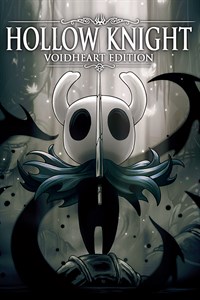
 I still don’t understand why games that are roguelike are named after the original game of that style, Rogue, while games that are Metroid-like (ie, exploration-platformers with boss fights and power-ups) are named after more than a decade later when Castlevania did the same thing, and someone decided they were equivalent and everyone else agreed. It’s just not right.
All of that to say, Hollow Knight is a Metroidvania in which you play a silent[1] protagonist come to the dying city of Dirtmouth above the dead-but-treasured-filled kingdom of Hallownest, and also everyone is bugs. And that’s it, that’s the whole plot as presented. Everything else you learn on the way. Questions like “why do I have such a shitty weapon? why are some of the bugs cool and chill and want to sell me things or discuss philosophy, but some of the bugs just run at me to kill me, but some bugs do both? why is this referred to as a platformer when I can barely jump at all?”
There are three important things to know about this game. The first is that, if you are okay with the genre, with having to go back and forth and remember where you left things to do later and explore until you find places you can’t go but trust that you’ll be able to later and until you find fights that you cannot win but trust the same thing about that, if you’re okay with these things: this is a spectacular game. Arguably the best one of its kind ever made.
The second is that it’s incredibly long. I played for 83 hours to get the credits, and there are still a number of things that I know are left undone, not counting that there are probably things I don’t know also.
The third is a corollary to the second. It is 97% melancholy, with only the briefest of divergences from this theme, and those countered by moments of much stronger sadness to still balance out at 100% adjusted melancholies. And there’s nothing wrong with a melancholy game! Most walking sims are, and I play lots of those. But here’s the thing: 83 hours of melancholy is a lot to get through, even for a truly amazing game.
Oh, and also Voidheart Edition is because there were eventually several small expansions, and all of them are included in the Game Pass version. According to the meter, I got 106% completion out of an implied possible 112%. Almost all of what’s left are harder versions of things I’ve already done, which makes it hard to feel like I should practice my ass off to accomplish them. Plus the melancholy.
In the unlikely event that I do more, and that the more I’ve done changes my impressions significantly, I’ll report back.
[1] I mean, yes, most video game protagonists outside of dialogue-tree RPGs and shooter cutscenes are silent. But the other characters in this game make a point of noticing your silence.
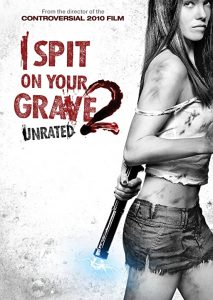 The thing that made I Spit on Your Grave[1] more than torture porn [before that was even a subgenre] is the novelty. There aren’t many lady revenge stories, and fewer that are violent in the way that dude revenge stories are violent. As such, it has both the typically female strength storyline in which a woman who has faced, uh, let’s say adversity is able to rise up from circumstances that would destroy a man[2], and then it follows that up with the direct, bloody revenge that has, as I said, been a traditionally male-dominated arena.
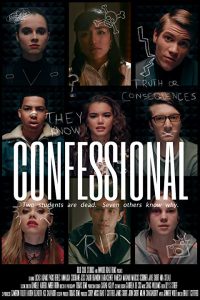 I hate it when research disproves a theory that superficially matches all available facts. See, the main thing that
 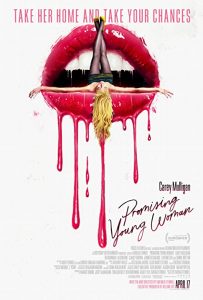 Every movie I watched in early 2020, according to a memory that is at worst only slightly flawed in this regard, had a preview for
 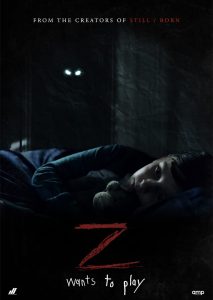 Shudder served me up a more bog standard traditional horror this time, and I’m maybe a little disappointed by it? It’s not that I’m itching to become a giallo aficionado or anything. It’s just that horror in the ’70s is so good. If I were the kind of person who got paid for this, I might call it raw so that I could proceed to call it visceral as well, and be proud of myself for the pun. But what I really mean is, that was when the genre first spread its wings. You had a little blood and a lot of screaming and maybe some goofy eastern European accents, or maybe you had rubber-suited “monsters” or perspective shots and miniatures to make every day critters giant-sized. But the ’70s is where the technology improved and at the same time the censorship limits were removed, and the field just exploded in every direction. By 2019, horror movies are often a lot more polished, but they’re also more prudish and maybe a little dead inside, from that sweet sweet studio money.
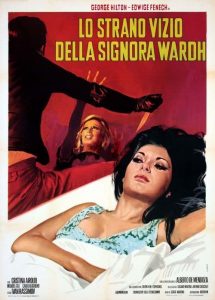 Unexpectedly, two movies in a row on my tragically massive Shudder watch list were giallos[1].
 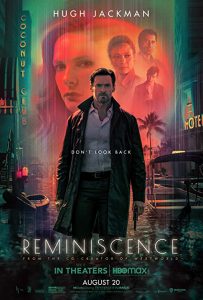 It’s not really clear to me what Kevin Feige is going to do when he tries to introduce the X-Men into the MCU. Not only has Hugh Jackman refused to play Wolverine again, but he apparently got the mutton chops in the divorce with Fox. Seriously, bro looks within an approximation of no differently than he did in 1999.
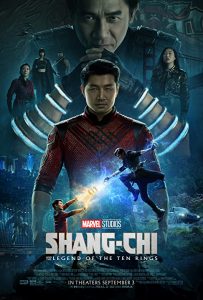 I’m not here for the idea of making links to a bunch of previous movies, but some quick and uncertain mental math tells me that
 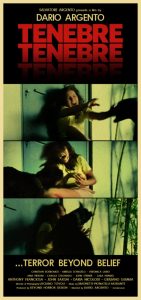 I have just spent upwards of seven seconds contemplating why I would select horror as a tag after also selecting thriller, given that the main feature of both of these genres is that some murdering[1] happens. In the case of
 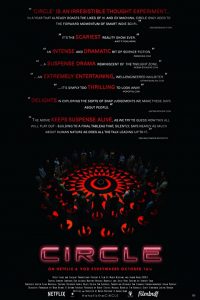 Outside of it showing up on one of the random tabs of movies that Netflix wants me to endlessly scroll through, I have never heard of