Monthly Archives: April 2025

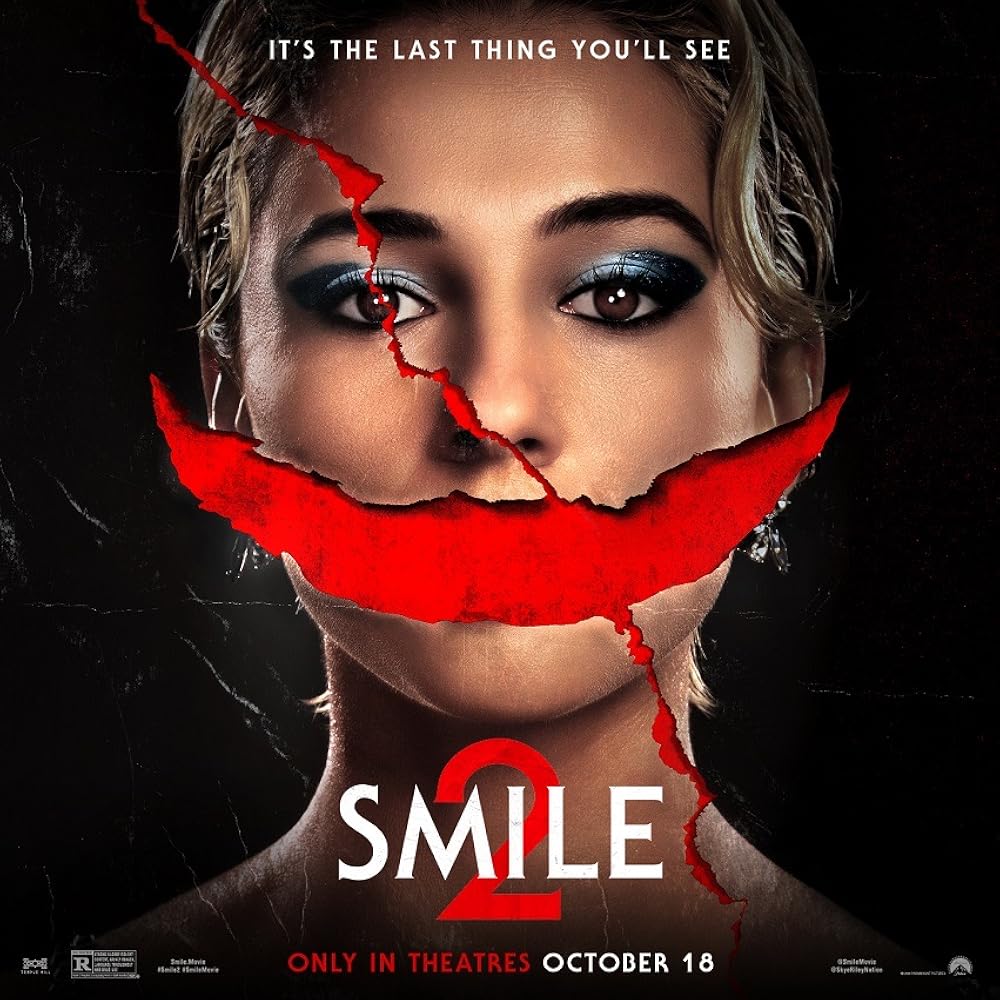
Smile 2

Remember Smile? Demony thing stalks and/or possesses a hospital trauma therapist who has just witnessed a horrific act of self-harm, and the main symptoms of said possession, prior to gruesome death, are losing time and seeing people oversmile creepily at you everywhere you go?
Smile 2 is very much like that movie, only instead of a deep metaphorical dive into the personal costs of providing mental healthcare, it follows a Taylor Swift-level superstar who lost everything to drugs and alcohol and is staging her comeback. Only, she makes a single impulsive (and low-key bad) decision that puts her in the wrong place at the extremely wrong time, and now people are smiling creepily at her.

Where the first movie was deeply horrifying and also an unpredictable mindfuck, this one is… well, the mindfuck part is gone because we know for sure that it’s real even if the afflicted character doesn’t, and the horror is not precisely gone, but it just feels mean-spirited this time. Not like it could happen to anyone, but like it is happening to this character because she deserves it. (Wondering whether she actually does deserve it or not honestly misses the point.)

In conclusion, not every horror movie needs to be a franchise.

But, if you’re into body horror, there was some stuff with hair that was really making me squirm.

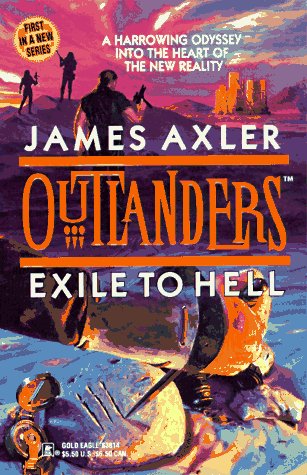
Exile to Hell

I have reached the point in the Deathlands series where it has become two series. Which is weird. Now, if I understand the release schedule correctly, I’ll be alternating between the two series. It is very clear that Outlanders is in conversation with the original, but less clear if it will be a two way conversation. We’ll see, I guess!

Exile to Hell is set another hundred years in the future. That is to say, two hundred years after World War III all but wiped out humanity and gave rise to monstrous mutations both within and outside of humanity. And one hundred years after Ryan Cawdor, Mildred Wyeth, and friends have been striding the so-called Deathlands that are what remained of the United States.

So, what’s different? A lot of things, as it happens. Most importantly, the mostly horrible Barons who run the mostly horrible various settlements have come together and consolidated their power[1]. They have nine much larger fiefdoms in which all of the healthy, happy, neatly contained and regimented and let’s be honest controlled people live, while everything outside the barons’ control is known as the Outlands. Yes, another hundred years means that much less radiation and associated horrors, but it’s still not great out there, Bob.

Also, our characters are pretty different. Okay, is there a main character, his military buddy, a redhead, an old dude straight out of the past, and an albino? When you put it like that, you’re undercutting my point, fine. But my point is, the main character? He’s one of his baron’s secmen, now called magistrates. They have the tech and the firepower to be nearly invulnerable. We’re talking hardcore body armor, the best guns[2], black freaking helicopters. You go up against them? You lose. Kane really could not be more different from Cawdor, viewed through the lens of the latter’s adventures so far. And Krysty Wroth’s ginger mutant has been replaced by Brigid Baptiste’s ginger historian who Knows Too Much(tm). (The other characters, it’s too soon to tell yet.)

But the biggest difference is the environment. This is not (yet at least) a survivalist series. Civilization has begun to return. The redoubts full of teleporters are still a feature of the series, but it turns out they’re the tip of the iceberg. The old questions were “where are we going next using this tech we barely understand, and who will we have to kill to save people and then get back to the mysterious tech and jump to the next place?” The new questions are “where did this technology come from, really, and once we know the answer, are we content to live with it? Or should Something be Done?”

So, as I said, I’m really interested in seeing whether the Deathlands are in conversation with this series, and what secrets each will reveal going forward.

[1] Does this make future Deathlands volumes feel a little less hopeful than they had up to now? Prospectively, it does. All the work they’ve been doing to free people and wash away the human horrors, and, a generation or so later, it was for nothing? Yikes.
[2] I mean, obviously. Whatever else these books are, they’re still in the genre that glories in describing gun models, ammo types, and what that ammunition does to a body.

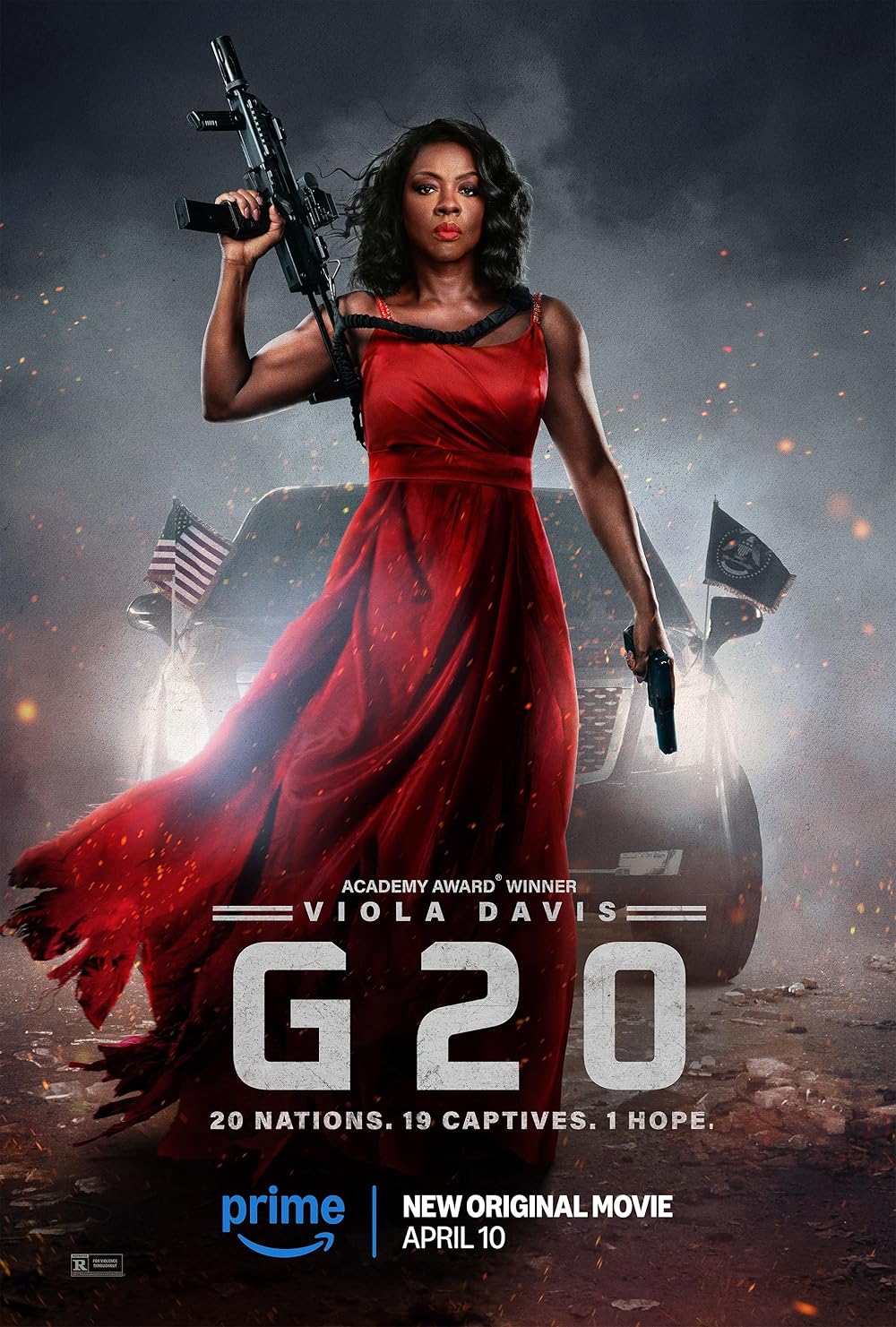
G20

Having watched the film, here is what I know about the plot of G20.

President Viola Davis is trying to solve world hunger and feed farmers in Africa, or something like that, at the expense of American voters (her opponents say) or to keep the dollar from collapsing (her other opponents say). It was never clear to me how these facts interact, nor how switching to a new worldwide currency[1] would fix hunger. Or necessarily how it would destroy America, for that matter.

Anyway, what’s important is her plan is somewhat unpopular, her teenage daughter is extremely rebellious and tech savvy, and the whole family is headed off to South Africa for a G20 summit where she will try to convince the other major nations of the world to sign off on her plan, whatever it actually is. Unfortunately for her and other world leaders[2], Homelander (but without his powers and with a non-specific accent that is later claimed to be Australian, but I dunno about that) has a plan to kidnap all of them and destroy the world economy so he can make some money off crypto.

Premise established, now it’s time for the explosions and gunfire. The only thing that separates this from any other political action movie is that Viola Davis is the action star. Gonna be honest, that’s what won me over here, and now that I’m out the other side? No regrets. (But I doubt I would have gone to a theater for it, so nicely done, Amazon, for going straight to streaming.)

[1] If that’s even what was being proposed? I am forced to admit that I must have missed some of the early film exposition, or else this never even tried to make sense. One of the two.
[2] Including Russia, China, Turkey, Britain, South Korea, implied Saudi Arabia, and 13 unspecified others, though one supposes the actual Group of 20 is fairly static and it would be easy to learn who would be expected present.
[3] Depending on how you count, there were either a lot more than 19 captives, or there were 18. But that doesn’t flow as well I suppose.

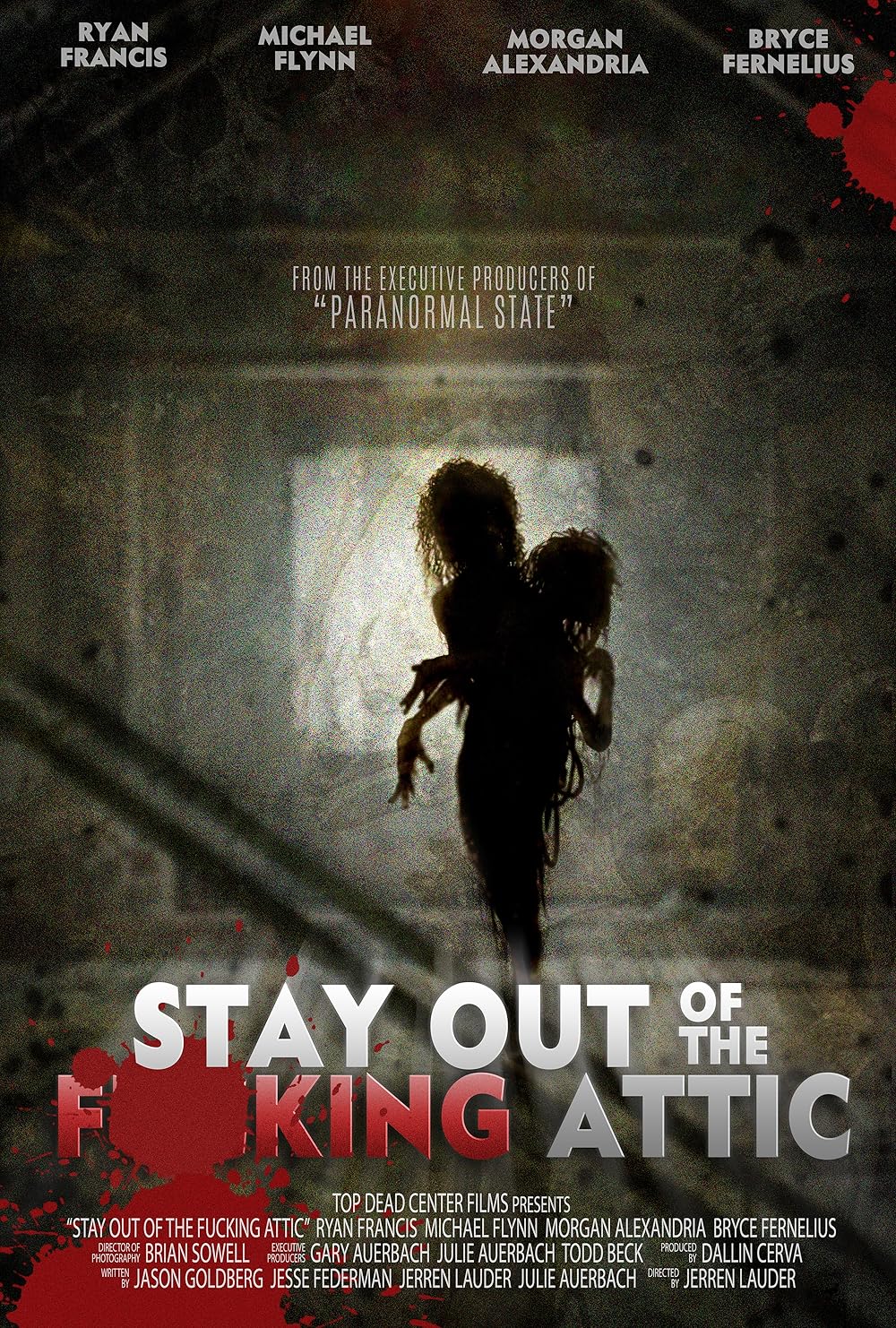
Stay Out of the F**king Attic

I want to say that the best thing about Stay Out of the F**king Attic is its title, but I feel like I can’t say that. It’s true, but it’s very prejudicial. What you need to understand is just how perfect the title is. With the inclusion of an advertising budget and Samuel L. Jackson, this could have been the Snakes on a Plane of its generation.

Still, to be clear, it was not that, and the movie is as it happens only okay. But good god that title.

An old German man living in an old and run down Victorian house has hired Fresh Start Moving Company to empty out his house, and that by morning. Which is nearly impossible for the three person outfit, all of them recently from prison, and so you see how the company name is a double meaning, right? So he sweetens the deal with loads of cash, plus the instruction to stay out of the basement and the attic, he’ll deal with those.

And that right there is the whole movie, minus one or two twists. At 80 minutes, it feels propulsively fast as soon as the obligatory packing and lifting montage is set aside in favor of, you know, the attic. It even maybe has something to say about the possibility or impossibility of redemption. Like I said, it’s not a bad movie. It’s also not a great movie, but if you miss the days when Nazis were the bad guys in movies instead of history recycled before your very eyes, this might be the very last gasp of that genre.

Kanashimi no Beradonna

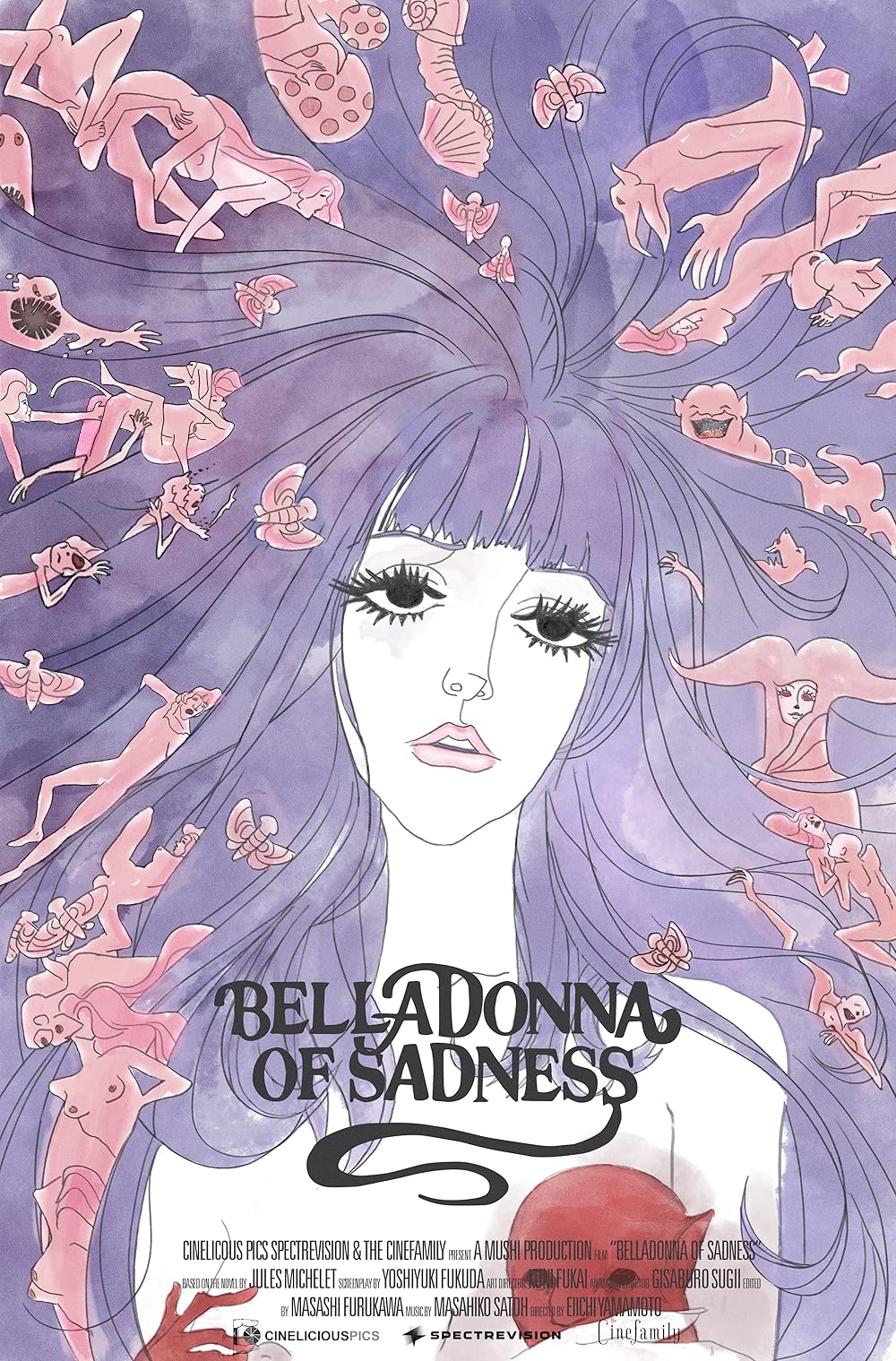
I’m again a long time between episodes of my nominally weekly horror podcast, partly due to difficulty finding a copy of the current movie that I could watch, but I think mostly due to being sick for the greater part of a month and falling behind on podcasts in general. I know one of the categories was revenge, but I don’t remember if that was the style or the monster, and I cannot remember what the other category was at all. (One supposes if I could, I’d also know which was which.) But I think revenge must be the monster die. Style could be a lot of things, but this is a 1973 anime named Belladonna of Sadness, so one supposes the style was Asian, or animated films, or not very plausibly 1970s. Just because of the glut of revenge movies from that decade, I mean.

Of course, I could be wrong about any of these facts, aside from what the movie was I mean. I’d check, but I’ve written way too much for that to make sense at this point.

There was a movie, I was saying. If I’m being real, I have no way to usefully talk about this movie without massive spoilers. Here’s what I can say before I reach that line: Belladonna of Sadness is a wildly stylized and yet minimally animated[1] movie about a medieval European, probably French, village in which a very much in love couple gets married, like you do, but then nothing whatsoever goes well for them for the remainder of the flick.

Okay, I’m not going to explain the plot point by point, because for one thing I don’t think I could anyway, but either way, definitely spoilers from here on in. Cut below the footnote.

[1] In the sense that there isn’t a lot of animation. There’s a lot of art, which the camera pans across, and sometimes small pieces of the art move in small ways. And sometimes it goes crazy. But mostly: very minimalist, from an animated perspective.

Continue reading

Wool

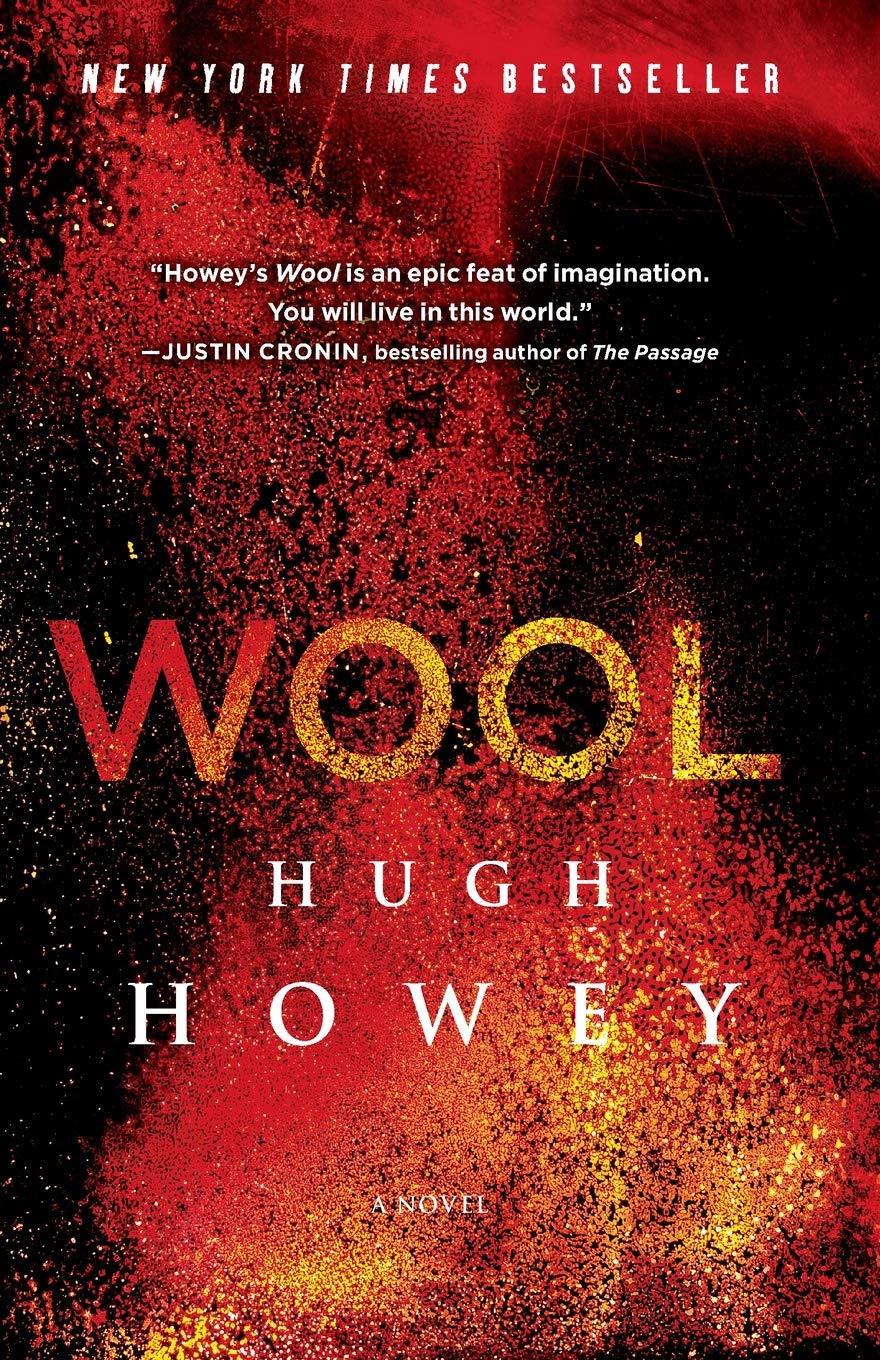
There’s this show on Apple+[1] called Silo. The year it came out (2023 maybe?), I called it the best sci-fi on TV, and I stand by that assessment. A long time later, albeit by my standards pretty rapidly, I’ve picked up and read the first book in that trilogy (which covers the first two seasons of the show).

Wool tells the story of a, well, a silo. It is underground, some 140 or so levels into the earth as measured from the up top, through the mids, and into the down deep. It contains a large but necessarily limited number of people. They all have jobs (porters who run things up and down the silo, mechanical who keeps the generator running, farmers, doctors, a sheriff, IT, even a mayor), and eventually everyone in every job has a shadow, learning to do that job from the previous generation. It is a perfect closed system, and nobody ever leaves.

Well, that isn’t quite true. There’s an exit, right next to the jail cells in the sheriff’s office on the top level. The exit leads up a ways to the surface, where there’s a door to outside, and cameras in all directions surround the door. Those cameras show an utterly destroyed landscape in greys and browns, with constant windblown particles, constant rushing clouds in what might otherwise be called a sky, a decayed city full of what are no longer skyscrapers in any useful sense off in the distance, but with a ridge that prevents view of anything nearby. The silo is in a depression, is what I mean. The view from these cameras is shown in the nearby top-level cafeteria, a warning of what leaving the silo would mean. And yet, if anyone asks to leave, they are not only allowed to do so, but by law must. The only caveat is that they are asked to clean the cameras when they go out, since the view is forever being worsened by the blowing dust. For this, they are given a square of wool. Anyone who goes out does clean, even those who swear they will not, and anyone who goes out dies within minutes, soon enough to become a part of that pre-ridge landscape, a warning that it is not yet and may never be safe to go out.

I’ve already said rather a lot, so I’ll stop here. Either that description grabs you and makes you want to know where a story would go in this setting, or it does not. But I have a few pieces of additional commentary relative to the show. The main one is, for better or worse, the voice of Juliette and the voice of Deputy Marnes are just irrevocably overwritten into the voice of their characters in the book. I think probably for better, in both cases. The second is that most of the changes made for the show were probably improvements, even if they stretched out the story a bit. (Plus, some of them might turn out to be due to retcons for future books I’ve yet to read.)

Lastly… well, this one is complicated. I must say first of all that Wool is a complete story in itself. If nothing else had been written, I would be completely satisfied by its ending. That said, in discussions online about the TV show, I was lambasted for not really caring what was the source of the disaster that led to these people being trapped in this silo. Like zombies in that flavor of apocalypse, the blasted landscape is setting. Who cares why there are zombies? There just are, the story is influenced by the setting, the setting is not a part of the story. And honestly, I stand by that assessment. This book being a complete story in itself just proves to me that I was right.

However.

I will say that the book managed something the TV show did not, which is to make me interested in finding out how we got here after all. Cleverly, therefore, book two is all about that, and I suppose I’ll read it pretty soon.

[1] the streaming service whose name I may or may not have correct