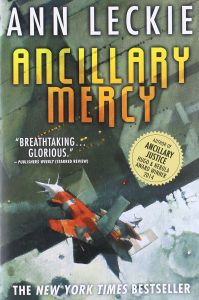
 I finished Anne Leckie’s Ancillary trilogy yesterday, and it comes with a realization that I had completely failed to anticipate what the story was actually about.
Okay, that’s not entirely true. I’ve been sussing out the thematic ground all along, but the plot? I thought I was learning about the end of something[1], when I was actually learning about the beginning of something else entirely.
Which is to say, now that I know what story I was actually reading, the trilogy does in fact have three strong, reasonably divided acts that tell exactly the story they were always telling, even though it took me until the end of the series to correctly order things in my own head and be able to see it clearly. Also, it’s a good story that I’m happy to have read, even though I’m sad I’ll probably never get a clear look at either the millennia old beginnings of the story nor the equally distant ending of it.
Perhaps because of my inability to grasp the picture until so late, I’m particularly spoiler averse here, so I will say only that issues raised in each of the prior books are well-resolved in Ancillary Mercy, and with more room than you can shake a stick at for Leckie to return to this universe and tell other, completely different stories, were she of a mind to.
[1] It’s not impossible for it to be both, but I doubt I’ll ever know.
 I remember liking
  I found it difficult to classify
 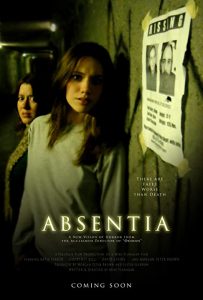 Here’s the thing: if you made a movie about having to declare someone legally dead because they’d been missing for so long that you have to accept that they won’t come back, but you also have to go through all the emotional trauma that you’ve been holding out against for so long, and so you’re packing up to move, you’re filing this paperwork that makes it real but will also allow you to get out from underneath years of crushing debt, and you have to deal with the trauma of that being a main driver of accepting it, because now you can finally get insurance payouts, but still you don’t even know if he’s dead, and you keep having visions of him, evil-ghostly-pissed as you bridge each milestone on the path to it’s finally over, he is now according to the county-issued certificate of death in
  According to the write-up,
  Eli Roth has a favorite type of movie to make, I think, and it is this: young people go somewhere that they should not have gone, and pay the price. Sometimes it’s a cabin, sometimes it’s
 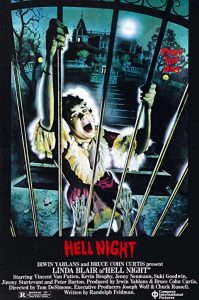 Do they have
 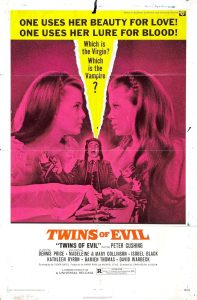 It is a truth universally acknowledged that if Peter Cushing is in a Hammer film, he must be in want of vampires. But I admit I was thrown off by the initial presentation, in which Viennese twins are hanging out in what I first mistook for the colonial countryside, what with all the British accents and Puritans burning witches.
 Horror movies are often funny. It’s a structural thing, I think. Movies with unrelieved dread are
  I have not seen many German movies, so I do not know how commonly they are weird and existential. But I am predisposed to believe the answer is “always”, you know?