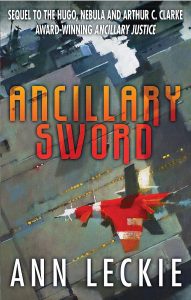
 Look at me, cleaning up my partially-read series backlog. Woo! But also, it’s nice in this case because I still remembered at least a little bit of Ancillary Justice. Not nearly everything, but probably enough.
A thing about that book and about Ancillary Sword that I find disheartening in myself is how much importance I place on gender. I should not spend large swathes of a book who is purposely (by the author, at least) cloaking gender by making it completely irrelevant to the society the series portrays, I should not I was saying spend most of the book wondering as to the gender identity of its characters as they come and go. And yet I do. Not that non-binary is what the book is portraying, exactly, but it is definitely clear to me via this book (and okay, not only via this book) that it’s not a concept I have yet comprehended. Gender dysphoria, I comprehend. Rejection of the concept, I just… don’t. (And for all I know, that description of it may even be missing the point.)
That bit of failed self-examination aside, the book continues to concern itself with the concept of justice, albeit from a different angle. A particularly of the moment angle, although the fires[1] of BLM had not yet started when the book was being written, as it happens: what justice is owed by a government to its citizens, especially when not all citizens are considered equal, and the divisors are by (in this instance) planet of origin[2].
Anyway: it is a) a good book, once more, and b) a maddeningly sparse book in the sense of resolving what I had considered to be the prime issue of the series. Okay, that’s not right. You don’t resolve the issues of your trilogy in the second book, but you… you advance them, right? This barely felt like that at all.
But that’s a me issue, reacting to the structure with which I have been presented. Taken on its own, this book, just like the one before it, is one of the best things I’ve read in many a year. Would heartily recommend.
[1] Figurative fires. Don’t even with me on this.
[2] At least I think I’m reading this correctly, between the lines. It’s made explicit now and again that there are alien species, and how many. Therefore, everyone else must be human and just of different origins prior to the Imperial Radch swallowing them up, whether decades, centuries, or millennia ago. I think. Like a lot of sci-fi, things are left for you to figure out on your own, and therefore arguably this entire footnote is a massive spoiler.
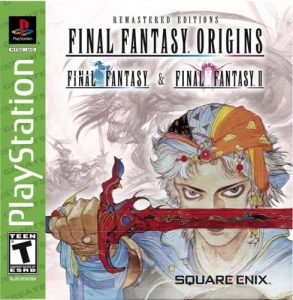 Sixteen years ago, somehow, I played
 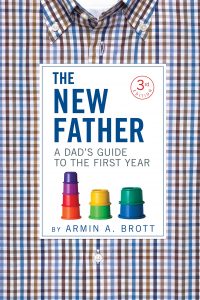 I cannot decide whether it’s weirder to be reading non-fiction, or to be reading a book gradually over the course of a year. Both are pretty weird! Like, maybe histories would be less weird? History is just non-fiction with a plot and a throughline. Although I guess a book about what to expect over the course of a year of childhood growth is almost that too? But histories have characters, which this does not, super-disgusting anecdotes about mistaken pumpkin puree notwithstanding.
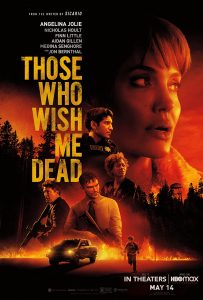 Warner Bros.’ simultaneous release schedule between theaters and HBOMax is good for seeing new movies and not getting Covid, as everyone knows. But what you may not know is that it’s also good for seeing movies that you would have never quite convinced yourself to make it to the theater to see, and then have forgotten to look for by the time they finally released to a streaming service.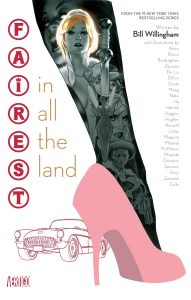
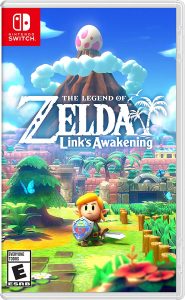 Two milestones! Surprisingly to me, I’ve never finished a Switch game before. Like, I kind of finished the Mario game from one perspective, but from another I was barely halfway through it. Regardless, no review! So, oops. (Or not. It’s hard to know.) But also, I’ve never played a game that required specifying a year for version control.
 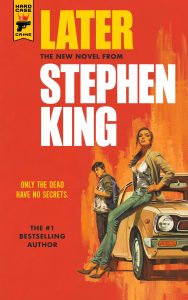 Cart before the horse time: surprise! I liked the new Stephen King book.
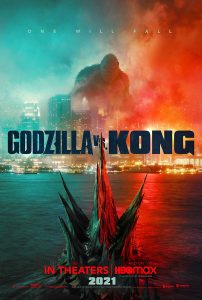 After three previous movies, one of which I didn’t see,
  I started reviewing things here in September of 2004. The first two books of the Slave Trade trilogy were published in 2003, and
  Back at the dawn of time, I played