 A small but visible number of movies I’ve watched in the past few years are premised as “what if a haunted house attraction, but bad things are actually happening?” Which makes me wonder, mainly, if these extreme haunts are a thing that really exist. Like, I don’t want to do the thing in this movie where the goal is to probe your psyche and bring you the very worst experiences, because that will… help, somehow? I don’t even know. But someone is actually menacing you with a butcher knife or whatever, and they chase you and things, or… look, I can’t actually imagine any way these could work in real life, which ultimately is my point. But if I’m wrong, someone needs to tell me what is the deal with them, is what I’m saying.
But in the case of Extremity, the deal is that this chick who has meds to be off of and is arguably suicidal and who definitely has a concerned girlfriend and an uncooperative therapist and has a lot of flashbacks to a dark and troubled past has decided that the best thing she could do for herself is sign a bunch of waivers and give herself over to the fine people at Perdition, which as you may have guessed is an extreme haunt, for the purposes of confronting her fears or herself or something[1], and before you know it we’re off to the races.
On the whole, I liked everything except for the unnecessary subplot where a Japanese TV show’s camera crew is onsite today doing interviews with the owner of and b-roll footage of the haunt. It added nearly nothing, definitely nothing that couldn’t have been revealed elsewhere, and had as far as I could tell no payoff. Otherwise, there were twists I saw coming a mile away and twists that caught me entirely by surprise and at least one moment late in the movie that I’m still not sure whether I’m supposed to believe actually happened or not. It would make a lot more sense as a partial hallucination, but they seemed to play it inextricably straight.
Nevertheless, it’s a solid movie on the strength of the psychological studies of the two main characters and has very little to disrecommend it, if you can get through the first 15 minutes or so that are too busy being shocking for the sake of it to remember there should be a plot.
[1] She actually said what all at one point, I just don’t remember, probably because I was too busy being skeptical of the whole concept at the time.[2]
[2] This is not to say that the concept is meritless. It is to say that I imagined telling people for whom I had just signed an absolving waiver that I wanted their untrained asses to help me overcome my fear of spiders, and my brain basically shut down for a while, followed by acknowledging that no, I would never do that, nor can I imagine any sane person doing so.
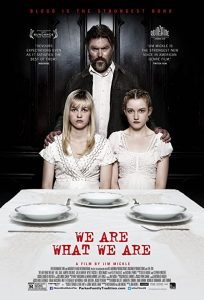 A proposition: if we accept that gothic horror must include a lonely countryside castle, then it (necessarily?) follows that American gothic horror must include a lonely farmhouse in the country. There is even, I believe, pre-photographic evidence of this.
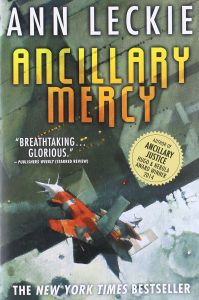 I finished Anne Leckie’s Ancillary trilogy yesterday, and it comes with a realization that I had completely failed to anticipate what the story was actually about.
 I remember liking
  I found it difficult to classify
 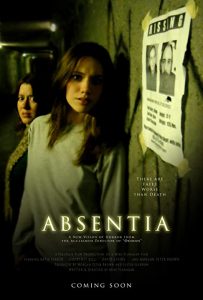 Here’s the thing: if you made a movie about having to declare someone legally dead because they’d been missing for so long that you have to accept that they won’t come back, but you also have to go through all the emotional trauma that you’ve been holding out against for so long, and so you’re packing up to move, you’re filing this paperwork that makes it real but will also allow you to get out from underneath years of crushing debt, and you have to deal with the trauma of that being a main driver of accepting it, because now you can finally get insurance payouts, but still you don’t even know if he’s dead, and you keep having visions of him, evil-ghostly-pissed as you bridge each milestone on the path to it’s finally over, he is now according to the county-issued certificate of death in
 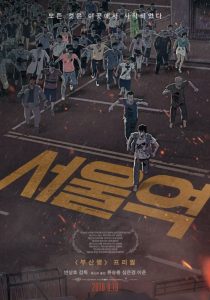 According to the write-up,
 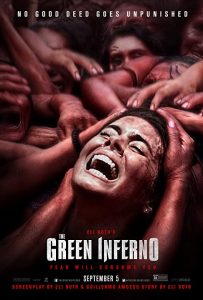 Eli Roth has a favorite type of movie to make, I think, and it is this: young people go somewhere that they should not have gone, and pay the price. Sometimes it’s a cabin, sometimes it’s
 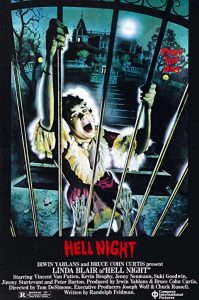 Do they have
 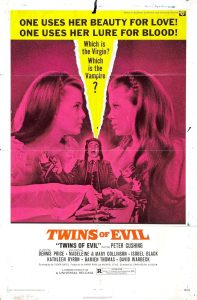 It is a truth universally acknowledged that if Peter Cushing is in a Hammer film, he must be in want of vampires. But I admit I was thrown off by the initial presentation, in which Viennese twins are hanging out in what I first mistook for the colonial countryside, what with all the British accents and Puritans burning witches.