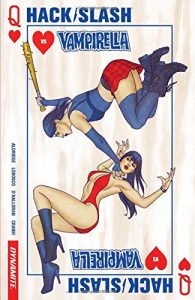
 I know very little about Vampirella as a character, save that she exists and dresses… provocatively, let’s say. However, I know a great deal about Cassandra Hack, so I am qualified to speak on two thirds of the factors that went into this book.
Well, three fourths if you count the name, which is a little odd. Hack/Slash Vs. Vampirella implies that the titles are fighting, rather than the characters. And that’s just weird, right? (I mean, obviously if the characters are all good guys in a crossover, their fighting will be resolved amicably before they deal with the real threat, I’m not talking about that; ‘sjust the way things are done. But who ever heard of books fighting? Get it together, title bro!)
Okay, I’ve lost the thread. Anyway, thing one I can address is the plot, and it was, y’know, fine. Cassie and her road trip buddy / fighting companion Vlad do the thing they do, dealing with a threat that could range anywhere from “might kill some teens at summer camp. again.” to “extinction-level event in the offing”, and they do so the way they usually do: messily.
To reiterate, I cannot address thing two, which is how was Vampirella’s characterization? Because I have no idea. Maybe Shawn Aldridge has written for her before, and maybe not. Her artistic rendering matched my vague memories of book covers past, so there’s that.
Thing three is Cassie’s characterization, and, um… it wasn’t actively terrible. I know it can be hard for some authors to correctly capture some voices. Honestly, it’s a testament to Marvel’s editorial staff over the first 25 years, that characters come across poorly so infrequently. But speaking, as we were, of Cassie’s voice… she had one mode the whole book, and it was vulgar bluster. Which is a thing she does sometimes, but honestly, the blood-spattered cheesecake in these books has never been good enough for me to tolerate a one note character, not for nearly this long. I really hope that whoever authors the next of these books has a better handle on what makes them tick. Or else, maybe this was simply a Vampirella book, and the target audience doesn’t care about my concerns at all?
Beats me!
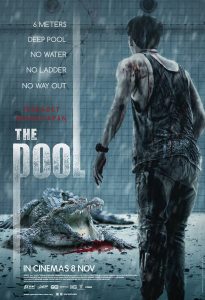 So, what I knew about
 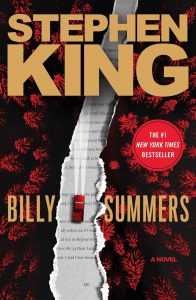 It really should not take me four months to read a book, too-busy job and toddler-rearing or not. And I mean, don’t mistake me, I read really a lot of comics in this period as well, but… something isn’t right, and I need to address it[1]. All that said, despite a four month duration, I was pretty happy with
 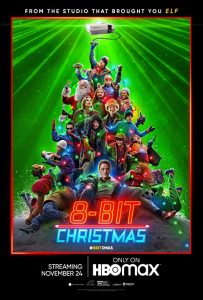 Back when streaming wasn’t a thing,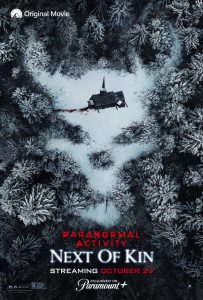
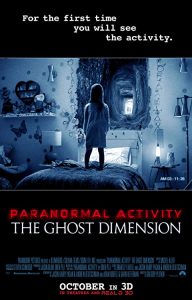 Anyway, there was one more Paranormal Activity movie that I missed, prior to the current new one that doesn’t yet count as missed. So now I’m caught up, yaaay.
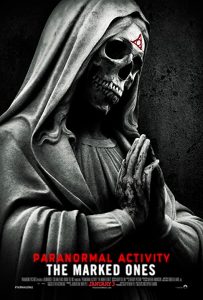 It’s been nearly a decade since I last watched a Paranormal Activity movie. …well, a new one, anyway. I rewatched the first four this week, after determining that they released entry #7 and thinking, should I catch up? Hey, why not!
 Retroactive continuity is a tool honed to perfection in two art forms[1]: soap operas and superhero comic books. These forms share a lot else in common. They are a) both extremely long-form storytelling where b) the people writing today do not have a plan past the next ten or twelve episodes at the most, c) they both have cliques of characters that mostly hang out together but occasionally cross over with other cliques, and even more rarely all come together for some kind of huge event, and they both d) have dedicated, opinionated fanbases who have stuck around for decades but e) are written so that someone can drop in at practically any moment and be able to catch up.
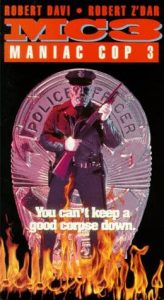 As you will no doubt remember from Maniac Cop and Maniac Cop 2[1], there was a maniac cop who was actually sort of undead too?, and who got the best of both Richard Roundtree and Bruce Campbell, which lets you know he was a badass. And it turns out that he’d been sold out by the city and left to die in prison, and once that truth was revealed he was able to rest in peace, secure in the knowledge that a balanced view of both sides of cops (ie, way too much brutality and people should be terrified of law enforcement, or else cops should protect each other unless it’s actually a bad apple, which it somehow never is though) had been presented over the course of the two films. And if that “balanced” message has aged badly, it’s still impressive that anyone was presenting a two-sided message in the late ’80s, instead of only the one side you’d expect.
 The movie starts with a high overhead shot of aquamarine water, and zooms down beneath the waves to something cloudy spurting from a crack in a rocky wall at the ocean’s bottom. We are told via music cues that this is ominous. The movie ends, if you were to play this scene backwards (dialogue excepted) with a high overhead shot of aquamarine water, tracking down to a beach and then a woman lying on her back on the beach, rocking slightly and saying over and over to herself, or possibly to the audience (since she’s speaking directly into the camera), “Don’t be scared. Don’t be scared.”