Tag Archives: family

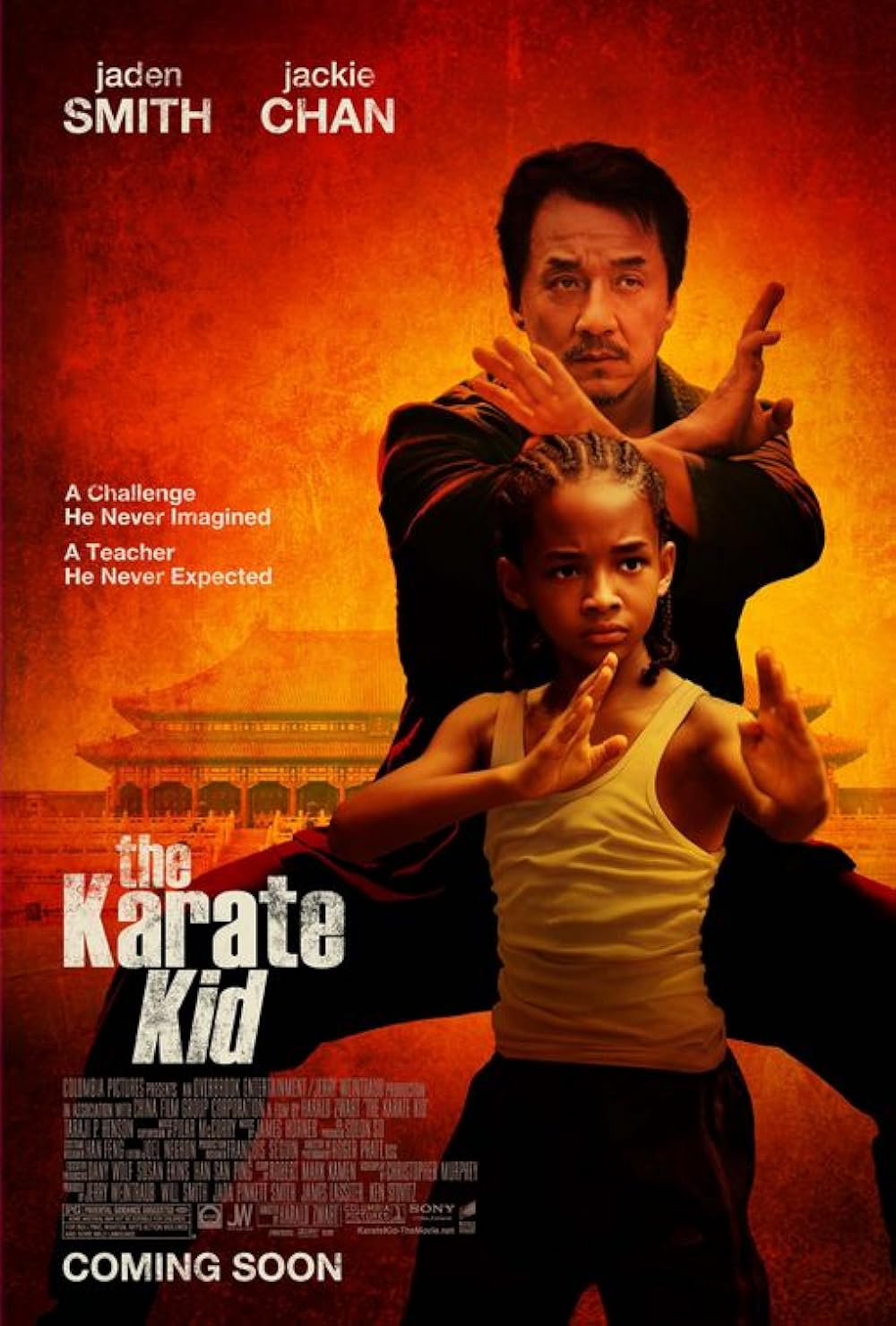
The Karate Kid (2010)

What happened was, I sat down to watch Child’s Play 2. This is because except for the first one and maybe Bride of Chucky[1], I never saw any of the movies in that series, and it seemed like it was time to give it a go. But then, when I pulled up my search bar to find what service it’s showing on, I saw an old search that had revealed a new Karate Kid movie set after Cobra Kai.

Is that compelling? Okay, maybe not, even though I truly loved Cobra Kai. BUT, my son also just started a karate class, because of how he needs something that will calm him and center him and give him a modicum of discipline, and martial arts sounds like the right thing for that. And so this new Karate Kid movie also somehow pulls in Jackie Chan from The Karate Kid remake, and I never saw that one, except now I have I suppose.

That’s it. That’s the whole story.

So anyway, this is a straight remake of the 1984 original, with different characters and setting, but somehow the precise same story beats. A 12 year old black kid and his mom move from Detroit to China, where he has no friends and where being friendly with a girl gets him beat up by some kids who know kung fu. (To be fair, he probably egged it on with some poorly thought out posturing.) He does something dumb to get petty revenge after they continue picking on him, and right when they are about to truly beat him up, the handyman at his apartment jumps in and wins a six on one fight without throwing a single punch.

So then Mr. Han agrees to teach young Dre kung fu[2] so he can enter a tournament and fight against the kids who are being trained at a “No Mercy” dojo(?) during said tournament instead of out in the streets, and that should settle everything. And then there are some montages, some 12 year old flirting, and a kung fu tournament, which was probably but not definitely bigger than All-Valley.

Yep. That’s the Karate Kid alright.

Now I can watch the new movie, in which Mr. Han and Daniel Larusso join forces for some reason to teach a new kid something. Possibly about karate.

[1] Huh. According to here, I’ve seen Seed of Chucky. Boy do I have no memory of that. Best part: still no idea whether I saw Bride.
[2] That’s the biggest problem with the fact of the remake. At no point is anyone a karate kid.

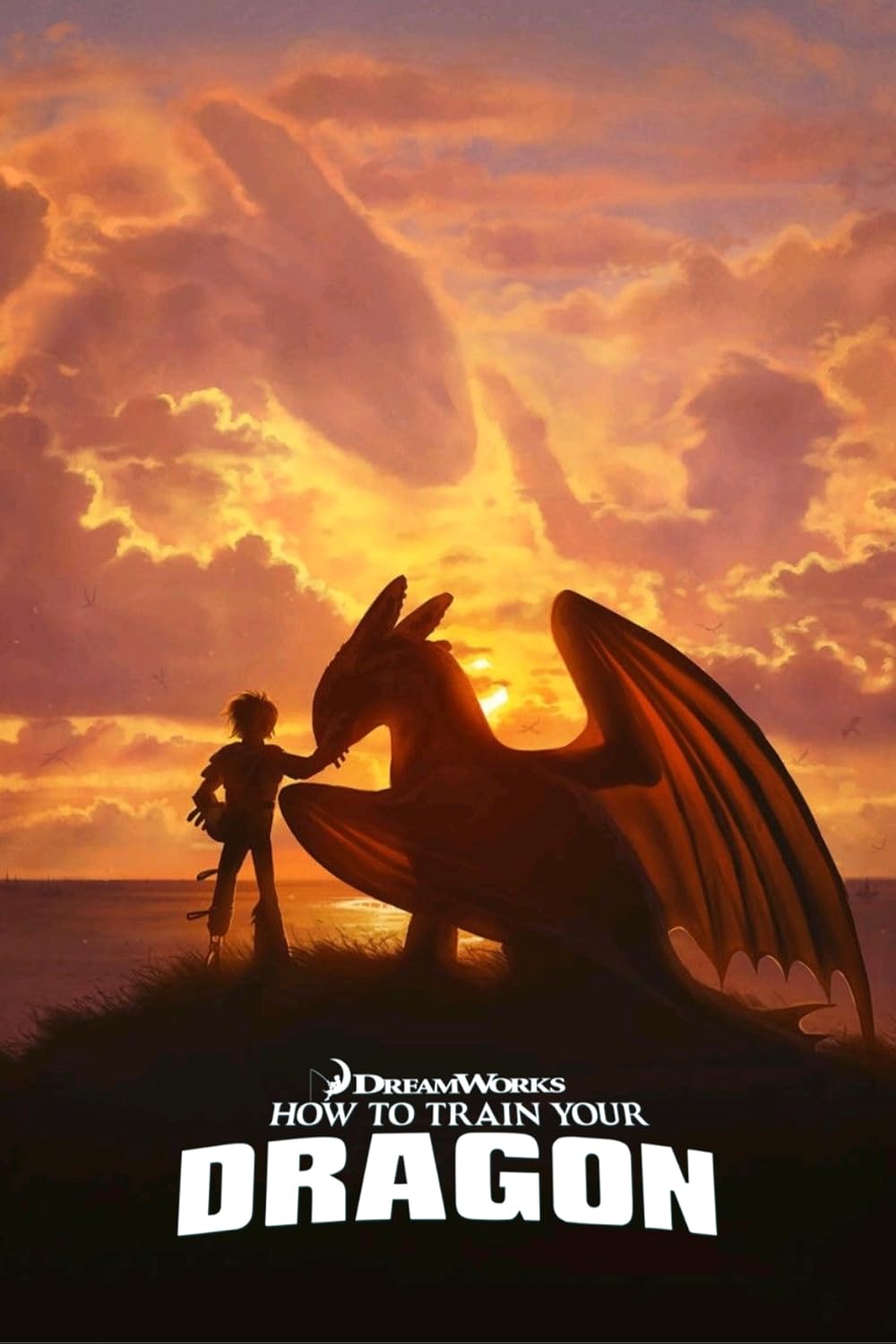
How to Train Your Dragon (2010)

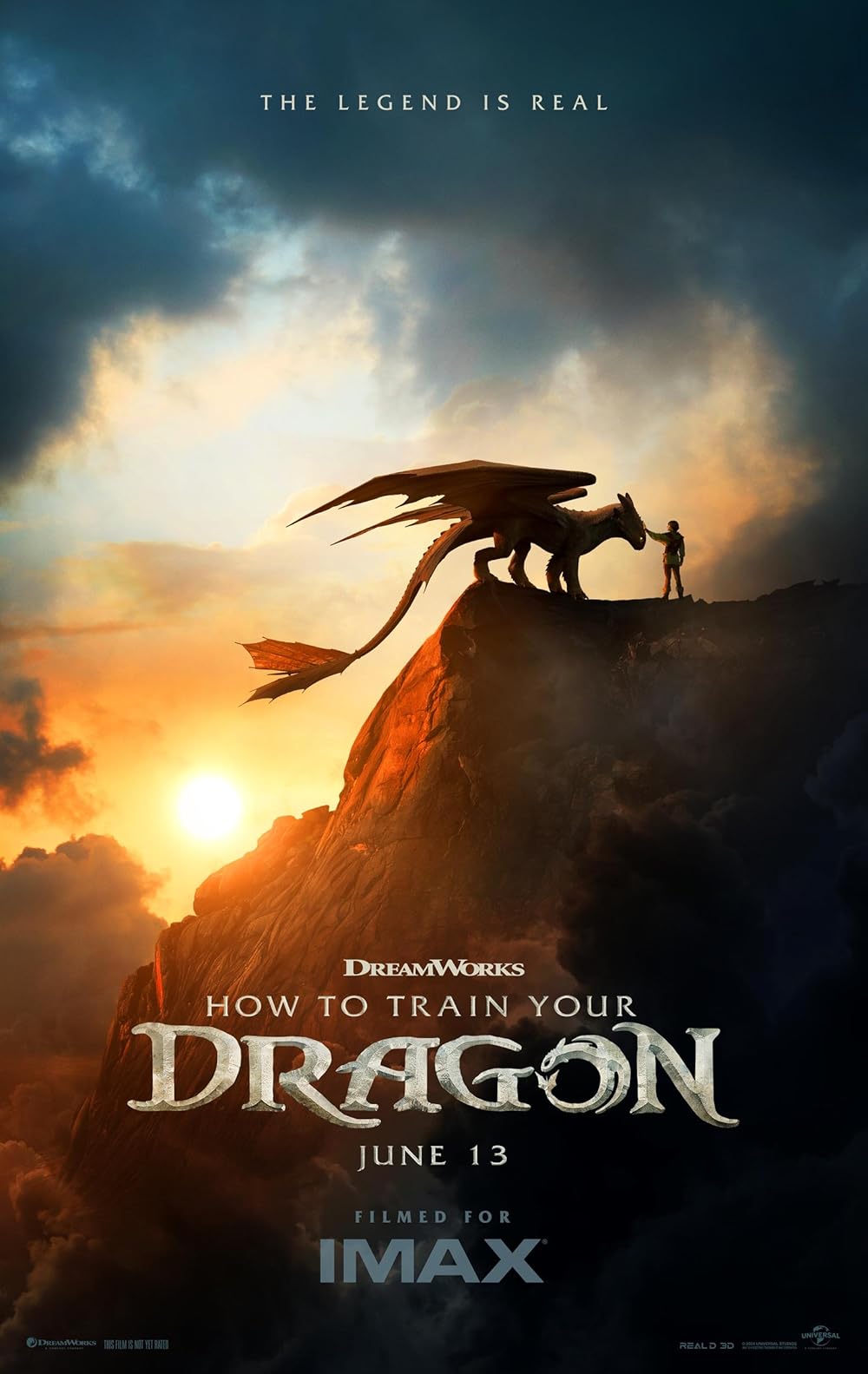
Fifteen years later, and also a remake, and I’m only just now seeing the original How to Train Your Dragon. In fact, it’s because of the remake. There are new toys, and my kids like dragons, so they have the new toys, which begged the question, shouldn’t they know what’s the deal with these toys? And Bob’s your uncle.

The plot twist [that I’ve already revealed] being, shouldn’t I know what’s the deal with these toys? Which brings me to a fun fact, in which I can objectively prove that previews are getting worse. I did not learn until 2025 that the dragons were nominally the bad guys of the movie. I always took it straightforwardly that the loser kid who never fit in found a way to be awesome via dragon training, not that he was supposed to be dragon killing this whole time! And I mean, it’s not really a spoiler for the movie, since you learn it during the opening scene narration. But I thought it was a clever subversion of the original previews’ expectations, and now the current previews are all, we cannot subvert anything, as our audience is dumber than ever. Or something like that. My point is, fuck[1] screw previews.

Anyway.

So there’s this Viking kid who is scrawny and engineering-minded, instead of being large and strong and (let’s say) single-minded. Which means he doesn’t fit in. Oh, sure, he still wants to kill dragons, same as everybody else, he just wants to use tools instead of muscles to do it. What a maroon! But once he actually manages to use said tools to get a dragon in a position where he can kill it, he… comes up with a new plan.

This is a kid movie, so the result of the new plan is that he ends up fitting in after all, and everyone learns a valuable lesson about accepting people for who they are. And, okay, as a parent, that’s a good lesson. Also, as a parent, I recognize that sometimes it’s a lesson parents need to learn as much as kids do. But the real point is, the actual plot underlying these lessons is at least halfway decent as well. Plus, riding around on a dragon is cool. I would not, I think, affirmatively recommend this movie to anyone unless you really like dragons and can live with kid movies, but I would not disrecommend the movie to anyone, if they were about to be in front of it. Because, you know, it’s fun!

[1] Family movie, I should watch my language.

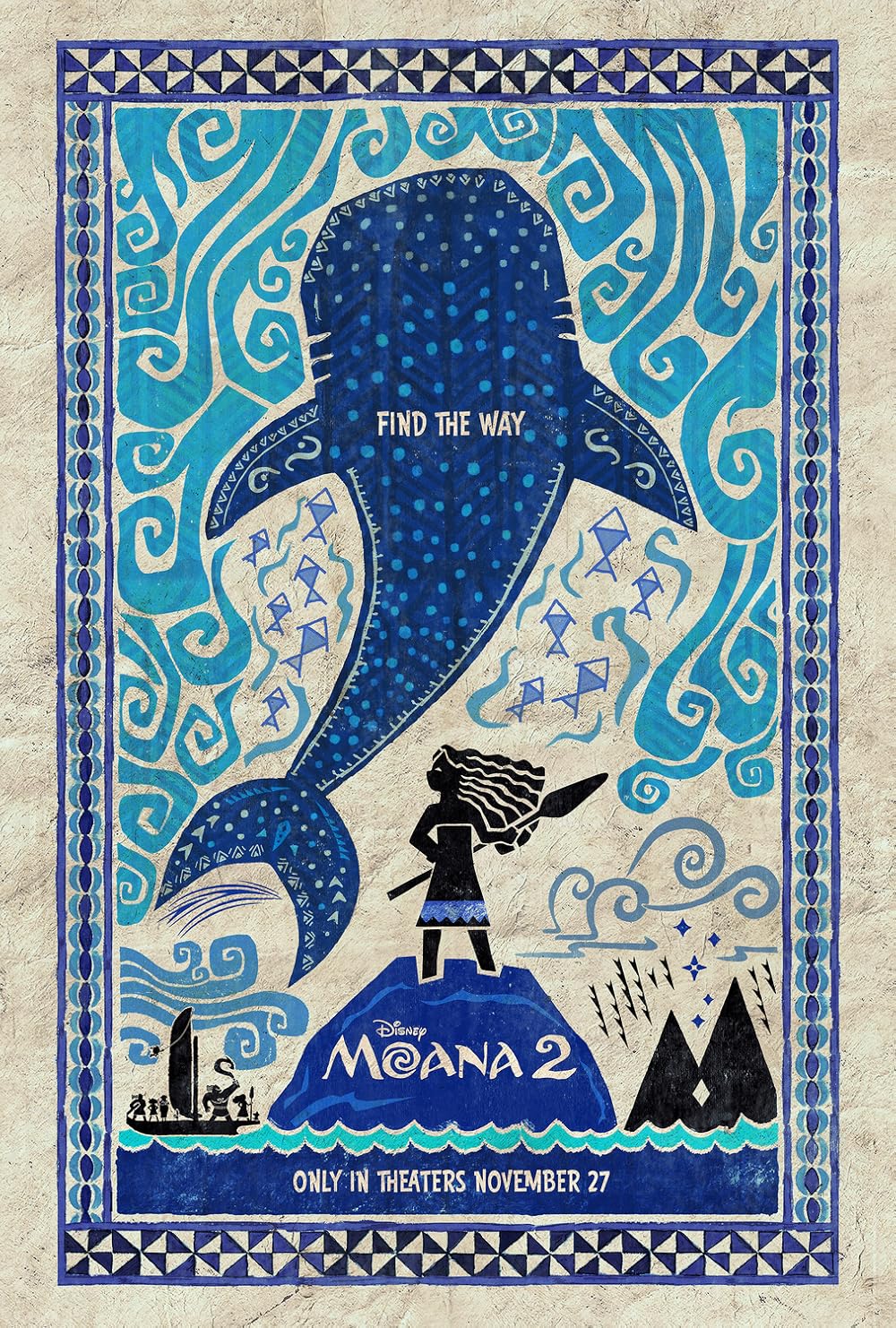
Moana 2

Exciting milestone: we successfully took the kids out to see a movie! The boy was entranced from start to finish, and only had one or two moments of “nope this is too scary I need to yell ‘stop!'”, which is tolerable in the scheme of things, especially for a kid-friendly showing with nobody else in the theater. Likewise, the girl was entranced, but not so much that she wasn’t also mobile. However, the furthest away she got was two seats down and on the floor peeking through the next row’s seats. Which, again, entirely tolerable under the circumstances.

Anyway, the movie we saw was Moana 2, as the original is a pretty big hit in the house. I don’t know whether these movies are based on any specific Pacific Islander legends, or a mish-mash of them, or made up from whole cloth to look authentic to people who are willing to shell out money to Disney. (Probably the second one?) What I do know is a) they are convincing and b) they definitely have that quality of good fairy tales and mythologies where you want to know what will happen next and it doesn’t turn out the way you’d expect.

But what I’m really here to talk about is the music, and there this movie was disappointing, albeit not in the way you might expect. Yes, obviously, whoever they hired to do the lyrics did not live up to Lin Manuel Miranda. Yes, obviously, the song they put at the end of the credits is the song that in the movie most closely evokes the main song of the first movie. (But honestly, it’s a little too much like Into the Unknown from Frozen II for my taste.) There was maybe only one song I did think I’d be excited to hear when the kids are listening to the Disney music station on Sirius for years to come, honestly. But none of that is my point.

My point is, usually Disney movie sequels are aggressively mid, so you’re allowed to not care much about what the music even sounds like in the first place. But Moana 2 is not only actually pretty decent (except for the music), but it’s also clearly setting up a trilogy. And if I have to care about the movie, then why couldn’t it have had either comparably good music or else not been a musical in the first place?

Knowing the answer to both forks of that question does me absolutely no good.

Cars

The boy has been watching Cars practically nonstop for the past four months. (Six?) But I didn’t ever sit down and watch it myself until this week. Common wisdom is that it’s a ripoff of Doc Hollywood, which would be easier to comment on if I, uh, remembered almost anything about that movie. I mean, the broad strokes, yes, in that a hotshot racecar|doctor learns that small town life is worthwhile and also falls in love. But I think I should be able to speak at a little more depth than that, to confirm or deny.

Anyway, at the end of the day, Pixar or not, it’s a kid movie, and unless maybe if you also are really into stock car racing (which I am not), it does not surpass its origins in the way that, say, parts of Up did. But it’s good enough to watch when his eyes light up like that, even if I think he should be watching Star Wars instead.

8-Bit Christmas

Back when streaming wasn’t a thing, A Christmas Story was such a popular movie that it would play over and over again for like a week straight on TBS, so people could just drop in and out and watch it whenever they felt like. In a strange albeit horrific and commercial-littered way, it presaged the very idea of streaming, at least for this one specific movie.

8-Bit Christmas is essentially Neil Patrick Harris narrating to his daughter his childhood attempts to bag a Nintendo Entertainment System near Christmas, one year in the late ’80s. It is episodic, sweet and heartfelt, and might otherwise become a classic if that kind of thing were possible anymore in such a diverse, fractured field of infinite entertainment options.

Basically, to bring my point back around to an otherwise extraneous introductory paragraph, A Christmas Story was an early ’80s movie about life and the holidays in the 1940s. This is an early ’20s movie about life and the holidays in the 1980s. I’m not saying they’re the same movie, but that’s mainly because I was alive in the ’80s and not the ’40s, so it’s hard to detect if ACS was telling lies or not. 8BC isn’t, though.

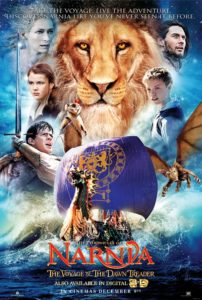
The Chronicles of Narnia: The Voyage of the Dawn Treader

After recently rewatching the other two Narnia movies[1], I have now proceeded to watch for the first time The Voyage of the Dawn Treader. This was one of young me’s favorite books, in retrospect because of how it involves episodic exploration of unknown parts in which random events occur. Examples: captured for slavery! found invisible monsters with weird tracks! cursed dragon hoard!

And I guess what I think is, without a cohesive throughline, that’s a bad look for a movie? Because “we’re sailing to the edge of the world and also looking for some lords who went this way before, because of some plot thing or other with green mist that frankly none of us[2] can be bothered to really remember well” is not a cohesive throughline. But it’s a perfect long-form episodic throughline, where you talk about the so-called main plot for maybe five minutes every other episode but mainly focus on the island of the week.

As far as the nuts and bolts of the movie… Aslan: mainly around to tell Lucy she should like herself for herself instead of wanting to be glamorous and older, and to take all the credit for making Eustace[3] a better person, even though let’s be real, it was finally having a friend that turned him around. Because Reepicheep is the best mouse, is what. But despite an interlude about heaven and who deserves to be there and when, the Christian trappings of this movie were… no, I’m doing this wrong. Christian trappings were all over the place, but at the expense of any actually useful Jesus values like forgiveness and loving your neighbor.

Ugh. Christian trappings. Goddammit.[4]

[1] They’re… not great. Like, my reviews might speak well of them? My counterpoint is “seeing this book for the first time on a screen” is its own special thing that takes away from noticing that it’s still only okay. And here I refer only to the first one. The second one is nowhere near as good as that.
[2] Okay, maybe me more than them. I would normally here say, well, maybe I was just too busy with work to pay attention. But I watch really a lot of TV and a good number of movies while working, and actually keeping up with the main plot has never been a problem before. So there’s a decent chance that the lack of new sequel was for a good reason.
[3] Eustace is a Pevensie cousin who is a right twit, until later when he is improved by the power of Narnia. If Aslan wanted to teach a Pevensie a lesson, it should have been teaching Edmund that, you know what, you were a right twit once upon a time too, so maybe cut a bro some slack? But CS Lewis is more offended by girls who want to use make-up and date than he is by toxic masculinity, and so here we are.
[4] get it?

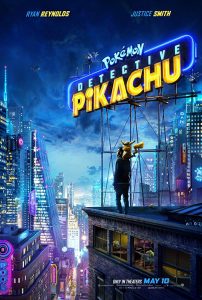
Pokémon Detective Pikachu

During the credits for Detective Pikachu, I learned that the movie was based on a video game of the same name, which I had not been aware existed. So I guess this is technically a video game movie? Well, I guess Pokémon in general are from a video game, so that’s not really a revelation after all. Nevermind.

This is a kidmovie, mainly inasmuch as Pokémon is a kidgame. The good thing about this is that it doesn’t really reveal its colors until the too-neat denouement, and if I’m being realistic, lots of movies are wrapped up with a bow that are not strictly speaking aimed at kids. Still, this was, and its too-neat bow-wrapping was definitely kid-oriented.

Except for that, it turns out to be really good? Well, important caveat: if you like the tiny pokemen upon which its hat is hung. I am just barely the target audience for this movie, mostly because of all the Pokémon Go I’ve played. But they did an incredible job both of making the creatures that I guess replaced animals in the evolution of this particular world seem completely alive and real and part of the scenery, and also of giving those creatures personalities that were, at least on a per species scale, unique and identifiable. Okay, the last thing sounds less cool than it is, because there’s not much involved in making a monkey pokeman act like a monkey. But trust me: they did an amazing job of bringing the world to life, in every particular.

The plot? Well, our hero, Tim Goodman[1], who has given up on his dreams of being a Pokémon trainer to start a career in insurance, goes to a place not literally named Pokémon City to investigate his policeman father’s mysterious death. Well, no, to settle his estate, there’s no way the guy I just described would be investigating anything, except that his father’s Pokémon partner (everyone in the city has one, it’s not a cop thing) is Ryan Reynolds wearing a pikachu suit and a detective hat. Together, they… well, you know. Like I said, it’s a kidmovie at heart. It’s just a really excellently executed one, if you are down with the P.

[1] No, really.

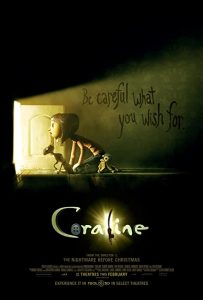
Coraline

You would think that I’d have already read the long-published book Coraline, by Neil Gaiman. I mean, he’s awesome, right? But by the time I got my hands on a copy, I already knew there’d be a movie coming out, so I’ve put it off. Of course, I kept not seeing the movie, too, which really threw the whole thing out of whack, but Wednesday rendered itself convenient, and now I can at least put the book on my shelf.

Coraline is one of those cautionary fairy tales about the dangers of skipping out on the hard parents who have your best interests, in favor of the easy ones who probably have a catch. Unfortunately, the movie failed this test by making Coraline’s parents all too unlikeable, with only a hint of the tough-but-fair paradigm I think (or at least hope) they were trying to portray. Coraline Jones and those parents have just moved into the ground floor of a rental house out in the country, where they can pursue their dreams of writing gardening books, dreams which are made ridiculously implausible by their shared dislike of dirt. Of course, the larger issue is that they’re stressed out by their lack of success and resultantly treat Coraline more like an unwanted distraction than a beloved daughter. All of which would turn into a distressingly heart-rending After-School Special except that there’s a tiny, walled-over door in the rental house’s parlor which leads to a mirror world, through a glass brightly, if you will, where Coraline’s parents dote on her and are excellent cooks, and every tenant and local are present solely to entertain Coraline in a variety of kid-friendly ways, with just the correct hint of faux-danger. In short, every child’s dream come true, much less any child living under the whiff of neglect, and possibly a bit more than a whiff, that Coraline is.

Here’s the good news. Although the cautionary portion of the tale is undercut by her parents actually being kind of harsh, instead of merely not the picture-perfect givers that self-involved kids inevitably want, the fairy tale sense of mounting dread and rich climactic action are spot on. Plus, y’know, 3D, which never seems to suck. Because, of course Coraline’s button-eyed Other Mother is different from how she initially seems. (I distinctly remember mentioning, y’know, fairy tale.) Additionally, the cat is just delightfully… cattish. I can’t say what comparison there is between book and movie, though I understand from Fresh Air that one character was created entirely for the flick. But that cat has all the right notes that makes me certain Neil wrote him first. He just understands cats like nobody’s business.

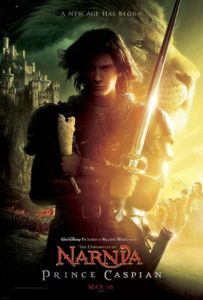
The Chronicles of Narnia: Prince Caspian

I finally saw Prince Caspian over the weekend, and it was kind of a weird experience. As a fantasy adventure movie, it kind of works. All those kids from the first movie are magically summoned back to Narnia when Prince Caspian, marked for death by his usurping uncle, stumbles across Susan’s magic get-out-of-jail-free horn where she dropped it in the woods while trying to escape his uncle’s army and blows it.[1] Or, considering he wouldn’t have known to, maybe someone gave it to him instead. Or maybe he didn’t know and was just hoping someone would show up to save him? I’m not sure.

Anyway, there they all are, and it’s been over a thousand years and their whole castle is fallen apart, because evil Spaniards (who we call Telmarines) attacked and subjugated Narnia quite a while ago, driving the magical creatures and talking animals so far into the forest that they are believed to be extinct, plus nobody has seen Aslan in pretty much that whole time. Although Caspian is heir to the Telmarine throne, the fact that his people want him dead and that plot necessity demands it combine to get all the Narnians willing to support him. His enlightened reign, he promises, will see his people and the Narnians peacefully co-existing, which one supposes is better than hiding so well everyone thinks you’ve died out.

Then he and the Narnians and the Pevensie kids (aka Kings and Queens of Narnia, aka Peter and Susan and Edmund and Lucy) all get together and have a war against Uncle Miraz and the Telmarine army, with mixed success, all culminating in a grand finale of some kind, as movies often do. So, yeah, that worked.

As the Christian metaphor that one expects from the Narnia property: well, mixed success fits well here, too. There’s a bit about not making a deal with the devil, even if it is the devil you know. And there’s a bit about not ignoring God’s little nudges in your life. Which, okay, I suspect that they maybe aren’t as obvious as seeing a lion waving you over, but that’s how metaphors work, so fair enough. But even though most of the failures in the movie were blamed on not following Aslan, as is a good and proper metaphor, the fact is there was just no real way to tell what it was that Aslan wanted of them. He just sat around waiting for things to be terrible, and then rolled in to save them all, while proclaiming that the whole point of not coming and saving them to start with, as he’d done in the previous movie, is that things aren’t ever the same twice. Except really, what he did was exactly the same, because, after all, the whole point of the metaphor is that ultimately you can’t face the evils of the world without Aslan there to carry you down the beach some of the time.

I mean, if they’d made a show of “I didn’t help you because you never asked me to”, that at least would have been a prayer metaphor, and I could get behind it working, pretty well in fact. But I mean, there was no show. And by ‘show of’, I mean not even a single line of dialogue, which is approximately how much it would have taken. Maybe another line or two of reaction, but this is not a long conversation I’m describing here. This also might have tied into the part where nobody in Narnia really believes in Aslan anymore, since nobody has much seen him in the past millennium, although at the same time, I imagine that the Narnians were looking for him to come help back when the war started and their castle was being smashed and they were doing the extinction-hiding and it had been less than a thousand years since anyone had seen him. (I mean, I don’t know how long, but this is the 10th Caspian, so it’s been a little while.) And since he obviously didn’t show up to help out then, well, that would kind of hurt the metaphor a bit, I guess.[2]

Also, the above review probably contained spoilers, and if you care about such things, you should not have read it.

[1] I just reread that sentence, and as much as I considered rewording it because it loses track of proper antecedents at least twice, I choose instead to let it stand as a monument to my awesome clarity of communication.
[2] I just remembered another complaint. It bothered me when they said that Narnia is only ever right when a Son of Adam or Daughter of Eve rules the country. Even though I understand the whole ‘man shall have dominion over the creatures of the earth’ thing, it’s just, these are centaurs and talking mice[3] and morally conflicted dwarves, and they all seem to have agency, you know, so the concept comes off a lot more as White Man’s Burden to show up from a different, far away place and take care of the poor misguided natives so they don’t screw things up too badly than as the Genesis metaphor that is apparently intended.
[3] To be clear, Reepicheep was in fact awesome. So that’s nice.
Season of Mists

The Sandman, I said. And I meant it, because that is some damn fine literature. I read the series in 1996 or so, right after they’d all been published as graphic novels, and it was a hell of a ride. Observant visitors may notice the domain name, and wonder if it is a coincidence. (It is not. That’d be pretty funny if it were, though.)

What I didn’t ever do was own them. So, over the past few years I’ve been snagging them one at a time as the mood strikes me, and then reading them gradually at whim, not really part of a reading list schedule. The first few books are highly episodic in nature, with introductions to characters and the setting taking up a lot more space than ongoing storylines (although there’s no question that there are a couple of very solid ones). The upshot of this is that I haven’t felt compelled to review any of them yet. But over the past week, I read Season of Mists and it all fell into place. To the point where if I had income, I’d just buy the rest of them right now and take some time. But I do not, so enough about that!

I’m loathe to summarize it, in that I feel I can only damage the pristine beauty, but here goes: The Lord of Dreams attends a meeting with the other members of his Endless family at which he is goaded into righting a long-ago committed wrong, and in the process he receives a most unwelcome gift.

Having read the series before, I can also say that this is where most of the seeds are planted for remaining arc of the story, which could explain my hankering for the remaining volumes just now. The standard high quality of art rounds off the experience, which should be shared by everyone. (Incidentally: I’m caught up now. Yay!)