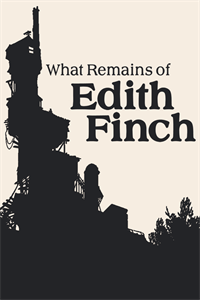
 I played another entire game over the past few days. This is so so weird. (Which I say every time I finish a game, I know. But it is! Especially relative to how long it’s been since I finished a book[1].)
This time, What Remains of Edith Finch, which is another plot-heavy / game-light exploration game in which … you know, I’m not sure I’ve ever seen a game like this, except, minimally, Gone Home. Edith Finch has, um, returned to her ancestral dwelling after the death of her mother and the receipt of a mysterious key, which grants her access to the majority of the house, which has been sealed up and inaccessible since before her earliest memories.
What follows is an exploration of generations of Finch family history and the simultaneous exploration of a truly ridiculous plus awesome house, with mysteries galore. There are elements fantastical, elements tragic, and elements personally very uncomfortable. If you want trigger warnings, you should expect that most things people get triggered by (besides inflicted violence) will be in play.
It’s barely a game in the way that all the things which fall into this genre are, in the sense that there are minimal choices to be made; you only move forward through the sparse and lonely plot. But it was a plot full of people and events I cared about, which is what I was looking for.
[1] Outside of a specific reading schedule
 So far, my favorite thing about Xbox’s Game Pass service is that it gives me the freedom to try things out that I cannot otherwise convince myself to pay for. To wit,
  Cool thing about finally reading
  There’s something to be said for a tidy, self-contained monster movie. I mean, look at Alien!
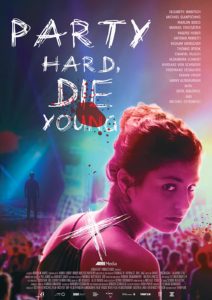 There are two kinds of slasher movies. The first kind is a gradually building sequence of events and accompanying tension in which targeted characters first learn that murder is on the menu and then over the remainder of the film try desperately to stay alive long enough to find out who is behind the murders, in the hopes of saving themselves; this of course does not work for virtually any of them, but that’s the tenor of the semi-genre. Examples: Friday the 13th, Friday the 13th: A New Beginning (aka part 5), the majority of one-off slasher films.
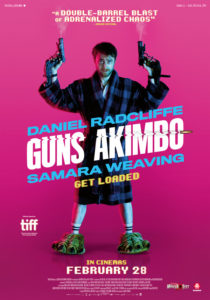 I have heard of
 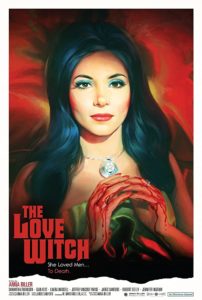 Movies in the ’60s were weird. Because they had all these eye-popping colors, and would film people in sharp focus while driving and the background looked like completely different film stock, even though I think it was actually real instead of matted, and everyone’s performance was very earnest and serious, like the fate of the world depended on finding a new boyfriend or solving that mysterious murder or discussing whether feminism is worthwhile in the modern world. No naturalism to speak of in really any aspect of a ’60s movie, is I think my point.
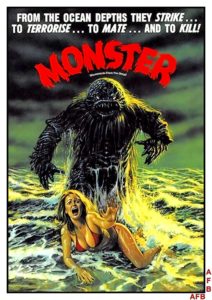 I cannot justify any claim that
 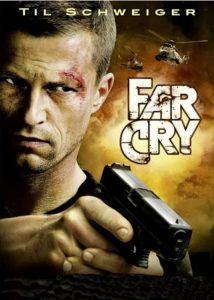 You know the rule about movies that you can’t make a good adaptation of a video game? It’s not 100% true, but it sure mostly is. I’m pretty sure I played the video game
 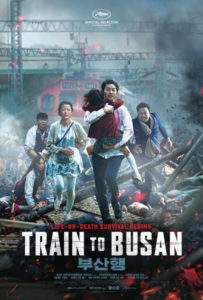 It’s no secret that I love a good zombie movie, which I define as one in which the zombies act as a setting upon which the truth of the characters is revealed. I freely acknowledge that this setting is, in the vernacular, “played out”. I should clarify, as I think that usage mostly means, ugh, zombie makeup and biting people, whereas what I mean is that there may not be anything new to say about the truths of characters in that apocalyptic situation.