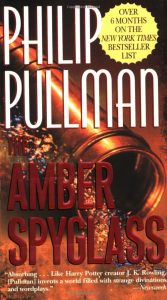
 All things considered, I’d rather live in the parallel universe where Philip Pullman wrote a better conclusion to his fairly nifty parallel universe trilogy, His Dark Materials.
I suppose I’m obligated to say more.
So, despite my continued enjoyment of the main characters and their struggles, most of what’s left went way, way downhill at the end. The Church badness got more cartoonish than ever. The climactic battle was barely a battle and in no way climactic (although it did have a satisfying Cost associated with it). Dangers to the characters were consistently resolved in deus ex machina ways, which is incredibly ironic in this particular plot. Several interesting things happened, but seemed to be only tenuously related to the previous two books of storyline. And even now, I have no clear idea who He is, nor what His Dark Materials are, or whether I should be concerned about them, happy, or something else entirely.
Could some of this be my problem and not the author’s? Sure, I suppose it could be. But I like my odds. I’m inclined to say that two books were squashed into one to achieve trilogy status. Which I suppose is a nice change from one book being extended to three, but ultimately, the reader suffers either way. One book in one book’s worth of pages, please.
I did like the titular amber spyglass and in fact the entire storyline associated with it. Except for the part at the end, where Lyra is supposed to be tempted like Eve was. I think I can cobble together a pretty good explanation of the temptation, the choice, the outcome, and all that, but I disapprove of the fact that it didn’t play out the way it was prophesied to earlier in the book, because it left me thinking that the point of the whole series had never actually occurred. There I was, waiting for event X, and event Y happens instead, the book ends, and I have to spend the next day or so working out that, no, that really was what he meant, he just forgot to write the part where it was in any way related to the characters I had been promised would be involved.
Looking up, I feel like I ought to include spoiler protection, except that if it never happened, how can it be a spoiler? And also except for the fact that the above is a jumbled, barely literate mish-mash of words that mean essentially nothing, and will probably even confuse people who have read the book, much less people who haven’t. If it helps any, this matches my own state of mind when I passed the climactic chapter and reached end-story land. Without the story, y’know, ending.
(Also, I was not particularly satisfied with how the story did end, but that is not the fault of the author and so falls outside the boundaries of this particular review. I can easily see how it could be satisfying to people who are not me.)
 The first good thing I can say about
  Last night, I got around to hooking up my new computer speakers. Once you have an upgrade like that, your only choice is to dig out a new game. Conveniently, I had an old new game laying around, in the form of
 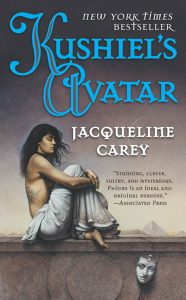 One of the unfortunate things I’ve run into while doing this is just how many series of books I’m in the middle of. It seems like every other book I review, I have to go back and review the rest of the series, too. It’s not like I can assume that just because I’ve read the earlier books, everyone has (although I only do this with the first book I review of a series, which implies I assume that any reader is intimately familiar with the contents of my endeavour here, and what does that say about me?), and so I have to review the series at the same time as the book. (Note to authors: this is not a valid excuse to recap your entire series in the process of writing each new book. Assume we’ve read the earlier ones. Please.) Still, the number of series I’m in the middle of with no review yet is shrinking, so that’s nice.
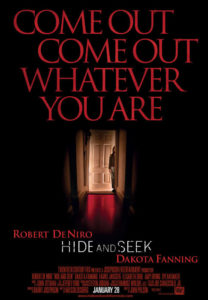 The thing is, this was a good movie. Several inevitable games of
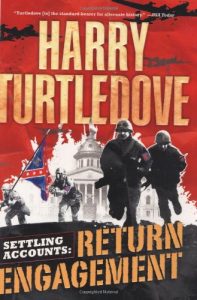 I think half the fun of alternate history writing comes from the winks and nudges that the author is able to give the informed reader about the parallels and outright differences between what got written and what really happened. Not that this is hard to achieve in a Turtledove novel; he’s the genre’s Grisham, writing alternate history for the masses, which means that he’s not really writing beyond the high school history level on most occasions. There are certainly things to spot even for more informed readers, but they’re rare. (Or else, I’m insufficiently informed; that’s likely.)