Tag Archives: folk horror

The Reckoning (2020)

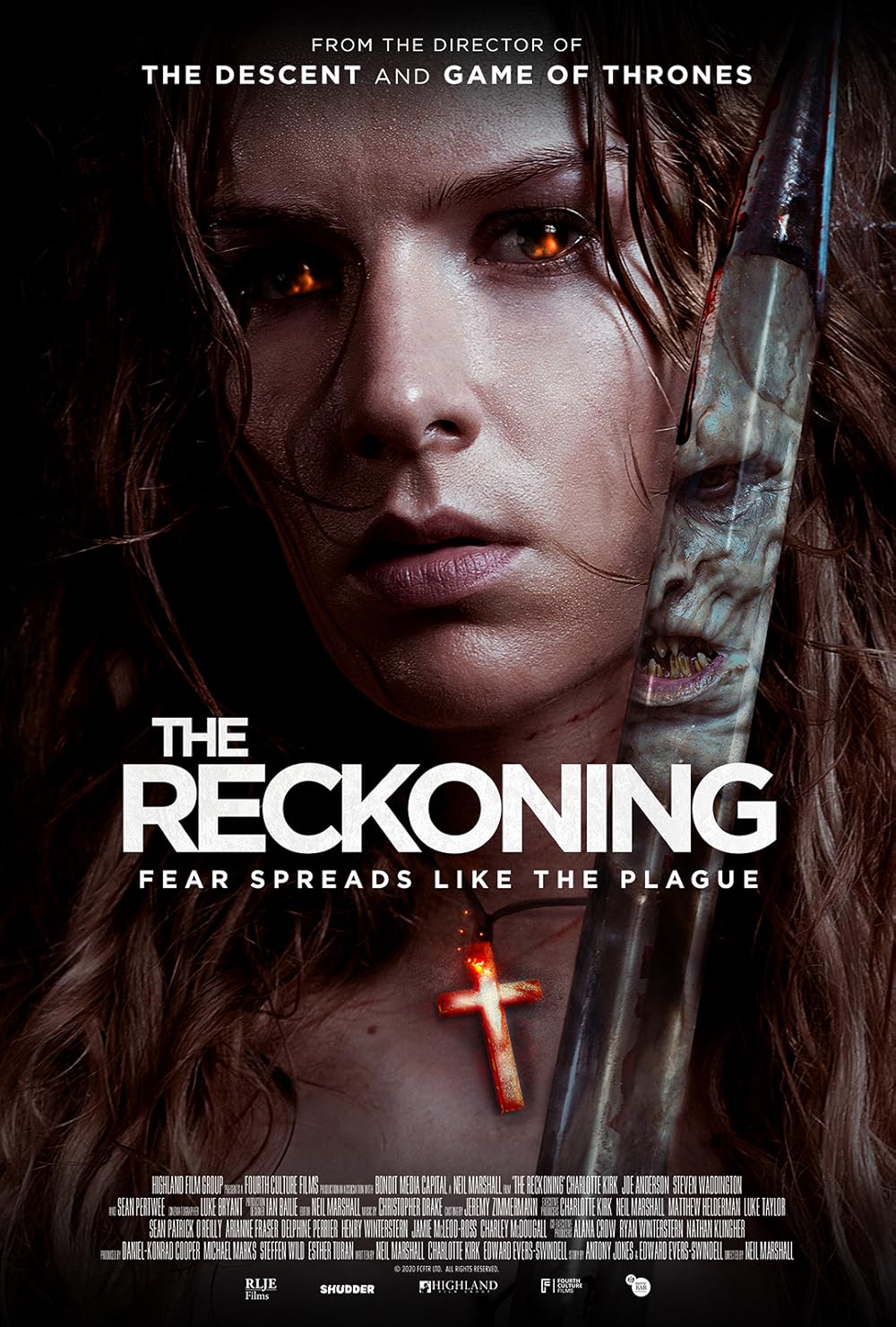
It’s easy to forget, living in the country that spawned the Salem Witch Trials, that other places were equally terrible to women in (especially but certainly not exclusively) the 17th century. Take England. Imagine you’re a squire, which is apparently a term for a landholder, not just someone who carries things for a knight. People all over are dying of the plague, and for some reason you want back a parcel of land you’re renting out. The only thing standing in the way is the family you’ve rented it to. Now imagine the husband gets the plague and dies, and now it’s only the wife and infant daughter, but the wife has paid for the next six months of rent up front. And yet you still want the land. If only there were some way to… oh, wait, no, she’s probably a witch, right? Problem solved!

The Reckoning is about what happens after Grace stands accused of witchcraft. There’s a witchfinder, and there are implements of torture, and there are public hearings, and there are family schisms, just really all the things you would expect out of obviously false accusations of this type, you know? I at first was afraid we were headed towards Hostel: The History of Europe, but none of the torture scenes (well, after the initial public flogging) are lingering and visceral, they are there solely to make sure you know they happened.

The heart of the movie is the face-off between Grace (the witch [let’s say]) and the witchfinder with whom she shares a past. Each is certain of their facts, and each is certain of the strength of their will. And the drama of that, er, reckoning is enough to carry the movie. Honestly, at almost two hours, the movie overstays its welcome any time it strays from that central conflict and the secondary conflicts surrounding it to explore the stuff in Grace’s head.

Her… visions? delusions? hallucinations? temptations? serve only to confuse the question of whether she might in fact be a witch after all, which I think strongly undercuts the story’s entire purpose. Also, they are aggressively sexualized in a way that simply doesn’t fit the surrounding events. I am never opposed to sexualization and also nudity in the service of the plot, and rarely for that matter does the gratuitous type bother me either. I think what failed here is that it was not meant to be gratuitous, and yet there was no way for me to take the scenes with the gravity they were portrayed without, like I said, completely fracturing the movie’s central thesis.

The fact that I still think it’s a good film, despite that previous paragraph, should be taken as a pretty solid endorsement. I have only one caveat, but it would completely spoil the ending, and so I bite my tongue and still mostly say, yeah, check it out.

Boys from County Hell

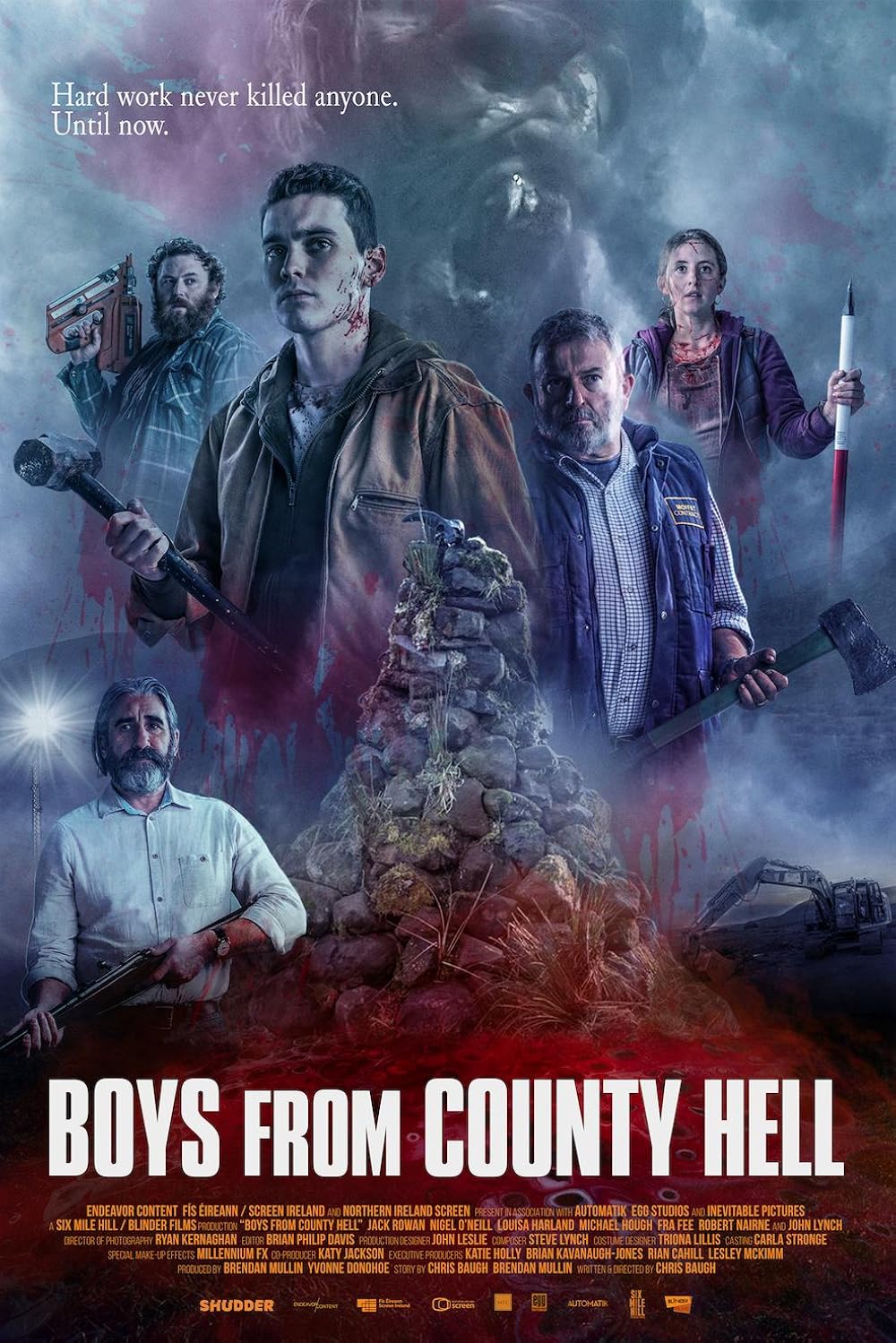
Imagine a small town. The kind everyone of a certain age who lives there wants to escape from, and within a rounding error of nobody ever actually does. Imagine the young men and women of that certain age, yearning for freedom. Imagine they’re in Ireland, and their town’s claim to fame is Bram Stoker tourism.

Now imagine there’s a cairn in the middle of a field, and legend says someone, or something, is buried under it. Something you wouldn’t want to run into at night, if you take my meaning. Also, the land is being sold for development, and one of our Boys from County Hell sees helping on the construction of that development as his ticket out, even if it means knocking over a few old stones, you know?

Once all the setup was finished and the main action commenced, I simply could not stop feeling the influence of Shaun of the Dead. Yes, vampires instead of zombies, but between the exotic UK accents and the slapstick absurdity and the occasional gore… yeah, there’s no way it wasn’t an inspiration. I daresay this is… well, it’s not a successor at all. I liked it, but come on. Shaun is just one of the best. And I don’t think they were going for homage. But I daresay the movies are having the same conversation with the audience, and this one is worthy of being in that conversation.

Perempuan Tanah Jahanam

I think I like the Indonesian title better. “Woman of the damned land” is kind of badass, you know? Whereas, I cannot really determine what Impetigore is supposed to mean. My best guess is that it’s a portmanteau of the Latin “impetigo”, meaning to rush upon and attack, and “gore”, meaning buckle up and get ready for buckets of the stuff. And I’m sure that by Indonesian standards there was rather a lot of the stuff? Nah, that’s not fair. Whatever else this was, it was not a tame movie.
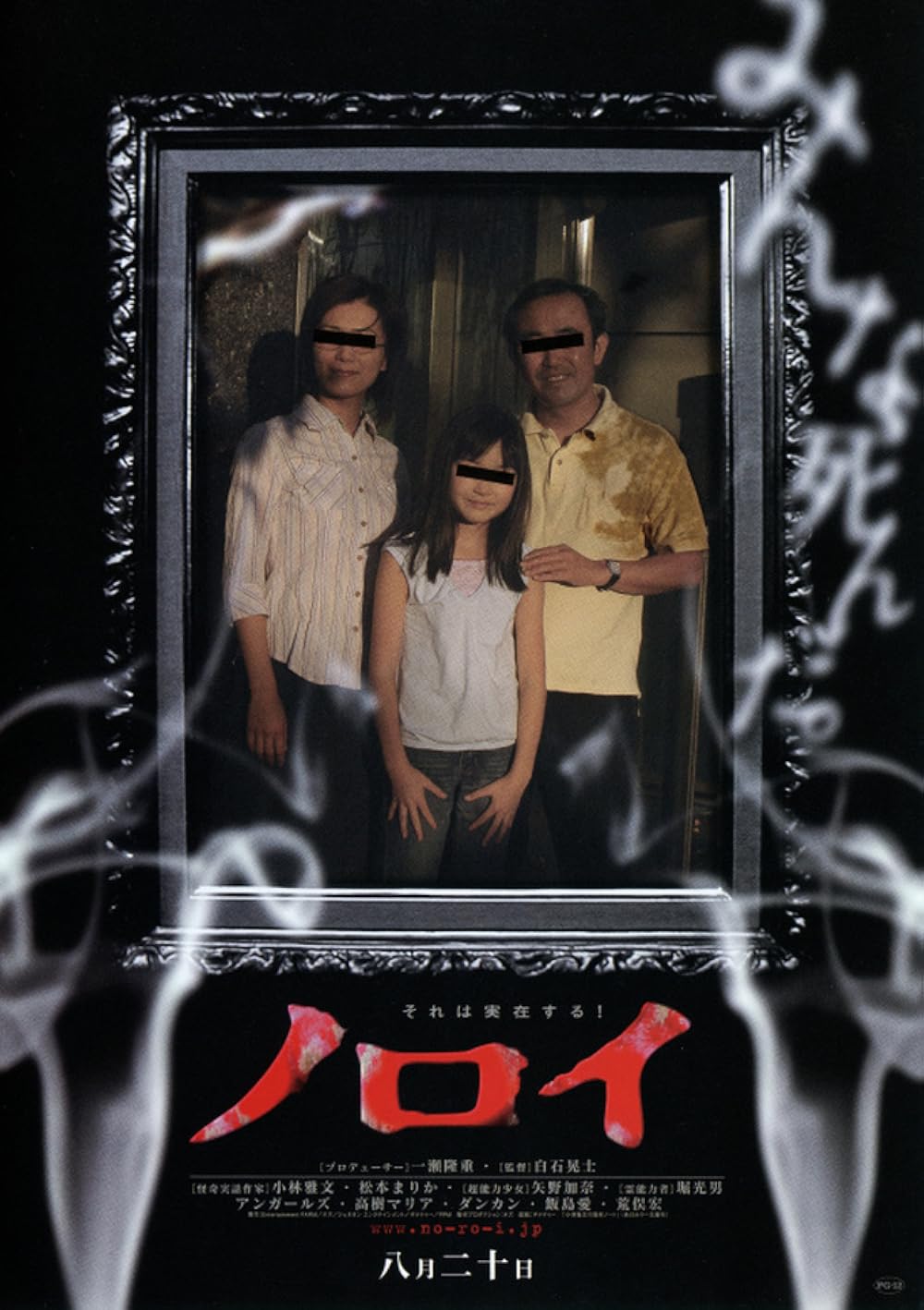
Imagine, if you will, that you are a broke-ass tollbooth attendant trying to determine how to make ends meet with your best friend who is also a broke-ass tollbooth attendant, only she’s a little more worldly than you are, and there’s been this creepy guy perving on you for a few days in a row, and now he’s identified you as a person with a different name from a village so small it isn’t on the map, and also tried to kill you with a machete because they in the village don’t want “your” curse anymore. So you dig through stuff your aunt left you when she died, and find indications that your long dead parents did in fact come from that village, and they have exactly one picture of you, when you were five right before they died and you went to live with your aunt, and as if it weren’t weird enough to only have the one picture, that picture has the name the machete-wielding perv called you by.

If I were that girl, I’d maybe run away from Indonesia or something? Not her. She sees the big expensive house in the background, and, remembering that they are both broke-ass 20-somethings, they decide to hare off to the remote village so they can sell the house and stop being quite so poor, even if the village is populated by the kind of dead-eyed people you would expect to find in Resident Evil 4.

All’s I’m saying is a) that is a really good setup, and b) between this and Satan’s Slaves (by the same director and producers), it’s fair to say that Indonesian horror cinema is having a moment.

Lastly, I have a thing that I do not know if I learned about Indonesian culture or that I learned about the writer or director of the film, or a thing that I learned about the makeup effects artist. But seriously a lot of people, with moderately implausible frequency, threaten suicide, and suicide of a very specific type at that. This is where I need a Joe Bob Briggs to come along and do my research for me and explain which one of the above is at play here.

Gwen

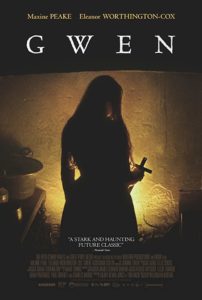
So there’s this movie called Gwen, in which Gwen and her sister and her mother, and also her father (in flashbacks mostly), wander around the hills of 1850s Wales, either being happy when they’re all together or moody and atmospheric and brooding when they aren’t. Also, some other things happened?

The sad part is, I’m not even joking. I watched this movie a day or two ago[1] and kept trying to pay attention to it, but realized at the end that I legitimately had no idea what had happened, outside of my description above and one or two specific events untethered from any ongoing narrative, like, oh, those neighbors died of cholera, or, huh, all the sheep are dead.

So instead of writing a probably unfairly empty review saying that, I watched it again this afternoon. This time, I felt like I really had watched the whole thing, and I for sure picked up a lot more. Is it all a land grab? Is the mother crazy? Or possessed? Is there a mysterious third party causing all these problems? Like, there was nearly enough plot there to mix in with the moody atmosphere[2], but then I watched the climax of the movie, and, uh… what?

So I went and found the Wikipedia summary of the movie, and sure enough, I missed nothing at all. The stuff that happened is just the stuff that happened. Which is to say there’s a subplot I did not mention above because it did not seem to be the main driving force of the film, but then haha surprise I guess it was.

I think I’m trying to talk myself into having hated the movie, which I did not do. I’m not even unhappy I watched it twice. But it is for certain not the movie that I wish it had been. Because what I understand this to be is a tripod of beautiful and unsettling and prosaic.

[1] I don’t even know which. Time, man.
[2] Folk horror, they’re calling it. The Witch is another such example, and at least there I understand why that appellation applies? This was also a limited cast, moody photography, and minimal dialogue, but I’m not sure that makes it “folk”, in the sense of folk tales I had previously assumed.

The Witch (2015)

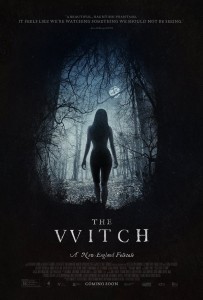
MV5BMTY4MTU2NjMyNV5BMl5BanBnXkFtZTgwMzUwMDk4NzE@._V1__SX1859_SY893_For reasons not known to me, The Witch was brought back into broad release this weekend, and I finally managed to find company to see it on Monday night (extremely late, but that’s what 5 hours of energy in a tiny bottle are for). It’s a thin movie, lacking quite a bit in plot and premise, but extremely meaty on execution. All of the actors were solid and believable, even when their motivations or reactions to what was happening around them bewildered me, and the young twins were just incredibly creepy.

In case you don’t know anything at all, this is a moody 17th century piece about an isolated family dealing with a number of severe setbacks all at once, as the last dregs of harvest season threaten to give way to winter. They may or may not (but definitely will) suspect deviltry and witchcraft is behind the string of ill fortune, and then… but, like I said, it’s a thin movie, so any “and then” I could follow this up with pretty much completes the film.

Between the lingering shots of the small farm and the forbidding forest beyond it, the total isolation, and the spare, screeching soundtrack, it feels like horror by way of the ’70s art film scene, or maybe Kubrick if he’d ever made a movie where every single shot failed to contain an onion’s worth of hidden meanings. Other than an ending that outstayed its welcome, I have basically nothing bad to say about this self-described New England folktale. Mood, acting, and cinematography can carry a thin plot a long way.