Tag Archives: dystopian fiction

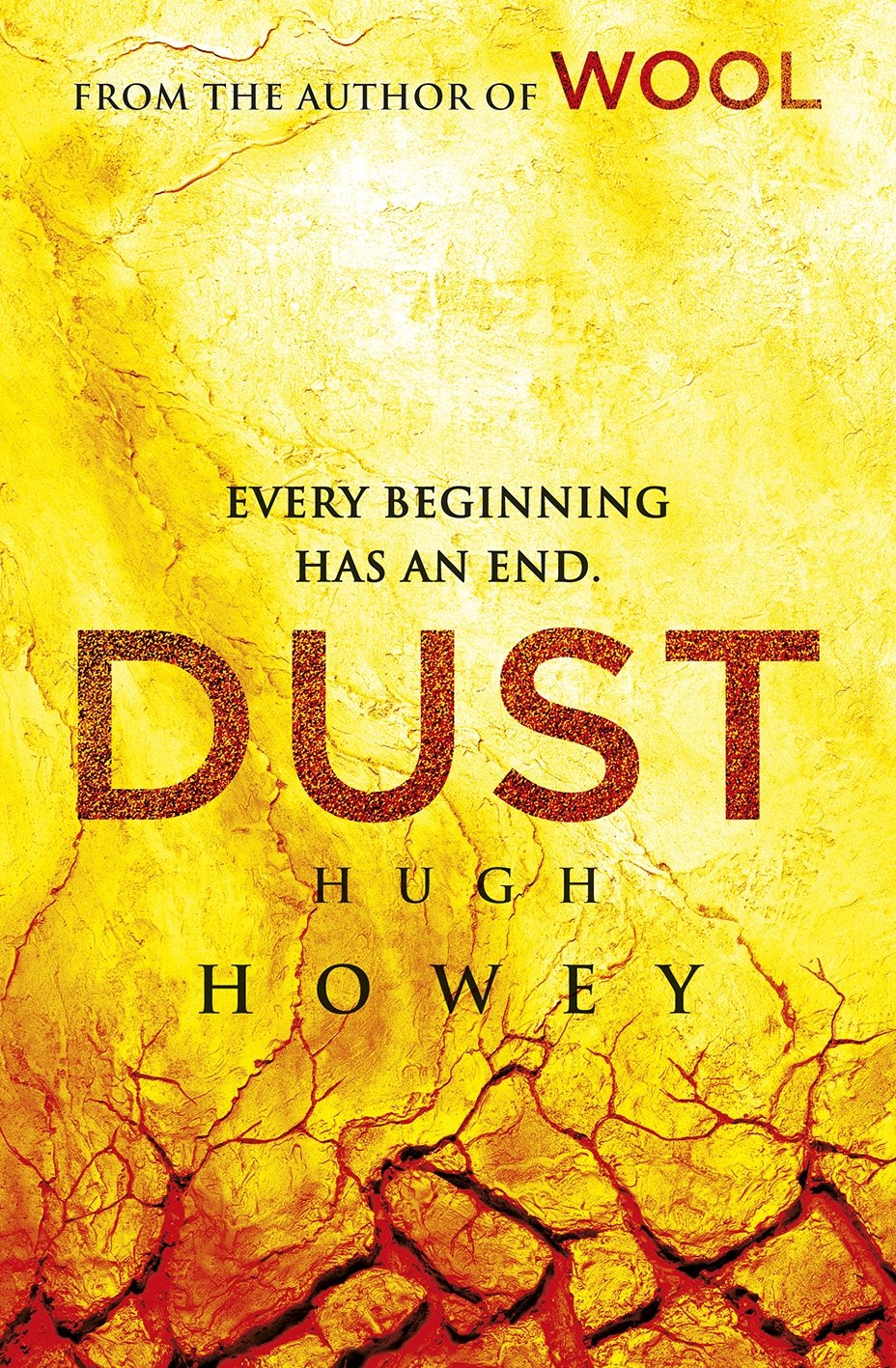
Dust

I have officially finished a series of books! That doesn’t happen much, mainly because of how I don’t read enough, but for other reasons too. In any case, noteworthy!

This time, it was the third book of the Silo series, Dust. And, you know what? It is definitely a conclusion to a story, with satisfying logical, logistical, and even emotional beats. But… it was also kind of overstuffed. I’m going to use an example from the story that is pretty much a spoiler, but if I disguise it by not naming any names or concrete details, I think it should mostly fly.

So, a bunch of people are escaping doom, like let’s say 1% of the people in the doomed location escape to somewhere else. Due to happenstance, some of them are religious nuts. So the first thing the religious nuts do is go all Handmaid’s Tale and forcibly select women for the men to marry (also forcibly), even women who qualify as underage, or wildly underage. And then someone shows up with a shotgun to resolve the situation. And it’s pretty realistic, both the horrific human behavior of people unhampered by rules and the part where those same people can be easily cowed under the correct circumstances. So it’s not that I disputed the realism of the vignette. But I dispute the utility of throwing in that kind of complication so late into a series that is about to end, and I paradoxically also dispute making it so easy to resolve, if you were going to monkeywrench it into the story like that in the first place.

This did not ruin the book for me, but… it kind of felt like someone trying to write their way out of a corner and stalling for time, and then not having an editor to correctly excise those bits once the corner had been escaped. But that’s the important part. The corner was escaped, and the story ended on a satisfying note, with a clear indication that there’s a lot more story left, even if it will never be (and should never be) written. Is this how all stories should end? Nah, lots of times “and they lived happily ever after” or “and he surveyed the lands he had destroyed with no small satisfaction” is the way to go. But I like stories that can pull off the “lived in, living world that you can imagine what’s next however you like” endings quite a lot.
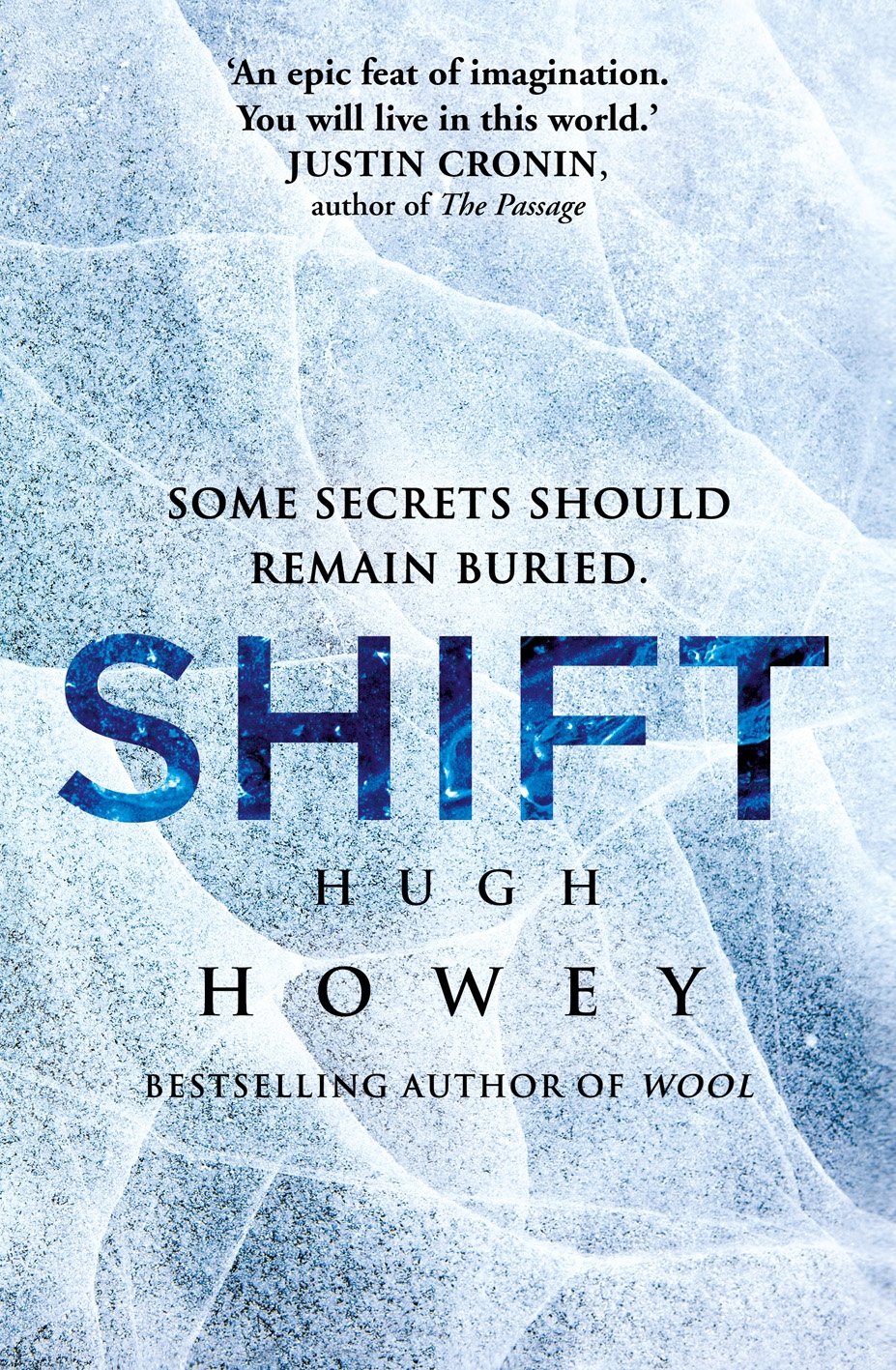
Shift

Not especially long ago, I read Wool, in which Juliette Nichols finds, and then exceeds, her limits[1]. The second book of the trilogy, Shift, goes back to the very beginning to provide several hundred years’ worth of context about Juliette’s silo and everything that surrounds it.

It’s hard to say anything more, due to massive spoilers. But I can think of a few things. First, the elephant in the room. I am on record for believing that the story I watched on TV and [mostly believing, at least] that I read in that first book did not require a specific apocalyptic backstory. It was enough to know that an apocalypse had occurred, and all that was necessary was to look forward. Having read the second book, with precisely the apocalyptic backstory under discussion… I 95% stand by my original assessment. I firmly believe a good, compelling story could have been told with nothing more than a handwaved “and then we nuked each other”, for example.

However, I would be remiss if I did not say that the apocalyptic backstory that has been provided is pretty damn compelling itself. Yes, there’s a little too much love triangle subplot that I’m not wholly sure added anything emotionally, and could structurally have been solved via different means, but that’s not really the point. The point is, necessary or not, the story of how Juliette found herself, wool in pocket, at the precipice of a much wider world than she could have imagined and yet so much narrower than the reader might have? It’s a good story, and I’m glad to know it.

[1] In most of the potential ways that could be taken.


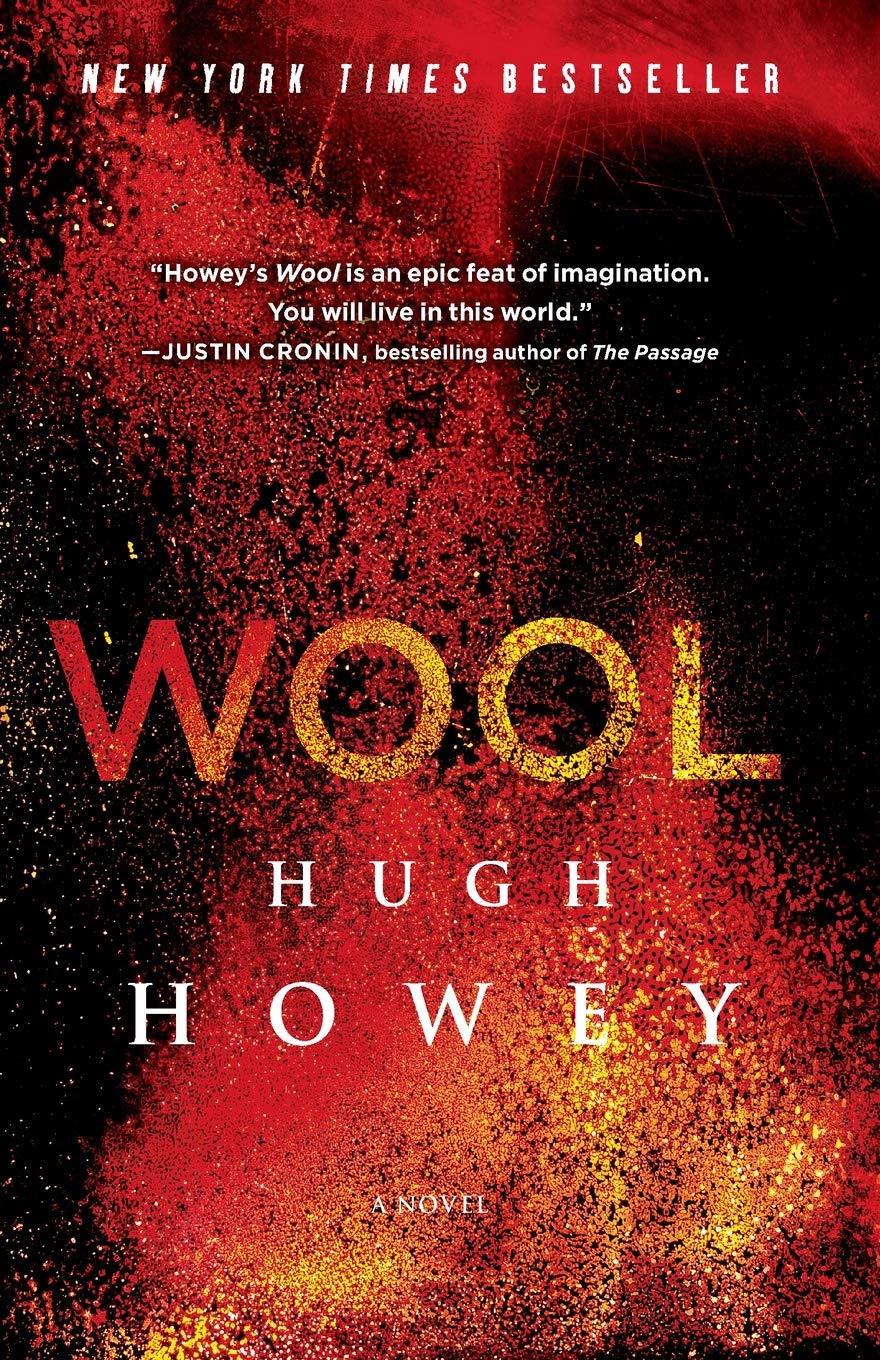
Wool

There’s this show on Apple+[1] called Silo. The year it came out (2023 maybe?), I called it the best sci-fi on TV, and I stand by that assessment. A long time later, albeit by my standards pretty rapidly, I’ve picked up and read the first book in that trilogy (which covers the first two seasons of the show).

Wool tells the story of a, well, a silo. It is underground, some 140 or so levels into the earth as measured from the up top, through the mids, and into the down deep. It contains a large but necessarily limited number of people. They all have jobs (porters who run things up and down the silo, mechanical who keeps the generator running, farmers, doctors, a sheriff, IT, even a mayor), and eventually everyone in every job has a shadow, learning to do that job from the previous generation. It is a perfect closed system, and nobody ever leaves.

Well, that isn’t quite true. There’s an exit, right next to the jail cells in the sheriff’s office on the top level. The exit leads up a ways to the surface, where there’s a door to outside, and cameras in all directions surround the door. Those cameras show an utterly destroyed landscape in greys and browns, with constant windblown particles, constant rushing clouds in what might otherwise be called a sky, a decayed city full of what are no longer skyscrapers in any useful sense off in the distance, but with a ridge that prevents view of anything nearby. The silo is in a depression, is what I mean. The view from these cameras is shown in the nearby top-level cafeteria, a warning of what leaving the silo would mean. And yet, if anyone asks to leave, they are not only allowed to do so, but by law must. The only caveat is that they are asked to clean the cameras when they go out, since the view is forever being worsened by the blowing dust. For this, they are given a square of wool. Anyone who goes out does clean, even those who swear they will not, and anyone who goes out dies within minutes, soon enough to become a part of that pre-ridge landscape, a warning that it is not yet and may never be safe to go out.

I’ve already said rather a lot, so I’ll stop here. Either that description grabs you and makes you want to know where a story would go in this setting, or it does not. But I have a few pieces of additional commentary relative to the show. The main one is, for better or worse, the voice of Juliette and the voice of Deputy Marnes are just irrevocably overwritten into the voice of their characters in the book. I think probably for better, in both cases. The second is that most of the changes made for the show were probably improvements, even if they stretched out the story a bit. (Plus, some of them might turn out to be due to retcons for future books I’ve yet to read.)

Lastly… well, this one is complicated. I must say first of all that Wool is a complete story in itself. If nothing else had been written, I would be completely satisfied by its ending. That said, in discussions online about the TV show, I was lambasted for not really caring what was the source of the disaster that led to these people being trapped in this silo. Like zombies in that flavor of apocalypse, the blasted landscape is setting. Who cares why there are zombies? There just are, the story is influenced by the setting, the setting is not a part of the story. And honestly, I stand by that assessment. This book being a complete story in itself just proves to me that I was right.

However.

I will say that the book managed something the TV show did not, which is to make me interested in finding out how we got here after all. Cleverly, therefore, book two is all about that, and I suppose I’ll read it pretty soon.

[1] the streaming service whose name I may or may not have correct

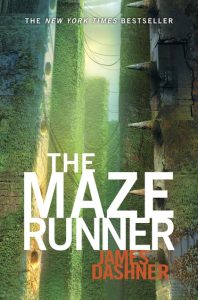
The Maze Runner

I finished the second second Robin Hobb book and its review just before my annual five day camping trip, which was good timing because I wanted small easy books to read, instead of dragging around a doorstop in the woods. But then I made a terrible mistake. In the midst of packing, every book I intended to bring (and the Kindle) were left on a shelf. Which meant, a day or so later when it was time to read, I had nothing!

This is I think the third worst thing that has ever happened to me on a camping trip.

So, I downloaded Kindle software onto my phone and picked the book that sounded the most like what I wanted at that moment, out of the books I have Kindleized. Which was The Maze Runner.

I already saw the movie (but apparently did not review it? wtf), so there were not like a ton of surprises? Though, much like the movie, motives are still unclear to me. Anyway, it’s a teen book about teens in a maze. Also, they have no personal memories. But mainly there’s this maze, and they’ve been there a while, but everything it about to change. (Also, mazes are cool.)

This book mostly asks questions that I assume future books will answer. Why are there a bunch of teenage boys left in a maze with no apparent solution? Why are they supplied? Why do new boys keep coming? Why can’t they remember anything? Why are there murderous monsters in the maze? Why only boys? (I’m not sure if I expect an answer to this one.)

I only read like one and a half chapters while camping, but it felt a lot better knowing I had something to read if I wanted to than before that, when I didn’t and everything to read was like 150 miles away.

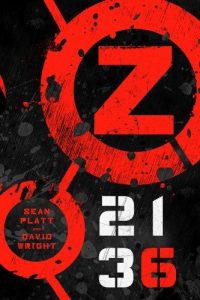
Z 2136

As you have no reason whatsoever to remember, I read the previous two books in this trilogy sometime in the last year or two I guess? And they were perfectly cromulent serial schlock. Hunger Games plus zombies, only a little light on the good half of that equation; and if I’m being honest with myself, probably they could have done a better job copycatting the game aspect of the equation. But still, if I don’t pause and think about the hundreds of better books on my to-read shelf, there was nothing wrong there.
As of Z 2136, consider that trend broken. And I mean, broken just really badly. This is the worst book that I’ve ever managed to finish. The writing didn’t change, and the already established characters were still, y’know, fine I guess. But the new viewpoint characters and the change in plot direction were just abysmally bad. Here’s my point, which I will need to entirely spoil the surprise ending of the second book plus I guess all of this one to make, but that’s okay because, seriously, do not read these books:

There were three main characters in the series, a father and two children. The father was part of the government apparatus but also had sympathies with the rebels who didn’t like living in six dystopian cities even though the walls kept the zombies out. Later, he killed his wife via mind control and was put into the zombie hunger games. Later still after learning the truth, his daughter was too. None of that really matters except that it’s an establishing shot for the shock ending of Z 2135, in which the father is executed, Ned Stark style. And then in the afterword, the authors were all, we weren’t really planning on this, but we decided we needed a big cliffhanger, so here you go!

Which leads into the third book, where one annoying guy is transformed into a raving lunatic, while another bad guy is transformed into a new father figure to replace the one they killed and then apparently realized they still needed. Result: half the book is spent on the motivations and travails of new characters about whom I already didn’t care, only now everything was so weird and forced that I actively hated them instead of just not caring much. Then, later, the book just kind of grinds to a halt instead of having an actual ending. Everything I’ve seen indicates this is a trilogy, which is a relief since Amazon would probably have already sold me book four at 99c before I knew how horribly things turned out; but I lost control of that sentence, and how I meant to end it was “but if I didn’t have these outside sources, I would be quite certain they were planning on writing more.” Because while it was not a cliffhanger demanding more story, it also was not the end of a story.

If everyone had died, that would have been more emotionally satisfying. First, because everyone never dies, and I’m pretty sure any real zombie apocalypse is much more likely to turn out that way than the way they always do turn out. But mostly because, fuck these people. They basically all deserved to die, and the ones who didn’t are at this point acceptable casualties in my vendetta.

Z 2135

51r4bMhNxML._SX331_BO1,204,203,200_Once again, my review material comes from the author’s afterword. This time, apparently, the authors of Z 2134 were disheartened by people who gave them crap for gleefully stealing from popular literature to mish mash their dystopic zombie-laden future. The goal for Z 2135 was to amp up the characterizations and the plot turns and prove everyone wrong while once again exciting their true fans.
Well… first of all, the series suffers from Harry Dresden disease. Despite being named after the year in which it occurs, everything took place over the course of two or three weeks, just like last time. Which doesn’t actually matter, but I always side eye that kind of thing a little. Otherwise? The characterizations were fine, but nothing to write home about. The plot turns are frequent and dramatic, that I’ll grant. In the end, though, the problem is that there’s hardly anyone to like. Sure, the teenage couple are nice enough, but the kid brother is too annoyingly indecisive to really latch onto, and while the government were always the bad guys, of course, I ended up with no interest in the rebellion either.

So there’s just this one family in the whole world that’s especially worth a damn? That makes for a pretty lonely world, even if they figure out a way to win in the third serial novel that doesn’t reward either horrible side of the struggle and only the innocent bystanders.

I mean, I’ll read it.

Z 2134

z-2134-coverIn the afterword to the book, the two authors discuss how, in the wake of a few successful turns as serial authors (a la Dickens, Doyle, or once, briefly, King), they decided that a good idea for their next plot would be, “What if The Hunger Games had zombies in it?” And, you know what? Yep, that is exactly the book they wrote.

Okay, that’s unfair in at least two ways. 1) The teenage female character is nowhere near as unlikeable as the book version of Katniss Everdeen. 2) The authors developed a world that is… okay, look, neither this world nor the Hunger Games one hangs together very plausibly if you actually start staring at the underpinnings. But this world makes at least as much sense after correcting for the zombies, and honestly maybe a little bit more, even.

Still, though. You cannot really define derivative more precisely than a book whose authors gleefully admit they combined a different successful book with a pop-culture staple. And as much as I’m a sucker for Rube Goldbergian arena combat to the death, that wasn’t even more than a third of the focus of the book. I guess I actually liked the characters and the premise enough to want to know how things turn out? Huh. Okay.

Warning: Z 2134[1] has two sequels and ends on several cliffhangers. Anti-warning: I think maybe there are only two sequels? And they’re all published, so. I know it sounds like my standards have plummeted here, but a) let’s be honest, they were never really so high as that, and b) it’s always nice to have a mindless book to read at a burn.

[1] Oh, also, the title is super-imaginative, right?