Tag Archives: young adult

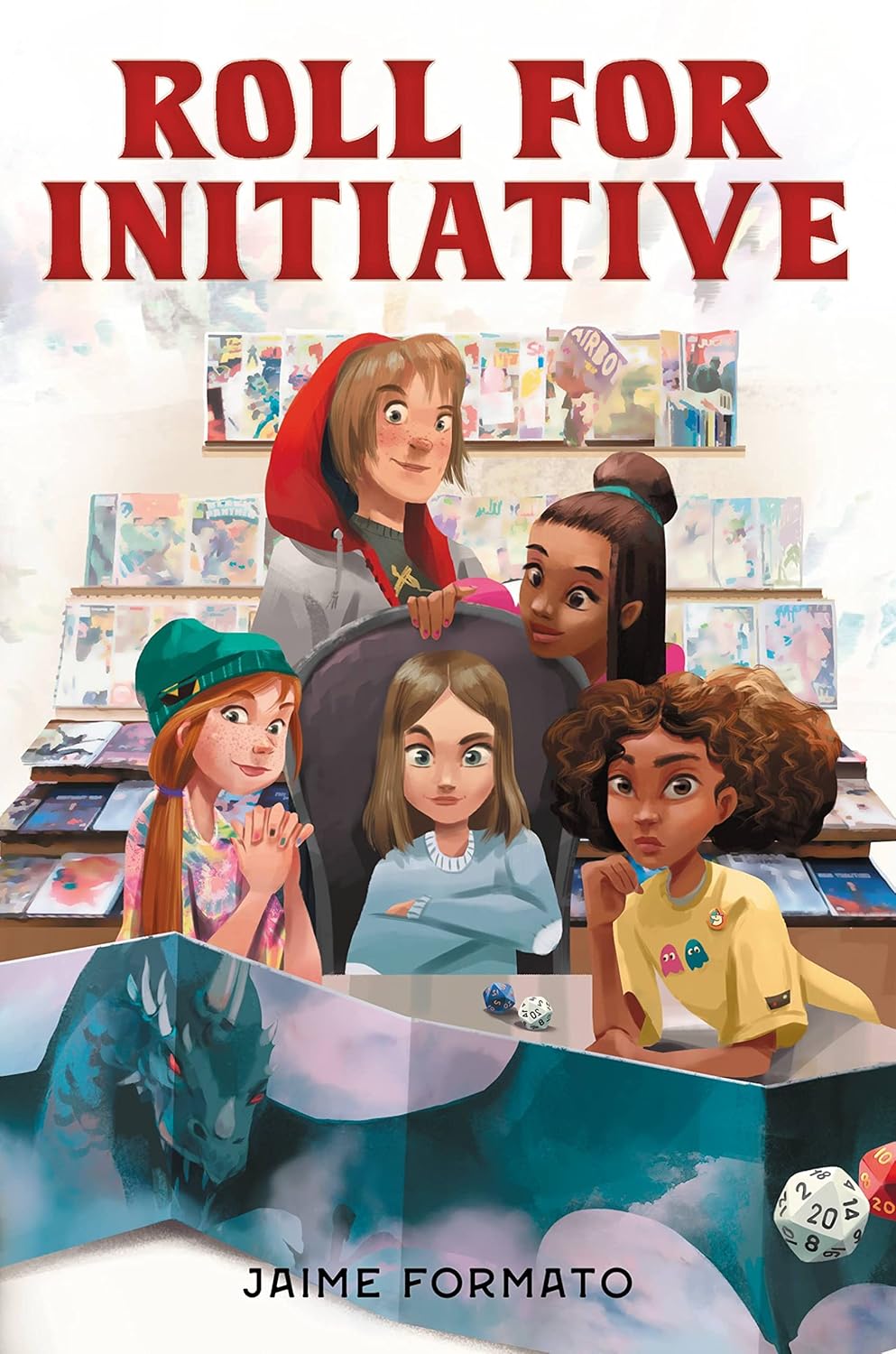
Roll for Initiative

Third[1] entry in the ongoing annual series of books what I read to my son over several weeks: Roll for Initiative. It’s a big standard coming of age story in which the girl who has never in her life done anything for herself has to come to grips with the idea of doing everything for herself, and just maybe solving everyone else’s problems around her at the same time, all as part of the middle school growth and maturity experience. I doubt there’s a former middle schooler reading this who hasn’t had exactly the same lived experience as Riley.

The twist is, this book is told through the lens of her wanting to play Dungeons and Dragons and not having anyone to play with now that her brother has gone off to college. Until she meets some girls on the bus that she never had to ride before now, and they form a little group, and before you know it, poof, everyone’s life is fixed. Even the people who we didn’t know had anything they needed fixed at the beginning of the book.

Thanks D&D!

No but seriously, I wanted to read him a book where the characters liked role-playing games, since he himself is currently in a kid RPG. He liked it, and I did not hate it, and that’s mostly what I’m looking for out of stories to read at bedtime, so, hooray.

[1] I read another, longer, book to him right before this, and have a niggling feeling I did not review it. This seems problematic. …no, wait, it was the library one and I totally did. Whew. …messes up the count a bit, though, doesn’t it?

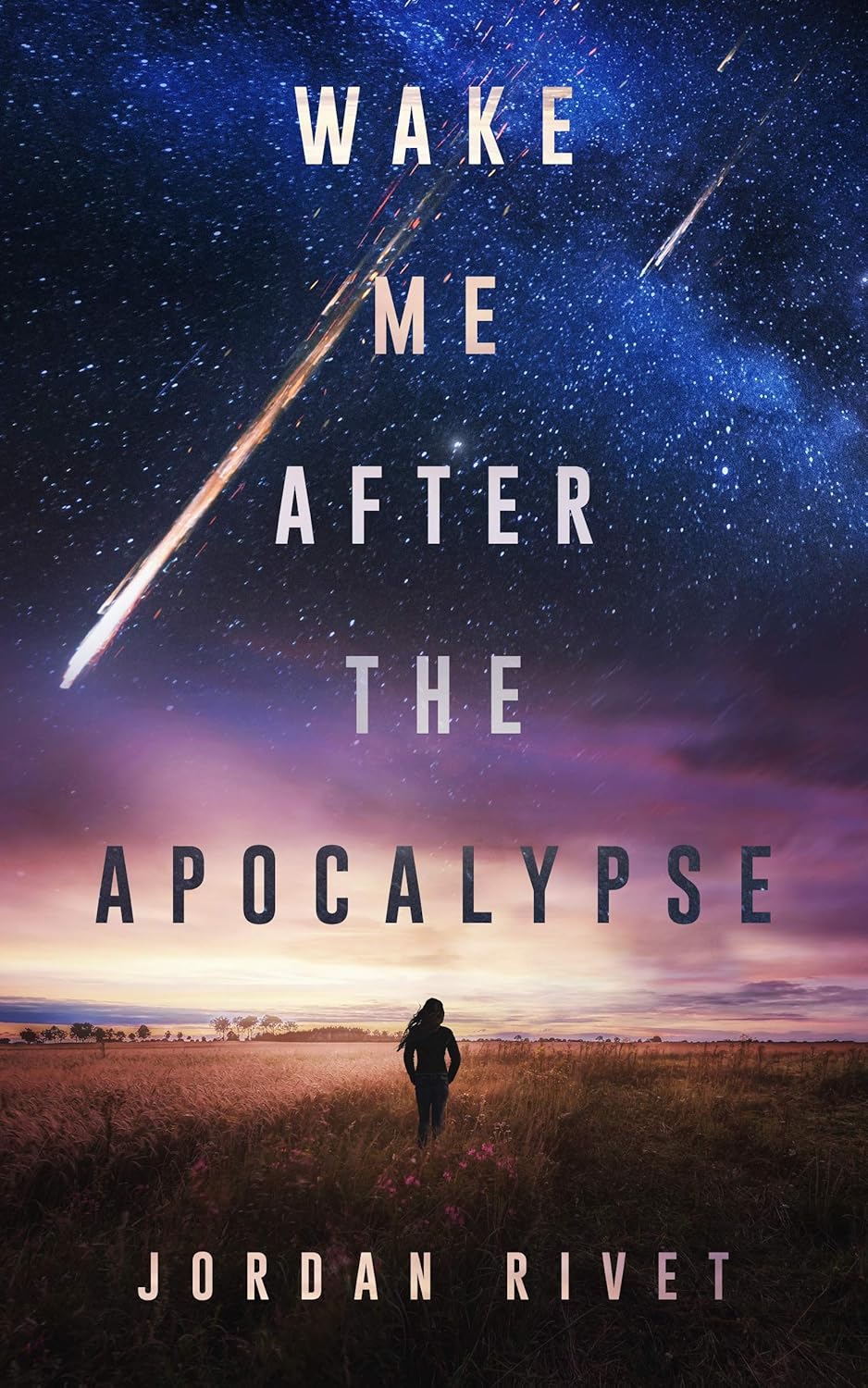
Wake Me after the Apocalypse

Some books have hooks that just get me, or maybe Amazon is good at advertising. Whatever. Anyway, this book‘s hook is that Joanna the protagonist wakes up from cryosleep after 200 years only to find that there’s been a cave-in, and she alone has survived out of her group of a thousand people. The backstory, doled out in alternating chapters, is that a comet was about to hit the earth, but with enough warning that lots of bunkers of 1,000 people each were set up throughout America to allow humanity to survive the darkness and the desolation, via centuries of sleep thanks to recently successful cryonics technology.

I mean, Joanna’s personal backstory is also doled out through those alternating chapters, but that’s the gist of it. Cryosleep to avoid disaster, wake up to completely different disaster. So… obviously she’s going to meet other survivors. For one thing, there’s no reason to believe all the bunkers were destroyed just because hers was. But, insofar as this is the first book in a series, I was looking for less exposition and relationships and stuff, more raw survival and maybe mystery solving.[1]

What I got was… about half a book of those alternating backstory chapters, enough to get me well and truly tired of them. Then, just as the book I was looking for got started, the back 40% of it was instead chock full of people again, already. Ugh. It’s not that the story Rivet wrote was bad, it just was not at all what I wanted. Put a different way [that overstates the case of what this book actually is], I’d like to read these YA books and have them be less about Team Jacob versus Team Edward and more about Team Bella.

Anyway, if the second book is available at the Kindle lending library, I’ll borrow it eventually as I did this one. If it is not, I’m pretty sure I will neither buy nor download it. So… yeah.

[1] After all, just because the scientists believed it would be an extinction level event doesn’t mean it definitely would be. 99.999% death rate, we’d still bounce back[2].
[2] …well, maybe not bounce.

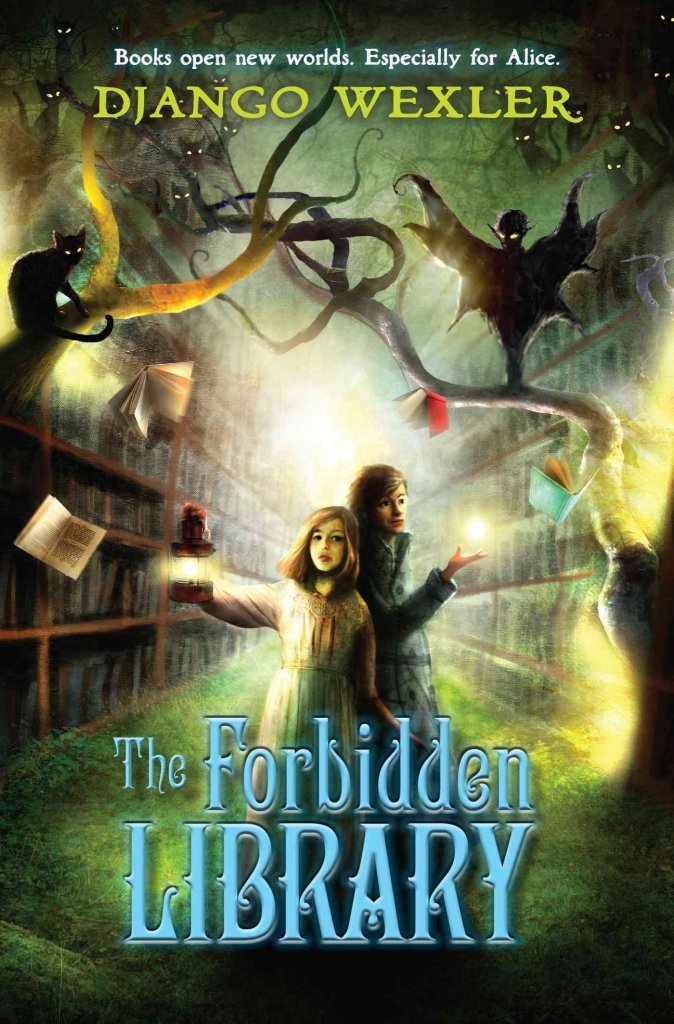
The Forbidden Library

I randomly found a Django Wexler book in the kid section of the library, which was a bit of a surprise. Turns out he wrote a YA series ten years ago, and since my son has a heck of an attention span for books, I took a chance. At usually a chapter a night, it took close to a month including one auto-renewal, but then again how fast do I read to myself?[1]

Important ingredients for a young adult fantasy series are a) an orphan b) who was orphaned deliberately by an external force who will later drive the plot, and also c) the orphan later discovers an unanticipated talent for a magical world that they previously had no awareness of. Also, if you’re a girl orphan, probably d) you’ll meet someone your age in similar but not necessarily identical circumstances, who you most likely cannot trust, and yet you really want to. I’d say I’m not sure why this is less common with boy orphans, but the truth is, I’m pretty sure of why.

Alice Creighton is an intelligent 12 year old girl living her best life (good at school, science, math, all of that) in Manhattan (I think) with her father at the height of the Great Depression (which does not really affect anyone in the story, they’re all rich here especially by the standards of the day), up until she learns fairies are real. A week later, her father is lost at sea and his estates are sold off to pay his debts, and she is the ward of her uncle Geryon, a man she had not previously known existed but who seems to be doing even better financially than her father had been (debts notwithstanding), what with his massive estate outside, I don’t know, Philadelphia maybe?[2]

There’s only one rule: don’t go into Geryon’s personal library at the edge of the forest without permission. But when you’re surrounded by vague maids who do only what they’re told and literal-mindedly at that, and then just kind of wind down waiting for their next instruction, and with talking cats and evil wasp fairies and distant uncles who have no real interest in you, and above all when you are the protagonist of a YA novel who has been given one rule to follow, plus also you like to read?

Well, I think we all know where this is going. (In case you do not: it’s going into The Forbidden Library.)

[1] It’s the comics, is what it is. Well, and the parenting. The storytimes, just for example, most of which are regarding books that are unreviewable, such as Geronimo Stilton and Dragon Masters. And the Three Investigators, which I should have continued to review, but failed. (I’m not sure what happened there.)
[2] If you’re wondering why I don’t know where anything happened, it’s because the cities are mentioned like once each at the beginning of the book and then never matter again. If everything happens at your massive country estate, who cares what state it’s in? Or nation, honestly.

The Maze Runner

I finished the second second Robin Hobb book and its review just before my annual five day camping trip, which was good timing because I wanted small easy books to read, instead of dragging around a doorstop in the woods. But then I made a terrible mistake. In the midst of packing, every book I intended to bring (and the Kindle) were left on a shelf. Which meant, a day or so later when it was time to read, I had nothing!

This is I think the third worst thing that has ever happened to me on a camping trip.

So, I downloaded Kindle software onto my phone and picked the book that sounded the most like what I wanted at that moment, out of the books I have Kindleized. Which was The Maze Runner.

I already saw the movie (but apparently did not review it? wtf), so there were not like a ton of surprises? Though, much like the movie, motives are still unclear to me. Anyway, it’s a teen book about teens in a maze. Also, they have no personal memories. But mainly there’s this maze, and they’ve been there a while, but everything it about to change. (Also, mazes are cool.)

This book mostly asks questions that I assume future books will answer. Why are there a bunch of teenage boys left in a maze with no apparent solution? Why are they supplied? Why do new boys keep coming? Why can’t they remember anything? Why are there murderous monsters in the maze? Why only boys? (I’m not sure if I expect an answer to this one.)

I only read like one and a half chapters while camping, but it felt a lot better knowing I had something to read if I wanted to than before that, when I didn’t and everything to read was like 150 miles away.

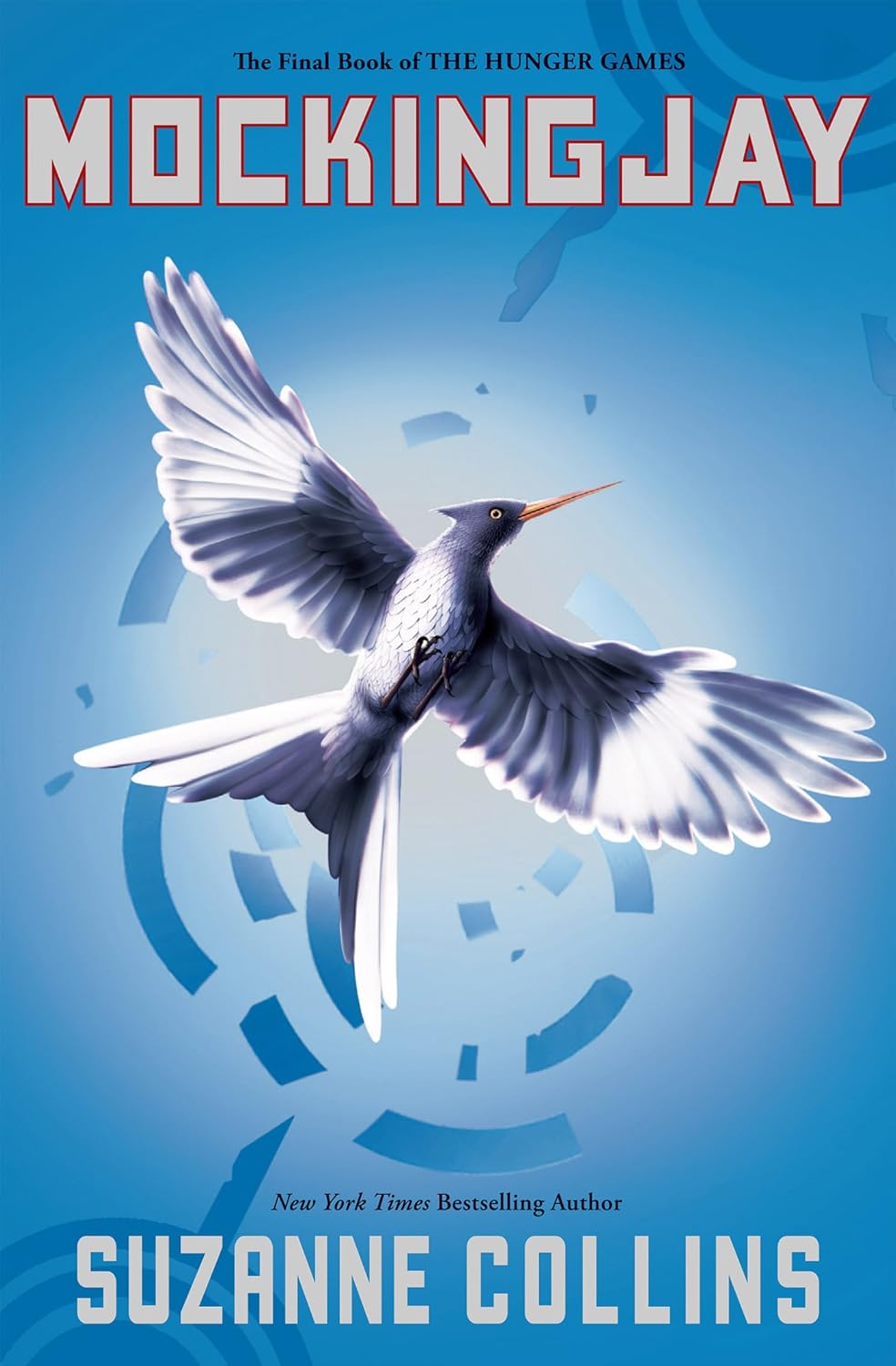
Mockingjay

I had been given appropriately low expectations of the final book of the Hunger Games trilogy. Expectations such as that I would really despise the Mockingjay herself, narrator Katniss Everdeen, and that the focus shift from dystopic public combat to rebellion also marked a loss of focus for the story as a whole. And you know… those things certainly have some truth to them.

Katniss isn’t a combatant in the Hunger Games anymore; instead, she’s the public face of the rebellion, which has caught fire just as predicted, which would be more okay if only one of her two possible boyfriends wasn’t the public face of the government against which they are rebelling. And things just get worse for her from there. It’s still an interesting world, and I still cared about what happened to it, but Katniss is never so compelling as when she’s in the arena fighting for her life against all the other tributes, and sure enough, those days are over. Plus, a year and a half has gone by, and the fact that she not only still hasn’t come to any kind of conclusion about the third of the story that is her love life, but actually keeps escalating the frequency of her lashings out against each of them and in fact everyone else in her world instead? It makes it really hard to believe she’d keep inspiring love from some people and loyalty from so many others.

Still, there’s a book here either way, because not learning a conclusion to the rebellion is untenable, and because people don’t have to like their Mockingjay personally to see her utility as a symbol. And her fate in that regard was inevitable, if only because the people watching her on TV can’t read her thoughts. To answer the obvious question,  the conclusion was satisfying; it’s just hard to read a book with a narrator that has grown mostly unlikable, especially if she isn’t locked in mortal combat often enough to mask what I didn’t like about her.

Unrelated prediction: the movie will succeed or fail on the strength of their Haymitch actor alone. That guy? He’s compelling.

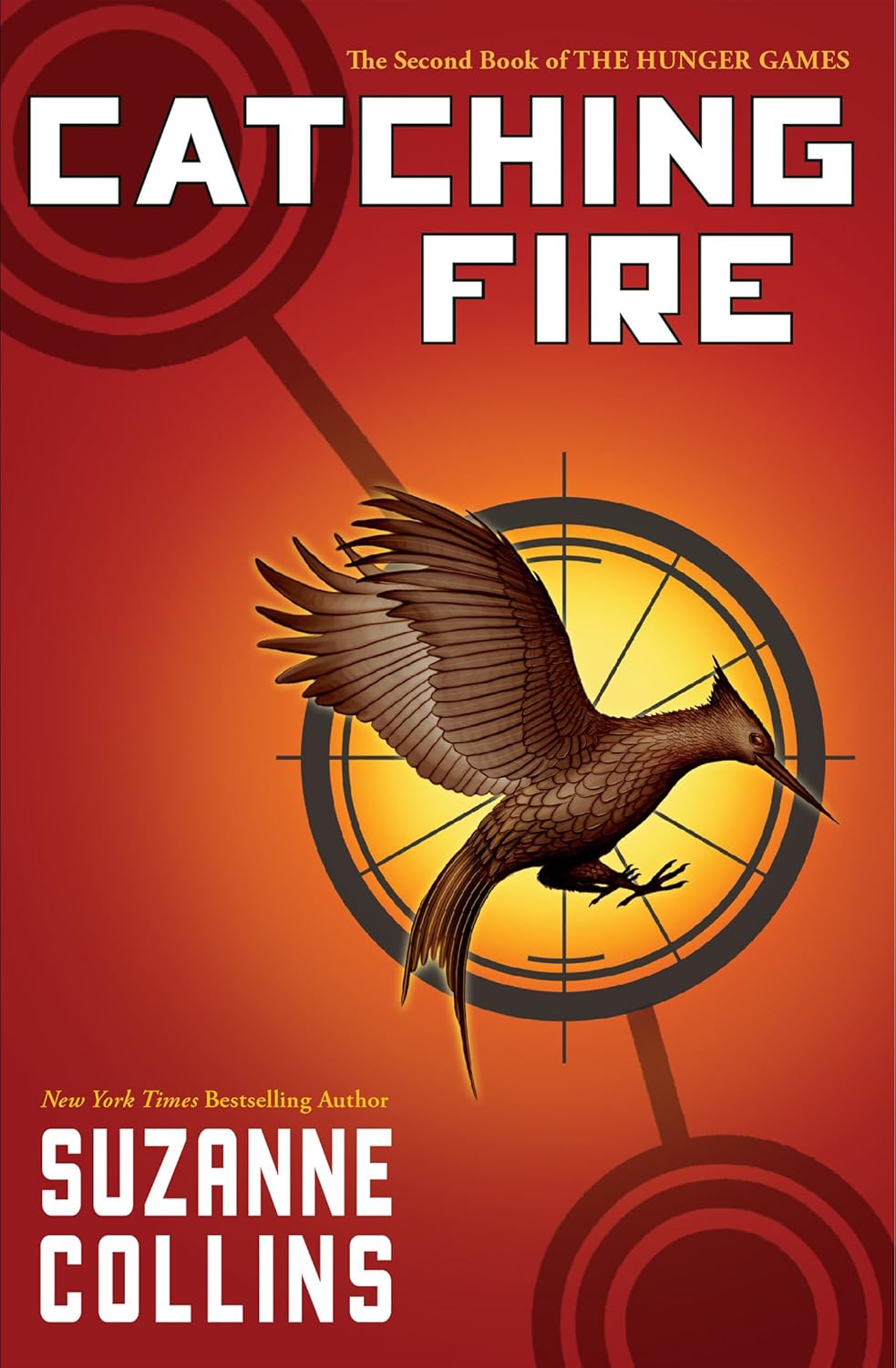
Catching Fire

Several factors conspired to have me read the second book of the Hunger Games trilogy so quickly after the first one. There are some reviews I want to read and can’t until I’ve caught up. There’s a movie coming out this spring, and who knows how they’ll dole out spoilers? Amazon Prime has a feature that lets you rent one book a month free from the Kindle store, and the whole trilogy was on the list, and I have not for the life of me been able to find the second or third book used anywhere. (Mainly because of that movie announcement, I’m sure.) So you, see, that’s a lot of things!

Oh, and okay, I may have glossed over one of them unfairly. See, early this month, a couple of tremendously awesome people presented me with a Kindle Touch, all out of the blue! I have only read this and about a third of another book on it so far, so I have no idea where I will eventually land in the dead tree wars. But I can say that the device is extremely pleasant to use and doesn’t feel the least bit weird relative to reading from a book. It is even superior in some ways, e.g., no worries about holding the book open in a damage-free way, much harder to lose your page via random movement flaws (and even when it happens, you haven’t moved far, as opposed to the book is just closed and you have to find it), built-in dictionary functionality (this is cooler than you might think, even when you have a good vocabulary), and there’s even a thing where you can a) mark up a passage for later perusal / footnoting and b) enable the ability to find passages that lots of other readers have similarly noted. Lots of readers, in the case of this particular book, are teenage girls in search of romance. Which, y’know, fits. The main inferiority I notice with the Kindle versus dead tree books is probably quirky to me, but I miss the ability to use my appointment cards as bookmarks such that I don’t lose track of my upcoming schedule[1], and I miss the ability to put my movie stubs in the book I was currently reading when I watched the movie, because of how there is a personal archaeology scattered throughout my bookshelves and now I don’t really know what to do with them instead.

But I suppose I should say a word or three about Catching Fire itself? On the whole, I still liked it, though I share concerns I’ve seen elsewhere that it was less good than The Hunger Games. It is, I think not purposefully, a study on how history can decide who is important despite what that person may desire, despite even what they personally have done. Anyone can be a symbol at any time and for any reason. Because the truth of the matter is that Katniss is all over the place in this book, penduluming between self-sufficiently effective, petulantly stubborn, and (most frequently) blindly clueless. The latter is the most annoying because I refuse to buy into the “but she’s just a teenager” defense. The same hard life that made her so likable to me in the first book (not to mention so plausibly successful in the Games) makes it impossible for me to believe she’s this unaware of the way her world and the people in it work. And so she seems to stumble from one event to the next when I’m quite sure that she should be making choices. I’m not sure those choices should be good every time, but the fact is that the girl who stepped up to sacrifice herself for her sister in the opening scenes of the first book should not be gradually losing agency with each new chapter. That is the wrong lesson!

Also, I wanted the Quarter Quell section of the book to be a much higher percentage than it was, for what will be obvious reasons if you have already read this and spoiler proof if you have not.

[1] It has been pointed out to me, with some amount of audible disbelief, that there are electronic solutions to schedule-keeping.

The Hunger Games

A forthcoming movie announcement led to a few people (my former roommate decidedly not among them) raving about The Hunger Games trilogy, which I had never heard of before that moment. This is understandable, since it’s written under the auspices of the young adult section of ye olde bookestores, which I have not often entered in this post- Harry Potter world. But all the same, a dystopian future America with hidden secrets in which teens are randomly selected every year to compete in a fight to the death, all so that the Capitol can flex its muscles over the 12 districts? It’s like someone watched Battle Royale and decided to rewrite it so that backstory would make sense. Obviously, once someone got around to telling me about it I wanted to read it for myself!

Anyway, the upshot is that while I learned all about the Hunger Games themselves[1] and a fair amount about Katniss Everdeen, our narrator-heroine, I did not learn very much yet about the hidden secrets of the dark future. But that’s cool, I have two other books where that can happen, and in the meantime the book was just compulsively readable. Of course, it had a few problems as well, though I hasten to add that none of them dampened my interest one bit. It’s written mostly in present voice, although it dips into the past for flashbacks and history lessons. I thought that would turn out to be a problem, but it’s not so bad, I’m just not used to seeing it. The other, larger problem, is that Katniss is sometimes jaw-droppingly oblivious as a direct result of her overabundance of natural suspicion[2]. I thought this would break the character, and it may yet, but not so far; because, so far, it has been at least as much hindrance to her as it has been benefit, and it turns out I’m interested in reading about characters with flaws that actually affect the progression of the story. As long as she either fixes herself or eventually gets badly hurt, I will have no complaint here either in the long run. (And it’s not like that suspicion of hers is unjustified, given her world.)

So, cool setting, cool plot, interesting narrator, and if the rest of the characters were just a little beyond two-dimensional at best, well, that didn’t bother me through the voice of this particular narrator. It might in the movie, but then again, the characters in the movie might have more depth. All that matters for now is, y’know, this was a pretty good book! I should find the next one, eh?

[1] Enough to make me wonder how they can adapt this young adult book as anything but an R-rated festival of violence without changing a lot of things during the Games themselves. I shouldn’t care about that, but, well, you saw the Battle Royale reference earlier, right?
[2] Well, okay, and a third problem, not so much for me but maybe for you if you are not in fact a teenaged reader, which I expect you will not be if you’re reading this particular review, is the occasionally awkward “Who do I really like, if anyone?” or “What will my first kiss be like?” folderol that when you get right down to it are the only parts of the book that felt like they were aimed at a young adult audience, and I almost wonder if they were conceived after the fact to get the book into this particular… genre? That doesn’t seem like it should be the right word.
Harry Potter and the Deathly Hallows

I honestly couldn’t tell you the last time I read a book this long this fast, although at a hunch I’d call it the sixth book of the same series. There’s something about being caught up in the flood of a cultural phenomenon that I really enjoy. For a few days (which basically predate this review), everyone has only this one thing on their minds. Well, maybe not literally everyone, but enough of everyone to annoy the holdouts. But at the end of all that, it’s still got to be talked about out of context as its own work, not merely as the reaction to the phenomenon. It has to be if you’re me, at least, since I do this thing.

I suppose the question is, does Harry Potter and the Deathly Hallows live up to the hype of being the conclusion of a series worth billions of dollars that will eventually spawn seven movies worth additional billions of dollars and not incidentally the hype of being the fastest-selling book in history? Well. It probably doesn’t. I mean, come on, that’s an unreasonable amount of pressure, right? But does it live up to the expectations of a series that has purposefully set out to reflect the process of growing up, and maybe teach children a little bit about that, through the lens of a magical world under assault by an evil thought destroyed twenty years earlier but which had instead merely bided its time while its power slowly grew back under everyone’s noses, most people unwilling to believe it could happen again? And does it work as an England approaching World War II allegory at the same time? I’m gonna go with a resounding yes on that one.

I’m just saying, good stuff. It stopped being a children’s story books ago, but this one is probably a bit much even for some of the early teen set. It’s every bit as dark and as dire as it should be, to match with the stakes that Rowling has been implying for most of the series. And impressively, I found the conclusion satisfactory. That sounds like faint praise, but it shouldn’t be taken as such. I just wasn’t sure there would be any way that could happen, due to the unreasonable expectations I’ve mentioned previously. It’s not the great series of the age or anything, but, taken as a whole, it’s a really good fantasy series, and that’s not nothing.

Spoilers below the cut, not because I need them to finish the review: it’s pretty well done, I guess. But there are definitely things worth a mention. And when I say spoilers, I mean that I’m letting fly with plot-destruction of complete magnitude, here. Seriously. Continue reading