Category Archives: Film

Indiana Jones and the Dial of Destiny

Last year, they made another Indiana Jones movie. I know that a lot of people complained about the Kingdom of the Crystal Skull movie, which, wow, was longer ago than I thought. But I think a certain suspension of disbelief is required to watch really any of these movies, and the things I saw at that time were more or less from the perspective of people who had lost their childlike sense of wonder about watching a pulp-inspired movie, and thought the sequel should have grown up with them. All of which to say, if you didn’t like that, you probably won’t like this. (If you simply thought it was weaker than some of the other movies in the series, this one is stronger again, for sure.)

Which brings us to 1969 and the latest (last?) sequel, Indiana Jones and the Dial of Destiny. The veracity of the plot is somewhat less than that of the other Indy movies involving Nazis, while still having more basis in fact than you’d expect from a pulp movie in general. See, there’s this fancy gear/dial thingy that predicts events based on prior knowledge, called an antikythera. The movie inaccurately(?) attributes its invention to Archimedes, who to be fair is a pretty cool dude, on par with your Da Vincis and your Teslas as far as coming up with fancy ideas (and perhaps executing them).

Everything else can be derived from first principles. Will there be an exciting chase sequence in which the upper hand changes direction multiple times? Will the Nazis deserve to have their faces melted off? Will there be glorified tomb-raiding, complete with traps and bugs and snakes and whatnot? Are there unexpected twists? Will it belong in a museum? (Yes, yes because it’s an odd-numbered movie, more or less yes, obviously yes, and, well, yes.)

The Lighthouse (2019)

The podcast I’ve been listening to determined that their theme for “this” week should be Edgar Allan Poe crossed with an aquatic monster, and as you may or may not know, there’s not really a lot of that. Which is how I learned that his last unfinished story is about a guy on remote lighthouse duty. Lighthouses in the past, you see, were mostly manned by practically nobody, in long shifts. I guess via the Navy?

So anyway, these two guys (a master and an apprentice, but for lighthouses instead of ruling the galaxy) named Willem Dafoe and Robert Pattinson arrive to a remote island off the coast of New England, in artistic black and white, and proceed with their month or so shift at keeping the light on for passing ships. The thing is, the ocean and the seagulls and the mermaid figurine and the solitude and the lack of solitude gradually take their tolls on the sanity of one or both men, and in conclusion, I would really love to read Poe’s original story, wherever it is catalogued in Dream’s library. It would not have been this movie, but I believe it very much might have been in the spirit of this movie. Or perhaps more accurately, The Lighthouse is in the spirit of Poe.

Suspiria (1977)

For I want to say my birthday, my mother-in-law pulled from my wishlist the 4K Blu-ray of Suspiria, a movie which I have somehow never seen, despite having felt its allure since at least as far back as when I bought The Sinful Nuns of St. Valentine[1]. I cannot even say what puts them, for me, in the same category. Objectively, they are not, but it’s the kind of thing where I just saw it in that period twenty years ago where I was buying up weird ’70s movies, so they are all jumbled together in my mind.

Learning that Suspiria existed was also my introduction to Dario Argento. I’ve seen a number of his movies since, but I always felt like this was his masterpiece. I do not especially know why that was my belief, only that it was. After the fact, I’m not so sure anymore, but there’s a lot to like here. This girl shows up in a weirdly Greek German city on a dark and stormy night to go to ballerina college, but they won’t let her in, and also this other girl is running away in terror.

Later, the other girl is dead, and they do let her in but everything is creepy all the time, and also they are just minimally pretending that learning how to dance is important, amidst all the food storage problems and exponentially amplified footfalls down the corridors outside the dormitories and weirdly vampiric Romanian handymen. This is not a giallo, and I think that is the single biggest departure from expectations. Because although they sort of acted like there was, this is not a movie that had a mystery to solve.

Instead, it has a series of vignettes happening to or near the American ballerina fish-out-of-water person, and they are all designed to be unsettling. The dog attack was not scary because it was gory, but because of the peculiar and shocking circumstances. The razorwire was not scary because it was razorwire, but because it was completely inexplicable, and because of how long the scene went on. And so forth. The entire movie was one long stretch after another of “this spooky and/or shocking scene is just going to keep going and going and going, long past the point of tolerability.”

My only real complaint is that it shared the Rosemary’s Baby problem of people in the 20th century never having heard of witches before. I just cannot wrap my head around who in the script room thought this kind of thing needed to be explained. What audience were they worried about leaving behind?

Before I go, I would be remiss to not mention the spectacular restoration this movie has undergone. The color palette is maybe the second most important character. The dance academy building is not red; it is drenched in red. The nighttime lighting is so far from today’s hyper-realistic “oh, is it dark in the story? then it’s by god dark on your screen” methodology as to basically be an inverse comparison to when people in 1939 discovered that color film existed while making The Wizard of Oz. No dim but serviceable lighting here; no, if it’s dark, it’s electric blue, or green, or whatever they felt like / had on hand in the moment. The important thing is, with every scene, you feel like Argento is throwing a bucket of paint at you, except beautifully instead of messily. …unless the scene calls for that, of course.

Last thing: that Goblin score? Maybe one step below being as iconic as your John Carpenters or your [guy who did Friday the 13th]s. Chef’s kiss.

[1] A movie which I may or may not have seen but definitely have not reviewed. Hmmm.

Solyaris

A long time ago, I saw the George Clooney remake of Solaris, a movie about which I remember essentially nothing except that I sort of hated it. The open (and unanswerable) question is: was past me wrong? Later, my horror(?) movie podcast decided to watch the original[1] Russian Soviet adaptation of the Stanislaw Lem novel, which is what brings us here today. Arguably, having watched these movies in reverse order, I should next pick up the book.

Solaris, in a non-spoilery nutshell: there’s this guy, and he wanders around his family property staring distantly at the lake and the underwater reeds and the empty road. Later, a second guy comes to visit and recap his history with the largely oceanic planet Solaris, which we[2] have a station in orbit around. Some people went missing, and the second guy piloted a failed solo rescue mission in which he saw a lot of weird things that his onboard camera system did not corroborate, as a result of which he has advice for the first guy, who is a psychologist going to the station to decide whether it should stay open. Also, the second guy has a son who seems unfamiliar with the concept of horses, and then afterwards the second guy and the son go on a long, pointless[3] drive in [probably] China. Later yet, the psychologist goes to the station, and discusses with the remaining two residents a) what happened to the until recently remaining third resident (who was the psychologists’s friend) and b) why there are in fact rather more than two residents. Then he spends the remainder of the movie coming to grips with the answers they provide him, as well as the answers they do not provide him.

I think I might have gotten more out of the film if I had a better grasp on the painting where those hunters(?) are returning to town on a ridge while everyone ice skates in the valley town below, or more fully caught the Tolstoy and Dostoevsky references, for examples. But even at three hours, it only wears out its welcome once or twice during the most drawn out and inexplicable scenes, or when director Tarkovsky gets a little too clever by switching to various black and white shades as though we’re meant to know what is being conveyed by this change in that moment. The rest of the time, we are presented with a slow (nay, lingering) meditation on what it means to be human, and to behave humanely, in the face of the unknown.

And really, you cannot ask for much more out of your science fiction than that.

[1] False! There was a TV movie in the USSR four years earlier, which, huh, okay.
[2] humanity? The Soviets? It’s not perfectly clear, but probably humanity.
[3] Okay, that’s editorializing. I have no idea whether it was in some way central to the plot or it wasn’t.

Hotel Leikeu

If you think it’s hard to watch a foreign film in a language you don’t know while working, well, it is, but what I was going to say was, imagine how much harder it is when you watch the two halves of the movie with a gap of probably two weeks in between. So if you think this is going to be a shitshow of a review: fair.

Lingering is a haunted hotel story, a la The Shining. A young Korean woman is called upon to care for a disruptive younger sister she never even knew existed, which is also how she learns that her mother has died by suicide. At a loss for how to take care of a little girl, she takes the sister to a hotel run by one of her mother’s friends, a place where she spent a lot of time as a child herself but which in latter days is seeing less and less business; now there are only a handful of employees and maybe one other guest?[1] Only, the little girl has visions of violence and death (to be fair, this was the disruption at school as well, so it predated the hotel), but then other people start dying in mysterious and/or suspicious ways, depending on whether you think you’re in a ghost story (as our hero does) or a crime story (as the investigating police do).

Sometimes, I think movies aren’t very good but wonder if I failed them instead of them failing me, by watching while working. This time, I’m quite sure the movie was good and I would have enjoyed it more watching it at night, but at minimum all in one sitting. (This was not a choice I made, just an oops.)

[1] The rundown, “nobody comes here” aspect put me in mind of an additional hotel movie, to be honest.

Godzilla (2014)

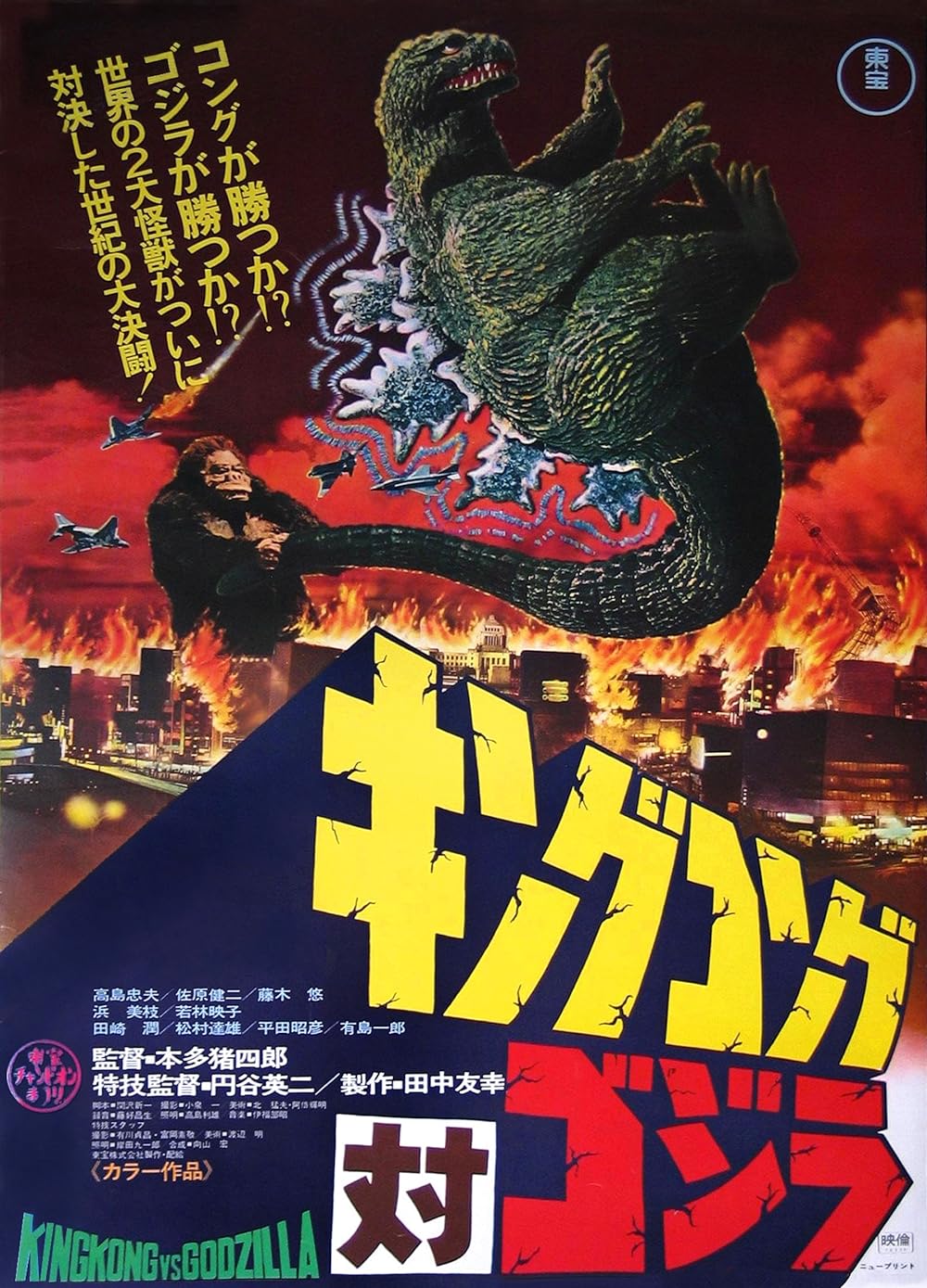
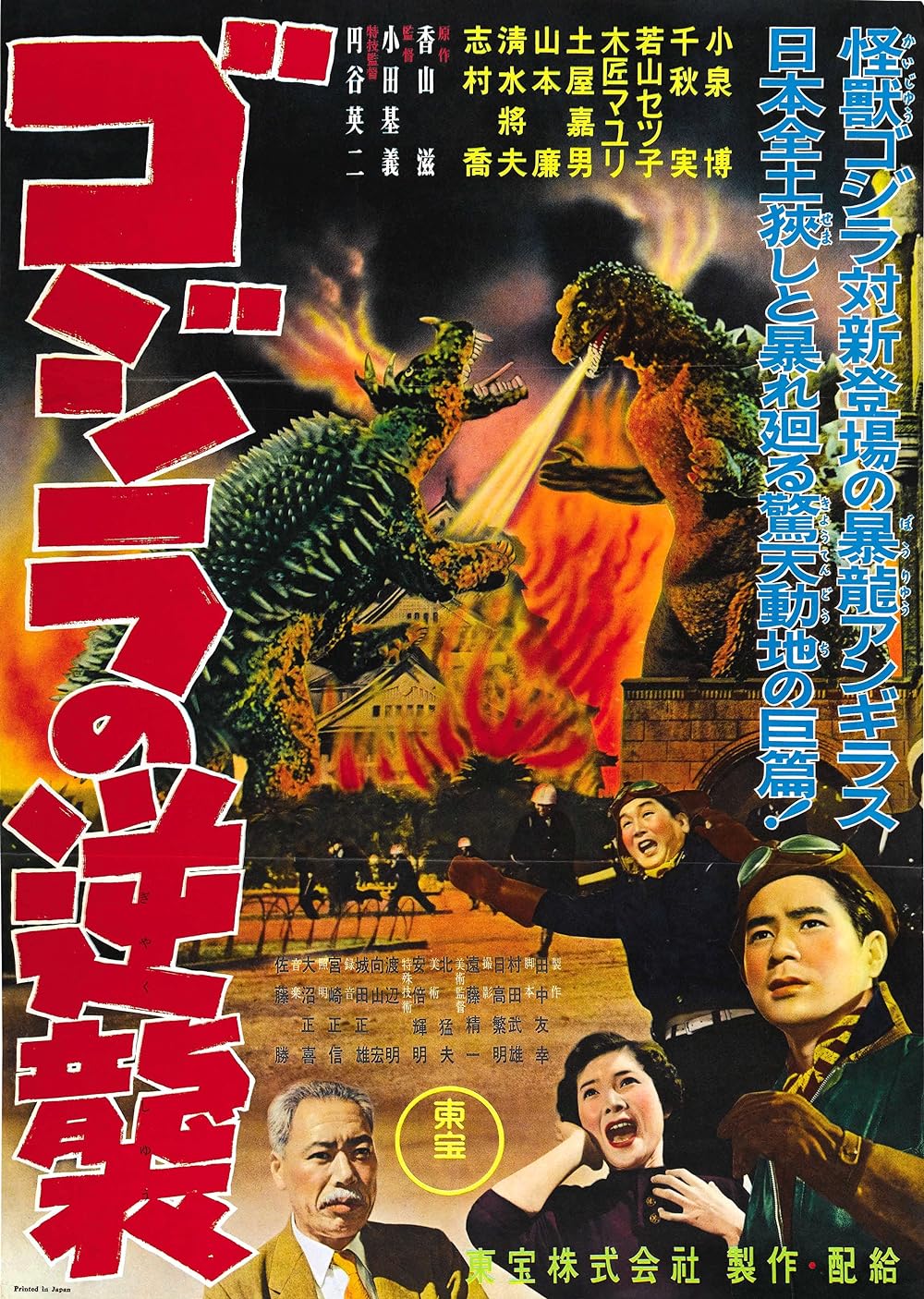
Back when they made that Godziilla remake, I still remembered the one with Matthew Broderick. You know, the one that basically killed his career?[1] So naturally I avoided with prejudice. Then later I saw Kong: Skull Island[2], and learned that these two movies were related? And they’ve made two sequels since then, of which I’ve seen one. I think? …nope, additional minor research indicates I’ve seen both, and, I don’t know, am just conflating them?

But for whatever reason, I never saw the movie that [re]started it all.

Godzilla has three distinct acts, connected linearly by the flow of time and not at all by theme. In act one, Bryan Cranston is [spoilers for the prologue] trying to figure out who murdered his wife. In act two, his son is taking a tour of the Pacific in the style of Raymond Burr. In act three, there is a final confrontation in San Francisco.

I do think that these movies find their footing, but this first one is interesting only insofar as you are entertained by fights with kaiju (80% of the movie) or shadowy government conspiracies regarding kaiju (20% of the movie). Otherwise, it’s kind of a shambling mess full of extraneous characters in service of a plot in which one rando is solely responsible for the salvation of humanity, even though the movie is named Godzilla.

But I mean… it was still mostly pretty cool to look at.

[1] I mean, is he still doing anything and I just don’t see it, or was that the coffin nail and now he’s retired on Ferris money? …or in that retirement home for Hollywood people who lost it all? Well. He’s probably not old enough for that.
[2] If you think I wanted to see that one on the strength of Peter Jackson’s remake, well, you’re at least partially right. but also I’ve always had a soft spot for King Kong.

Ghostbusters: Afterlife

Based on the strength of the nostalgia hit from the teaser trailer and no other knowledge, I’ve lowkey wanted to see the Ghostbusters requel[1] for two years now, but then they announced that Afterlife itself has a sequel, and my hand has been forced.

I want to feel guilty about getting on this bandwagon, instead of holding the boycott line for some hypothetical alternate universe lady ghostbusters sequel, but a) I sort of already did prior to when this sequel was announced instead of that one and the ship had officially sailed, but also b) man it’s hard to feel guilty about watching a movie that was basically Jason Reitman’s carbon copy clone of JJ Abrams’ Star Wars sequel. Because as we have all learned over the past ten or so years[2], nothing beats nostalgia-mining as a source of income, and the cleanest nostalgia mines are those where they make the exact same content that you fell in love with in the first place. Turns out the teaser trailer was a full steam ahead spoiler trailer all along, there was just no way to know at the time.

But the thing is… despite all that, I actually did like it, you know? Paul Rudd is always good, the kids were fine since they weren’t sidekicks, and I’m a sucker for a love letter to Harold Ramis.

[1] Like a Reese’s peanut butter cup, which I am somehow old enough to remember when that was a thing that needed to be explained, it’s both a reboot and a sequel. It’s a whole thing.
[2] Or probably I’m underestimating this

Prevenge

I’ve once again fallen to three years behind on my random horror movie podcast, but having watched Prevenge, maybe I’ll start to catch up again? Maybe!

So there’s this Australian widow, and she’s pregnant. And the voice of her baby is in her head, telling her to kill people. Is she[1] choosing them at random, just striking when opportunity knocks? Is she stalking anyone she happens to see who pisses her off? It’s really hard to tell what motivates these murders, which is part of the horror of it. When she’s not in the middle of the hunt or doing an actual murder (usually these interludes are prenatal appointments), she seems herself horrified by what she is doing. But whenever the baby smells [metaphorical] blood, it is most thoroughly on, by turns tragic, slapstick, or nearly demonic.

If I’m being real, this movie does not work on paper. Even after knowing how it ends, I don’t think I would buy it, except that Alice Lowe sells it so well. She’s the writer, director, and actually pregnant star, and she’s… it’s hard to say what I want to say without buying into the system, so let me say it from the system’s perspective: she would never make it as the star of a Hollywood adaptation of her film. She’s plain of face, did I mention actually rather than prosthetically pregnant, and she’s not conventionally funny. But the way she commits to the bit, both physically and emotionally… when it’s not funny trending toward hilarious, which it often is, it’s profoundly disturbing. The escalating desperation, the simmering anger, the bewildered horror, she portrays all of these and more, and in conclusion, I hope she writes more starring vehicles for herself. She definitely knows what she’s doing.

[1] The mother or the baby, take your pick

Murder on the Orient Express (2017)

We saw Death on the Nile as one of our rare theatrical outings last year, which inspired me to want to see Murder on the Orient Express[1], but then also to very promptly forget all about it, until Mary suggested it last weekend. Irony: now that we watched that one, she is getting Agatha Christie books to read.

I wonder if chronology bears out my theory that this movie is a sequel to the kidnapping of the Lindbergh baby? Anyhow, Hercule Poirot, after hilariously solving a priest, rabbi, and imam joke in Jerusalem (I think), gets on a boat to Istanbul[2] to look at art, but then instead gets on a train to London, because he’s been summoned to solve something or other. The Orient Express is like five cars long, and that counts the food car and the engine (and probably the coal car), so you can tell that the super-luxury compartments for the multi-day journey are also extremely exclusive.

We never do get to find out what important business Poirot was called away from his vacation for, because an unexpected avalanche in (let’s say) Carpathia derails the train, upon which they find that one of the passengers has been murdered, and Poirot must determine who, you know, dunnit. Obviously that’s all I can say, but I do wonder if the books are as funny as Branagh makes the screen version be.

You guys. The mustache sleeping mask! Also, an unrelated thought: why was there a random The Last Supper callout?

[1] Or for that matter really anything Branagh has ever done. That man is acting gold.
[2] Which they did not call Constantinople, but for some reason did call Stamboul.

The Hunger (1983)

I was prompted by that podcast to watch The Hunger, a movie which inexplicably I’d never even heard of, even though it has David Bowie and Susan Sarandon in a lookalike contest, vying for[1] the affections of an Egyptian vampire. Vampiress? It is usefully descriptive, but I think it may be more reductive than it is descriptive.

So anyway, first she loves David Bowie, and then she apparently doesn’t, and then he experiences unforeseen (by him, at least) side effects, and meanwhile in what is maybe too much of a coincidence for how precisely similar Ms. Sarandon is to Mr. Bowie, she (the vampire) meets her (the sister of Chris Sarandon, who also once played a vampire, so that has to be weird at Sarandon family Thanksgivings) and feels-slash-creates an immediate connection to Bowie’s replacement. And then dramatic events unfold, but almost certainly not the ones you’re thinking of. Also, sexy-time events unfold, and these are the ones you’re thinking of, since all vampiresses are lesbians, at least in the movies.

You know what the movie really suffered from? If I hadn’t seen Let the Right One In first. There are some pretty crucial differences, not least of which is that this one is a little less plot driven than that one. Honestly, I think that’s why this was the wrong order. Because if I’m thinking of a Scandinavian movie which had snow as one of the three main characters and yearning for a similar movie to please get on with having something, anything, happen, well, you can see how that’s a bad sign.

It’s not that I didn’t like The Hunger, it’s that it didn’t meet my unjust expectations. If you want to watch a movie in which people mostly stare longingly at each other, punctuated by short bursts of violence and/or medical research, but also all the longing stares are performed by impossibly attractive androgynes?

Come to think of it, that’s every David Bowie movie, isn’t it?

[1] The summary blurbs they put in imdb and atop movies on streaming services, etc., would have you believe this “vying” thing is accurate, but I don’t think it was. Catherine Deneuve seemed strictly serial to me.