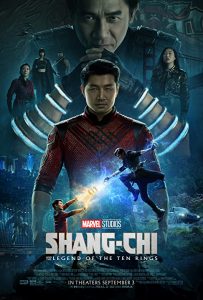
 I’m not here for the idea of making links to a bunch of previous movies, but some quick and uncertain mental math tells me that Shang-Chi and the Legend of the Ten Rings relies on four previous and mostly unconnected MCU movies[1] to explain its backstory. (Six if you care about the Blip.) None of these movies include Shang-Chi in a credited role, or even acknowledge his existence. And I mean… I’ve read within a small rounding error of 100% of 25 years’ worth of Marvel comics, so I’m obviously here for it, but that is noticeable weight of continuity to labor under, you know?
Anyway, the plot is the plot and yes I want to see it again, but nobody is interested in an MCU spoiler review, not even two weeks late like this one basically is. But between a pre-verbal child and Covid, it’s harder to get to the theater on time than it used to be, you know?
What I am interested in is the things that were cribbed from the comics, with which I have a more than passing familiarity[2]. Master of Kung Fu (as a comic) focused on two things. First, both in importance and chronology, a generation-later retelling of the old Fu Manchu stories with a lot of those characters still in play. Fu Manchu is as yellow-perily as ever, and the British spies who oppose him are likewise as clichedly British. Only, now he (Fu) has a daughter set up as his heir apparent[3], and a finely-honed, kung fu assassin-trained son who has turned against him for being, y’know, evil and whatnot. And second, once the comic wasn’t all Fu all the time, it also focused on being a British spy agency story in which Shang-Chi traveled the world with James Bond’s nephew[4] doing superhero-adjacent spy stuff and living out a spy-girlfriend relationship to a Fleetwood Mac soundtrack.
The movie only focuses on the first of those, except obviously not using Fu Manchu and instead pulling in the so-called Mandarin and his ten rings, by way of the terrorist organization we’ve seen before, all the way back in the very first MCU movie. But then it also pulls in a lot of Iron Fist’s mythology, what with an extra-dimensional kung fu city that you can only get to every so many time intervals, unless you know secret ways; and also, their kung fu is magical wuxia kung fu. Sad to be the guy who played Danny Rand in the Netflix show, but zero percent sad to see the expert martial artist not be some random white dude.
My point, if indeed I had one, is that if you were going to cram a mildly problematic Iron Man villain named the Mandarin together with Marvel’s two martial arts characters, this is pretty much the best way to have done so. And furthermore, if you weren’t going to cram those together into one story but instead spread them out among three, well, probably you should cram them together instead.
[1] And a “Marvel One-Shot” that I’d seen before as a Blu-ray extra, which was released on Disney+ two weeks before Shang-Chi’s release date, to minimal fanfare.
[2] While that is a verified fresh statement, I honestly didn’t remember most of these things until the end of the movie. I spent like 2 hours saying to myself “I don’t remember Shang-Chi having a sister,” for example, until suddenly I was all “oh yeah” instead.
[3] Not that he intends to ever do anything so gauche or pedestrian as dying, but still: contingencies.
[4] Among others, but the more important point is that I’m serious about that.
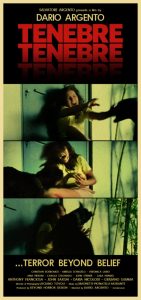 I have just spent upwards of seven seconds contemplating why I would select horror as a tag after also selecting thriller, given that the main feature of both of these genres is that some murdering[1] happens. In the case of
 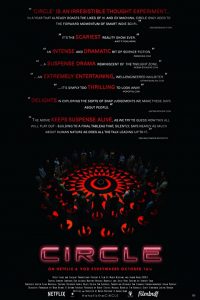 Outside of it showing up on one of the random tabs of movies that Netflix wants me to endlessly scroll through, I have never heard of
  Remember when Harry Potter and the Philosopher’s Stone was released as a book in America? You do not, of course, because some publisher decided we were collectively too stupid to understand the reference and/or to look it up, and gave us a made-up, dumbed down version instead.
 “Zero point zero megahertz is the frequency at which a person’s soul meets a ghost,” someone technobabbles in like the third scene of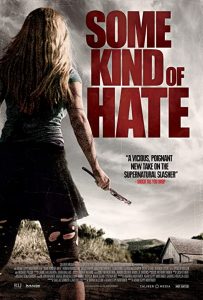
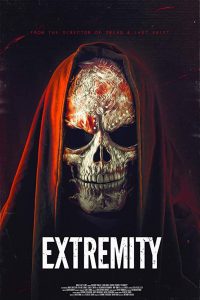 A small but visible number of movies I’ve watched in the past few years are premised as “what if a haunted house attraction, but bad things are actually happening?” Which makes me wonder, mainly, if these extreme haunts are a thing that really exist. Like, I don’t want to do the thing in this movie where the goal is to probe your psyche and bring you the very worst experiences, because that will… help, somehow? I don’t even know. But someone is actually menacing you with a butcher knife or whatever, and they chase you and things, or… look, I can’t actually imagine any way these could work in real life, which ultimately is my point. But if I’m wrong, someone needs to tell me what is the deal with them, is what I’m saying.
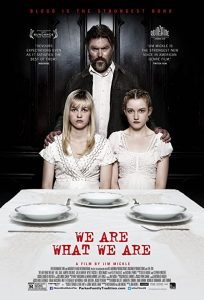 A proposition: if we accept that gothic horror must include a lonely countryside castle, then it (necessarily?) follows that American gothic horror must include a lonely farmhouse in the country. There is even, I believe, pre-photographic evidence of this.
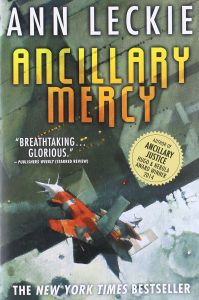 I finished Anne Leckie’s Ancillary trilogy yesterday, and it comes with a realization that I had completely failed to anticipate what the story was actually about.
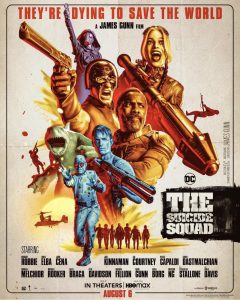 I remember liking