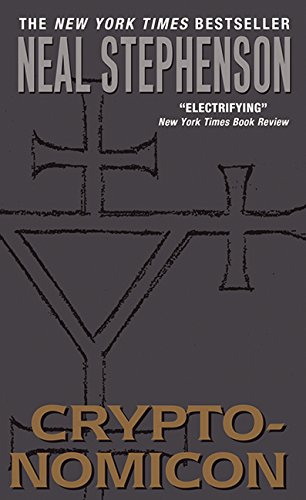
 This review is somewhere between days and weeks late; I just haven’t simultaneously felt like writing anything and had time to. I’m not entirely clear on whether that confluence of events has in fact occurred now, but I pretty much have to get over the hump, right? The sad part is, I absolutely adored Cryptonomicon. I mean, I’ve heard of Neal Stephenson and Snow Crash years since, but I never got around to reading it because I could never get into Gibson, and that made me think I wasn’t into cyberpunk. The jury is out on that question, I guess, as to my way of thinking Cryptonomicon doesn’t really qualify as cyberpunk, at least not the way I understand it.
That said, I’m not really sure how to classify it, except to say that the lone Half-Price Books I found that had shelved most of Stephenson’s books under general fiction instead of sci-fi/fantasy was clearly the correct one. It’s a book about cryptography from the early days of World War II up through modern times, where modern works out to mid ’90s, and a book about the unexpected interrelationships between a couple of families during the same span. The viewpoint characters are all either endearing or at least interesting, as are a majority of the remaining characters. The villains of the piece are not so much written ham-handedly as we are given almost no insight into their motivations at all. In a way that’s a complaint, but for the most part the book wasn’t really about bad guys, so it’s not much of one. Along with the story, which is engagingly written in exceptionally good prose, Stephenson spends a lot of time explaining about advanced mathematical concepts (well, not actually advanced, but advanced for the vast teeming majority of people who will read the book), statistics, cryptography, and the internet. While the internet is pretty much my field, most of the remaining topics are not. I therefore feel that I’m sufficiently lay of a person on those other topics to say he does a good job of explaining every point he’s trying to get across in such a way that a layperson can follow it pretty easily. Which is the kind of thing I mean when I say it’s not really cyberpunk. It’s in no way so dense that you have to know a pile of things to even wade through it, and anyway the setting is neither futuristic nor dystopian, even though there are hints of that potential for the future. Since those hints also exist in real life, I don’t think that counts as very cyberpunkish either.
And I continue to have trouble classifying it, despite odds and ends of thumbnail sketching I’ve already done. There’s World War II, of course. Lots of philosophy. A treasure hunt. Future directions that the internet can and probably should take, if it hopes to remain the repository of free information that it is now for most people around the world. More than one love story. A compelling view of undiagnosed mental disorders in people who, through luck and circumstance, end up being more or less functional in the world. A completely incomprehensible (in more than one way) island of people off the coast of Britain. Counter-counter-spying techniques. There’s just a pile of things going on, is what I’m saying. As there should be, with over 1100 paperback pages.
Mostly, though, I’m a little annoyed that nobody insisted I read this sooner, ’cause, wow.
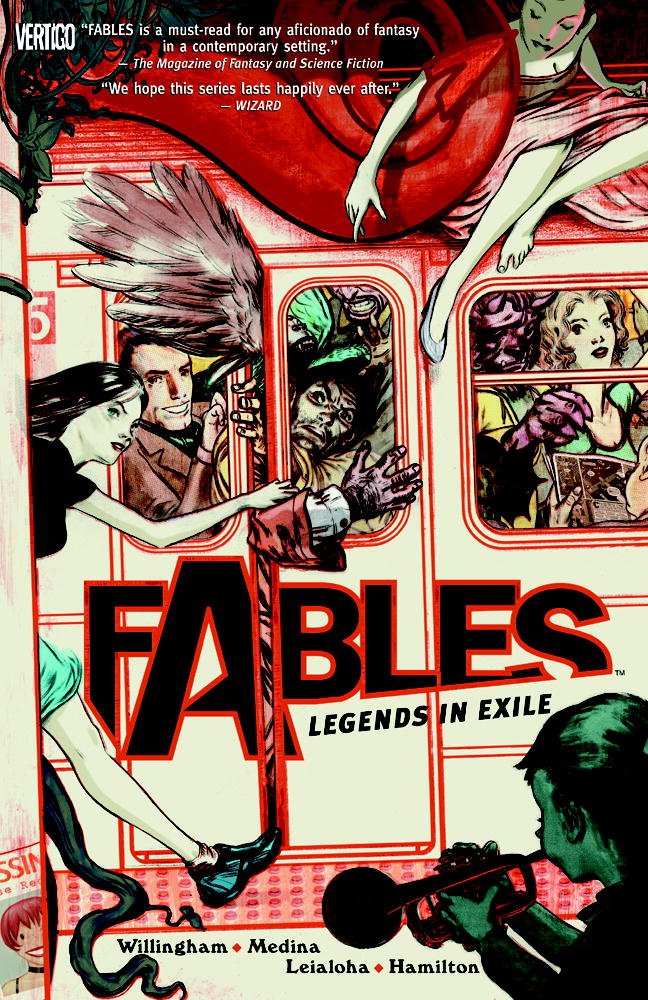
 Far back in the mists of Delirium’s history (er, the site, not the girl), I read
 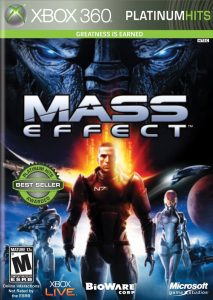 One sign of an extremely good video game is that it would be almost easier to describe it as a movie and leave out the game elements entirely. Well, okay, that may not be true. But if the reason you want to leave out the game elements is that they were so seamless and non-intrusive that you only very occasionally even felt like you were playing something instead of watching it and influencing the outcome, that would be good. It would also be a good sign if your father, no stranger to games even if he’s not the gamer type, were to ask you after watching the last 15 or 20 minutes of the game to clarify that it was in fact a game, and not a movie.
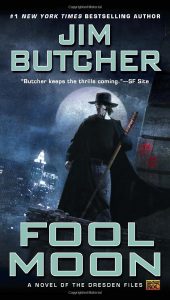 I cannot decide if my love for the Harry Dresden books comes from their being objectively awesome, or from them being in such sharp contrast to the Anita Blake books. I mean, sex happens, but it’s dealt with tastefully, with soft-focus lensing and quick cut-aways, and far more importantly, it is not the constant focus of Harry’s regular magic-wielding, mystery-solving lifestyle. Which leaves him some time to think about wielding magic and solving mysteries. Is the prose with which he wields his magic, the world-building in which he solves his mysteries, the characterizations that come into play when he interacts with the other, er, characters really any better than most books I read? I’m going to guess that probably not, and yet I could grab the next three that I currently own and read them all in a row without getting the least bit tired of it. Um, unless the plot suddenly changes into a situation where he’s banging the vampire chick Bianca like a drum and his cop friend starts hating him and he wallows in angst by taking up with a werewolf pack? Don’t be sexy, Harry! It’s not worth it!