Tag Archives: fantasy

The Historian

It has taken me, wow, over a month to read a book. It was a big book, yes. But the real issue was the moving. I am astonished, nevertheless. The next few should be faster, though I’m still pretty sure I won’t reach fifty for the year. (For reference, I’m at … huh. I’m at forty, with two more partials in the works. (Or forty-one and three more, if you count a couple of novel sized and quality fan fictions I’ve read over the past month. I haven’t yet decided whether to review them or not.) So maybe I’ll reach fifty after all. Who knew?) But I’m done moving, and I’ve finally made good unpacking progress, so even though it will still eat my time, it won’t be nearly as bad anymore, and that means that I’m going to stop using it as a crutch. Yay!

Anyway, there’s this book, The Historian, and I totally judged it by its cover. I was in Half-Price Books and there were stacks of it sitting at the end of a row. Cool name, right section, I looked at the back cover and read the line, “My dear and unfortunate successor,” and I was convinced it was the book for me. Then I didn’t read it for a while, because that’s almost always what happens. Then I finally did, and read it for so long that a Stephen King book has been out for weeks, completely untouched by me. That’s a weird feeling. Be that as it may, though, the point is I read it, and discovered that it kind of was the book for me after all.

A girl and her diplomat father are living in Cold War Europe, and one day she accidentally discovers some of his private papers. Completely forgivably, considering the above-referenced opening line of the letter she found, she reads through them to discover that her father has a past that pre-dates his current state department career. Over weeks and months he gradually unfolds to her a history of himself and his grad school adviser that hints, nay implies, nay outright states that they were on the trail of vampires and possibly even Dracula himself in the years before she was born. And then one day, her father disappears.

Despite an almost entirely fictional tale, a lot of historical research went into the book, and it shows. Europe in the late 15th and mid 20th century alike is a vibrant place, full of knowledgable allies and dastardly foes. And that’s without even paying heed to the vampires. I’ve reached the point in my life where there are some actual European and American histories that I ought to read, because I’d find them nearly as fascinating as I do the ubiquitous fiction I surround myself with. But until I get up the gumption to do research and pick and choose what books have the highest quality (that is to say, ask some people), it’s nice to know that there are reasonably solid history books out there masquerading as fiction to trick me into learning things.

As far as the fiction part, it was solidly okay. Good story. Mid-book pacing problem that either eventually resolved itself or I eventually got used to. Compelling characters and a mystery that was doled out entertainingly. The biggest single problem was just how anti-climactic the climax was, especially relative to the build-up. In a way, though, the subject matter made it a really difficult task, so I can forgive that. As I said, the rest of the book was solid, and that makes the anti-climactivity of a nearly inevitable conclusion fairly forgivable.

The Knight

Hard to believe, but true: I actually haven’t done anything in the past month or so. Well, okay, completely untrue. I’ve done lots of stuff in the past month or so. But they’ve all involved being at work a lot or hanging around the house catching up on my TV watching (alas, not reviewed here; but you should be watching Veronica Mars) while my house guy makes various improvements or moving stuff from my storage unit to my house and unpacking and sorting and cleaning and the like. What I haven’t done is play more than about 10 hours of video game total, or watch any movies, or finish more than one book.
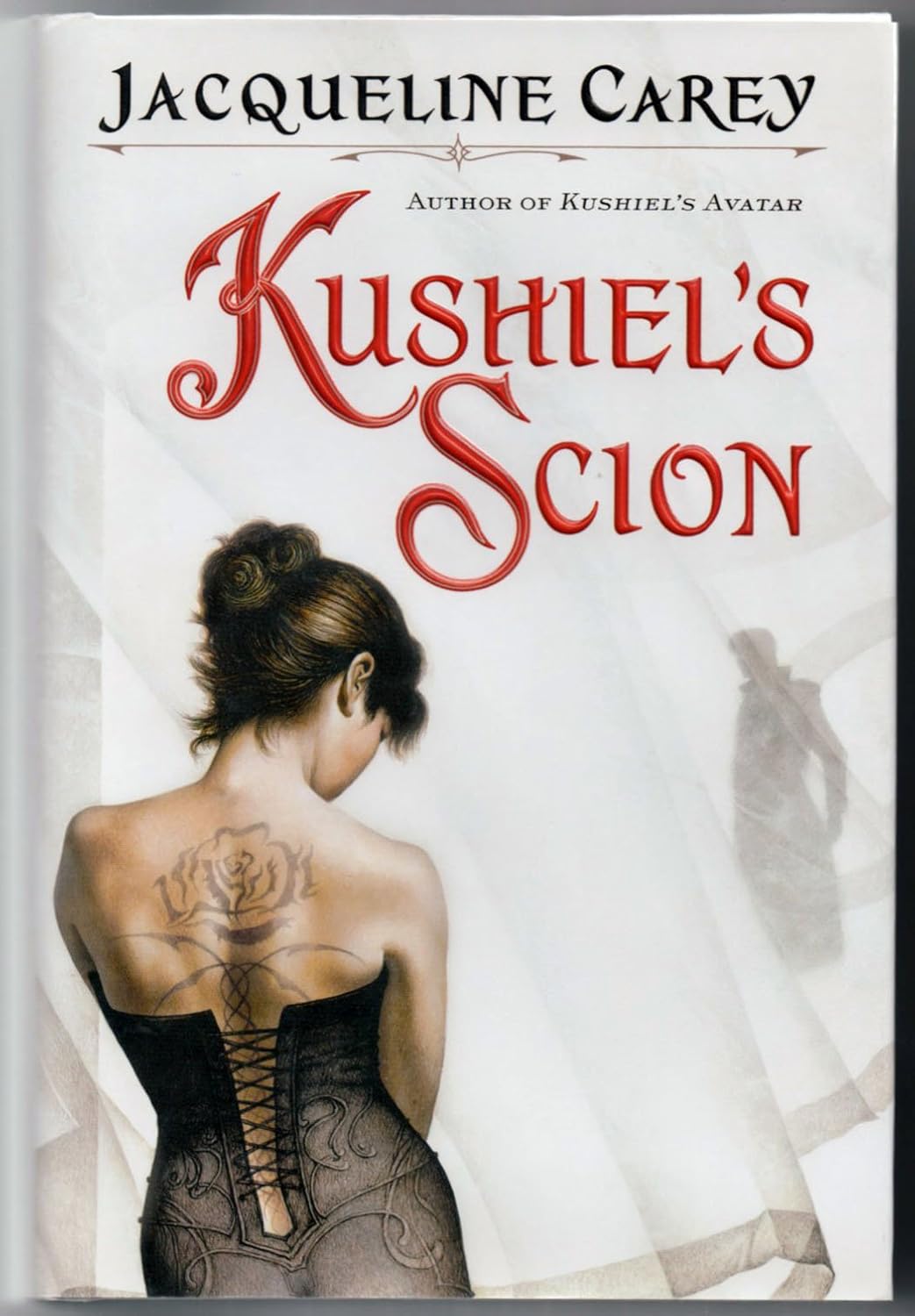
Luckily, I did finish that one book, earlier in the week, and that means I get to be here and talk about it. A long time ago, we used… no, that’s wrong. A long time ago, I was in a book club in San Jose. It met for (I want to say) two books. But one of them was the first part of a Gene Wolfe series, the Book of the New Sun. And although I can remember few or none of the plot elements at this particular moment, I distinctly remember liking the main character, the setting, and the prose. A lot. So I’ve had this low-grade interest in Wolfe ever since. And now, I have finally exercised that by reading the first of his most recent pair of books, The Knight.

In what is apparently a common theme of Wolfe’s writing, the eponymous knight is a first-person narrator of dubious reliability. Despite his size, strength, and apparent wisdom, he is in reality a young boy (no older than teenaged) who wandered off unsupervised one day, Alice-style, and found himself in a fantastical (and apparently multi-dimensional) medieval world; and who, a short time later, found himself grown to adult size via enchantment. So, like any boy probably would, Able determines to become a knight and seek adventure and the favor of a lady.

And now, an undetermined period of time later, he appears to have found a way to communicate with his older brother back in America. The story is entirely his very long letter to that brother. Unfortunately, Able still has the mind of a child. He presents information haphazardly and out of order, often whenever it occurs to him without respect for the narrative flow. What he finds important is not always what the reader would, and he puts his trust and faith misguidedly at times. The result is a mish-mash of fact and speculation and almost certainly outright fiction, too. (I mean, internally fiction.)

I say all this like it bothers me. It really did not, though. Sure, it’s a little bit harder to read and work out exactly what’s going on, but I’ve always gotten something out of puzzling out events and peoples’ motivations and so on. It’s like history; it can’t always be clean and orderly and straightforward, because history (and books) are populated by humans who are flawed, wicked, stupid, and often many of these at once. Unlike history, it’s also rife with metaphor, allusion, and dreamlike fairy tale prose. I can dig it.

Kushiel’s Scion

From time to time, I browse my local Half-Price Books. Well, more accurately, there are two that are right close and another that is along a path I follow with semi-regularity, and I tend to be in at least one of them at least once a week. So, you know, a lot. I’ve always been okay with used books, and the thing where I have a lack of income has turned that into something more like necessity. But, my point is, regular freaking customer here. So when I saw a hardback copy of a new Kushiel book from Jacqueline Carey, completely without having been aware that the series was set to continue, I just snagged it and went. Only later did I learn of the unlikelihood of finding a used copy of a book that had only been out for about a week. So, hey, neat. Go, me!

And then, a pair of incredibly busy weeks made me not only read it more slowly than one might guess, but also resulted in the review being a solid week late. The details have faded a little bit, but I can only assume that Kushiel’s Scion is about the further adventures of Phèdre, discarded child, high class prostitute, and now peer of the realm as she attempts to select and customise an incredibly ugly and inexplicably popular rectangular car without bankrupting her beloved Terre d’Ange or allowing the swirling intrigues of the court to distract her from her goal. Or, possibly, it’s about something else?

So, yeah, no. In fact, it’s about her adopted son Imriel, whose legacy is nearly as convoluted as her own. Birthed as part of a plot by his infamous mother and Phèdre’s longtime adversary to steal the throne for which he is third in line, raised unwitting of his heritage or rank in a remote monastery, kidnapped into slavery and sexual abuse at a tender age (completely coincidental to his past), and now raised to adulthood in the household of the most famed citizens of the modern age, our young Imriel has had a lot to overcome. And this book is as much about overcoming it as it is about introducing the hero of a new trilogy full of the same style (and, I think, quality) of political intrigue, lush travelogue and vivid characters that made the original so enjoyable.

Best of all, it being an introductory novel in no way hinders any of the other qualities one looks for in a book. You have the tried, true, and almost never trite trope of exploring the present by revealing aspects of the past. You have a tightly contained and incompletely explored thematic question of what it really means to be good, a question that haunts Imriel daily due to the dark passions that came to him through his bloodline and his fear-disguising hatred of his exiled mother. And lest you think that ‘incompletely’ indicates a criticism of some kind, let me hasten to assure you that the opposite would be the case; the temerity to consider such a complex question as solved would be the point where I’d think far less of an author, rather. And you have an excellent hook into what promises to be an even stronger second entry. The downside, of course, is that I’m once again in the middle of an ongoing series I’d thought closed off and complete. But, you won’t find me complaining too loudly about it. I’m a sucker that way.

Chainfire

51PDA40MJGLSo, yeah, the new Goodkind? (Okay, thoroughly not new; in fact, there’s going to be an actual new one in a matter of weeks, but it’s still currently “the” new one for now, so there’s that minimal claim to factuality, plus it was new to me, of course.) To absolutely nobody’s surprise, it really wasn’t all that good. I mean, look at the last one.
But here’s the thing. As bad as that was, at least it was competently constructed. Chainfire is a little bit better in some ways, but so much worse in others that I don’t even know how I got through it, though I do know why it took so long. See, on the good hand, the plot is more interesting than it has been in a few books and a substantial bit more relevant to the progression of the series. So, yay. Things are finally coming to a head between Richard’s empire and the evils of enforced liberalism from the previously hidden continent, which include the complete collapse of capitalism, rampant unhappiness, extensive rapine and murder, and all the kinds of things that you would expect if anyone believes that compassion is ever more important than self-interest. (Gosh, I have a hard time praising this thing.) But, whatever, when you stop looking at the thinly veiled metaphor sideways, my point is that things are coming to a head. The problem is, Richard’s wife has disappeared. And not by half-measures; instead, nobody in the world but Richard seems to recall that she was ever a part of his life or even existed. What’s more, an amorphous unstoppable killing machine of a demon has been unleashed onto his trail, and prophecies say that if he isn’t in the right place at the right time, the world as they all know it is doomed. So, yeah, not the best time for your wife to be missing from the timeline and all of your energy bent onto solving her problems instead of the other stuff going on. (It does kind of remind me of the Perrin/Faile thing more than a little bit, and I am impressed that the Wheel of Time plagiarism charges could possibly resurface. But that’s for my own horrified amusement, and not really otherwise relevant to this review.)

So, yeah, the plot elements and progression left me on the whole interested in the book, as I said. The real problem with the thing, far more dire than anything I’ve mentioned above, is that it was a 250 page story crammed into a poorly edited (copy- or otherwise) 600 page book. The first half is almost nothing but repetitions of arguments on the nature of reality, duty, right and wrong, between people that could not possibly be willing to talk to each other like this in anyone’s real life. Sure, to crowds of faceless nobodies like in the last book, okay, but these are almost all between friends and relatives. Such a beating. By the time the plot finally picked up the pace, started having more events than lectures and reminding me why I have occasionally enjoyed this series, it was only through sheer discipline (and my anticipatory enjoyment of a then-upcoming Jewel concert) that I had not already sporked my eyes free of their sockets to stop the pain.

Just… wow. If you correctly guessed that I’ll be reading the next book once I spot it used somewhere and wish to save me from myself between now and then using lethal force, I will both understand and almost certainly thank you with my dying breath. Bring breasts, though. They seem like they’d make that kind of thing easier on me, is all.

Freedom and Necessity

I think I may be getting bad at this. At least, lately I’ve been at a loss for descriptive words. In this case, my lack is for how to describe Freedom and Necessity, other than to say I liked it. I did, unquestionably, despite being of an insufficiently philosophic mind (or at the least insufficiently grounded in the basics of philosophic thought) to understand all of the historical nuances of the debates around Hegelian logic. …see, and this is exactly what I mean. Although Brust is very good at writing books that make me feel inadequate to fully appreciate them, that’s no excuse for me to make them sound like dry treatises with dense and well-disguised themes when I could as easily and far more approvingly describe them as rousing tales of adventure and skullduggery. So, y’know, bad. At this. (Also, I’m disregarding Emma Bull’s contribution to my enjoyment, but that is only because I’ve read nothing else by her and as a result can’t really put together in my head what that contribution was.)

So, I grabbed this book because of how Steven Brust is one of my buy on sight authors, these days. He is right to be, because of how everything I’ve read of his has a great authorial voice, humor that makes me laugh out loud[1], and plots that, though sometimes dense, always seem to hinge on exciting matters of life and death (and on occasion far more grave) that are guaranteed suck me in. As you might expect, this was just such a book.

Set in 1849-1850 England, this epistolary novel follows the loves and politics of a family that has just been struck by tragedy in the form of drowned James Cobham. Except that, two months later, he sends a letter to his cousin Richard informing that he is alive and without memory of his recent past. From there, the story quickly branches out to the addressing of that conundrum and a number of other family mysteries, the struggle between the proletariat and its oppressive masters, affairs of state, a magical conspiracy, blossoming love, and of course murder most foul. Allowing one of the characters eidetic memory combined with a penchant for writing letters long enough dam the Thames was perhaps overly transparent of the authors, but the unique and entertaining voices of all four main characters (one of whom cannot end a sentence to save her life) more than made up for that lone violation of my suspension of disbelief.

[1] I’ll admit here that I might seem to some people to laugh easily; to those people I would say that in fact I have a highly refined sense of humor, but choose to surround myself with people and things that activate it. So there.

The Annotated Legends

Previously, I claimed that the Dragonlance Chronicles stood head and shoulders above most of what I was reading at that time (other TSR books, Piers Anthony, etc.). I made this claim with perfect honesty and no malice aforethought. Be that as it may, it falls under that thing that we classify as ‘damning with faint praise’.

To my delight, I still find that the Dragonlance Legends are genuinely good in their own right, better than some of the books that lie ahead on my reading list over the next few months. They’re not great, or life-changing, or even wonders of prose. But they tell a story personal enough to satisfy people with no interest in the sci-fi/fantasy genre (y’know, if they were to read it, which they would not) with a scope that is epic enough to satisfy people who would refuse to read anything else. I find that usually the balance is not there. And there’s something about a good story that allows me to forgive the occasional mistakes in execution, which of course existed. I mean, yeah, I like it a lot, but it’s still from TSR.

This is all good news for me, because the annotative part of the book was a lot less well done than in the previous volume. The authors did fine, of course, as one would expect, and the poet guy too. Instead of comments all over from the design team, though, there’s one unidentified annotator covering everything else. And everything else consists of, in this case, pointing bright flashing neon signs at already sufficiently obvious thematic elements, removing any hope of subtlety. That, and pausing at any point where a moment from the past has been referenced in the text to explain exactly in what book and chapter said event first occurred. This “helpful” dissemination of information eventually came to include references to earlier points in the current book. Seriously. So, so aggravating. And I couldn’t even find a name of someone to blame, anywhere in the book.

Survivor’s Quest

With a new Stephen King book on the way, my goal was to pick a book that would be fast and easy, so I could be done in time to start right in. But, between suddenly picking up a lot of steam on the last of my 360 games and picking a book that wasn’t quite as breezy as I was expecting, I ran a few days late. Luckily, it was for a book that I genuinely enjoyed, so that’s okay.

Apparently, Timothy Zahn’s latest Star Wars entrant was released a couple of years ago while I was paying attention to something else. I never really saw it anywhere, or heard people talking about it until just in the past month. This is odd, because it appears to have been pretty relevant to all the other ones I’ve been reading lately, and even more so because it was at the usual high watermark in literary quality of the ongoing series. (Luckily for me, the prequel to Survivor’s Quest will be out next week, and I know to watch for it this time.)

In any case, yeah, this one has all the Star Wars-y (and otherwise) goodness you might be looking for. Onion layer-worthy twists, lightsaber excitement galore, a stormtrooper squad that I’ve lately been familiar with from the world of videogames (which makes it cooler to me, if not to Joe Average Reader, I suppose), the past and the future of the franchise coming together in an entirely sensible and interesting way. Sure, some of the books are golden, some of them you read just to know what’s going on between gold, and some of them you can ditch because the other books will pick up the slack for you in apology for this last group of books being so horrible. As usual, though, Zahn only provides the pure gold. Could you read just his stuff, ignore that the rest of the Star-Wars-as-a-novel experiment exists, and be pretty happy with the outcome? There’s a lot of other things I’ve read and enjoyed the hell out of, but yes. Yes, you could.

The Chronicles of Narnia: The Lion, the Witch and the Wardrobe

Looking back, the review contains one spoiler for the movie. You have been warned, though I personally wouldn’t sweat it, I don’t think. It’s not that kind of movie, being based on a decades-old book and all.

So, way back on opening day, we trekked across town to the Rave theater in northwest Fort Worth, because the guy who sold my dad his TV had claimed that that chain had the best equipment in town. It was fine and all, don’t get me wrong, but nothing like worth that kind of drive. If we hadn’t also had other things to do quite near there indeed, it would have been pretty much a terrible waste of gas. It occurs to me, in retrospect, that when he claimed the Lion, the Witch and the Wardrobe had beat out the Lord of the Rings movies for both story and technological advancements, that should have been a sign that he was a loon on other fronts as well. (In fact, I’ve just talked myself into being a bit worried about the TV, which hasn’t been delivered yet.)

The thing is, it was a pretty good movie, and suffered only by that comparison. True to the source material without carrying along Lewis’ overbearing tone, pretty as all get out, and with excellent sense of wonder quotient. Sure, it was a kid’s movie, and there were elements that were not just fantastic but downright nonsensical. (It’s not just that Santa Claus showed up to give them presents. It’s not just that this was a sign that the evil winter was coming to a close, even though 12/25 seems to fall at the beginning of winter in the majority of farmer’s almanacs that I personally have perused. It’s that he chased them halfway across a frozen lake without using a few hos to identify himself, just to create tension with the other ensleighed character of the film. Cheap, is what.)

So. Good movie? Yeah, despite being unapologetically for kids. It didn’t have those ‘for adults too’ winks and nudges, which sometimes work and often don’t. But it was still really good, in that you could put yourself in a kid’s position and still remember caring and fantasizing about things like this. The two family-friendly movies out for the season that involve multiple ‘parents with way too many kids‘ scenarios? No adult wants to remember wishing for that as a kid; I’d like to think that no self-respecting kid wishes to experience it now.

Christian movie? It’s very visible, yes. If you wanted to use it to talk to your kids (or your pagan friends, though that might be dangerous, considering the history underlying resurrection myths around the world) about what happened with Jesus and why, the parallels are there to be drawn. If you’re in a minority that’s as allergic to Jesus as a minority of vocal Christians are allergic to anything non-Christian, then, well, the parallel will almost certainly set you off in hives. If you’re most people, it falls somewhere safely in between, to be ignored if you want it and savored if you do.

Speaking of minorities, if you’re in the one that’s allergic to Furries, well, Narnia is one of the early examples of the genre, so that’s going to be unavoidable. And if you’re in the one that really gets off on that, well, try to go to a theater late in the run where nobody else will have to listen to your heavy breathing, okay, pal?

Effects? Yeah, they were fine, but don’t expect any awards.

Faery Lands Forlorn

Apparently, I waited a while to hit the second book in my current Duncan series. I’ll see about maybe reading the last two closer together. This will be tricky, as there are a couple of gotta read books coming out here soon, plus a couple of other books I want to read in between or whatnot.

Faery Lands Forlorn continues the adventures of Queen Inosolan and Rap the stableboy, now separated by half a continent from each other and from home. Things move fast despite the introduction of a few more races of people with which to fill in the map. In a way, they moved too fast almost. All the events of the first three quarters of the book felt like they should have taken up only a few dozen pages, not a few hundred. And yet there was no trace of things seeming dragged out or focussed on disinteresting side material. It’s a neat trick, and although I wouldn’t want to duplicate it, I wish I knew how he did it. Lots of enjoyable but ultimately empty calories, perhaps.

In the midst of the fast-forward buckle-swashing, sorceress-escaping, and romance-creating, Duncan still found time to flesh out the magic system quite nicely and introduce more powerful enemies while giving old enemies new powers of their own. I think my favorite thing so far is how the word enemy is a misnomer. There are people opposing our heroes’ goals and people assisting them, but there haven’t been any (well, more than one, and I haven’t made up my mind there) truly bad people in the world; it’s all about politics and unobjectionable people who have different goals from each other. The very opposite of run of the mill, and good enough on that merit alone even if it weren’t so rompful.

Brokedown Palace

515ke3hm56lSeriously. If this is the kind of experience any given regular person has when reading fiction, I can force myself to feel a little bit of sympathy for the non-readers of the world. It was very good, and certainly easy to follow on the primary level. Four brothers, a king and his siblings, must decide how to deal with the gradual decay of their familial home and the seat of the kingdom’s power. Sides are chosen, battles are fought, dragons are incidentally slain. So why did I feel like I spent the entire book trying to catch up and understand what was really going on?

Brokedown Palace
, set in the same world as Brust’s Vlad Taltos novels and Khaavren romances, interweaves the main story with several folk legends of that land (possibly actually Hungarian in origin, but that would be missing the point, or so I believe). I don’t really think I ever did decide what was happening under the surface. There was a lesson in the tale, and I think I’m supposed to be able to compare it to the many lessons (or were they all the same lesson?) of the interspersed fables. Only, most of the fables themselves were incomprehensible to me. As they often were to the characters of the story. Eking meaning out of that confluence of events, if any exists, is beyond my capacity.

Odd, in any case, to have enjoyed a book I understood so very little of. Perhaps I don’t actually have that sympathy after all. Below the cut, a couple of questions that act as spoilers for the book, and more importantly, as spoilers for his other novels in the same setting.
Continue reading