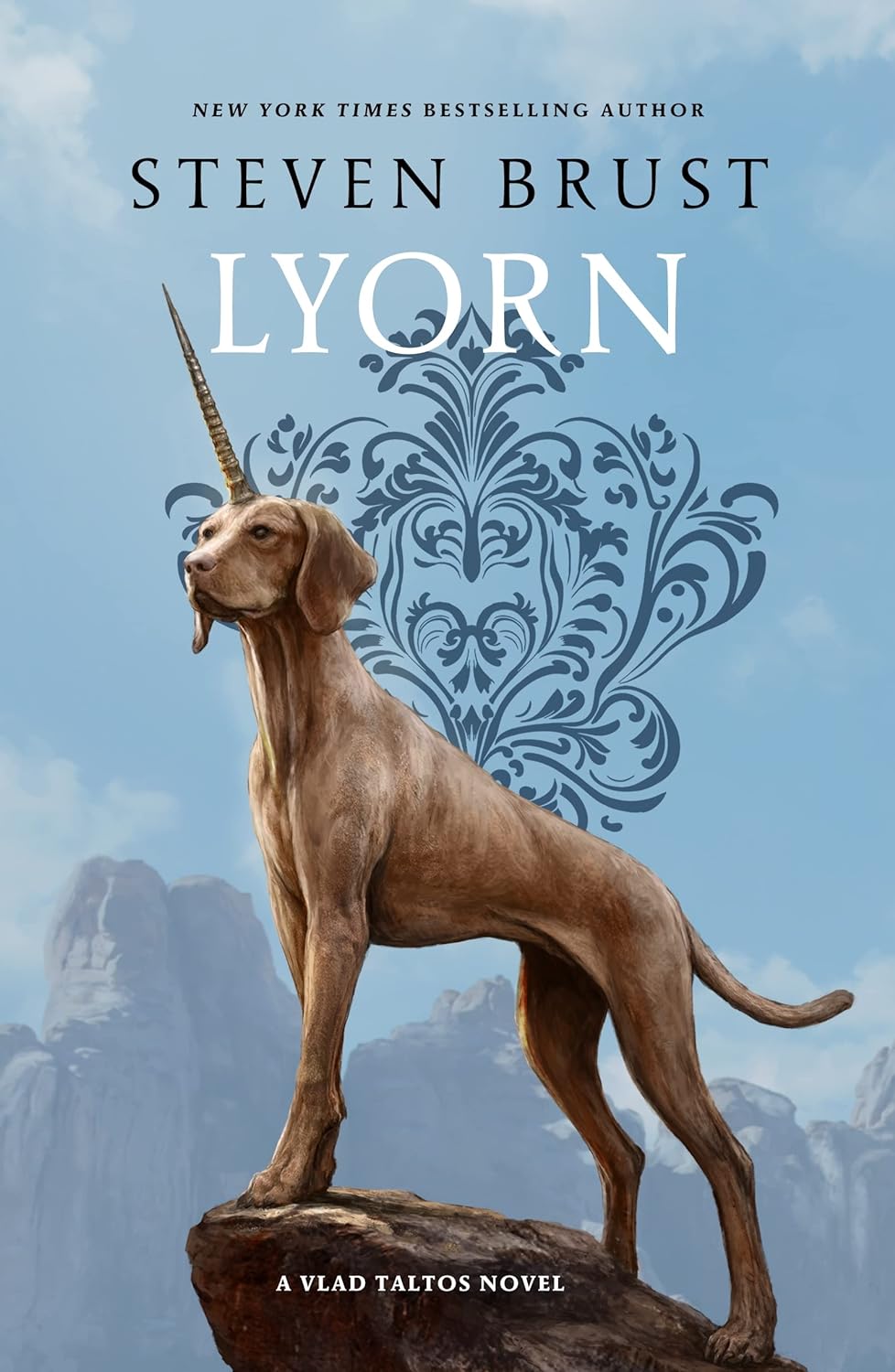
 After Lyorn, there are two books left in the Vlad Taltos series, and you can really tell. This is a book that is tying up loose ends in an effort to rush headlong toward a finale. But, and here’s the good news: it’s also a book that’s about something besides tying up loose ends.
In the words of General Rieekan, “A death mark’s not an easy thing to live with.” So Vlad has decided to lay low at a theater (because of sorcery-related reasons) to plan his next move. Which quickly turns into a series of musical numbers and side quests, but the former are unobtrusive to the reader (if that’s not your thing) and the latter are quickly rendered apparent to be the actual point of the book. I’ll explain myself below the spoiler cut, not because it is especially a spoiler for more than the book’s themes, but for brevity, because I’m about to overstay my welcome.
 New Vlad book! Which you’ll know if you’re a long time reader here is kind of a big deal. You’ll also know that the series is coming towards an end[1], which explains why I can say very little. Basically, Vlad Taltos is an assassin, he’s made powerful enemies and powerful friends, and this particular book is more about the latter than the former. Worth knowing:
  The only upside of accidentally reading the newest Vlad Taltos book a year late is that it probably indicates a proportionally shorter wait before the next one. Well, no. There’s also the upside that it’s even harder than in most long series to discuss the Vlad books without spoilers, so yay that anyone I know who cares about them has read this ahead of me, right?
 I’m not sure if it’s literally true, but WordPress claims that this is my 400th post here. That’s a nice round number, and for people who care about such things it is fitting that said post be dedicated to one of my favorite authors having written a new book in one of my favorite series. Sure, he wrote it a goodly while ago, and sure, I’ve never reviewed any of the other books in the series (besides a highly allegorical one set in the same world but otherwise wholly unrelated, at least that I’ve been able to detect via my apparently useless English Lit degree), but regardless of all that,
  Seriously. If this is the kind of experience any given regular person has when reading fiction, I can force myself to feel a little bit of sympathy for the non-readers of the world. It was very good, and certainly easy to follow on the primary level. Four brothers, a king and his siblings, must decide how to deal with the gradual decay of their familial home and the seat of the kingdom’s power. Sides are chosen, battles are fought, dragons are incidentally slain. So why did I feel like I spent the entire book trying to catch up and understand what was really going on?