So, I’ve been kind of dreading this review, in the back of my head, ever since I got going with the whole ‘review things’ idea. (Which, clearly, was mine alone, never before conceived in the scope and breadth of human experience.) It’s like this. I’ve got these books that I started reading in 1993 (when there were just the four of them) (sidebar: I can still remember reading over my girlfriend’s shoulder about some guy named Mat whining about whether to go home with Perrin or what he should do if not that; funny how much better I like him now than I did in that moment of first exposure), and they’ve shaped my life, if only to a small extent. Sure, none of my big life decisions have been informed by them, but they account for about half of my friends and at least a quarter of my entertainment budget; and when you think about it, the stuff you do because you enjoy it really is the important part, so I guess it’s fair to say they’ve shaped my life to more than a small extent.
My point is, there are these influential books, only the quality has declined over the past, well, sadly, more than half the years since I first picked one up. And every time a new one comes out, there’s this balancing act between sufficient excitement to get and read the book and sufficiently lowered expectations to not loathe it afterwards. And now I have to review Knife of Dreams. So, yeah, that’s the source of the dread.
Only: it wasn’t that bad. I can do you one better. It was actually pretty good. Sure, there’s the overdescription gene he got from Tolkien. Sure, there’s a chapter that had me rolling my eyes at the pointlessness of dwelling on a single event for that many pages. (In fact, it involves Elayne being wet, just like in the last book.) But that stuff was the small part, not the large as it has been for so long. Plotlines advance in significant ways, and some of them resolve. Some of them even resolve satisfactorily. And if some others seemed like he was working on completing a checklist rather than presenting high drama, well, at least the little box did get checked.
And I can do better than that. There were multiple scenes that had me talking to the book, in anger, in disbelief, in excitement. None of them bad things about writing or lameness, though; all about plot elements that I was engaged by. Better still: there was a solid sense of wonder moment, and I thought those had been long gone, this far into the series (because of familiarity with the world as much as because of the author’s failures of late).
If the author wrote like this for a standalone book, I’d roll my eyes a few times, but I’d have enjoyed myself. It’s nice to be able to say that again, even if it’s not the ‘You have to read these books, now!’ diatribe I inflicted on people until about 1998 or so.
A few spoiler-like materials lay beyond. Before that, though, one thing. As much as I enjoyed myself, and as much as I was impressed by the way the plot appeared to have momentum: No, I don’t believe he can finish in one more book, unless he really does cram in 1000 pages of small font with as much plot density as the sixth book. Still, this one was a lot longer than they have been since, well, they were last good. So I suppose that’s a positive sign.
Continue reading
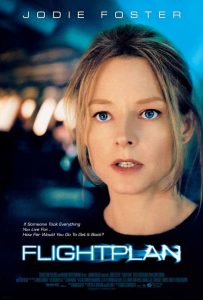 Some time ago, I mentioned one of the best previews I’d seen in a long time, for a movie where Jodie Foster gets on a plane with her daughter, goes to sleep, and awakens to discover that not only is the girl missing, but nobody remembers seeing her and there’s no proof she even had a ticket for the plane. In the months that passed between my first awareness of
 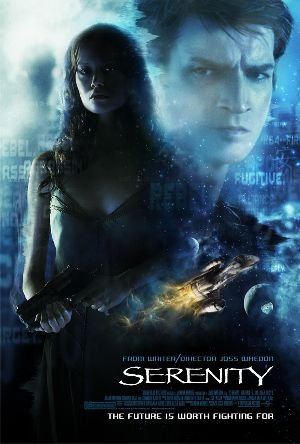 Some time ago, there was a new Star Wars movie coming out. I’d been burned by the series a bit, if not as badly as some, so I was looking forward to it still, but guardedly. Meanwhile, the Joss Whedon movie,
 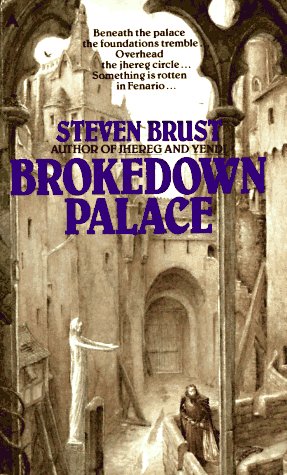 Seriously. If this is the kind of experience any given regular person has when reading fiction, I can force myself to feel a little bit of sympathy for the non-readers of the world. It was very good, and certainly easy to follow on the primary level. Four brothers, a king and his siblings, must decide how to deal with the gradual decay of their familial home and the seat of the kingdom’s power. Sides are chosen, battles are fought, dragons are incidentally slain. So why did I feel like I spent the entire book trying to catch up and understand what was really going on?
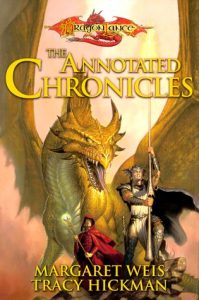 When I was a wee lad, I read a ton of those AD&D Dragonlance books, pretty well indiscriminately. There came a time in my late teens when I realized that some, okay most, of the books in that setting were pure crap, and that they didn’t actually have to be suffered through in order to know the entire story. Ultimately, books written by authors who didn’t create the characters I was trying to read about, in which the characters did completely ridiculous things that they probably would never have done anyway and certainly would have mentioned doing… these kinds of books could be ignored. It was a pretty happy day, when I finally worked that out for myself.