It has taken me, wow, over a month to read a book. It was a big book, yes. But the real issue was the moving. I am astonished, nevertheless. The next few should be faster, though I’m still pretty sure I won’t reach fifty for the year. (For reference, I’m at … huh. I’m at forty, with two more partials in the works. (Or forty-one and three more, if you count a couple of novel sized and quality fan fictions I’ve read over the past month. I haven’t yet decided whether to review them or not.) So maybe I’ll reach fifty after all. Who knew?) But I’m done moving, and I’ve finally made good unpacking progress, so even though it will still eat my time, it won’t be nearly as bad anymore, and that means that I’m going to stop using it as a crutch. Yay!
Anyway, there’s this book, The Historian, and I totally judged it by its cover. I was in Half-Price Books and there were stacks of it sitting at the end of a row. Cool name, right section, I looked at the back cover and read the line, “My dear and unfortunate successor,” and I was convinced it was the book for me. Then I didn’t read it for a while, because that’s almost always what happens. Then I finally did, and read it for so long that a Stephen King book has been out for weeks, completely untouched by me. That’s a weird feeling. Be that as it may, though, the point is I read it, and discovered that it kind of was the book for me after all.
A girl and her diplomat father are living in Cold War Europe, and one day she accidentally discovers some of his private papers. Completely forgivably, considering the above-referenced opening line of the letter she found, she reads through them to discover that her father has a past that pre-dates his current state department career. Over weeks and months he gradually unfolds to her a history of himself and his grad school adviser that hints, nay implies, nay outright states that they were on the trail of vampires and possibly even Dracula himself in the years before she was born. And then one day, her father disappears.
Despite an almost entirely fictional tale, a lot of historical research went into the book, and it shows. Europe in the late 15th and mid 20th century alike is a vibrant place, full of knowledgable allies and dastardly foes. And that’s without even paying heed to the vampires. I’ve reached the point in my life where there are some actual European and American histories that I ought to read, because I’d find them nearly as fascinating as I do the ubiquitous fiction I surround myself with. But until I get up the gumption to do research and pick and choose what books have the highest quality (that is to say, ask some people), it’s nice to know that there are reasonably solid history books out there masquerading as fiction to trick me into learning things.
As far as the fiction part, it was solidly okay. Good story. Mid-book pacing problem that either eventually resolved itself or I eventually got used to. Compelling characters and a mystery that was doled out entertainingly. The biggest single problem was just how anti-climactic the climax was, especially relative to the build-up. In a way, though, the subject matter made it a really difficult task, so I can forgive that. As I said, the rest of the book was solid, and that makes the anti-climactivity of a nearly inevitable conclusion fairly forgivable.
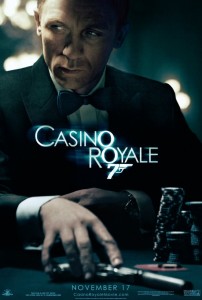 As so often promised, James Bond has returned.
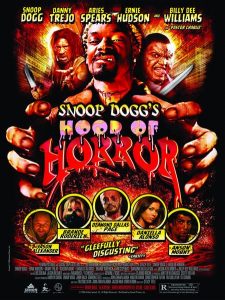 I have such a headache right now. I’m going to assume that it’s from reviewing too much too fast, and wrap this up as quick as I can. Assisting me in that task is our final movie of the festival,
