Ultimate Spider-Man: Death of Spider-Man

There just aren’t any words. Which I suppose I’m going to have to get over quickly, all things considered. It’s just that I haven’t been hit this hard by a character’s death since, well, every time I re-read The Fires of Heaven.[1] But there’s still almost nothing to say. I mean, I can’t talk about the plot, because the title (frankly, the last several titles) gives away far too much as it stands, and anything I might add to plot details after that would take away even more strongly from the experience.

But then again, Moiraine’s death didn’t hit me nearly as hard the first time, because of the shock, so maybe they knew what they were doing. (Maybe not, too, because I’m sure it wasn’t broadly announced on the monthly schedule. Still, all I can go with is what I was given, you know?) The upshot of all this? I do have words, but they are not really that different from the words I already had. Peter Parker is an astoundingly brave and moral character who improves everyone around him, and this book tells… you know, it doesn’t tell a powerful story. It simply tells the latest chapter in an incredibly powerful and almost certainly wildly underrated story. I think it also makes a huge mistake, but I suppose that remains to be seen.

[1] Also, Joyce in The Body[2], but that’s not the same thing, my sadness is for the ones she left behind, not for her loss itself.
[2] Unlike The Body, I didn’t cry. But I bet I would if I ever read through these books again. It absolutely hurts.

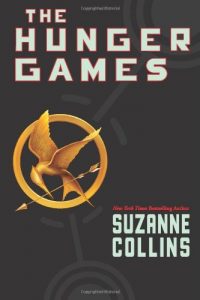
The Hunger Games

A forthcoming movie announcement led to a few people (my former roommate decidedly not among them) raving about The Hunger Games trilogy, which I had never heard of before that moment. This is understandable, since it’s written under the auspices of the young adult section of ye olde bookestores, which I have not often entered in this post- Harry Potter world. But all the same, a dystopian future America with hidden secrets in which teens are randomly selected every year to compete in a fight to the death, all so that the Capitol can flex its muscles over the 12 districts? It’s like someone watched Battle Royale and decided to rewrite it so that backstory would make sense. Obviously, once someone got around to telling me about it I wanted to read it for myself!

Anyway, the upshot is that while I learned all about the Hunger Games themselves[1] and a fair amount about Katniss Everdeen, our narrator-heroine, I did not learn very much yet about the hidden secrets of the dark future. But that’s cool, I have two other books where that can happen, and in the meantime the book was just compulsively readable. Of course, it had a few problems as well, though I hasten to add that none of them dampened my interest one bit. It’s written mostly in present voice, although it dips into the past for flashbacks and history lessons. I thought that would turn out to be a problem, but it’s not so bad, I’m just not used to seeing it. The other, larger problem, is that Katniss is sometimes jaw-droppingly oblivious as a direct result of her overabundance of natural suspicion[2]. I thought this would break the character, and it may yet, but not so far; because, so far, it has been at least as much hindrance to her as it has been benefit, and it turns out I’m interested in reading about characters with flaws that actually affect the progression of the story. As long as she either fixes herself or eventually gets badly hurt, I will have no complaint here either in the long run. (And it’s not like that suspicion of hers is unjustified, given her world.)

So, cool setting, cool plot, interesting narrator, and if the rest of the characters were just a little beyond two-dimensional at best, well, that didn’t bother me through the voice of this particular narrator. It might in the movie, but then again, the characters in the movie might have more depth. All that matters for now is, y’know, this was a pretty good book! I should find the next one, eh?

[1] Enough to make me wonder how they can adapt this young adult book as anything but an R-rated festival of violence without changing a lot of things during the Games themselves. I shouldn’t care about that, but, well, you saw the Battle Royale reference earlier, right?
[2] Well, okay, and a third problem, not so much for me but maybe for you if you are not in fact a teenaged reader, which I expect you will not be if you’re reading this particular review, is the occasionally awkward “Who do I really like, if anyone?” or “What will my first kiss be like?” folderol that when you get right down to it are the only parts of the book that felt like they were aimed at a young adult audience, and I almost wonder if they were conceived after the fact to get the book into this particular… genre? That doesn’t seem like it should be the right word.

50/50

Meanwhile[1], I saw another movie tonight! It’s because I’ve been kind of way behind on them, y’know? Horror is just about all that’s left to me at this point[2], though there are a couple of interesting things on the horizon. 50/50, on the other hand, was pretty much an interesting thing on the opposite horizon, only showing in a handful of local theaters by now. So it’s good that I caught up to it in time!

Especially good because of how it was, you know, good. I cannot help but draw a comparison to The Road. Just as that novel was a meditation on the end of the world, this movie was (when not being funny, which it also managed quite well, but really, can you expect less from Seth Rogen at this point?) a meditation on the end of the world writ small: really, can you see 50% odds of beating the cancer in your spine that you didn’t know you had until earlier today as anything less than the end of your world? The fundamental difference between that book and this movie is, of course, the presence of hope. There are dark moments, horrible people, and of course lame Hollywood misunderstandings about the way the world actually works, because, despite anything going on in the plot or theme, that’s how Hollywood rolls. But put all that aside, and there’s still an undercurrent of fundamental hope. I guess what I’m [still] saying is that it doesn’t matter how either story turns out; what matters is what the road was paved with.

[1] The game is still on, in extra innings now. It is really hard to think about other things, much less write them.
[2] He says, as though complaining. Ha!
[3] This review is complete, and the game is still going. I guess, if you are a historian with extremely limited access to first- and second-hand documentation, you will never know how the 2011 World Series turned out, Dammit.[4]
[4] Don’t start with me about how footnote 3 wasn’t referenced. Seriously. You can go fuck yourself.

Superman: Red Son

The upside to that random Frank Miller book I read today is that it broke up my otherwise back-to-back Mark Millar readings. (Although, of course, if they’re pronounced the same (as I suppose), it’s like a threepeat. Which is really a terrible word, so I hope it’s instead mill-are as I’ve always said under my breath when typing it.) I’m not sure what I would have read if I had planned ahead, but the graphic novel that happened to be sitting in my car, still uncategorized after my last trip to Recycled Books in Denton, was Red Son. And I’ve been wanting to read it for ages anyway, so there was really no question of anything like worrying about it not being one of my ongoing non-superhero series and therefore out of order.

The conceit, if the title does not make it obvious, is that Kal-El’s ship landed on the other side of the planet, where he was found by collective-farmers and raised as a Communist before developing superpowers (as one does) and becoming Stalin’s darling. And then, of course, the story proceeds.[1] There’s not a lot more I want to say, because things go in extremely interesting directions that should not be spoiled, but I will say that it presents one of the most compelling versions of Lex Luthor I’ve ever seen. And despite my avoidance of DC Comics, I follow really a lot of Superman stories on film. So.

One downside: I cannot find it in me to entirely approve of Superman having as strong of a moral center without having been raised by the Kents. I comprehend how that’s wildly unfair to millions of possible parents out there in the early twentieth century world, and especially to somewhat fewer millions of Soviet parents. Nevertheless, it’s a thing.

[1] Not that you can tell from where you are reading, but I have been paused for a very long time because the incredibly compelling Game Six of the World Series has distracted me from typing for a while. I’m not sorry or anything, just documenting.

Holy Terror

Sometimes, really random things happen to me. For instance: today my boss recommended (based on the horribleness of it) that I read Frank Miller’s latest opus, Holy Terror, and then he handed it to me. Did you ever wonder how heroes thinly based[1] on Batman and Catwoman would react to a series of terror attacks, if they were interrupted mid-hate-fuck on the roofs of Gotham? Let me assure you that you will never have to wonder again.

Anyway, some sense impressions, and that will be all I have to say about that. Why so very much attention to ours heroes’ sneaker patterns? Why, for that matter, sneakers? I don’t care how artistic the impulse, three pages of empty white squares still comes off as lazy. I’m insulted by cartoonish villains at this point, much less cartoonish villains based on real people. Speaking of real people, the caricatures mostly came across as mean-spirited, and I wonder if that was the point; certainly it was the point of the rest of this story, right? It doesn’t matter that you ascribe the elaborate and pages-long rope bondage of Catw Natalie[2]-the-cat-burglar to frustrated Al Qaeda members, Frank, we still know it’s your fetish.

The worst part is, there are interesting ideas in here that will probably never be handled by an author who is more interested in them than in an anger-fueled revenge fantasy about Batman knocking out terrorist teeth. Al Qaeda as the tip of a much vaster conspiracy? I would read more. I would probably even read more if written by Tom Clancy, ’cause sometimes he can make a concept come alive. Archaeological discovery of an ancient and incomprehensible city beneath Manhattan? I would absolutely love for a good speculative fiction author to steal that idea wholesale and do something amazing with it. (Even if they had to keep and explain the utterly random T-Rex head coming out of one of the walls.) Instead, though, we’ve got this, which I hope I have prevented you from reading. Because the art? It would be the worst thing about the book if I hadn’t also read the words.

[1] I really, really wonder whether it was Miller or DC that decided to pull the plug and re-imagine this particular scenario with characters outside certain lucrative copyrights.
[2] let’s say

30 Minutes or Less

It’s true, I finally started watching movies again. So, yay! If you find Jesse Eisenberg to be the premiere personable actor of his generation no matter how horrible of a human being he is portraying, or if you find Danny McBride to be a compelling poor- / gross-man’s Seth Rogen, or especially if you think Aziz Ansari’s voice makes his every line somewhere between two and three times as funny as it would have been in another actor’s mouth, and if you don’t mind your dark grey comedy having plot holes a pizza delivery guy could drive through, then you could do a whole lot worse at the dollar theater than 30 Minutes or Less.

Pretty dim praise, right? I laughed quite a lot, don’t get me wrong, but on top of the plot holes, which were pretty galling for reals, there just weren’t any likable characters. The heroes merely won the title of least hateful, and that’s kind of impressively sad. In a way, Danny McBride’s villain sidekick may have been morally better than any of the stars, and he was still quite certainly a villain.[1] But anyway, if you still think a couple bucks and the 90 minutes  are worth your time, I’ll tell you that this is a movie in which a couple of bad guys force a dead-end, largely friendless pizza deliveryman to rob a bank, by strapping a bomb to him. And while I bet there’s a potentially really solid drama somewhere in that plot, and that it is possibly named Dog Day Afternoon, this is definitely more the “hijinx ensue” version.

Enjoy. Or not. But Ansari really is kind of hilarious, so.

[1] Okay, the romantic interest had no problems, she just wasn’t enough of a character to get a handle on, aside from “I can see why Jesse wants to go to there”.

Ultimate Avengers Vs. New Ultimates

I guess this Death of Spider-Man thing is the next big Ultimate event, what with a prelude and now crossovers? I still think it will turn out to have been a giant mistake (unless it is simply not true), and the current book did not disabuse me of that notion at all. The book starts pretty much exactly where Blade vs. the Avengers left off, with S.H.I.E.L.D. in the midst of an international incident in the Iranian desert. What better time to set off a power struggle between Nick Fury (leader of the black-ops Avengers) and Carol Danvers (leader of the public-facing Ultimates) by accusing each of them to the other that they are responsible for the sale of genetic secrets to rogue nations and splinter groups?

And, seriously, whether the struggle was set off by whichever of them is the guilty party or by a mysterious outside agent, the twists and turns are pretty entertaining. (Though I will admit this is perhaps just a few too many versus in too short of a time, but it’s cool, the horizon looks clear for a little while.) In any case, I liked the starting point and I liked the ending point, and the path was, if just a touch predictable, still always fun to read. Except for, well, the crossover bits with the so-called[1] event itself, which felt tacked on and unrelated in every way to the story being told. I wonder if, in a week or so, I’ll regret the publication order of this book and the next one? Either way, I definitely regret the hollow treatment in this book, with characters mouthing mostly empty platitudes about importance and tragedy. What I don’t know is whether the cause was Millar’s annoyance at having to work a few extra pages into the story he was actually telling or whether it was that the emotional impact resides elsewhere in pages I haven’t seen yet, and any words without the weight behind them would just feel this empty?

[1] Technically, by me, but I still bet I’m right and this is / was meant to be a big crossover event.

The Road

I got on a plane to Portland on Thursday night, and, as one does, I brought a book along. It had been recommended by a librarian and by a used bookstore’s regional manager, both friends of mine. Pretty rarefied praise, right? I read about three chapters of it around the discomfort of my late arrival to the front seat, you know the one, it has no tray and no space for your stuff. Then, when the plane landed, I set it down to get my backpack out of the overhead luggage, and then walked off the plane, fiddled with the internet for an hour thanks to free wifi, and realized as I was at the end of the line for the next plane that I had never picked it back up. A quick check in my backpack confirmed the sad tale, but by then not only was the first plane almost certainly gone, I was also on the jetway, three people back from the actual plane entrance. So I sat on that flight, sad about the lost book and the inability to read until I finally fell asleep, and then I found a Powell’s at the bookstore in the Portland airport and bought the first book that really caught my eye, the long-recommended The Road. (There was a movie starring Aragorn as the man who is on said road, which I never saw, if that helps to identify which particular road I have in mind.)

In a strictly plot-derived sense, this could be a book of the first years of the apocalypse that resulted a century and change later in my ongoing Deathlands series[1]. Something horrible happened, and the world (presumptively but never explicitly America) is a broken, terrible place where you can only rely on yourself or, in the case of pretty close to 50% of the book’s characters by presence, your father. Food is gone, shelter is gone, animals are gone, even the sun is gone. The prose reminds me a lot of Hemingway, only with a richer vocabulary of colors to paint from; I could almost understand, reading it, why people can appreciate a spare canvas over a rich, vibrant, and above all completely full one. It will stay with me, I know, but I’m not sure I can say that I liked it.

How is this, you may ask, knowing my love of the apocalyptic? It occurs to me that, aside from the dire events themselves, my apocalypse porn addiction shares another consistent thread throughout the collection. All of those books, however high- or low-minded, have a generous amount of hope buried within them. The Road was as bereft of hope as it was of sunlight, and no amount of spare beauty could ever make up the lack. And now that is a thing I know about myself!

[1] In the character and prose senses, of course, they could not be further apart.

Dectra Chain

Camping now means “another Deathlands book”, since they’re already old and don’t need to be kept very well plus also it’s not like I’m going to run out of them anytime soon. Of course, I only managed to read a tiny portion of the book while camping, because I had very little luck concentrating on any book until the last full day. And then it took me like a year to read it afterward, but that’s because I’ve been busy with too many hours of work (and lots of comics to read while there) and too many hours of TV that I fell behind on while camping, so, y’know. It’s just weird ’cause these read so easy.

You know what else is weird? Dectra Chain does not refer to anything actually in the book, and even Wikipedia Pete knows almost nothing about the word. It appears to have to do with navigation? Which, okay, is fair enough, since the book is about a post-nuke whaling village in Maine. It’s not clear to me where they got their boats or the know-how to maintain them, but I guess it’s been a hundred years, people adapt and all. If you’re anything like me, a whaling village doesn’t sound like it has the kind of serious threat that Ryan Cawdor’s band of teleporting rovers needs to take care of, except perhaps from the whale’s perspective. But sure enough, there’s a bloodthirsty captain who holds the town in a strange thrall and who our heroes naturally manage to run afoul, after which violence ensues, as it is wont to do.

But what’s interesting to me is not this so much as the fact that our good guys are still kind of assholes at times. Notably, they both ran across some French Canadian hunters[1] and chased them off and stole their food and weapons instead of just leaving them be, and then later very nearly left town without Righting the Wrong. I like to think the subsequent difficulties were karmic retribution, but I suppose I’ll instead have to get used to the idea that they’re merely the best of a bad world, and not always good in a bad world instead. However else I may feel about it, that at least has the virtue of being suitably apocalyptic.

In other, unrelated news, there may be more people teleporting around! And also a secret, more highly classified teleporter that leads to a secret moonbase? Whether these facts are related or will ever become the focus of an episode remains to be seen.

[1] Well, that’s what I assumed, all it said was that they couldn’t speak English.

Moneyball

I have a theory, which is as follows: if my reasonably beloved Rangers were not in the chase for the World Series once again, I would have found Moneyball to be at least a little less compelling than I did. Still, I like baseball in general enough to have enjoyed it in any case. It combines several worthy sports film ingredients: the rise of the underdog, impressive success, an uncertain ultimate outcome, and the thing where it is really a lot more about the characters than the sport.

Also, Brad Pitt: is there a more affable actor in all of Hollywood? Anyway, though, the premise of the book on which the movie is based is how statistical analysis has started to change the way baseball works. If you like statistics a lot, you will adore this movie. If you do not give a crap or even hate math? It still works pretty okay on the straight sports formula version. If you just hate baseball, I reckon you already were going to give it a miss, and that would probably be a good idea. Even if you find Pitt eminently affable.