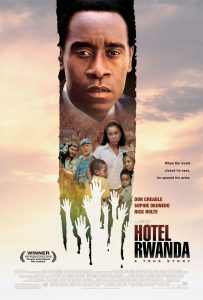
Hotel Rwanda

It’s a lot to take in, is the thing. Sure, you’ve got the whole Germany and the Jews thing, but that’s so internalized into our culture that it doesn’t pack the same visceral punch. I didn’t know that yet, at this time yesterday. But, back a couple of months ago, the girl told me I should go see Hotel Rwanda. I doubt it would have crossed my mind to, on my own. This, also, is part of what there is that’s a lot to take in. So I looked for it, and kept looking for it, but it was a small distribution and was never local. Until last night, when the dear, dear Alamo Drafthouse started a three day run. I managed to escape work early enough for the run to downtown, so I got to go.

Really, there’s too much to tell about what went through my head while I was watching. It could be that there’s be too much to get it all out even if I waited a week, but I’m going to see another movie tonight, so now is the best time. Therefore, I try.

It’s a true story thing in Rwanda during the genocide in 1994. The comparisons to Schindler’s List are inevitable, but I’ll try to avoid them. I haven’t seen that movie since before the events of this one actually happened, so it’s possible my memory of it is flawed. On top of which, like I said earlier: Unfamiliarity has bred a deeper reaction, maybe. As for the film elements, they’re all fine. Unobtrusive cinematography, just as I prefer. Excellent acting, never over the top despite subject matter that would all too easily create that kind of thing. A script that only crossed the preachy line once, so that’s forgivable, and it made up for it by humanizing characters that could have been too noble or too tragic or too evil.

Anyway, though, it’s a film based on a true story, and the story is probably easy to learn about, so I need not go into it here. I say probably easy to learn about, and that’s the part of what’s in my head what I will go into. I feel bad about myself, that I’d have to poke around to see how well-documented things are. I remember it happening, and sure, I was in college, but hell, that’s exactly the time I ought to have been the most fired up about it. And it barely registered. Now, it has registered. I got a little choked up looking at a billboard on the way up to Dallas today, because the subject matter reminded me of a line from the movie despite an only tenuous connection. I’m pretty sure I’ll have a nightmare sometime in the next week where a man will tell me to “Take the river road; it’s clear.” I feel bad about myself all over again for the things I thought would be pretty good ideas, for a few hours on a Tuesday in 2001.

Despite all that, I doubt my life will really change. The way I think about some things has changed, and I hope I keep that. I’m going to pay more attention, and maybe I’ll find a way to do something that would make a difference, someday. Probably not, and I won’t feel bad about that, because the main thing that makes heroes is circumstance. And no matter how I may feel about myself for never making that kind of difference, having the circumstance to allow for it would be far, far worse. That’s where the paying attention and the seeing things differently comes in, is by helping to avoid that kind of circumstance in the first place, maybe. And I can definitely get on that bus.
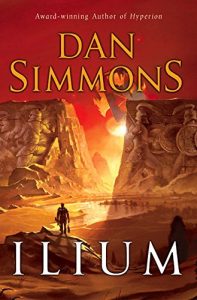
Ilium

The problems with having no real standards are two-fold. 1) When you find something that’s really cool and worthwhile, people who let themselves be guided by such factors as quality or entertainingness will naturally suspect you of being up to your old tricks, and 2) you’ll find yourself being given to greater flights of hyperbole as a natural result of the first thing. Hyperbole is absolutely, positively, and I mean this 1000 percent, never effective. So, naturally, both of these are concerns of mine after having finished Dan Simmon’s Ilium.

Okay, the easy stuff. I came into it knowing it was about the Iliad, and basically not knowing any more than that. This is okay, because both the title and the first couple of paragraphs make the same point. A couple of more things that I didn’t know coming in are that it’s also about Shakespeare, and H.G. Wells, and Proust (and a little bit, I claim, about Arthur Conan Doyle), and sentient robots living in the shadow of Jupiter, and pampered people living in an idyllic golden age on Earth. It’s about knowledge, and whether knowledge has value, and whether knowledge has intrinsic value. Most of all, it is about what the very best in science fiction is always about, what it means to be human.

Ah, you ask, but is it any good? Well, obviously you’re not really asking that, because a) you don’t trust me to know anyway, b) I already basically said it’s good, and c) how can that mix of plot, character and theme not be good? I mean, really, did you even read the second paragraph at all? Seriously, though. It’s great. When I finished it, I would not have hated the author if it had been almost exactly the same[1] and been one book instead of the first of two. At the same time, if the second book were out yet, I would go buy it and be reading it now, in express violation of my policy of not reading / reviewing books consecutively. I kind of resent having to wait until early July, as Amazon implies.

Thinking it over, I can’t even say that I miss the lack of frozen zombies. Thinking it over a little bit further, there’s a case to be made that it has the potential for frozen zombies after all, and that makes me feel better about myself. At the least, I can’t say I needed them in volume one, and that’s still saying a lot.

Incidentally: Can someone who has read this book contact me external to the site? I have a question that falls outside the scope of the review, about faxing and whether there was an authorial misstep or hints for the second book. And, can everyone who hasn’t read this book go ahead and read it? The world will be a better place. I actually kind of want to read the Iliad again now. No, really.

[1] Because, being two books, there are elements of the narrative barely alluded to that are sure to come into full relief in the second book. If he’d covered everything, then a second book would be silly.

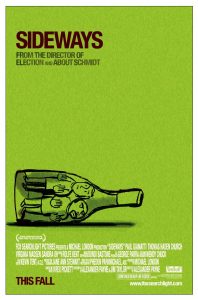
Sideways

So, early this week, I saw Sideways. Without a doubt, the best thing about it was the bleu cheese burger that accompanied it, since I was at the Alamo Drafthouse, prince among movie theaters that it is. Other than that… this review is going to have spoilers, because it’s hard enough to come up with anything to say even if I don’t worry about them.
Continue reading

The Ring Two

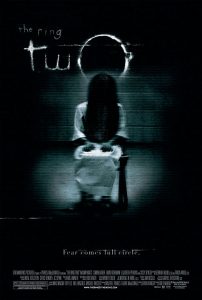
MV5BMTY2ODc2NTQ2OF5BMl5BanBnXkFtZTYwNzA4OTU3._V1_I finally got out to a movie again, which is nice, because I was starting to feel bad about how few I’ve seen this year. (Barely more than one per month!) Despite the overcrowded and subsequently hot theater, I went for the one I wanted to see the most out of my available choices, The Ring Two. The title really bothers me, and I don’t know why. Is it because it’s too short or monosyllabic to have the number appended? Is it because it’s written out instead of numeralized? Maybe it’s just because the posters with Two written out and the o matches the Ring imagery from the original movie is so brilliant that any other vision of the title pales by comparison. Seriously, good poster. I kinda wish I collected movie posters. Perhaps once I have a bigger house I’ll make a poster room, and spend a lot of unnecessary money on eBay.
So, yeah, there’s this movie. The first one was really scary, despite the ridiculous premise that people are still watching anything on videotape. As the movie opened, and I know it’s only supposed to be six months later by plot, but it’s been several years in real life, and also the kid is the same actor, so he looks several years older, and my point here is even if I could handle it in 2002, no way am I going to buy into the videotape thing in 2005, and as the movie opened I was already rolling my eyes. (Also: I was starting to think that opening night is a bad time to see a horror movie, because too many people were too amused, but that faded at the same time my eye-rolling did, so I instead take this as proof that the rest of America agrees with me on the ridiculousness of anyone watching a videotape, or probably even owning a VCR.) Luckily, the people making the movie seemed to get that, and the plot unleashed the scary drowned spider girl into a different, somewhat less scary[1] but more emotionally resonant and symbolism-filled world.

Symbolism and to spare. Lots of iconic ring and related images to be found all over the place. (I can’t go into detail there without spoiling the first movie.) Lots of water imagery. A distorted reflection of the maternal themes in Aliens, which now that I think about it was also less scary but more emotionally resonant than the movie it was a sequel to. I like this thing where horror movies are deep, but still manage to get in the scary cinematography, oppresive musical score, and sure, occasional cheap thrill. It’s kind of like science fiction in the literary world, in that there’s room to explore pretty much anything you can imagine, yet it’s all lumped together in one critically dismissed (although increasingly less so, in both cases) category based strictly on a setting that everyone assumes isn’t adult enough to care about.

Scary? Sure. Good plot? For the most part, although I still don’t really get what it is that Samara actually does to her victims. I think this is a Japanese horror trope, the idea that you can be scared to death without worrying about what was so scary, so I’m willing to let it go. It is creepily effective, so it’s easy to not mind. Extras for people who just want to see boobies and cameos? Naomi Watts is the star of a movie filled with water-related events, so you do the math there. Also, Bingo Bob has an amusing turn as a real estate agent. (And gets fourth or so billing out of basically a cameo-sized appearance, which surprised me; but the cast is small and therefore more personal, which is a good thing for the story as written.)

[1] With the exception of Halloween 2, all horror movie sequels are less scary. And it’s only as scary, because no horror sequels are more scary than the original. Can’t be done.

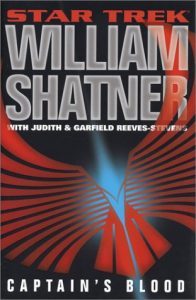
Captain’s Blood

Along with some equestrian obsession I don’t fully understand and a successful re-invention of himself as a kitsch icon, Bill Shatner (yes, that one) has been spending his time in collaboration with a couple of other writers going about the business of crafting Buck Rogers in the 25th Century stories, only with James Kirk instead of Buck Rogers. To be fair, this makes a lot more sense than if it were actually Buck Rogers, because there’s really no link there.
I can appreciate this desire, I think more than most. I know what it’s like to get inside the head of a character and then feel like I could tell more stories about the character after everyone else is done. The problem, of course, is that Kirk eventually died. Inevitably, the bringing him back to life and putting him back in play in the new Federation part of the story was complete tripe, because of the degree of self-indulgence required. (If another person had written exactly the same thing, would I be calling it self-indulgent tripe? Well, since I maintain that nobody else would have done, I’m giving myself a free pass.)

Here’s the thing, though. Once you get past the two books worth of that, there have been about four more since (and at least one more next year) that have been on the high end of the Star Trek novel spectrum. I know this is not a high mark to reach, but I’m already on record of reading treasure and trash with equal abandon, and this stuff is by no means the trashiest.

Which brings me to the latest book, the middle-of-a-trilogy Captain’s Blood. It has a lot in common with the first book of the trilogy, Captain’s Peril. Both wrap hints of an extra-galactic invasion force that are sure to pay off in the final entry around the meat of the plot, two murder mysteries. This one is more engrossing by virtue of the size: The murder in question is Spock, blown up in the midst of a unification speech furthering his efforts to bring the Romulans and Vulcans back together. Naturally, Kirk, his old-school pals who managed to still be alive into the 24th century with him, and his next generation chums gather together to investigate.

That covers the first couple of chapters, and, well, the twists and turns are well enough plotted out that I’d prefer not to dig deeper. Like I said, after you get past the self-indulgence bit, he (and his under-writers, I expect) writes some pretty good books. Plus, the next book with the extra-galactic invasion will probably be self-contained, just as these two have been, and that will save you really a lot of time over reading the 21 or so volume Star Wars extra-galactic invasion series. (I don’t even know if I’m serious there, so probably it’s not worth asking.)

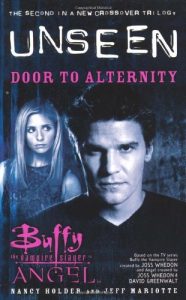
Door to Alternity

If you’re in any way interesting, you don’t remember that I read the first book of a Buffy/Angel crossover trilogy in December (at least, not before I reminded you just now), because you’ve had other, better things on your mind. Like, say, tax season, or how the Iraqi election contributes to the stability of that region.
A few days ago, I finished reading the equally engrossing second book of the Unseen trilogy, Door to Alternity. (As before, there are inevitable spoilers through the first several seasons of Buffy, so stop now if you want to avoid them.) Much as The Burning had lots of fire, this book has lots of doors to alternities (which, sensibly, are alternate realities but without so many syllables). This third of the trilogy combines the thrilling danger of randomly appearing monsters swarming over Sunnydale, teens (disaffected and affected alike) disappearing into glowing portals all over LA, and a turf war between Mexican street gangs and the Russian Mafiya.[1] Against this thrillingly dangerous backdrop, the authors have included the kinds of Buffy tropes you’d expect of a Scooby gang frozen in emotional time for the summer: Xander and Anya sure do talk about and have lots of sex, Buffy, Riley, and Angel sure do spend a lot of angsty thought over their non-existent triangle, and Spike sure does want that chip out of his head.

It was approximately three months between when I read the first book and the second. By comparison, it was approximately two months between when the two books were released. I can’t say I know they were written two months apart as a result of that publication spacing, but I also can’t say I’d be surprised to learn that it was so.

[1] As you can see, only a couple of key changes have occurred in the greater Southern California area in the ten years since the events chronicled in Grand Theft Auto: San Andreas.

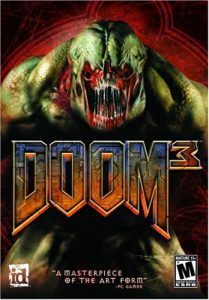
Doom 3

So, after that long Half-Life detour, I finally did get around to playing Doom 3. And then came a very frustrating interlude this morning when, less than 10 seconds from victory, my wireless/optical mouse crapped out and I had to start all over. (Well, okay, just the last battle all over. Still, though. It was stressful.) In any case, after a 20 minute struggle to fix the mouse and a 2 minute struggle to replay that end bit, I have now finished.

Was it exactly the same as Doom and Doom 2 and Quake and etc.? Well. It still didn’t have a story the way Half-Life does. I mean, it has a story, and a pretty good one. But it’s basically the story of everything that led up to the endoomening. Space marine wandering around the planet Mars shooting demons, that part is identical, but now it has prettier graphics and a backstory. Which is to say, the fun in the game is seeing the graphics, but not in seeing how it turns out. Still, the backstory part is an improvement over the original Doom. I’d compare it to Doom 2 as well, but that would require me to remember anything, anything at all about that game that would distinguish it from the original. As for the Quake comparison, well, Quake sucks as a single player game, so this is much better than that. So, to answer the actual question: it’s different, but only cosmetically.

That’s okay, though. Going into Hell with guns blazing to save humanity is its own reward. On top of that, the graphical and auditory enhancements have made it pretty spooky. Okay, there’s no good reason in-game why you can’t have the flashlight and a weapon out at the same time. But it would ratchet the tension way down, and the whole point of the Doom franchise is to be twitching around at every noise afraid of being blasted into a lava pit by a giant beholder (which we call a cacodaemon, because this isn’t Dungeons and Dragons, but I think I know a beholder when I see one, thanks). It succeeds masterfully at this aspect, and the backstory-gathering is all gravy on top of that.

I hope they wait for Doom 4 until we’re at another full leap forward technologically, because otherwise they’re really going to have to write an engrossing plotline after all, and id’s only real innovative strength (at least, that others don’t do as well at or better) is the iconic shock image, eg Doom’s missile-launching minotaur or Wolfenstein’s power-armored Hitler. Good Stuff, yeah, but only so good when games that are chock full of plot are in the same place on the store’s shelf, for the same price.

Constantine

When I first saw the preview for Constantine, with the hot Mummy chick getting pulled through a building and Keanu chasing after her, I really thought they were making another Matrix movie for some reason. This guess is not as far off the mark as you might think. It made about as much sense as Matrix Revolutions, but I feel better about it because of differing expectations.

Keanu’s acting worked pretty well for me in the John Constantine character, bearing in mind that I come to the movie untainted by the comic. Basically, his acting in any role (leaving aside the Theodore Logan aberration) works well, as long as the character is a cipher who never gets angry. He can emote detachment quite well, but detached shouting is oxymoronic. You may claim that ‘detached’ is not an acting skill, but there are a lot of characters in Hollywood with that as the defining characteristic, and actors have been filling those roles for all the years they’ve been written, some of them quite well. See also Charles Bronson.

Except for the part where lots of things were stated but not really backed up (Why is Constantine of so much interest to hell? What’s so special about this particular time that the neutrality thing is being breached?), the story was sufficiently comic-y to make me happy on that count. Also, Keanu has that look. Really tall, really thin, he just looks like a comic character. I’m sure a big part of that was the cinematography and wardrobe choices, but it was well-done enough that I want to emphasize it. For your comic movie to work, at least someone should look like a comic character.

Anyway: story, schmory. It had a good look, the Hell sets were really cool, and lots of demon-fighting. This is plenty to keep me happy with a February movie. Also, in a bow to gratuity, hot Mummy chick stayed soaked for the final half of the movie. That’s just good directing.

Napoleon Dynamite

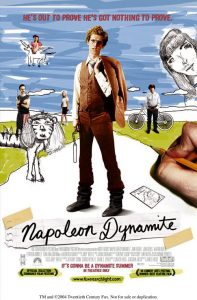
I saw Napoleon Dynamite yesterday afternoon. This is good, because now I only have one thing left to do before my trip. This is also good because I really, really liked it. It’s bad, though, because I have no clear idea how to express what about it I liked. I mean, even to myself. It has everything I don’t like in a movie. Deliberately framed shots that scream ‘look, I’m a movie over here!’ Characters in which I have no legitimate interest. Slice of life reality as the setting. A plot resolution that came essentially from nowhere. And yet, there’s some kind of perfect storm thing going on, because I thought that the combination of all the elements was great, such that none of them really even bothered me during the few times I wasn’t actively enjoying myself.

Perhaps it’s because everything touched by Mormons is pure gold.

Probably not, though. I know it was funny, but funny isn’t really enough to make me want to see it again and recommend it to people, by itself. Lots of things are funny. Most things don’t leave me with a goofy smile on my face just thinking about bits and pieces of it, or having a similarly goofy conversation last night with a friend who independently saw it for the first time the same day, with the whole ‘”Do you remember the cow?!” laugh of hilarity while everyone else stared at us’ thing going on. This did, though.

And, yeah, I eventually came to care what happened to a few of the characters. This is unusual, in movies where I don’t care during the first ten minutes or so.

You may note I haven’t described the plot. This is because I don’t even really know what that was, although I know a little better than I know why I liked it so much. In short, it’s about this kid in high school in Idaho, the template upon which high school geeks are drawn, and a snapshot of a few weeks in his life during which Things Change. Which still doesn’t say a lot, since that is (except for the character and duration being specified) that point at which any story should be told, if it expects to be even mildly interesting.

In short: Weird scenario, but funny. Mormons. Good, but I can’t say why exactly. Is this review worthless? I think it is.

Bubba Ho-tep

Sure, there are lots of mummy movies. Like the one with Brendan Fraser and the one with Abbott & Costello. And there are lots of JFK movies, like the one with Martin Sheen and the one by Oliver Stone. And there are lots of Elvis movies, like, um… y’know, it’s weird that people don’t make Elvis movies, but I guess there’s still Jailhouse Rock and the one with the clambake.

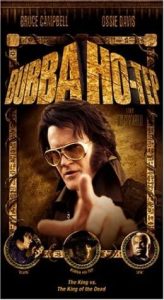
My point is, this ground is well-trodden. What you don’t see very often is any two of them in the same place. And all three? Unheard of! Except, obviously, not anymore. That’d be pretty weird, if I was just blathering on about things that don’t go together, randomly. But I (unlike previously) digress. The point of all this is that a movie pitting the elderly and retirement-homed King of Rock & Roll and most recently assassinated President (or so they would have us believe, to the point of dying him black to further the cover-up) against a redneck mummy out to steal their souls was made a few years ago, receiving a limited theatrical release and the beginnings of a cult following on DVD.

The story is simple. Simple enough that what I started to write would be a restatement of what I already just said, so I’ll skip that. What makes it good is the mood and the leisurely pacing. It’s easy to get lost in the sad lives of these men, sad because they believe they’re really Elvis and Kennedy, sad because they believe they’re saving their fellow inmates from a soul-sucking mummy, and sadder by far if they really are who they say they are. I’m making it sound depressing, and it is, but it’s also not. It’s hilarious, at times a little scary, and the melancholy mood lends it enough gravitas that it doesn’t turn out to be the cheesy B-movie it so desperately wants you to believe it is. Instead, it’s a story about heroes who still have legitimate heroism left in them fighting against a villain who isn’t just robbing them of their souls, but of what little dignity they have left.

For a movie that is about, well, you know, it has a great deal of heart to it. On top of which, it’s very, very funny. I can’t really think of a reason for anyone not to watch it.