Battle: Los Angeles

I went into Battle: LA only really knowing two things. 1) It was going to be an alien invasion movie, somewhere in the range between Independence Day and Skyline. 2) Michelle Rodriguez has never in the history of cinema survived to the end of a speculative fiction movie. (Well, okay, and 2a), Michelle Rodriguez is in this particular example of cinema.) I didn’t really need to know any more than that, since, y’know, if aliens invade, things will explode, and that pretty much is enough to satisfy me on the time-and-money aspects of things.

I feel obligated to say a little more than that to you, though, not least because I already know of at least one person who would have benefited from altered expectations. The main thing I didn’t know that maybe would have helped is that it’s unlike Independence Day or Skyline in important ways. Where ID4 was a nation-spanning inspirational take on the concept and Skyline was a giant, overflowing sack of crap, this one owes more of its existence to Black Hawk Down. Gritty, hard-bitten marines have been sent to rescue civilians ahead of a massive bombing run, with only the faintest idea of what they’re up against, and the situation is portrayed pretty realistically, which is to say, with a great deal of grimness and doom in the air. But also aliens, so, y’know, that is probably easier to deal with than local insurgents. At least, it was for me, the viewer.

Couple of random thoughts to close with. The first is, if such an invasion did occur, on a rapid timeline? We’d be so boned, what with our military forces scattered all over the world. I guess that’s what happens when your nation is the most powerful one around and hasn’t faced a threat on its soil in 150 years. I’m glad the movie wasn’t about that, as it would have been a lot more boring, but I couldn’t help thinking it. The second is potentially a spoiler, depending on your viewpoint. I think not, but now you’re warned. Anyway, the second one is that I did have a brief moment of chilly fear, when one of the invaders was dragging an injured fellow out of the line of fire. These aren’t Star Trek humanoids with bumpy heads to distinguish them from us, not by a long shot, and it made the fight a whole lot more real to me, very suddenly, when the bad guys — however… well, there’s a reason why the best word in my lexicon right now is “alien”, and however unprovoked their villainy — have friends and families and care about each other too.
Take Me Home Tonight

Sometimes, I think a movie gets made mainly for the soundtrack. You could make a case that Forrest Gump is such a movie, honestly, though of course it has other charms. And similarly, I don’t really mean anything derogatory about the movie attached to the soundtrack when I say that about Take Me Home Tonight.[1] But they did just make a really big deal out of all the songs of the ’80s they were able to cram in there. As for the movie itself, well, for the most part, you’ve seen one teen sex / coming-of-age comedy, you’ve seen them all. Will Topher Grace manage to get the girl while learning something valuable about himself before the events of this crazy night are through? Will his sidekick have zany unrelated adventures that push the limit a lot further than anything the main character and his chick[2] do, because their centrality to the plot makes them somehow more pure to the audience?

Though I did find it interesting that they used the  (anachronistic?) Gen-X and -Y trope of children never managing to leave home. Maybe kids in the late ’80s were already doing that? But it sure wasn’t getting portrayed yet, so it was noticeable and odd and at the same time clearly (to me) an attempt to make modern viewers of the same age able to relate. Which, while not precisely a revelatory moment in cinema is at least a slight variation from my original claim that you’ve seen them all, right? Plus also, I’m pretty sure that Anna Faris comes-of-age during her 25% of the plot, so that’s cool, even if nobody can think of another example for me!

Oh, and additional things to say real quick, I strongly approved of proto-goth and barely recognizable Michelle Trachtenberg, and strongly disapproved of the anti-gravity bangs sported by some 60% of the female cast. Remind me why that happened, again? I just don’t get it.

[1] Bizarrely, I don’t remember that particular song ever getting played. I wonder what that means?
[2] There should be more coming-of-age comedies where the chick is the main character. Are there any? Do chicks not come-of-age?[3] I have seen at least a couple of sex comedies where the chick is the main character, though I can’t remember what right now.
[3] Obviously they come of age. The hyphens represent the fact that I may be thinking of something that is peculiarly male and 20th/21st Century American and is not therefore broadly applicable, and hence the lack elsewhere.

The Roommate

The Roommate was one of those movies where you absolutely knew what you were going to get, right? Sure, there are all kinds of thriller sub-genres, but once you start narrowing down, the plot is going to start getting predictable. If you’re in an obsession thriller, such as Fatal Attraction, and you see a small fuzzy animal somewhere around the main character? Prepare to cringe. And if you’re in a lesbian obsession thriller[1], such as Single White Female, and you see a boyfriend somewhere around the main character? Prepare to cringe about that too, although probably not in the same way. Because, seriously, and with all due respect to Steven Weber, but I feel worse about the bunny.

Not that knowing what you’ll get is a bad thing. Sometimes, it lets you take the time to appreciate the performances all the more when the plot is devoid of surprises. Take our obsessor, Leighton Meester. You might appreciate the dead stare she affects when she is angry, but that’s nothing half as creepy as the bloom of hope in her eyes every time she thinks she’s done something that this time will finally, finally get the obsessee to understand that she’s been right all along and this really is the way things are meant to have been. Of course, sometimes knowing what you’re getting leaves you with the time to ask too many questions, too. It’s always an interesting thought exercise to determine how the police will react to these events. Will there be enough witnesses for her to feel comfortable explaining what happened? Must she run away, her life forever shadowed by the tragedy even though she won? And this type of movie never addresses those questions, so if it leaves you with the time to ask them, and you can’t come up with satisfactory answers? Well, I at least think that’s a bad sign. Probably great numbers of people won’t ever mind, though.

That’s cool, I’m sure I’m wrong sometimes too, so no reason to beat them up about it.

[1] I hesitate to narrow the field in that way. It’s not that the characters in obsession thrillers necessarily want sexual relationships with the objects of their obsession, and it’s certainly not like that is the prescribed way for the obsession to start. It’s just that once the obsession exists, there is always always a sexual element to it.

Drive Angry 3D

Remember that time when Nic Cage gave up the idea of having a serious film career and just started making drive-in flicks? I guess from one direction people might be guessing any year out of the last five, and from the other, people will insist it hasn’t happened. For my part, I definitely hope my memory is correct and would point to the current year as the bearer of that happy event. Mind you, I haven’t seen Season of the Witch yet, but surely I will? And I don’t need to, to realize it is probably even more B-grade than that fantastic Drive Angry, which I have seen.

Thumbnailing it, our Mr. Cage breaks out of Hell to chase down the man who kidnapped his granddaughter, accompanied by muscle car enthusiast Amber Heard (who you won’t quite remember as having one of the six speaking roles in Zombieland) and pursued by accountant William Fichtner (who I bet has been in some movie I reviewed, but right now I only remember him from mid-decade television). But aside from the car chases and explosions and various gunplay, I can describe a single scene which will make it entirely clear what kind of movie this is.

So there’s John Milton[1], having sex with a waitress (as you do), and a sizable group of satanic cultists break into the motel room to kill him. A several minute gunfight and melee ensues, and when the bloodstains and gunsmoke have settled, Milton has at no point exited said waitress. That? That right there is commitment to the moment.

[1] Nic Cage’s character, for some reason.

Toll the Hounds

One of the very few problems with the Malazan Book of the Fallen is that, like The Decline and Fall of the Roman Empire, the title of the series is kind of a massive spoiler. But since it’s ten books long, and with approximately that many ancillary books published or on the way, I suppose it’s pleasant to at least have an inkling of what you’re getting into. And yet, at no point (well, okay, at very few points) does the series wallow in its bleakness. The death and tragedy serve as contrast for the heights that humankind (well, personkind, as there are lots of non-humans around, and most of them reasonably immortal to boot) can aspire to. Toll the Hounds alone covers camaraderie, duty, leadership, self-sacrifice, and even that old semi-Vulcan saw about the needs of the one outweighing the needs of the many.

Okay, and the other big problem I have is the same problem I have with every sizable series; it’s impossible to review after a certain point. Nevermind that he’s not really in this book nor that I have yet to draw in my mind a clear diagram of who is on what side of the war against him, why he among all the unlikeable gods needs to be fought, or even what he actually wants: you don’t even know who the Crippled God is! And, okay, reading over that, it doesn’t sound like I do either, and maybe that’s a valid place to start, when you consider that I’m thinking about this review in terms of an absent character. But I have nowhere to go from there either that doesn’t lead me down the same path of worries about how much is too much to repeat again and again and also where would the spoilers lie?

But, okay, I think the theme of this book is dissolution. It happens literally  during the climax, more than a few times, but that’s not really what I’m talking about; it only serves to reinforce my point. Dissolution of conspiracies, of the bonds of friendship, the decay of skills once proudly held, of family ties, and from several different directions, intent to dissolve the whole of civilization itself. (Obviously that cannot happen in the eighth book of a ten book series[1], though I am impressed by my belief that it could really be the direction the series is going.) And if that sounds bleak, just like the series as a whole does from the title, I will say again that there’s a lot of good happening, and that it is served all the better by the high contrast against the bleakness of a theme celebrating entropy’s inevitable victory.

I’ll say it again, and probably one or two more times after this, but you really ought to read Gardens of the Moon. It’s a good start to a thusfar amazing journey.

[1] Sure, it can happen in the first book of a series of any duration, if the post-apocalyptic is what the goal was all along. But not four-fifths of the way through anything, is my point. Later or earlier, okay.

Unknown (2011)

My favorite show that you’ve never heard of[1] was called Nowhere Man. It aired on UPN in like 1996 or something? It was about a photographer who took the wrong picture, and in between entering and exiting the bathroom at a celebrity event, his entire history is erased. From the internet such as it was then, from public records, from the apparent memories of his family and friends. And the plot was pretty much him finding people who could help in one way or another, piecing together the whys and wherefores of his fate in an attempt to either undo it or at least get revenge by exposing whatever they so desperately wanted hidden. And, okay, the problem that conspiracies always have is how much easier it would be to just cap an ass, especially since it could be done at the same time as he’s being erased, right? But that doesn’t matter, because the concept is way way too cool to nitpick about.

Thusly Unknown, in which Liam Neeson has a four-day coma caused by a taxi wreck, only to discover that he has been completely replaced. Does the biotechnology conference he was scheduled to attend make this a corporate espionage story? Does the Saudi prince backing said conference make it a terrorism story? Does the seemingly airtight proof that both he and the man who has stepped into his shoes simultaneously have make it a psychological identity story? Does the fact that he’s Liam Neeson make it an explosive action story? These are questions with which I was largely uninterested, and that is because of Nowhere Man. Nobody knows who he is except him, and he has to find a way to prove it, right? Then yeah, those other questions don’t matter anymore; I’m in.

[1] There was also Profit on Fox, which aired for three(?) episodes, making it about equivalent to a full season on UPN’s first year of existence, in my estimation. But those two are definitely my favorites that fit the criteria.

I Am Number Four

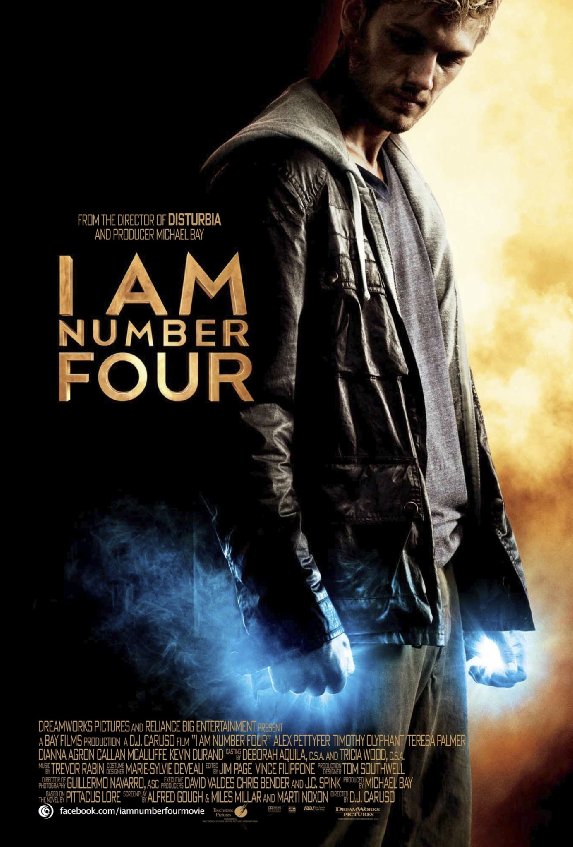
MV5BMjI0NDI1MTMyM15BMl5BanBnXkFtZTcwMDMzMTcyNA@@._V1__SX1859_SY847_Let me say off the bat, the CGI was a little bit terrible. I’m not sure how good expensive CGI can get, either because I haven’t seen it or don’t remember, but cheap CGI[1] just can’t do mammals at all. It can do reptiles okay, but fur is just a complete show-stopper. The reason for that disclaimer, as you may otherwise have been asking, is that I Am Number Four was mostly enjoyable, contrary to what expectations I had been given. And that’s always pretty cool, right?

Plus, it had what I believe is a unique premise in the annals of Hollywood history. Well, no, that’s not true at all, but I think this particular combination of two premises is unique[4]:  prince on the run from alien assassins combined with high school angst. It sounds a lot more like a TV show, right? But I think it would have been too angsty to work on TV; the forced speed of the movie format made up for a lot of what might otherwise have been annoying digressions, and it only barely gave me a chance to think about the worst, most teenaged part of the plot. And corollary to those improvements via limited screentime, I hope it doesn’t do well enough for people to pick up the pie-sized bread crumbs of sequel bait and start running with them.[5]

I won’t say much more about the plot beyond acknowledging the premise, both halves of which are visible within ten minutes of screen time anyway, but I should say a bit about the acting. Dianna Agron from Glee (who has a broader résumé than I’d have guessed) did a nice job as the outcast shutterbug love interest, and I suspect that someday soon she might be able to get herself a role that isn’t defined by another member of a cast. And Timothy Olyphant[6], easily the best of the bunch as the aforementioned prince’s guardian, manages to maintain the amusedly-detached-with-flashes-of-intensity hyper-competence I’m used to from his characters without ever giving the impression that he’s above either the cast or the angsty half of the plot, despite that he so clearly is.

Anyway, I dug it. Except for the mammalian CGI. Just saying, that was a bad idea, way worse than the angst or a sequel would be. (Probably not worse than a TV show, though.)

[1] My premise may be wrong, and all CGI has this problem? But I’m guessing not. (Or hoping not.)
[2][3] It must be a problem with all CGI, though, since obviously Michael Bay can afford the good shit.
[3] I know what you’re thinking, and you’re wrong. Consider it an easter egg hunt.
[4] Not the practice of mashing-up, clearly.
[5] I also hope I stop with the metaphors, because, wow. I am so, so sorry.
[6] If you are not familiar with his work in Deadwood and Justified, you’re doing it wrong.

The King’s Speech

Days ago now, I saw The King’s Speech, a lightly fictionalized account of King George VI’s unlikely ascension to the throne of England at the dawn of World War II and the debilitating speech impediment he had to overcome due to the rise of radio broadcasting, against the thematic backdrop of unlikely cross-class friendships. And I would occasionally think to myself, “Dude. Review,” and then immediately forget again. Until now, I guess?

And the problem is, I just have nothing to say. I can review bad things, and either explain why they’re better than you think or complain about their many flaws. I can review good things and highlight the ways that they are especially powerful and unexpectedly even better, or else explain how they’re overrated lumps of crap that people need to stop talking about. (Although I’m kind of an overly positive person when it comes to movies, so that last bit doesn’t perhaps come up very often.) But in this particular case? The movie is compelling, filled with talented actors giving moving and powerful performances, and all of it just as expected. What am I supposed to do with that?

It’s really good. Go see it if you like that kind of thing, I guess?

Assassin’s Creed

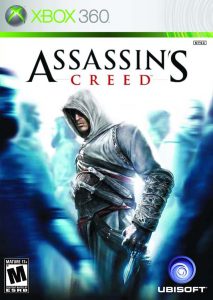
71233_frontTo be clear, this is a pretty old game. I remember reading about Assassin’s Creed in Gamestop’s magazine sometime in 2006 and being really excited about what they were doing with the cities full of random people and the ways you could run and climb and otherwise interact seamlessly with the environment, and without a lot of weird button combinations and things. Plus also the plot, which pits historical Assassins against the Knights Templar in the Crusades setting; it seemed to have a lot to offer on both the very pretty and the very cool scales. The framing story, which has a faceless but clearly very wealthy corporation essentially kidnapping a man who is a descendant of one of these assassins, because they can put him in their cool sci-fi device and use the blood link to pull genetic memories from him, seemed like it may also have been cool, but I really didn’t get far enough into the game to form a valid opinion.[1]

So, right, that part is probably relevant. Despite all of the real coolness inherent in the gameplay and plot in concept, in practice I found it absolutely unplayable. Part of this, I realize now after the fact, is that the introduction was weak and did not provide as much direction as I think I needed to latch onto the plot. The other part, that caused me to stop playing out of pure frustration, was mechanical in nature. Without a clear set of roadsigns to pull me quickly into the plot, I was still enamored of the beautiful countryside, and on top of that there were collectible items and very tall towers with expansive views to enjoy, so I started poking around into that, still perfectly happy with what was going on around me. Until I learned that any time I ran (or ran my horse) past a soldier, I would be targeted for death. It’s not like I had started murdering people yet, and it’s equally not like it was based on some recognition of me, as obviously a walking person is easier to look at. No, the designers just made a terrible decision in which any person who is running must be evil and in need of capture. And once I had to enjoy the expansive open world at a snail’s pace always instead of slowing down at the parts I wanted to explore in greater detail, or else I’d have to fight all the time? And I still didn’t really have a feel for the actual main game on top of that? It was rendered unplayable.

In the meantime, people have sung the praises of its sequels, and while nobody seemed to hate the one game-breaking aspect of the first game the way I did, everyone seemed to claim that the sequels fix a lot of other small problems that I never really saw for myself, and the whole is a massive improvement. My completionism still left me believing I might try to pick up the original again someday, but having played a few hours of its first sequel (review forthcoming, though likely not anytime very soon) and seeing that on top of my complaint, it really does feel a lot more polished and playable in ways I can’t even explain the differences for, it has become clear to me that I would only be punishing myself by going backward.[2]

Anyway, this right here? Kind of a horrible game that thankfully got another chance at life. Because the concept I loved so much? It works every bit as well as I had imagined.

[1] The wikipedia summary that I recently read tells me it probably would have been very interesting, though.
[2] Hence the wikipedia summary.

BioShock 2

It’s been rather a long time since I finished a game, though thankfully not as long as it’s been since I finished BioShock. All the same, definitely too long. But over the past few weeks and culminating in an enforced snow day on Tuesday, which is slightly ironic when you consider that I never bothered to get the plasmid that lets you freeze people into ice sculptures, I played its unimaginatively-named sequel, BioShock 2, to completion. It seems overly harsh to proceed by saying that “unimaginative” was a convenient choice of word since it can serve double duty by also describing the gameplay, which has a few cosmetic changes but nothing especially new. Honest, yes, but harsh; and I think that feeling of harshness stems from the part of my brain saying, “well, it’s a sequel, of course the game play is the same. That would be like complaining that Halloween II had a tall guy in a mask who went on a murderous rampage while trying to schedule a family reunion![1]”

If, like me, you accept my brain’s premise there, the really important question is, how does the game rate on the basis of plot and theme? And the answer to that is a little complicated. BioShock, as you may remember, was unapologetically cruel to the objectivist philosophy described by Ayn Rand. Or, depending on your perspective, it was compellingly accurate about the end results of objectivism run amok. BioShock 2 seems on the surface to be written as apologism for that cruelty. At least, the simultaneously cartoonish and ham-fisted portrayal of Sophia Lamb as Andrew Ryan’s philosophical nemesis reminded me so much of the strawmen used by Terry Goodkind throughout his Sword of Truth series that I assume the main point of BioShock 2 was apologia.[2] “That doesn’t sound complicated at all,” you are no doubt thinking. And you’d be right, except that there are moments of real brilliance (mostly in the end game[3]) that shine through that muck and leave me considering aspects of both the original and this game all over again in that light. So, yeah. Complicated.

[1] Insofar as, y’know, of course he did, that was the whole point of it being a sequel.
[2] There is every chance that this is a real word, and a slightly lessened but still significant chance that I’ve just used it correctly.
[3] And therefore firmly in the territory of spoilers. See the ROT13 comment I’ll leave by tomorrow for more detail.