Tag Archives: science fiction

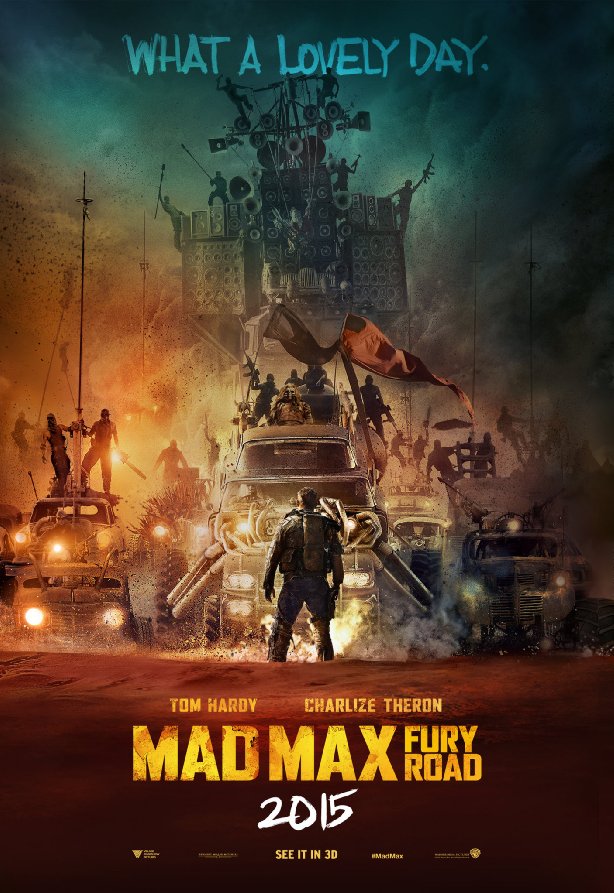
Mad Max: Fury Road

MV5BMTUyMTE0ODcxNF5BMl5BanBnXkFtZTgwODE4NDQzNTE@._V1__SX1859_SY893_A lot of people will tell you the new Mad Max movie is a feminist film. Those people are right, of course. There are many more women with dialogue than there are men, especially after you correct for one-line extras. It passes the Bechdel test again and again. Nobody’s role is “be rescued”, even the people who are in fact being rescued; and even if it were, they are being rescued by another woman. By any possible metric, Fury Road is a film that glories in being pro-woman.

But is it a Mad Max movie? Is it even an action movie? So, I’ll be honest. I’ve seen those movies, I’m pretty sure all of them. But not since the ’80s. All I remember is Mel Gibson driving around Australia a post-apocalyptic hellscape in weaponized cars, shooting at people he was chasing or who were chasing him. That said, there’s no doubt that this is a sequel to those flicks, both visually and via the clever use of flashbacks that were not intrusive to my lack of knowledge while clearly referencing real scenes that I just couldn’t remember. And as far as action: I’m pretty sure you will not find as much concentrated adrenaline at any point during this summer season. It’s one long chase movie, and you can tell where the act breaks are written into the script because that’s the only time someone isn’t chasing someone else. Aside from one silly action movie trope about the physical toughness of a main character, there was no point where I was confident about anyone’s safety once things started, um, rolling. I have nothing bad to say about this movie that I’m not willing to immediately handwave as an aspect of the genre.

But you know what? It’s important to acknowledge the feminist angle again. Here’s why. Post-apocalyptic fiction has a habit of relegating women to victimhood. That’s what I always praise so highly about the Deathlands series that I’ve been reading, is not only that it rarely falls into that trap, but that it was written starting in the late ’80s, when nobody really cared about that kind of thing yet.

The thing about the post-apocalypse is that women will frequently be victims. This is not a particularly controversial thing to say. Men will be victims too, they just won’t survive that initial step the way women will. Human nature indicates that once power is all that matters, a lot of men will be killed, fewer women will be killed because they can be enslaved for the purposes of the men doing all the killing, and the people who are left will be tough enough to survive on their own / in their own small groups, or they will glom onto the men doing all the killing and help them so as not to be killed themselves. Which is the point. In the post-apocalyptic world, as in all worlds, feminist problems are really just humanist problems with a different word attached to them. Yes, it’s terrible that all those women have been enslaved and someone should ought to do something about it. It’s also terrible that all those men were killed on the way to where the movie started, and it’s terrible that all the boys were brainwashed by the powerful into being cannon fodder for Max (or whoever) to shoot at. None of it is the least bit okay, but the women are the face of it.

What makes Fury Road a great feminist movie is simply that women were co-equally involved in doing something about the world’s humanist problems. Maybe someday we can get there in the regular world, too.

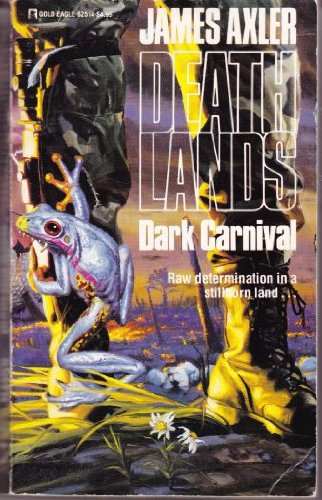
Dark Carnival

51VKHsxpjILI wish I read the Deathlands books a little more often than I do, although the truth of this matter is you could insert any ongoing series[1] I am reading and not yet caught up to live publication for, and that would still be a true statement. I have an embarrassment of reading wealth, I guess? Kind of.

But as much as I enjoy reading them, they’re getting harder and harder to review, because of how much continuity is piling up. I have read 14 of these over the past 7ish years (they are published quarterly, I think, so yes, this means I’m falling behind), and they’re so far not the least bit episodic. Old enemies come back, the cast changes over time, the past (both the written past and the characters’ pasts before the series opens) has consequences. All that, on top of post-apocalypse porn with a deep sci-fi bent and surprisingly[2] egalitarian gender parity, and yeah, of course I want to keep reading more.

This one, leaving out all the piled up plot, centers around dire happenings in and around an operational amusement park in Florida that is conspicuously not DisneyWorld. Also, though, let me leave you this hilarious dispatch from the 22nd Century:

Doc returned to his own room and watched some vids of a television series that Boss Larry piped through. Ryan and Krysty tried to watch it, but it seemed a plot of such staggering complexity that they gave up on it.

“It wasn’t the giant and the dwarf,” Krysty said, lying back on the huge bed. “Nor the damned fine coffee and the cherry pie. It was the woman who was dead, then Japanese, then alive again.”

[1] I mean, not Anita Blake. Seriously. But otherwise, yes.
[2] Both for the genre and the publication date. And I’m not saying it’s perfect, it’s just a lot better than could have possibly been predicted, and objectively closer to the good side of the scale than the bad side.

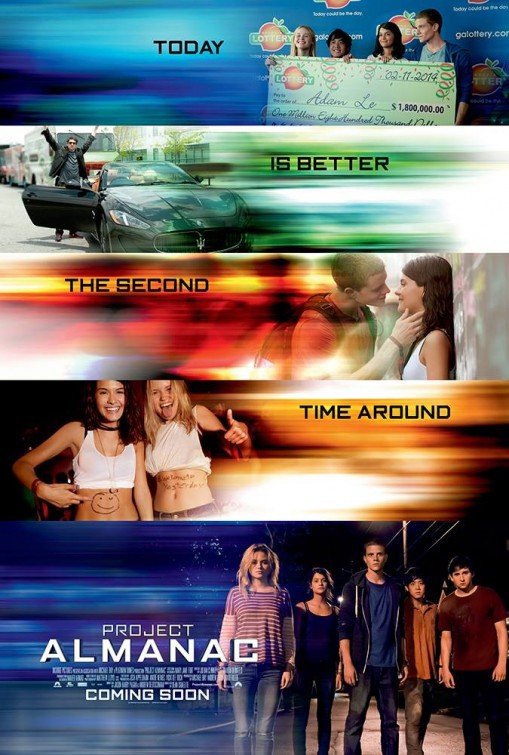
Project Almanac

MV5BMjIyOTYxMjM0Ml5BMl5BanBnXkFtZTgwMTE2NTI3MzE@._V1__SX1859_SY847_Did you ever see The Butterfly Effect? The one with Kelso from the 70s Show, right before he turned into Ashton Kutcher? If not, definitely watch that instead. But if you have, it’s probably been quite a while, and you may be ready to walk that territory again. Project Almanac is an MTV movie about a bunch of high school students who find themselves via quirks of causality in possession of the ability to time travel.

Then, they use it to do the kinds of things high school students as envisioned by MTV would do (pass chemistry, go to Lollapalooza, you know), until, inevitably, things start to go wrong. Which is what the movie is really about.

I liked it well enough, probably because of how much I liked the other movie in the first place? I assume it was meant to be neither an indictment nor a non-judgmental representation of how high school popularity works, but instead accidentally represented and indicted that process. And from a time travel logistics perspective, well, I had issues. They used and tossed out causality pretty much at whim, which is annoying simply because time travel logic needs to be internally consistent. Pick your method, but then stay there. That’s all I ask.

Like I said, the only reason to watch this is if you can’t watch the Butterfly Effect for the first time instead. Not because Project Almanac was bad; it wasn’t. It just wasn’t nearly good enough.

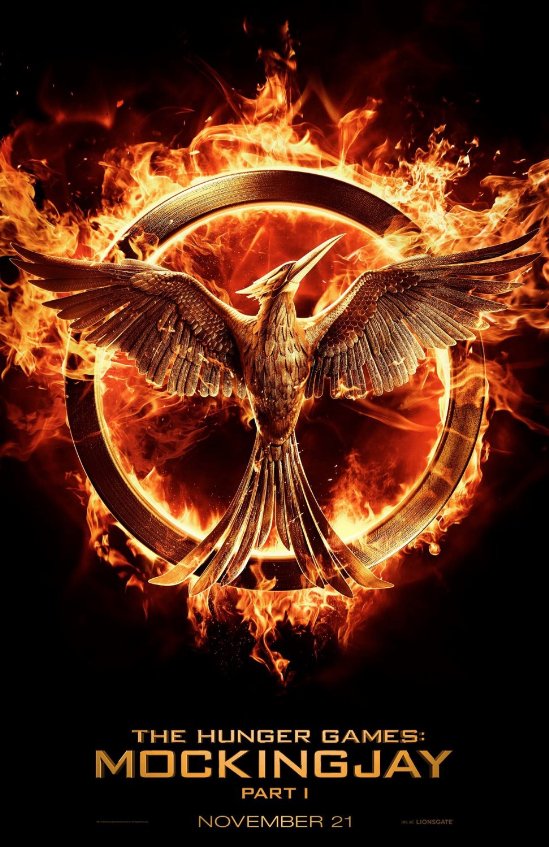
The Hunger Games: Mockingjay Part 1

MV5BMTA2OTM5MjQ0OTZeQTJeQWpwZ15BbWU4MDg3MzcyMDEx._V1__SX1859_SY847_The Hunger Games books, as I have said elsewhere, had a glaring flaw: I eventually stopped liking the narrator. As I have also said elsewhere[1], the movies have taught me that this is because of how much Katniss Everdeen doesn’t like herself. The third book has been split into two movies[2], and at least in this first half, the trend of Jennifer Lawrence portraying a much better Katniss than she ever portrayed herself through her narration continues like gangbusters.

See, there’s this civil war going on, right? Over the last two years’ Hunger Games, Katniss has demonstrated (accidentally? on purpose? does it matter, though?) that the Capitol can be fought, so now people are fighting back. Plus also there’s a secret rebel army that was lightly foreshadowed and a big propaganda war and all kinds of things that would be pretty big spoilers, so trust me: plotwise, it’s pretty okay.

But mostly what I have to say is more praise for Ms. Lawrence. Because, well, here’s the thing. I am quoting past me, after having read the entire trilogy: “the movie will succeed or fail on the strength of their Haymitch actor alone. That guy? He’s compelling.” And you know what? Woody Harrelson has done an outstanding job. But I was so very wrong, and it’s because I didn’t think Katniss could be redeemed. Instead, when I watch these movies, I see the character that the people of the Districts fell in love with, not the self-loathing, self-doubting emotional mess from the books. And the fact that she still lashes out with the same anger, collapses with the same grief, capriciously flits from one of her two men to the next and back… it was never about her actions, it was about her emotions, and this is a character I can get behind.

There’s still a movie left, but if it succeeds as well as the rest have, this will be my favorite adaptation of a series by a long mile. It kept everything good and jettisoned everything bad, and that pretty much never happens.

[1] At least, I think I have in print? Certainly I have aloud.
[2] I find myself wishing this was less common. It’s cool and all that, to my two year old memory, they are filming every scene in the book. But book adaptations are an art, and while I have nothing to complain about regarding this particular film, it nevertheless seems like a bit of a cheat to not have to go to the effort of actually adapting the book after all. Plus blah blah blah cynical money-grubbing studios, I suppose.

Interstellar

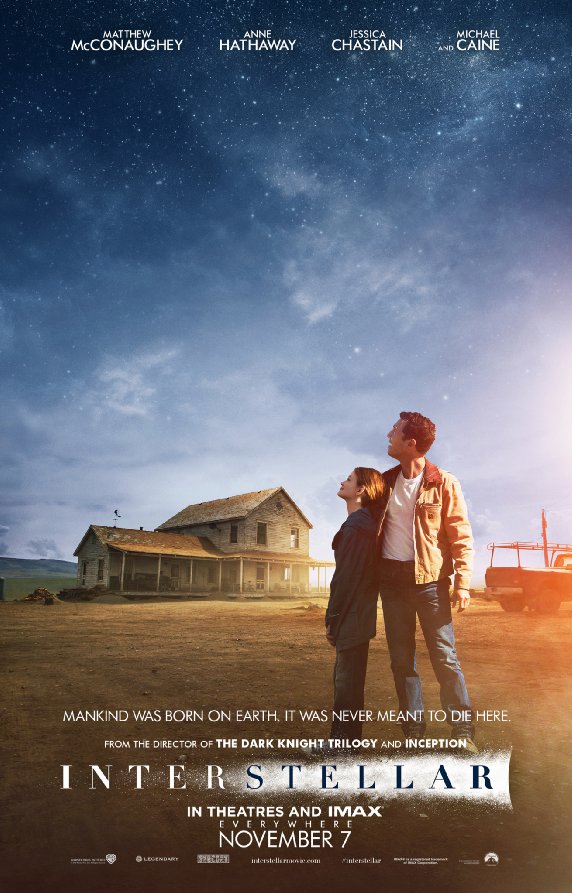
MV5BMTc1NTM2ODQxM15BMl5BanBnXkFtZTgwOTc1NTM3MjE@._V1__SX1859_SY893_On Monday night, I took my father to see Interstellar. Accurate things gleanable from the previews are that it is a movie about mankind in her final hours, struggling to find an escape from a used up Earth, and that it is a movie about the tension between responsibility on small scale (family) and large scale (survival of the species), and that it is a movie about flying to Really Cool parts of space and showing Really Cool, Scientifically Factual things about those parts of space on the screen. So, y’know, it’s a science fiction movie. Cool.

Tonight, I’m sitting in his hospital room after a cancer-related surgery that to all appearances has gone well. I can’t say a whole lot about really cool parts of space here, and I can’t say a lot about the end of mankind, and I can’t really say a lot about responsibility. But I definitely couldn’t help, while watching the ten-year-old girl watch her father getting ready to leave her behind, knowing it was probably forever despite anything he had to say, feeling a twinge of existential terror. I am not, nor have I ever been, a ten-year-old girl. But I think that some parts of the human experience are universal. It may not be blood, it may not be age, it may not be gender, but correct in your mind for whatever part needs correcting and I’m still saying: nobody wants their dad to leave. No matter how good the reason might be, and not many people have as good a reason as “if I don’t, we’ll all just die anyway.”

I usually, and imdb certainly did in this case, separate out my category tags by reserving sci-fi for movies and science fiction for books. But sometimes (Children of Men springs immediately to mind, as it often does when I’m thinking about things like this), when a movie goes to such great lengths to focus on our shared experience of humanity even though we should by rights be looking at really cool things in space? Well, my point is that I try very hard to make these tags usable, in case someone were to ever want to browse by them. And this was, like I said in the first paragraph, definitely a science fiction movie.

Cool.

And, dad? Thanks for staying.

Prometheus

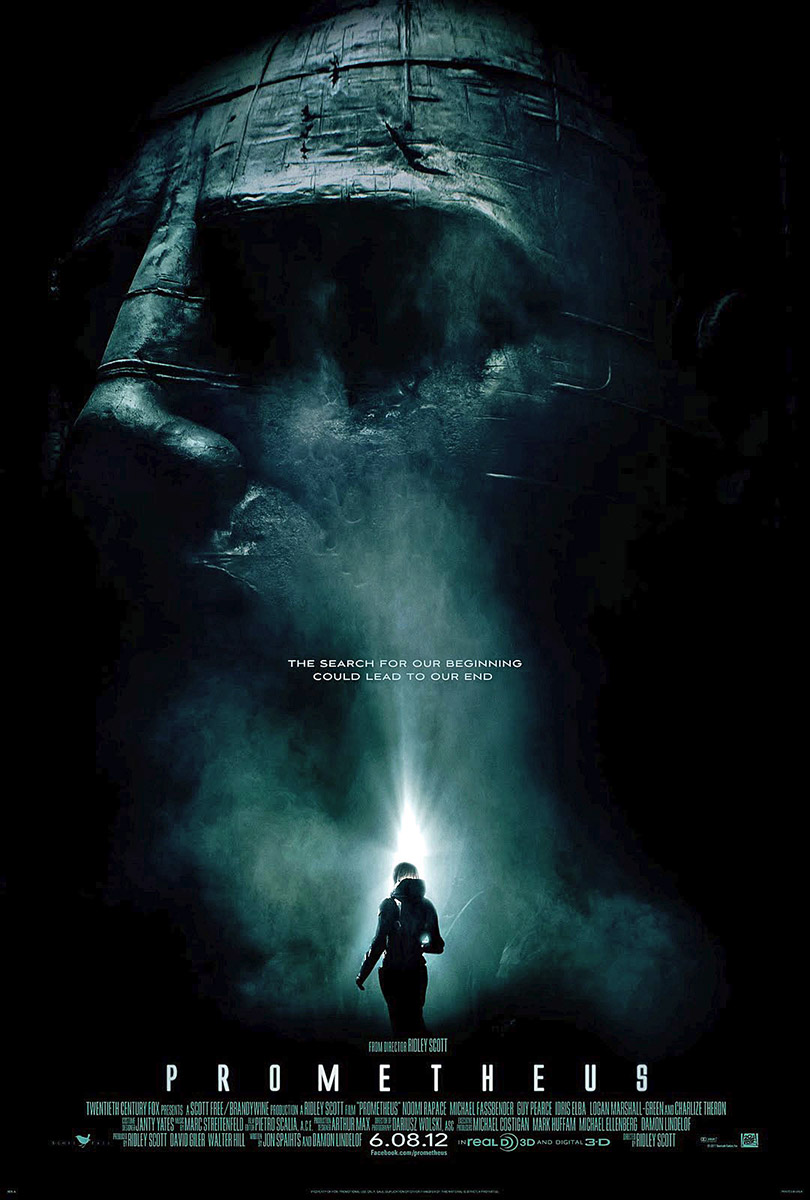
prometheus_810Then I got to pick up a movie that I’ve long regretted missing out on, by virtue of it apparently being a recommended reference piece for the latest in quality surround sound.[1] I would never have been so obsessed with seeing Prometheus if I had not known about its connection into the Alien mythos, a series with which I am quite obsessed indeed. I find it ironic, therefore, that the huge failing of the movie is that Ridley Scott thought he could make a science fiction movie by drawing so strongly on the same elements that made Alien one of the best horror movies of all time.

See, there are these archaeologists, and they have found evidence in the records of a dozen ancient cultures that aliens were once among us. Better yet, they found a map. Off they go (courtesy of the Weyland Corporation, its Yutani partnership still in the murky future) to meet said aliens and see what can be learned from them or their remains. (After all, it’s been a while since anyone has heard from them.) And then… well, the problem I have here is that the only thing that compelled me to eschew my usual lack of non-theatrical reviews is how much I want to talk about What Went Wrong. And though I don’t plan to lay out the plot detail by detail, the broad strokes of conflict necessary to explain myself are major spoilers for the last third of the movie. Probably nobody is worried about being spoiled for a generally panned film that is also two years old? But just in case, you have been warned.

So, after various trials and tribulations that there’s no need to detail, half of the main characters are standing face to face with one of their Progenitors. They have woken him from presumed millennia of cryogenic slumber, they have a robot with enough linguistic knowledge and recent research to speak with him. This is a high level “Are you There, God? It’s Me, Margaret” moment in progress here. And then…

Let me come at it from another direction. Science fiction, at its core, is about the betterment of humanity. Depending upon the flavor, it may not always be successful, but we are always striving, seeking answers, reaching beyond ourselves in some way, whether technologically, physically, philosophically, morally, or some combination. And you cannot get more science fictional, I would posit, than going into deep space to learn the fundamental answers of our own genesis.

Horror, at its core, is about the inexplicable. Sometimes we try to impose a cause where no cause exists[2]. Sometimes we just shy away in existential or literal terror at the knowledge that there is no reason to be had. Ridley Scott’s Alien was exactly that movie. Some miners on their way home stumble across an old space beacon, accidentally wake up an egg filled with death, and the lone survivor walks away with no answers at all, just bloody destruction.

As you can see, these two genres are fundamentally at odds with each other, in their purest forms. The reason Prometheus is a failure, then, is because Scott pulled a bait-and-switch. Two-thirds of the way through a science fiction movie, the audience is suddenly faced with inexplicable horror and an ending that promises only the lack of answers, even as the film’s heroine launches into the uncertain future to continue her off-screen search for them.

Which forces me to wonder if the sequel (2016, IMDB says) will retroactively redeem some portion of this movie?

[1] I suspect this is entirely due to the waterfall scene the flick opens with.
[2] Pamela Voorhees launched a decade of schlock by pretending her murder spree was about teenage drug use and premarital sex instead of blind, flailing denial of her own senseless loss.
Edge of Tomorrow

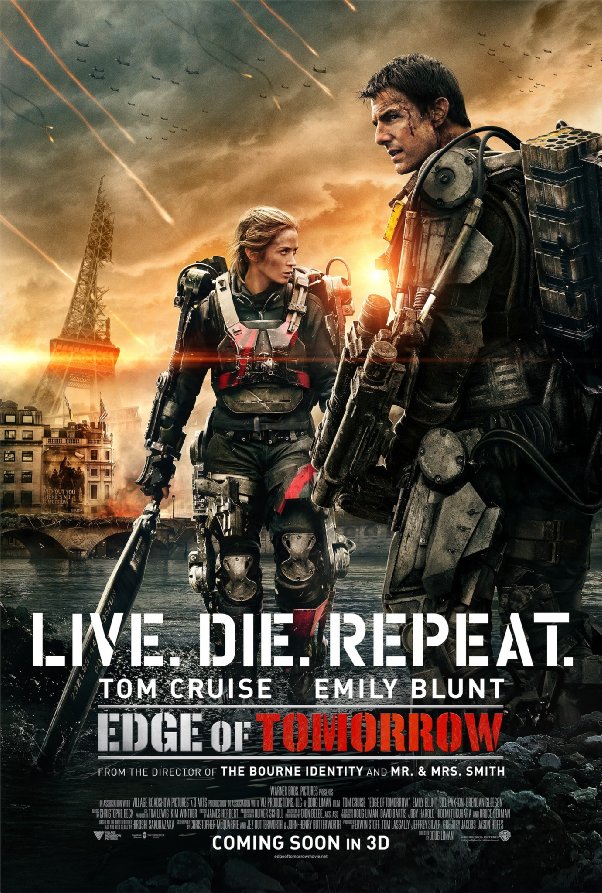
MV5BMTQwODI0NDM5NV5BMl5BanBnXkFtZTgwNzkwNTY3MTE@._V1__SX1859_SY893_Man. I am so slow at watching / reading / playing anything at all, this year. So slow. It’s driving me a little bit crazy, although I have read really a lot of comics from the overly dense mid 1970s. I’m looking rather forward to a lot of titles starting to collapse by 1977 or so. However, this is not about that.

This is about Edge of Tomorrow, in which Tom Cruise plays the main character in a video game, stuck on an endless escort mission to get Emily Blunt (who used to be the main character in the previous video game to which this is the sequel) into close proximity with the boss fight, so that she can save humanity. Despite what a misery that would be as a player or to live through, it actually works pretty well on the big screen. Which you presumably knew it would, since you already know what an excellent movie Groundhog Day is.

If it feels like, between my thumbnail sketch and my acknowledgement of the very clear forebear, I’ve given away too much? Well, a) I like to think there’s enough depth in the movie (character studies, sfnal exploration of the possibilities, new and improved explosions, etc.) that it’s not actually as simplistic as that thumbnail, but then also b) it’s still a summer action movie. So maybe it is that simple, and all you’re going for are the broad sketches and explosions. If that’s the case, I offer up as my defense that I gave you one half of a detail beyond what the previews did. Either way: it’s more good than bad, as most Tom Cruise sci-fi vehicles are. So that’s cool.

Seedling

Assuming you haven’t been here long (and are unwilling to click through the Deathlands tag): post-apocalyptic 22nd Century gun porn with teleporters and whiffs of Seven Samurai, in episodic format, series approximately 100 books in length. Okay? Okay.

Since I’m still reading them, it’s probably time to stop being surprised by how compelling they are, or at least to stop mentioning it every time. The real problem is that without that or the setting summary, and without massive spoilers, it’s hard to say much of a much. Plausibly, I should not concern myself with spoilers regarding a 25 year old men’s adventure series that nobody besides me is going to read, but it’s hard to think that way. The result of all of this being, there’s maybe a sentence, tops, I can put together to explain any given book.

In the case of Seedling, Ryan Cawdor and company stumble out of the latest abandoned secret government teleport installation into uptown Manhattan (or technically probably Queens, but whatever), where they discover the biggest collection of pre-nuke hardware and memorabilia any of them have ever seen, an unexpected mutant army, the expected levels of treachery and general Deathlands deadliness[1], and a deviously clever use of the book’s title.

[1] After all, it’s not named that because you’d want to buy into the timeshare.[2]
[2] Okay, fine, two sentences. But only barely.

The Hunger Games: Catching Fire

MV5BMjIyMjMwNDU3OV5BMl5BanBnXkFtZTcwMzYxODU5OA@@._V1__SX640_SY720_Cutting right to the chase, the cinematic adaptation of Catching Fire was superior in every way to the first film, and more than that, it told a better story than its source material did. So there’s quite a lot of good here.

See, the really quite spectacular Jennifer Lawrence[1] has been given much better material this time around, and what looked in the book like a girl stumbling blindly into the role of hero of the rebellion looks here like a game of cat and mouse between Katniss Everdeen and President Snow. (In case I’m pretending you already know what’s going on in the sequel of an adaptation of a trilogy of books, I am. In case that bothers you: there’s this girl who not only won an annual deathmatch designed to keep the common folk down on bended knee before Snow’s Capitol, she beat the system and won for her boyfriend(?) as well, which nobody has ever done before. She made Snow look symbolically weak, and people have become inspired by her, and this entire movie is basically a reaction to that premise. Also, there’s another deathmatch, since those are annual like I said.)

Whereas in the book, I contemplated that Katniss’ transformation into a symbol of the rebellion was certainly implausible but possibly not meant to seem that way, it is played note perfect here. She’s only trying to be a good person, but everything she does exposes the hollowness behind Snow’s power, so it’s easy to see why people would be inspired by her, despite her own doubts, anger, and insecurities. And it still doesn’t hurt that you can’t see inside her head, as she is growing more likable along the film trajectory instead of less so along the one that played out in the novels.

I’m still not convinced that the mess of a third novel can be rescued, but if the same writing/directing team tackle that adaptation, I will find myself hopeful all the same.

[1] I have got to see Winter’s Bone. Probably also the movie last year she got the Oscar for?

Latitude Zero

517LqnCryCL._SY346_Here are the important lessons I have learned from reading two Deathlands books in a row[1]:

1) Yep, they are able to catch me by surprise still, and even better, do it by meeting my expectations on one hand while utterly subverting them on another.
2) It is a bad idea to read two of them in a row. It’s not that popcorn isn’t still delicious every time you get a tub of it, it’s that you fail to get the proper impact if you have it daily.
3) Man, life really is nasty, brutish, and short. These are the good guys, and they usually try their best to help the most people, but noble self-sacrifice? Playing long odds in the hopes of saving a few more? None of that. They help when they can, but if they decide they can’t, that help ain’t coming. On the bright side, they do a pretty good job of staying alive, and they’re almost never the aggressors. But heroes? Nope.

Also, though I didn’t learn this from the specific two-in-a-row circumstances, Latitude Zero taught me that this author and/or stable of authors is really quite good at recycling villains. And getting me to empathize with them, no matter how minimally. I know I keep praising this series, so I should make a point of explaining that it’s not that they’re objectively good. It’s that they’re a post-apocalyptic sci-fi series that so dramatically transcends the limitations of the men’s adventure shelf, and in so many literary and social ways, that they are objectively Not Bad. Which is wildly unusual if not unique in the annals of that shelf, and results in my getting to read a never-ending series that is dialed into my specific proclivities.

It’s like that time when the soap opera I randomly chose to watch from the beginning as my first ever soap opera turned out to have witches, talking dolls, and portals to hell opening up under peoples’ homes. Nobody could have predicted that something so perfectly aimed at me would ever exist! Much less that I would trip over it.

[1] Because I was camping in the desert and didn’t want to a) run out of books[2] nor b) destroy my delicate electronic devices[2] nor c) bring a book whose physical form I would be worried about[2].
[2] I did not. So that worked out pretty well!