Tag Archives: mystery

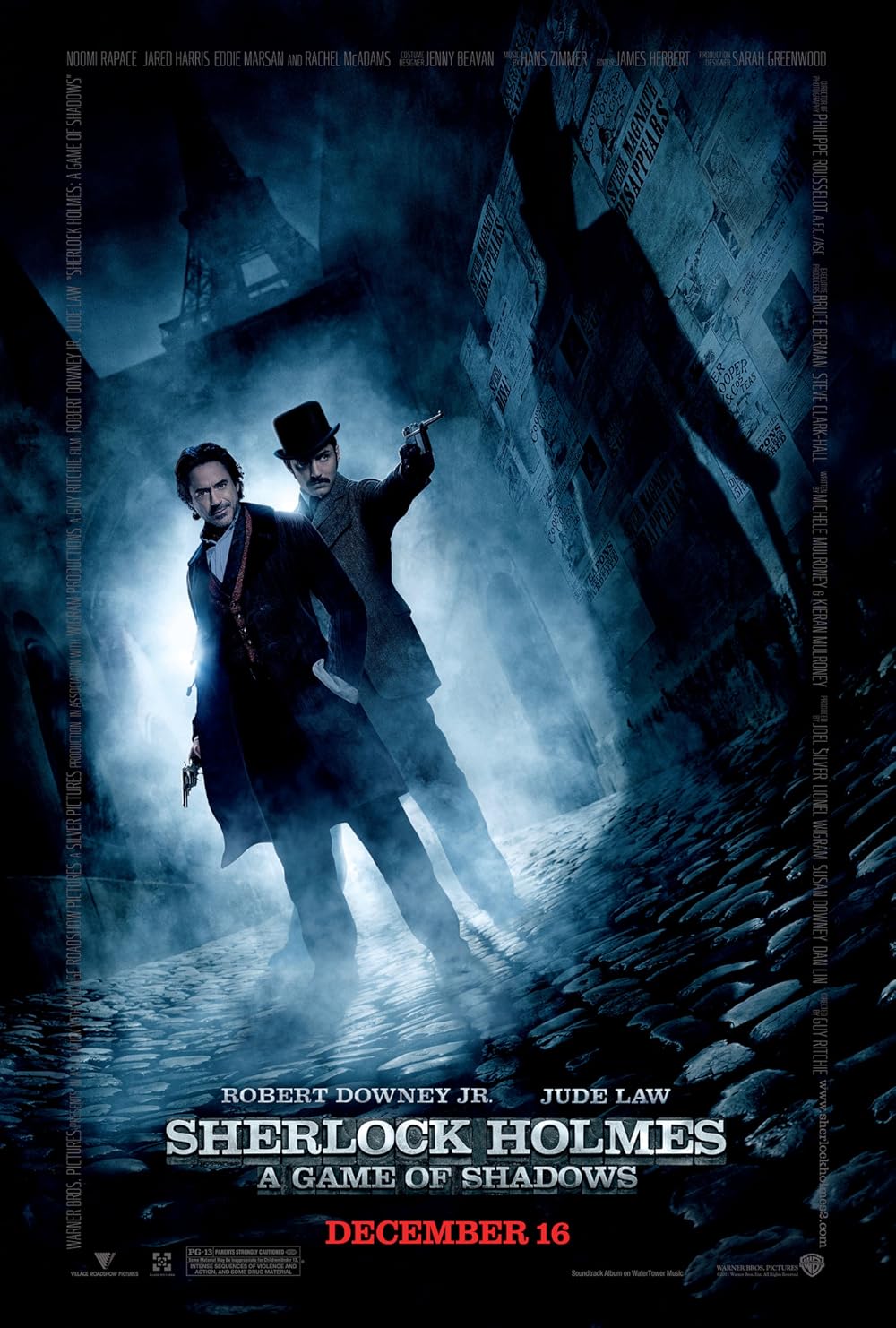
Sherlock Holmes: A Game of Shadows

Things the Sherlock Holmes sequel did right, in no particular order:

Less action-for-the-sake-of-action feeling to it than the original. Sequences that showed the inner workings of Holmes’ mind; not so much how he is eight steps ahead of anyone else, but at least the demonstrable fact that he is. (Though maybe the first one did too? I can’t recall.) Sufficient use of Doyle’s canon that I was able to anticipate certain events and recognize others. Robert Downey Jr. Stephen Fry. Still excellent Holmes/Watson chemistry.

Things the movie did wrong, in no particular order:

Y’know, I got nothing. It was light and fun and better than its progenitor, and what more do you really need? Oh, right, if you care, blah blah Moriarty, anarchists, gypsies, unstable Europe, Reichenbach. That should pretty well ought to cover it, except to promise that you will laugh.

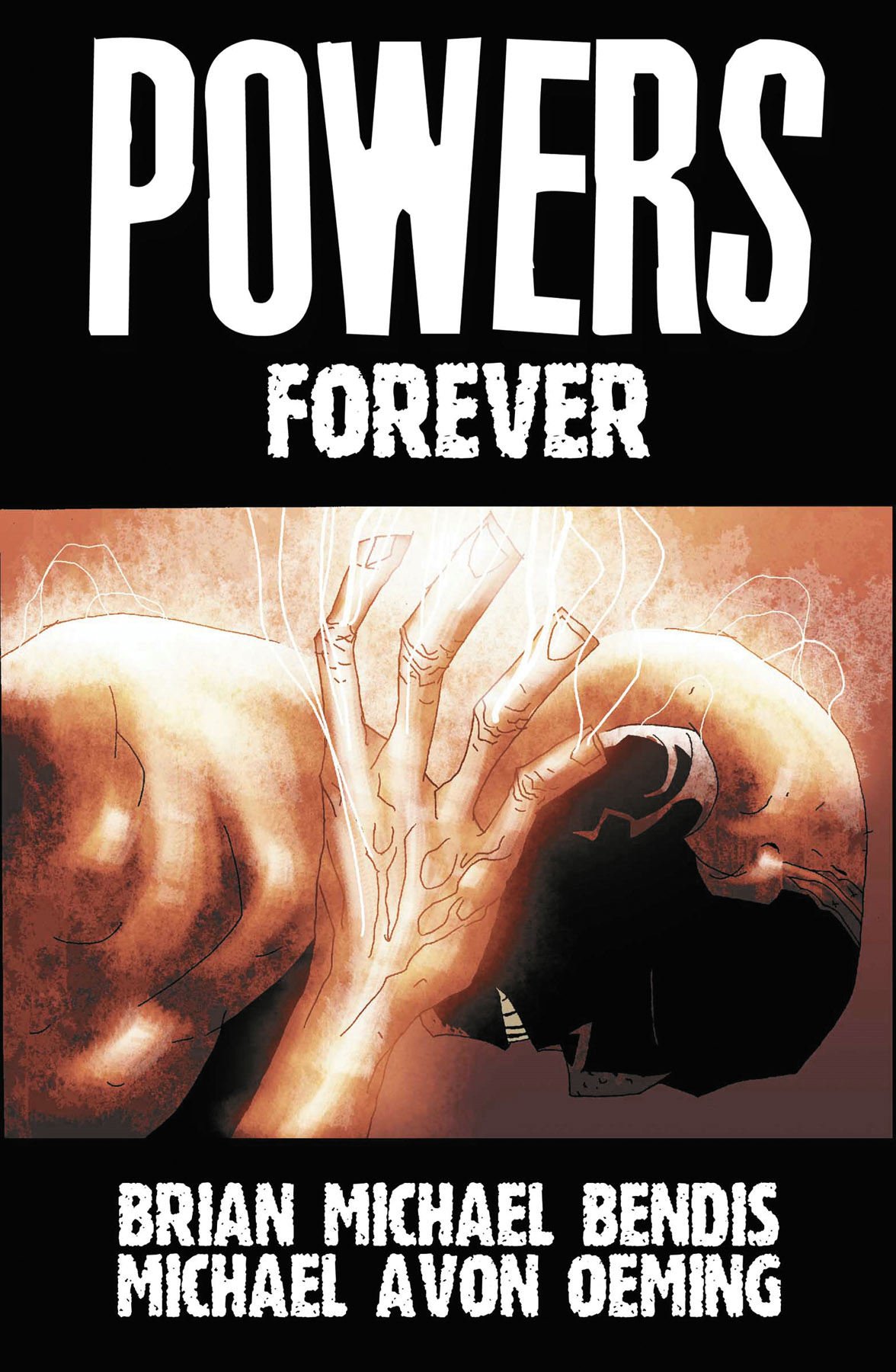
Powers: Forever

81rp8fcRC7LIf I remember correctly, the previous volume of Powers marked a major shift in the way things work, with said Powers being basically outlawed altogether. (Which only makes a limited kind of sense in a world with supervillains, but roll with it.) Naturally, therefore, Forever picks up… at the beginning of time. What?!

No, actually, it’s pretty cool. If you’ve ever wondered about the origins of superheroism in the world, or also about the secret history of now-police detective Christian Walker, and if you haven’t wondered about that last bit by now we aren’t reading the same books, then this is a can’t miss entry in the series.[1] Except to warn you that it’s a historical interlude with no apparent bearing on the future, there’s almost nothing else I can say. No, not true, I can say that it’s good. And that it has really unexpected monkey vagina. (Is there another kind? …if you’re not a monkey?)

[1] Someday, I will probably still not understand people being able to skip a book in a series.

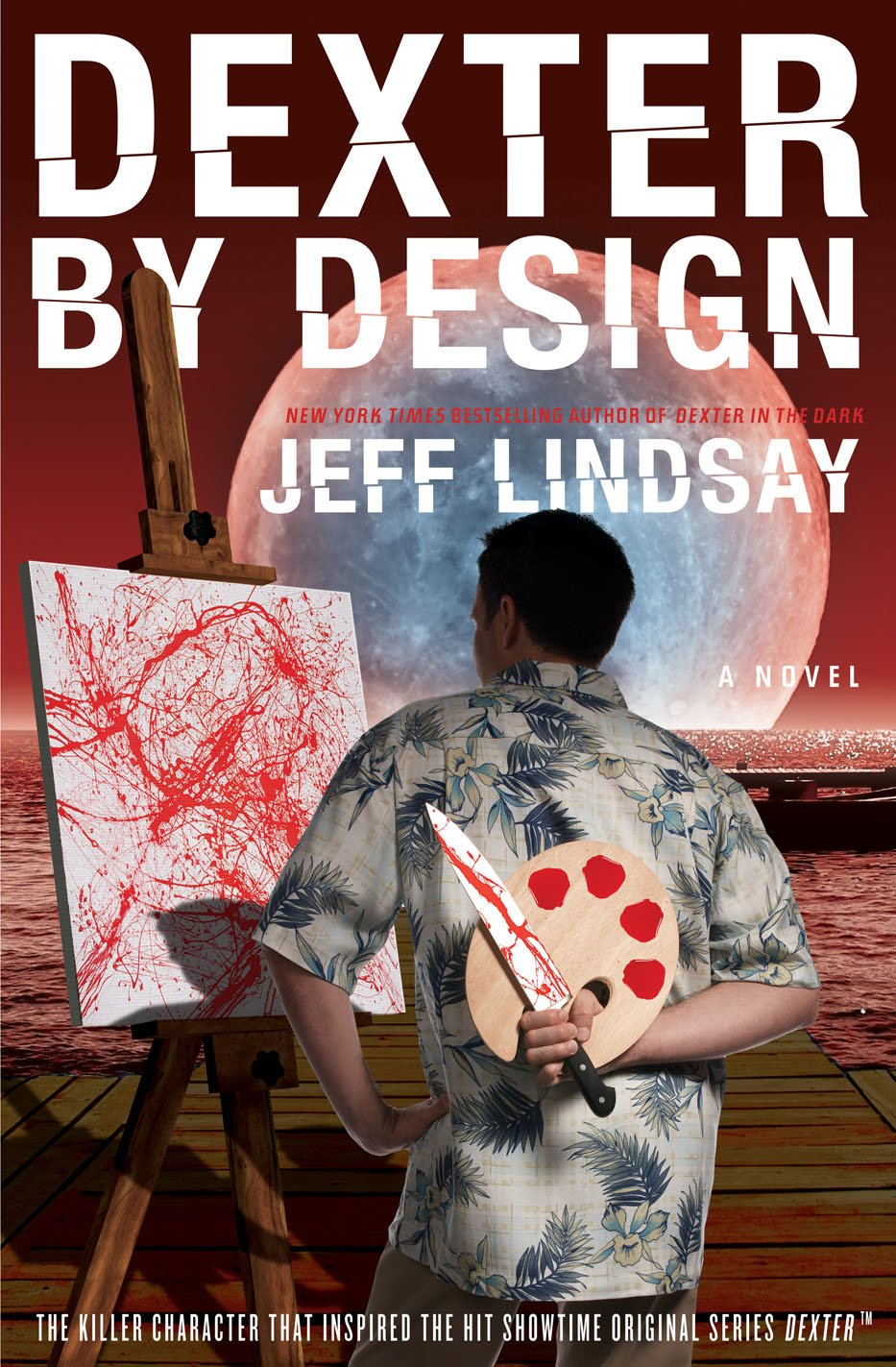
Dexter by Design

With every Dexter book I read, I am less and less convinced that he’s anywhere near as smart as he thinks he is. I haven’t decided how I feel about that, I think because television Dexter is so much more on the ball. He’s not hyper-effective, but he doesn’t strike me as ever more inaccurately-pompous in each succeeding season either. See, and this is no good, because it’s starting to sound like (as of Dexter by Design) I actually dislike the character now, and that’s not it. It’s just that I am snickering at him, and I cannot imagine snickering at the TV character. Or maybe it’s that it’s harder to be okay with his plan to thin the world’s population of murderers if I become less and less sure that he actually knows what he’s doing. On the bright side, he’s at least still likable in his blunders and pratfalls, at least for now.

In this particular book, the Dark Passenger’s supernatural origins take the back seat, just as I had hoped, in favor of a more prosaic killer who is nevertheless quite artful in his arrangement of the bodies he is leaving scattered across Miami. None of which would seem out of place for the two-thirds of a TV episode devoted to the killer of the week instead of a season-long plot, except that this particular killer has a bone to pick with Dexter, and he has far more than enough information to pick that, uh, bone[1] quite masterfully indeed. As if that weren’t enough, Deborah is in danger and the cops are closing in. Hooray for a light summer’s thriller! (And yeah, I’m nearly positive that reading the book during last week’s camping trip made it better than it would have otherwise been. Setting matters, y’all.)

[1] It turns out that metaphor only works in the passive voice. Who knew?

Powers: Sellouts

In a way, Sellouts is the exact same book that Supergroup was, they just changed Marvel to DC before writing it. In another way, it’s the biggest book in the Powers series since the first one, because this is where everything changes. Obviously I cannot talk about the second part of that claim, so I’ll have to explain the first part. Imagine if the Justice League of America was full of people who hate each other and are no longer concerned with fighting the supervillains much at all, instead renting out their Hall of Justice for tours and merchandising. Imagine further if Batman were to be embroiled in a sex scandal in which an underaged girl was dressed up in the Robin outfit, seducing him, on film. This is like that, except these statements are not spoilers, they are the premise of the book. Things start getting bad after all that is established. (The names have, of course, been changed to protect the guilty.)

Really, that’s what makes it work for me, is that a lot of such stories would be rolling for shock value. And while that is a little bit true here, don’t get me wrong, it is still primarily a springboard to examine dire consequences, and I like how they laid it out. This established, I have a bit of a gripe about Deena Pilgrim. Well, not about her, but… this is a buddy cop noir drama thing, right? The thing about buddy cops is, they are both the main character, billing split right down the middle. So why is it that Deena has been shown naked not only more often than her partner, but in fact more often than any other character in the series? I will never oppose nudity in my art, full stop. That is a known quantity in any disinterested observer’s evaluation of me. But that doesn’t mean some characters aren’t being exploited, and I do object to that. ‘Cause, seriously, what gives? How are you supposed to be a credible main character if the author or director or whoever is exploiting you?

It occurs to me belatedly that the title may have had more relevance than I thought. In any case, I hope something is done to adjust the balance. This be uncool, as it stands.

Powers: Anarchy

The thing that is sad about my review of Anarchy is that it will sound like I didn’t like it, when the worst I have to say about it is that I didn’t love it. The characters are still top-notch, or I should probably pass that through my filter of liking things too strongly and say instead that I continue to find them compelling. But the plot of this particular issue was really just forgettable. It was tasty forgettable, don’t get me wrong, but like when you eat light popcorn and then later you suddenly want actual food? It’s like that. I know that there were some superhero murders that tied back into the comic’s earlier days and that may well become very important later for that matter, but in the moment, it was just a glimpse of places we’d been before with people I’m happy to accompany, sure; and restoring the status quo (which had been really strongly upset by the end of the last book) was probably a good idea, but I could wish it had been more exciting to get there.

On the bright side, the book isn’t a thousand pages long and I didn’t have to wait two or more years to read it, so the standard complaints really don’t apply.

Silent Hill 2: Restless Dreams

They may eventually get bad, but so far, I cannot say enough good things about the Silent Hill series. And unlike last time, this is one I had… well, okay, I had played it before, but I never finished. Last time was spooky and inexplicably satanic, I think? Whereas Silent Hill 2 (and, I hope, the future entries as well) was deeply psychological, with no hallucinogenic drug rings to be seen. I should first mention that although the 360 claims backward compatibility, there were still some sound bugs, less bad than last time but still present, and also I found out an hour in that you can only have one save game slot, total, or the whole thing falls apart. So that bit of replaying sucked.

But the rest of the time? Awesome stuff. See, there’s this guy James, and he’s come back to Silent Hill where he and his wife Mary had the best vacation of their lives, years before, because Mary has sent him a letter asking that he meet at their “special place”. Only, Mary’s been dead for three years, the town is mostly abandoned and all the roads into it are blocked, and the people he does meet are split between disturbing homicidal creatures, seemingly disturbed humans, an oblivious child, and a doppelganger of his dead wife, a stripper named Maria. Oh, and a hulking, unstoppable brute with a giant sword and a red pyramid-shaped helmet who is bar none the scariest dude I’ve ever seen in a video game.

In the midst of these dangers, James must unravel the mystery of his wife’s summons and the dark history of the town, and in some ways, that’s just the tip of the iceberg. All this amidst the best kind of bump-in-the-night sounds, a moody score, and halfway decent graphics. Even while playing the short prequel with backstory on Maria after I finished the main sequence, there still managed to be a moment when I got an accidental adrenaline jolt from an unexpected bad guy popping up in front of me. I am impressed, it’s been awhile since a game managed that!

Ôdishon

What’s that, you say? You want to see a really, really weird movie? Let me recommend Audition, in which an aging Japanese widower mocks up a TV show in order to get girls in to audition for one of the parts, when in reality they are auditioning to be his new girlfriend. And… well, the thing is, anything beyond the premise is a spoiler, including honestly the ways in which I have categorized the type of movie. But on the other hand, I’m pretty sure we both know you aren’t gonna go see this, so I am obligated to make this a conversation by elaborating. If you are in fact planning to see it, therefore, please disregard anything below this paragraph. (Oh, and my short answer is that it is worth seeing, I’m not trying to trick you over here.)

So, there are a number of open debate topics around the way the movie played out. First, there’s the widower guy. His whole plan sounds really damn creepy in a one-line sentence, no denying. And he is clearly entrenched in what is apparently Japan’s paternalistic relationship culture. But I couldn’t bring myself to look too unfavorably upon him, because despite his wealthy-version-of-a-stalker means, his heart really did seem to be in the right place. So I wonder if I’m taking that all wrong[1], and one of the points of the movie is that he did in fact deserve… well, okay, that’s too much spoiler even for me.

And then there’s our star auditioner, about whom… well, she is in fact my biggest open question. The only solid hints of her history we get seem to be from the perspective of someone else’s hallucination, so she is by and large a complete cipher to me. Does she believe herself wronged by, well, various people? Has she been extensively wronged in the recent and/or distant past? Is she simply insane? Is it a hefty combination of all of the above? Perhaps it’s okay that I don’t know, and perhaps, as per my footnote below, she plays a role instead of a character. I hope not, as it’s the same trap that her role is being used to punish, if so; just a different angle on it.

Anyway… by and large, the thought exercise presented here was better than the movie itself. Probably this is because it bucked my expectations via its near glacial pacing, and for no other reason directly related to the plotting or acting. But even if I’m objectively right, I will never call a movie that put this much contemplation into my brain anything less than good.

[1] For one thing, I started to say that there’s no counter-example in the film of someone interacting with the opposite sex on more equal footing[2], but then I remembered that his son seems to do fine. And while I will be the first to take notice of how meeting people only gets harder as time passes, there are still reasons to believe his counter-example is central to the themes of the film.
[2] Heh.

The Alienist

On recommendation of one of my graphic-novel-sharing friends, I picked up a turn of the 20th Century mystery book, The Alienist. (And, seriously, it was recommended several times, and has been mentioned several times more while I’ve owned it unread. Which is not a complaint about my pushy, pushy friend, it’s a wry nod to my massively overflowing bookshelf.) But the point is, I got to it, only to find (unsurprisingly) that everything I heard was true! It is in fact a pretty darn good fiction about the genesis of modern police procedure set against the trashy, immigrant-filled slums of New York City’s 1896. It occasionally bordered on feeling too modern, but never quite got there, all while managing to have a shockingly strong female protagonist in the cast, an occasionally Holmesian feel, and special guest appearances by Theodore Roosevelt and Charles Ranhofer. Oh, and “the first” serial killer. That may not actually be something for everyone, but it’s something for just about everyone I want to know.

Powers: Supergroup

Superficially, the fourth volume of the Powers series appears to have borrowed heavily from the Fantastic Four mythos. Sure, the government-backed group is named FG-3 and has only the three members such a name would imply, but the long history between its members, their popularity, the wealth and merchandising, the times when the team is in some kind of interpersonal crisis? All quite familiar. The good news is that the similarities really do fall apart once the plot of Supergroup has proceeded beyond the surface. Down there in the muck, the story is chock full of dark conspiracy, several stripes of bravery, and some pretty big changes to the series’ dynamics, all while inching closer to the as-yet unrevealed underlying truths of the Powers world.

Which is a good thing: only four books in, and already most of the recognizable secondary characters have bitten it. Either Bendis intended to show a world in crisis all along, and this is a good way to make his character realize it and start working towards the solution, or else this kind of change is the only way to slow down the grinding wheel of destruction and give us a chance for alternative storylines. I think I prefer the former but expect the latter, since there are quite a few of these books left. But at least my interest in them is renewed by this solid entry, so, we’ll see!

Powers: Little Deaths

I am still trying to work my way through my reactions to the third volume in the Powers series. We’ve previously been introduced to the world and its concepts quite well, so by now the interactions between the main cop, his new partner[1], and the superhero-related crimes they investigate are comfortably old hat. And the stories in the book (big hero dies in a way that reveals salacious sexual peccadilloes; smalltime hero and villain conspire to make their comebacks) are quite good. Yet, I found myself really disappointed with it.

And the why? I feel like I’m being unfair, with the massive amount of monthly comics from the early ’70s I’m reading right now that are frequently guilty of this and yet I never give a second thought about it there. But, my problem with Little Deaths is that nothing new happens. Did I learn anything new about the world? Not that I can tell. Was an important new character introduced that I need to keep an eye on? It’s always possible, but I don’t believe it. Detectives Walker and Pilgrim entertained me as always, but no new facet of their characters or relationship was revealed. It seems ridiculous to complain about a comic book being more like cotton candy than steak, but it turns out that I’ve come to expect substantive new material from any given book, and today I simply didn’t get that. Oh well. At least I learned Olympia (who I hadn’t heard of until he died) has a thing for redheads? Useful!

[1] Although I say it that way, I kind of think that Deena Pilgrim is the character best suited as stand-in for the audience and therefore the actual main character of the series. The probably-cancelled The Good Guys on Fox does the same thing, though without superheroes. Still, I’m not sure how to refer to a rookie cop and his experienced partner, since the X and new Y flows so much better.