Tag Archives: Kindle

Lord of Chaos

So, these are certainly getting harder. I mean, yes, Lord of Chaos is a hard book. “Let the Lord of Chaos rule” indeed. Not only is it the book where the first real convolutions of Aes Sedai plot mystery and basically every other type of political mire that you can imagine begin to rear their heads, but it’s also hard to watch such a trainwreck. I don’t mean that in the plotting sense, of course, just in the “Shit just got real” sense.

But it’s damn hard to review. I would claim that this is because of my self-imposed spoiler moratorium from here on out, but that’s not it really. Anything that I would put behind a spoiler cut[1] has already been discussed in every conceivable iteration when I was still young enough to read all of it in all its glory and even participate now and then. (Google Groups may even still have most of it.) And any theme I would try to tease out is right there in the title.

So, I will instead report on the two things that really stood out to me on the reread, although they’re not new either. One is what a huge fan of Min I am. The other is what a huge non-fan of the endless summer I am. Because of how evocative it became, which is certainly praise for Jordan’s talents, but I suppose of the backhanded variety. But not really. Good writing about uncomfortable things should make the reader uncomfortable. Right? (But for so long? Sure, like six months in Randland, but more like six years out here. Hell, even at the pace I’m reading, it is lasting less than regular summer, but I still feel it worse in the book.)

That said, it does raise a discussion point I don’t remember seeing crop up back in the day. Non-specific magic weather, or stopped-the-earth-in-its-orbit magic weather? I’m sure the latter has more physics consequences than I could shake a pointed quark at, but it’s kind of cool to consider nonetheless.

[1] Taim. I paused several moments to consider, and that’s the size of it. It doesn’t properly capture the scope of the discussions I would rehash, of course. Man, that guy is a compelling character, and one of the best examples of the cyclic nature of the Wheel of Time. All the moreso if he had never knowingly spoken to a Darkfriend when he first met Rand.

The Fires of Heaven

Yes, it really did take me this long to read The Fires of Heaven. (Yes, I really haven’t watched a movie in this long either.) No, it’s not because I suddenly liked the book a lot less than I have liked the previous ones during this re-read. Yes, it spells all-but-certain doom for my hopes of being caught up with the series by the time the last one comes out in three-ish months. Yes, that makes me pretty sad.

But damn, it doesn’t make me as sad as watching Moiraine’s noble-tragic march through the book, every bit as cognizant of the outcome as I am.[1]  It doesn’t make me as melancholy as the loss (in one way or another that is probably not as lossy as you might expect) of three characters I would like to have watched for longer than I got to.

The metaphor breaks here, because most of the rest of what I have to say is good. So much of what isn’t melancholy trending toward tragic is ridiculously awesome (Mat finding his place in the world, finally) or downright hilarious (any given scene from Nynaeve’s point of view, and I feel bad relegating her to the hilarious when there is so much awesomeness to be had by her along the way). Plus, this is the first book where we see into the minds of the bad guys in a sincere and meaningful way. Those sections have always been my favorites, I think, once they were not solely the province of Ishamael, the 4,000 year old lunatic.

If I have to pick a character to dislike (and save for Elaida, this is probably my first time in the read), it’s Egwene. Her rise to power is cool in its way, I like how much she is learning and how much she wants to learn, but the way she turned the balance of power on her friends solely to keep them from ratting her out for doing something she had sworn she would not do, and especially for her feeling so gleeful about being able to upset that balance of power for such an ignoble end? Pretty icky, Egwene. Just saying.

[1]I have read this book at least four times, and every one of them (well, okay, not the first one in 1994[2]) I have felt increasingly more sad over the course of her scenes and inevitably become teary by the time Rand is reading her letter.
[2] This was the first book in the series I had to wait to read. I did not have to wait long at all, maybe only a month or so? But I did have to wait.

The Shadow Rising

I think that I was a little hard on The Shadow Rising in my mind, when I claimed that The Dragon Reborn was the last book in the series that had a solid structure to bring everyone into the same storyline. I mean, yes, some of the characters have fully divergent stories for the first time, and they will remain diverged until the end of the series from here on out. I mean, some people reconverge at certain times, but never everyone all together. (P.S. Still spoilers, for now. Probably not much longer, I’ll be more careful, but they still exist for now.)

But the plotlines in this book constantly mirrored each other thematically in ways that I would be able to describe rather than assert if I had not waited so very long after the book for the review. (This is a real problem that I will try to avoid in the future. Because, pretty embarrassing, right? I mean, even one “for instance” and I’d be satisfied. But my brain is a blank slate on the point, other than having been impressed by it as I was reading. This is one of the upsides of re-reading a book when you know all the things that are going to happen in it. You can get a lot more deeply into the structure of the thing, the themes, the foreshadowing, develop a real appreciation for the craft of writing. When craft exists, at least, which it did here, despite my lack of proof.)

Plus also, some of the coolest scenes in the series, right? Well, at least, the highest concentration of them. Redstone doorframes? Rhuidean? I’m just saying, cool shit went down. Plus… so, this was the first of these books that I read any of. I was at UT for a weekend “come be at our school” trip, in the summer of 1992, and my occasional girlfriend was reading it, and I glanced at what she was reading, a scene where Mat was trying to convince Perrin that they should both ditch Rand, because, crazy channeler guy even if he is the Dragon, right? She explained to me that Mat was less of a dick than he sounded in that scene, and I eventually picked them up based on the recommendation. (Later, I realized that when she sent me through a three-ringed art installment on the UNT campus  hoping I’d have some kind of vision, that was a reference too.) My point is, it will always be special to me not just because I haven’t entirely gotten over the collapse of the Age of Legends and the Da’shain Aiel, but also because it marks the first words I read in the Wheel of Time.

Anyway, good book. But then, haven’t they all been, so far?

The Dragon Reborn

It occurs to me that every review after this one will be much harder. Because, see, The Dragon Reborn has a cohesive storyline that weaves its way apart and back together again, although arguably Perrin is barely involved in the climactic action, or for that matter any of the rest of the events, which mostly bring everyone together via traps and/or the whims of fate, and meanwhile Perrin is only being dragged along by Moiraine while causing ripples that will have future rather than current consequences. So I suppose I’ve just made a liar of myself, and the truth is that Jordan was already starting to drift away from everyone being a part of the same grand plan for a book’s arc.

But all the same, this is the last time that was even mostly true, and so it’s still noteworthy. Because Rand is… so, here’s a thing people talk about, why he seems so much crazier in this book as though the taint of saidin was ravaging him, then Jordan took stock and realized how much time was left and kind of backed off that plan for a while. Also, this may be a good time to mention that I’m still not caring about spoilers yet. Good? Good. So anyway, that’s a valid stance to take, authorial error. Whether it is such and I’m being apologist or not, I still think the text, especially the preceding events in the overall story, support another explanation. Which is, Rand is experiencing actual regular psychological trauma based on having just had a prophetic fight in the skies above Falme, taking a magical unhealable wound during said fight, being praised by everyone around him as the savior / destroyer of the world, and still not even being able to control the power he’s supposed to use to do whichever of those things turns out to be accurate. My point being, you don’t need magic evil to explain why he might have experienced a temporary break with reality that reset itself once all his doubts had been erased. Sure, he ended up with the crappy end of the bargain, but at least it was no longer just sitting there, unknown and unknowable. “Am I really really the Dragon? Fine, let’s get to work, then.”

I, uh, may have gotten ahead of myself there. So, anyway, you have Rand running off to fulfill the one part of the Prophecies of the Dragon he knows about, just so he can be once and for all sure instead of awaiting Moiraine’s pleasure. And you have Moiraine vexedly following, never so angry before or since at her own inability to to make it happen the way she wants to, and you have our three Aes Sedai in training headed off to spring a trap so it won’t get Rand instead, even though they know that’s probably why they know about it in the first place, and most of all you have Mat finally getting to be Mat, which is nice because I will like him for the whole rest of the series, except for the book he’s not in and the book where his voice is wrong, but it’s better than disliking him, which I have had to do now and again.

And this is me considering the reviews still pretty easy. Oy. The one bright side of reviewing books I’ve read lots of times and that furthermore almost everyone reading the review has read lots of times as well is that nobody has much in the way of expectations. Oh, also, Egwene? Totally binty. I wonder if this is objectively true or more a function of me liking Nynaeve so much better in my old age. I think it’s an objective truth that is undercut by her eventually growing into what she wrongly thought she already deserved in this book. Alright, I’m done. The next one may be a while in coming.

The Great Hunt

So then Rand got this idea about running off and living a hermit’s life in the middle of nowhere, one of very many middles of nowhere scattered throughout the continent because of how humanity is on a long gradual decline ever since the Breaking of the World, some 3500 years ago. This? This is why we don’t drill holes into the Dark One’s prison. Anyway, Rand’s idea made a lot of sense, because in the middle of nowhere he could not kill all his friends nor be gentled by Aes Sedai. The only downside is that, being the Dragon Reborn, he would also fail to save the world, which is probably worse than those other two outcomes. So naturally the plot ta’veren strikes in the form of creepy little Padan Fain stealing the Horn of Valere and riding into the sunset with it, right before Rand could have snuck off into obscurity. Et voila, a book.

This may leave you with the impression that I am meh on The Great Hunt, and really I’m not. (Truth be told, I expect to be meh on few if any of these books when read in one desperate gulp as I am doing. I’ve long had a theory that the problem with the books was two-fold: 1) far more repetition than non-casual readers need, and admittedly the huge gulp will eventually make that a trial, yes, and 2) too much space between books in which not enough happens, whereas the gulp will make that vanish entirely because over the course of the whole series, yep, quite a lot happens. Sure, there are other problems, but I think those are the two biggest ones. If I’m right, even a book that should be far more annoying upon re-read than the first time when I didn’t even know what to expect will also probably seem fine, and much moreso an old standby of basically good like the one from which I have just digressed broadly.) It’s just that I don’t have a lot to say, and even less to sum up, so that’s where my brain went.

It occurs to me that I possibly shouldn’t like this book, just because of the role it plays. The Eye of the World set up the central conflicts of the story, between Rand and Ishamael, between Rand and Fain, between Rand and his destiny, and of course between the entire world and the Dark One. Whereas this book sets up the some of the biggest distractions from those conflicts with the introduction of the horrible and functionally irredeemable Seanchan society and Rand’s debilitating, messianic spear wound. Plus, it introduces someone who should by rights have been an interesting distraction in the form of Lanfear, the original Dragon groupie, only to squander her before the series was even half over. I wonder if her character arc would have made more sense in a much shorter series. That said, her attempts at seduction (both the sexual kind and the “dark side of the Force” kind) were awfully clumsy here, and I wonder if that was about Jordan or about her character?

Am I rambling? Yes, yes I am. So let me leave you with this. Remember that time when they went through the Portal Stone and something went wrong and they each of them in the group lived the entirety of somewhere between hundreds to maybe infinite lifetimes? If you do not, then it is because you’re not aware that I am wildly unconcerned with spoilers for these early books, even though I announced it in front of the previous review. So that probably sucks by now, huh? Anyway, before I was so rudely interrupted, I was making a point. Sure, Jordan described each lifetime in just a few paragraphs, but they were still entire lifetimes. How horrible is it to imagine that you could be a person in the midst of some kind of scientific-magic overload, a dim reflection of someone’s incorrect fate, granted the entire lifetime that everyone gets, yes, but eventually doomed to be only a fading memory punctuated by Elan Morin Tedronai laughing that, as always, he has won again and your faded reflection was an exercise in futility.

Say what you will about Robert Jordan, but the man could be incredibly evocative. Which reminds me that, as a devotee of the post-apocalyptic, I’m disappointed that the dimming light of humanity which persuaded Ingtar to sell his very soul[1] has kind of fallen away from the story. At least, my memory of the latter books is that the land is never so vastly empty as it is right now. Probably I’m wrong objectively and it only seems thus because of Travelling. But it was tragic and beautiful, and I miss it.

[1] What, you’re still here complaining about spoilers? Seriously? I thought I had made myself clear! (I’ll start trying to keep track of them somewhere in the book 7 range or so, I reckon.)

The Eye of the World

It is likely that I’ve read The Eye of the World more often than any other book. But not in the last eight years or so, I guess? Hence this review, which is kind of difficult to put together. What can I say that hasn’t already been said extensively? In any event, the book is over twenty years old, so expect spoilers from here forward, and I can’t promise there won’t be spoilers of future books. But certainly not of the last several.

One thing is that I watched the Lord of the Rings extended trilogy on blu-ray last weekend, and there are large swathes of the book that feel a lot like The Fellowship of the Ring, far beyond the opening hundred pages with black-cloaked riders invading the idyll of the Two Shires, only to be turned away by a wizard and a ranger. Still, given the length of the series and only one aspect truly remaining similar throughout the series (I refer here to the Padan Fain / Gollum connection), it still basically feels like the first few pages were written to be familiar, rather than that a full-scale rip-off occurred. Still, I’m surprised I didn’t see more people saying that it had back in the day. (Until I remember I didn’t pick up one of these books until 1993, by which time four had already been published, so I suppose those cries had already echoed their way out into the void.)

As usual, the biggest tragedy of the book is Rand’s innocence, so soon to be shattered. I also notice that Perrin’s broodiness here matches his future multi-volume obsession with being the guy from Taken, and that Nynaeve is by far the best female character in the series (except maybe Moiraine, but it’s not really fair to count her, because she spends so much of her time as a cipher, mostly to be observed with only the barest of glimpses into her head). There is little that has made me so happy of late as her current position on the board.[1]

Otherwise, I only have two things to add about the kindle version and my current re-read. One is that through some quirk of odd fate, every instance of the word ‘whatever’ was capitalized. I really wonder whose search and replace thought that was a good idea? The other is a thing that I need to compare against a physical copy, so just a moment while I do that. (You can pretend while reading this sentence that the sentence isn’t here, and there was a pause while I hopped into the other room to dig through my bookshelf and make sure whether the copies are identical or not. This pause is also a good time to stop if you are worried about future spoilers somehow, because I take a lot of knowledge as self-evident in the rest of this paragraph.) And what hey, they match! So, here’s the thing: The grave is no bar to my call, right? The Horn of Valere? Here’s what is actually written on the Horn, though: Tia mi aven Moridin isainde vadin. Based on the rest of what I’ve seen of the Old Tongue, which tends to be pretty consistent, the literal translation is ‘To my call, Death is not a bar’. Unless, of course, one were to notice that a newish character has taken the name Moridin, and then one were to wonder why bother to capitalize that one word there, and then one were to notice that the Horn of Valere has been absent for pretty much the entire series, and having it just being Heroes of the Horn out again after all this time would feel kind of anti-climactic, and anyway, here’s my newest loony theory[2]: the Horn is going to somehow affect Ishamael reborn, directly, as has been prophesied for the duration of said Horn’s existence. And if the Horn is older than the Age of Legends (I wonder if we know that either way?), it is also an indication that this is the actual Last Battle after all, not just one such along the turning of the Wheel.

[1] Because that would be a spoiler for recent books.
[2] not obviously addressed in the current version of the FAQ, though my searching was not exhaustive by any means, and of course if someone has said it on rasfwrj in the past 8 or 10 years, I wouldn’t be in a position to know that.

Turn Coat

Usually when I go camping, I bring a trashy post-apocalypse book because they are quick easy reads and I won’t be horrified if my copy falls in the mud or something, I guess? This time, I brought the Kindle, though. Which makes no sense given my prior criterion, but I think I figured what with the case it’s in and the non-delicacy of the electronics in general, probably it would be fine. Plus also, in case I had read a lot, there would be more books present without having had to carry them in my already significant pile of stuff.

That said, I did not read a lot, but since what I read was Turn Coat, the next book in the recently horrible-in-paperback Dresden Files, it’s just as well I had it in a format that did not cause me to hurl it in the mud in disgust. (Technically, I have not cracked open my physical copy of the book, and maybe it was only Small Favor that was done poorly, and all subsequent entries in the series, despite their similarity in construction, look like normally proportioned books inside. But I doubt I’ll find out.)

So, right, Harry Dresden. This weekend, he must face a traitor at the heart of the Wizard’s Council, his oldest enemy, the White Court of Vampires (as, okay, happens every book or three), and a Native American nightmare. Also, he has to acquire a little more power, juggle his sporadically successful love life, and continue to have two awesome pets and an awesome apprentice who could at any moment spell his own death. So, you know, it’s pretty much a book in the Dresden Files, and after a dozen or so, I suppose you know if you like them. I know if I do, and the answer is yes.

I wonder if I will make a more solid attempt to to review these when I am reading the current one? I’d like to think so, but I would have the same problem with bloat in the ongoing storyline (not a pejorative; it’s just that after multiple years and multiple books, if an author is trying for continuity, there will be a kind of a lot of it) and spoiler avoidance whether everyone else had read the book yet or not. Possibly, these problems would even be amplified.

The Map of Time

You may or may not remember that I started reading The Map of Time on a plane in October, only to lose it on said plane due to a series of circumstances best blamed on myself. Tragically, it took an extremely long time before I admitted I wasn’t going to find another physical copy anytime soon and acquired a Kindle copy instead; and perhaps fittingly, the Kindle came to me in part to make fun of my having lost that very book. And it is one hundred percent fitting that there should be such a circular tale to my reading of the book when it is itself so very concerned with circular tales.

See, there’s this guy who had a prostitute girlfriend, only she was Jack the Ripper’s fifth and final victim, right before he got caught. And before you know it, first Murray’s Time Travel (offering scenic trips to the year 2000 to watch mankind’s final battle against his automaton overlords) and then famed author H.G. Wells are enlisted to help him travel back in time and stop the Ripper before poor Marie Kelly’s demise. And then there are two more stories after that, all set in the same several weeks long period of November, 1896, and with similar time travel plots. You have to watch out for Palma; he pulls so many fake-outs and double blinds within his characters’ time-travelling escapades that you’ll think you’re watching an episode of Lost. From the second season. Or possibly Back to the Future 2. But you know, mostly it’s a period piece, of which I suppose I’ve read quite a few lately, mostly written by Dan Simmons.

My thought? Totally worthwhile, go for it. And then let’s talk about it afterward, because I feel uncomfortable adding more details than I have, which may already be too many, but there’s a lot of stuff to tease out up in here.

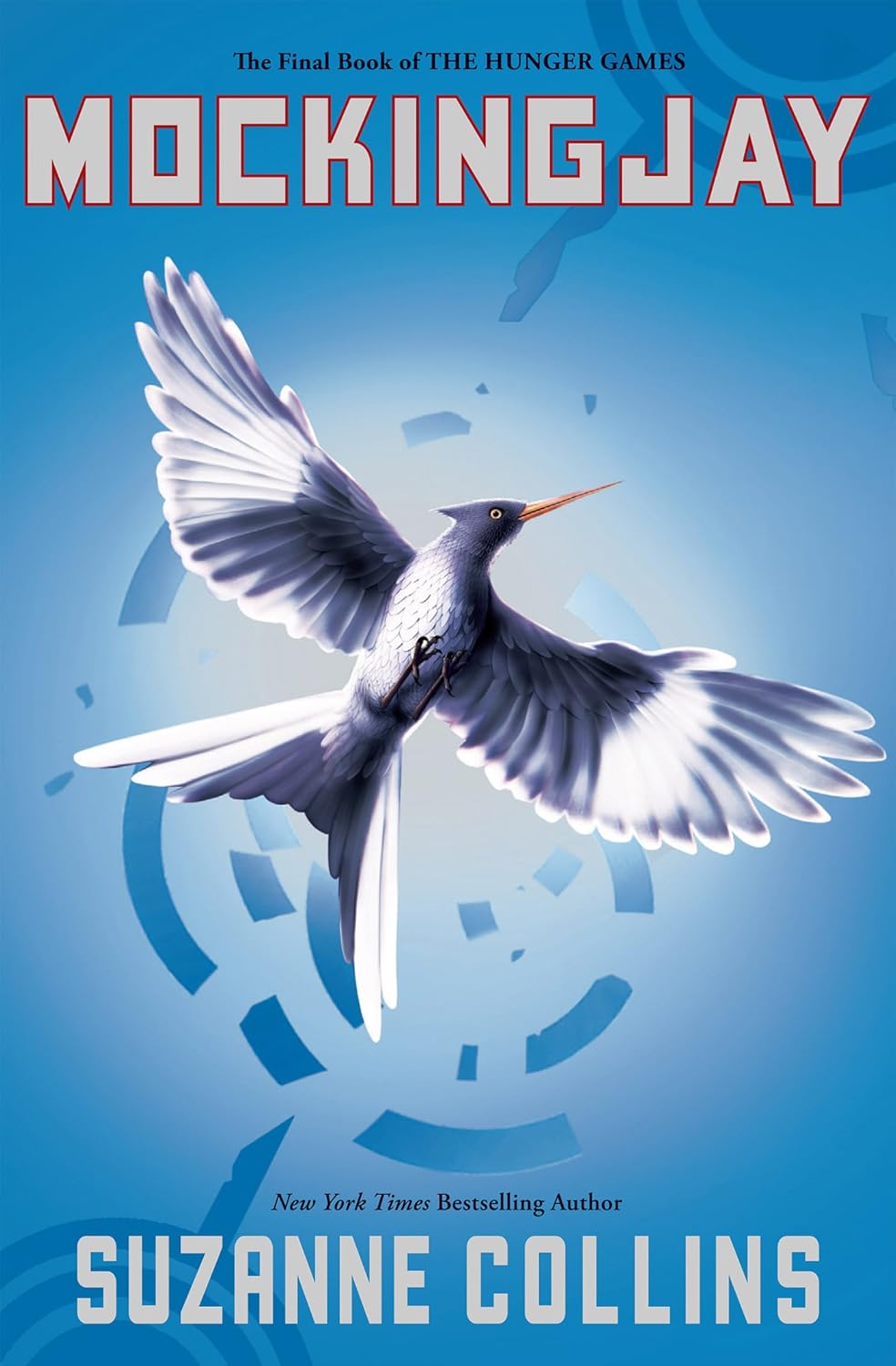
Mockingjay

I had been given appropriately low expectations of the final book of the Hunger Games trilogy. Expectations such as that I would really despise the Mockingjay herself, narrator Katniss Everdeen, and that the focus shift from dystopic public combat to rebellion also marked a loss of focus for the story as a whole. And you know… those things certainly have some truth to them.

Katniss isn’t a combatant in the Hunger Games anymore; instead, she’s the public face of the rebellion, which has caught fire just as predicted, which would be more okay if only one of her two possible boyfriends wasn’t the public face of the government against which they are rebelling. And things just get worse for her from there. It’s still an interesting world, and I still cared about what happened to it, but Katniss is never so compelling as when she’s in the arena fighting for her life against all the other tributes, and sure enough, those days are over. Plus, a year and a half has gone by, and the fact that she not only still hasn’t come to any kind of conclusion about the third of the story that is her love life, but actually keeps escalating the frequency of her lashings out against each of them and in fact everyone else in her world instead? It makes it really hard to believe she’d keep inspiring love from some people and loyalty from so many others.

Still, there’s a book here either way, because not learning a conclusion to the rebellion is untenable, and because people don’t have to like their Mockingjay personally to see her utility as a symbol. And her fate in that regard was inevitable, if only because the people watching her on TV can’t read her thoughts. To answer the obvious question,  the conclusion was satisfying; it’s just hard to read a book with a narrator that has grown mostly unlikable, especially if she isn’t locked in mortal combat often enough to mask what I didn’t like about her.

Unrelated prediction: the movie will succeed or fail on the strength of their Haymitch actor alone. That guy? He’s compelling.

Small Favor

If one almost-enemy asks you to go rescue another almost-enemy, I’m not sure how the personal math on that works out. Do they add up to more than one enemy total and you shouldn’t do it? Is it a multiplier effect, and in fact you will have less enemy than ever? Of course, if you’re Harry Dresden, the kind of people who are asking for a Small Favor of this type are unlikely to be the kind of people you get to ignore, so it’s not like you have much of a choice. But I still wonder.

This particular book had the fairies and the Knights with their special magical swords and the mob again, and the last one had vampires, so I’m assuming the next one will be mostly wizard-related. (I’m not saying there is a definite pattern, I’m just saying there might be.) Beyond that, I don’t want to say a lot about the plot, partly because it’s still a mystery series and anything I tell you is something the author doesn’t get to present just so, and partly because I am spoiler-shy about these particular books right now. That said, the massive spoiler I have for two books from now did allow me to take note of a lot of pretty heavy foreshadowing, which mostly leaves me impressed that Butcher knows what’s coming so far in advance. I mean, it’s one thing to know he has a long term plan for the story and another to realize he knows years in advance what steps he will take along the way. So: cool.

Another thing I like about this book (and I think the series in general) is how Harry is basically playing high stakes poker without ever getting a chance to look at his hole cards. From one moment to the next, as each new horrible and/or death-defying event occurs, his move is to raise, faster than the bad guys can call. Sometimes it feels like, to slightly muddle my metaphor, the only reason the house of cards doesn’t fall is that he’s building it too fast for gravity to catch on that something isn’t quite right. The cool thing about this method of plotting is that it doesn’t give you a lot of time to think, which is fair since Harry never seems to have much either, and also any time the cards do start to fall, you feel it. A lot. And yet, it seems mostly to work. At the end of any given tale, Harry has won a little or held his ground, only rarely slipping back any. And he certainly never loses really big. Well, y’know, yet anyway.

Meanwhile, though, the book? I don’t know what Roc is thinking with their new paperback design, but I want to go on record as finding them to be godawful. It’s the wrong size for shelves and the wrong shape for the words on the page. My eyes hurt before I finished the first chapter. Too tall, too thin, the angles were wrong in the same way that an eldritch Lovecraftian horror is. The upshot of this is that I am a bigger fan than ever of the problem-solving capabilities of my Kindle and also I’m still not sure how I feel about reading paper books now that the new world has opened up to me. But the next book I read, definitely. Definitely. So I’ll let you know.

Also, apropos of nothing else I’ve written here besides the part with the Dresden Files tag, but I’m an ever bigger fan of Karrin Murphy. Best normal person in a supernatural series? Possibly!