Tag Archives: fantasy

Doctor Strange

mv5bnjgwnzaznjk1nl5bml5banbnxkftztgwmzq2nji1ote-_v1_sy1000_cr006741000_al_I know that Doctor Strange occasionally crosses over with other characters in the Marvel universe. I mean, maybe someday he’ll be at the heart of a big crossover event, but as of 15 years of Ultimate comics and 20 years of mainstream comics, he has only ever been at the fringes. And this is a thing that makes a lot of sense! Except for the artifact of history that Stan Lee decided to build a stable of shared characters in the early 1960s to compete with what DC had been doing, there’s no way anyone would say Strange fits into Marvel. Different genre than anything else they publish, and an entirely different style to boot. The only thing that comes close is Thor, and that’s only because they both share a love of stilted declamations.

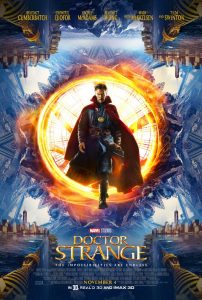
Do I have a point, here? Maybe. See, as promised in a blink and you missed it scene in The Winter Soldier, Marvel Studios has dropped a Doctor Strange film onto an unsuspecting[1] public. And sure enough, there is no apparent connection between it and any other movie they’ve made, at first glance[2]. But this is fine, because unlike some Netflix series I could name, Avengers Tower is prominent in the midtown skyline. Even better, both the characters with names and dialogue and the pedestrians in the background are becoming more comfortable with the bizarre turns of events that occur with increasing regularity in their world, just as befits a maturing familiarity with superheroes. I would not have thought to be so appreciative of a touch like that, but I don’t think I would have thought to expect such a touch in advance, and yet here we are. Normalcy. I dig it.

Anyway, all that’s about the world and setting. The actual movie, though? See, Stephen Strange is the best neurosurgeon in the world, but after a series of unfortunate events related (mostly) to his personality, he finds himself seeking alternative answers about his place in the world. It took Stan Lee and Steve Ditko maybe three pages to establish all of this before turning Strange from a doctor into a sorcerer, and it took the movie a good 45 minutes. Now, don’t get me wrong, Lee has never written under the auspices of “show, don’t tell”. Man loves to tell approximately as much (and as floridly) as PT Barnum did. But at the same time, 45 minutes is a lot of celluloid to squeeze out of three pages. Maybe there is some kind of middle ground? Like, I would never say they should have skipped the origin story entirely, because who has heard of Doctor Strange?

The good news is, that’s the only bad thing I have to say about the movie. It is a feast for the eyes, and moreso in 3D (unless that kind of thing makes you ill), and if the plot is a little bit bog-standard good v evil for modern Marvel, to be fair fantasy and spellcraft kind of lends itself to that. And even so, it’s far more nuanced than you might think from what I’ve said. Not-apparently-a-Baron Mordo in particular is fully realized in a way that never would have been predictable based on his turn in that same initial Lee/Ditko comic I mentioned before.

Tl;dr go see it, they’re not out of juice yet.

[1] I mean, if you discount years of announcements and months of previews. Look, nobody asked you.
[2] At second glance, this is completely untrue, but only because the writers made an effort to relevance that I cannot decide if I appreciate or oppose. That is in full on spoiler territory, however, so I shall say no more.
Shadows of Self

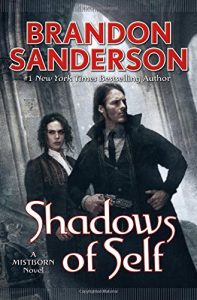
51elu7hcehlBack when I read The Alloy of Law, I said it was a feature that my brain had already erased everything except the broad outlines of what had happened in the Mistborn trilogy. This is because the characters are living 300 years in the future created by their new god, and most of what happened in the short months or years during which the old empire fell and he rose are already the stuff of half-remembered legend instead of researched historical fact.

Well, now that I’ve read Shadows of Self (at a glacial pace that reflects how busy I’ve been these past months[1] rather than anything about the book or my enjoyment thereof), I can safely say that is no longer a benefit. Because the characters definitely remember things like kandra, which are a race of shapeshifters that require other living things to not be formless balls of glop (at least I think that’s right), and also they need metal spikes to have intelligence. And they are also god’s butlers or angels or something, serving both the old god and the new. I mean, not right now, but respectively[2]. Oh, and one of them has maybe gone crazy.

This is the first book of a trilogy, I guess? Or maybe the second of a quartet, I’m not sure how to tell the difference yet. It’s definitely good, and good to see Wax and Wayne and Marasi back in action. Both because I already liked them and because they continue to grow and backfill and change. On top of both plot and characters I approve of, it’s a book about identity, class politics, and freedom vs. servitude. And maybe even alien invasion?

I mean, probably not the last thing.

[1] What with losing a job, then maybe not losing the job, then continuing at said job while waiting for a new job, then losing the job again, then finally getting a new job after all, oh and also getting married. (Plus witnessing the plausible collapse of an inclusive, just society.)
[2] Don’t get me wrong, I apparently picked up on all that eventually, but it definitely felt like I shouldn’t have been playing catch-up.

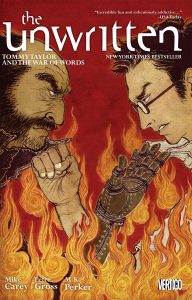
The Unwritten: Tommy Taylor and the War of Words

91jopd0dlnlThing the first: it is undeniable that I have not given this series the attention it deserves. Mike Carey gives good pictorial fiction, and I definitely like the Unwritten. But it’s too dense for me to have spread the past four books across the past four years, so I’m going to have to reread it as a whole, afterwards. Which is annoying to know right now, too late to fix it and also, um, too soon to fix it.
Thing the second: even if I were well and truly timely in my reading of the series, at six books in, it would be hard to avoid spoilers. All the same, I have at least a little to say about Tommy Taylor and the War of Words. Structurally, it was very cool, with the main plot alternating issues with background details going back from a few months to thousands of years, depending. On top of that, both the main plot and the background details advanced in interestingly meaningful ways; above all, I actually feel like I know what’s going on again.

Pity I’ll go another year before reading the next one, probably.

The Omen Machine

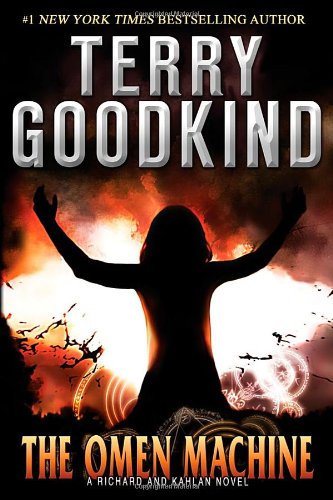
512jJDaPiILEight years ago, I declared myself free from a hell of my own making. Eight years is a long time, you know? Not as good as getting a ten year chip, but pretty impressive nonetheless, right? Don’t worry, I’m not buying it either.

Yeah, I’ve done something horrible. I thought I was hate-reading, and it would be entertaining after the fact. But instead… yeah, there will be spoilers everywhere. I do this so you don’t have to even though you never would have, purely because I am stupid. Learn from Observe my mistake, and laugh well.

What happened was, Goodkind wrote more books even though the series was over. And I eventually (a long time ago, really) bought the first one. We’ll never know why, I’m sure. The Omen Machine picks up very soon after the series ended, with a purpose other than objectivism, unexpectedly! Would that I could say it was a purpose other than screeds, though. See, there’s some dude with a bone to pick[1], and via means that are not at this time particularly clear, he starts seeding minor, clear as day prophecies all over the place. Then Richard Rahl[2] spends hundreds of pages arguing with his subject nobles individually and in groups, or sometimes with his friends instead, about how nobody should pay attention to prophecy in the first place, but they all (well, his friends less so) keep insisting, “but we waaaaaaana!”, so while never changing his initial opinion, he also argues that at the very least, leave prophecy to the people who understand it, that is to say him and his friends.

I mean, nobody could have interest in all of this back and forth in the first place, but it’s really critical to note that Ayn Rand’s most commercially successful disciple is making even a partial argument from authority that his pissy strawmen should stop choosing for themselves and let the government take care of it.

Also, your faithful reviewer adds as an aside, there’s a really cool AI in the basement that can see the future and is struggling with the whys and wherefores of its existence. I am really disappointed the book couldn’t have been about that instead, you know? But that’s what Goodkind does. He takes the kernel of a good idea, and plants it in a sea of shit. Which I suppose is how gardening is supposed to work, but not everyone who understand the principles of gardening has a green thumb.[3]

[1] Who we meet for a hot minute in the middle of the book, never to return. Because, God help me, there are more books.
[2] The main character of the series, you may recall.
[3] Nice try, metaphor. Thought you were going to escape me, didn’t you?

Warcraft

MV5BMTc1MDQ1MDI4OV5BMl5BanBnXkFtZTgwMzgxNjg0ODE@._V1_SY1000_CR0,0,674,1000_AL_This is good, because, finally being caught up on reviews, I can finish reading the top secret book of awfulness I’ve been slogging through for the past month. (It’s possible, possible that hate-reading is a bad idea. Like, if I were mortal or something, I’d have a lot of regrets eventually.)
Note: what follows appears to have tons of spoilers, but really I’m just describing the premise as established (for the most part) in the first 20 minutes or so. Honest.

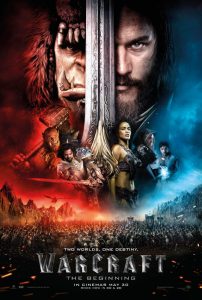
Anyway, though, yeah, I saw Warcraft on Friday. And I saw it in the way that a lot of people who get paid to do this see most fantasy movies, which is without the faintest clue of what’s going on. I played Warcraft 3 back in the day, so I know from Lich Kings or whatever, but this is apparently set generations before that. See, there are these orcs[1], composed of multiple tribes banded together into a Horde, and the one with the glowing green eyes has figured out how to open a comically oversized portal into a new world, but only long enough to send out a roving warband. See, the comically oversized portal requires death magic to operate it, and the warband is going to capture enough people on the other side to perform more death magic so the support people, you know, the orc smiths and orc farmers and orc nannies, can come across next time. Mind you, if the portal had been like 12 feet high instead of a thousand, maybe the death magic would have burned through more slowly and they all could have made it in one go? But then again, the orc with the glowing green eyes is kind of a dick, so maybe it was comically oversized on purpose so he could use more death magic.

On the other side of the portal, a bunch of humans, composed of multiple tribes banded into an Alliance (also some dwarves, and a couple of elves with comically oversized breasts who, unlike the dwarves, seem to serve no other purpose in the film) are hanging out congratulating each other on everything being peaceful for the first time in forever. Only, not so much anymore. Then the orcs and the humans (and sort of the dwarves, but decidedly not the elves with the comically oversized breasts) start fighting each other, like you’d expect in a movie named Warcraft, and in the meantime some things that make no sense at all happen, and I was prepared to throw my hands up and sound like one of those reviewers who get paid by saying that this movie was fantasy tripe bullshit, but it turns out that patience is a virtue and all the things that didn’t make sense do make sense after all, I was just missing some information at first.

Long story short, it’s a very pretty and entertaining (if maybe less entertaining than it is pretty) fantasy movie where a whole bunch of people beat up a whole bunch of other people, and several of the characters have fascinating motivations, and the ones who have dialogue without having fascinating motivations at least have a kind of handwavy excuse for why their motivations are cartoonish instead of fascinating, and pretty makes up for a lot. If you don’t believe me, go find a review of Snow Falling on Cedars written by the kind of person who gets paid for this type of thing.

[1] Okay, I lied. I had at least a few clues as to what was going on, in that I know what an orc is, while the kind of people who get paid to write reviews are allowed to pretend they don’t, since it’s been more than 10 years since The Return of the King was released.

Witches Abroad

513Bs4HYbmLI seem to be reading more lately? I dunno. House is more unpacked than not, and things that are left to do, I cannot really progress on without outside interference. Either way, I’ve also been reading more of the partial series I have scattered all over the map, instead of new stuff. In a way that’s good, because progress, in a way it’s bad because there’s so many things I still have no idea about even though they’ve been talked about lately. That is the problem of lacking infinite free time, I suppose.
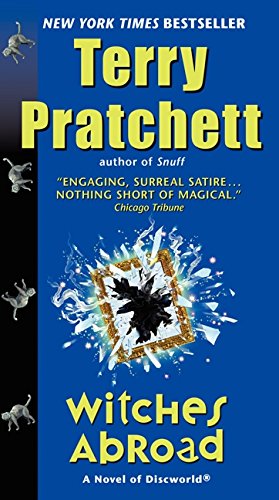
So I read another Pratchett. In Witches Abroad, he studies the nature of fairy tales, mirrors, and family relationships[1]. Mostly the nature of fairy tales, though the characters say it’s the nature of stories. That said, the characters are analogues for the Fates, so any story they’d be in would have fairy tale elements nearly by definition. See, this one fairy godmother (only distinguishable from any other witch, so far as I can tell, by her possession of a magic wand) died prior to handling all her affairs, so she sets the witches from Wyrd Sisters[2] on a quest to wrap things up. So they head off to Genua, which is to say New Orleans, and proceed about their appointed tasks.

I know I’m very near the threshold where these books are basically always of high quality, so it’s nice to be able to say that yep, this one was really quite good, very funny throughout and with the characters who are currently my favorites. Yay, Discworld!

[1] The last one is a bit of a stretch, in that it’s not untrue but also in that most of these books have been about family to some degree, especially if you accept “the family you choose” as fitting the paradigm.
[2] Who I suppose will be henceforth known as the witches in any of the Discworld “witches” books.

Cinderella: From Fabletown with Love

815fU8q1ldLImplausibly, I’m like six years behind on the Fables series of interwoven comics. At least, it seems implausible to me? There’s probably no good reason why, though.
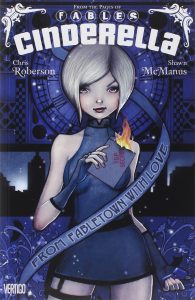
From Fabletown with Love marks the second spin-off of the main series, this time focused on Cinderella. Who, awesomely, is an international interdimensional spy in the top secret employ of Fabletown’s law enforcement / governing apparatus. Aside from that premise, though, there’s nothing much to talk about here. It’s a first book, and mostly all that is established is her credentials. So, if you like the Fables series generally, no reason you wouldn’t like this, and also no reason you’d be six years behind like some people I could name. If you don’t, I don’t see this one winning you over.

Unless you really like spies, and that’s what’s been keeping you away until now, I suppose?

Aftermath

51EAv3L9PGLSo, the one good thing about a new Star Wars timeline is I’m only one book behind now, right? Haha nope, there are already like six books, plus seasons upon seasons of animated television I never got around to watching. Oops.
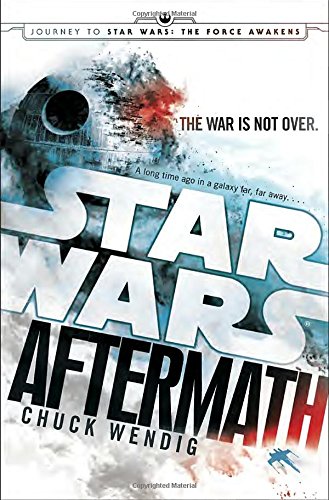
Aftermath is set in the months after the Battle of Endor, in the midst of the rise of the New Republic. The main thrust of the story is a group of folks who find themselves on-world for a secret meeting of the remnants of the Empire, who are trying to figure out what their next step is now that the head has been removed from the snake. Some of the aforementioned folks want to get word out to the Republic fleet, of course, but for the most part, there are as many agendas as there are characters. (Which is, I reckon, as it should be.)

Then, blah blah speeder chases and dog fights and laser battles, you know how this stuff goes. What made the book interesting (besides that it kicked off a new continuity, I mean) was all the vignettes about the state of the galaxy scattered throughout the book, none of which were in any way related to the main plot. I don’t mean to imply that the 50 some odd books I’ve read in what I think they’re now calling Star Wars Legends did not end up making it feel like a lived in galaxy, with trillions of sentient beings going about their lives. But something about the concerted effort Wendig put into making his new continuity feel immediately as lived in was very successful. Not to mention appreciated.

Ultimately, I don’t think anyone is going to get anything deep and meaningful out of these books, but it was good enough that I’ll keep looking for them.

Majo No Takkyûbin

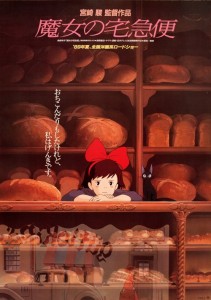
MV5BOTc0ODM1Njk1NF5BMl5BanBnXkFtZTcwMDI5OTEyNw@@._V1__SX1859_SY893_The second outing of the weekend was to catch the one Miyazaki movie playing this month at the Alamo Drafthouse that I both had not seen and could fit in my schedule[1]. Hence, Kiki’s Delivery Service, about a 13 year old girl sent out on her own to make her way in the world for a year, in the traditions of her people. Who are witches, I should probably add.
Based on the vehicles and architecture, and other clues, I’m guessing that the never specified timeframe for the film is in the late 1950s or early ’60s, and I’m also assuming the locale is Japan. The latter is more strongly implied than the former, but neither is by any means definitive. For most of the movie, I assumed the point was mostly to showcase the gorgeous animation and soundtrack, via long, contemplative shots of Kiki flying across the countryside on her broom, or walking through her new city, and that the job (she delivers things for people, as you might expect) and relationships she was forming were mostly beside the point.

But then my mental jokes about making a 13 year old run off and earn her own living were translated seriously onto the screen, as she quickly lost her [Japanese phrase that means joie de vivre] in the humdrum grind of using her heritage and passion as a means of keeping herself fed and housed. From that turning point and throughout the final act, the story turned into more of a meditation on whether and how she could come back to herself and find her happiness, and now I think the movie is a love letter to post-war Japan, unsure of herself and finding her footing after a resounding defeat.

But maybe it’s just a feel-good movie about a witch and her sarcastic cat. That’s cool too.

[1] The only other one I’ve actually seen was the only other one that matched up schedule-wise, sadly. (Mononoke.)

Welcome to Night Vale

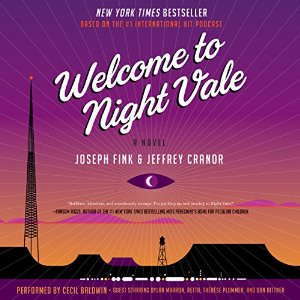
61b0tVzWgaL._SL300_In a first for me, I listened to an audiobook that I had not previously consumed with my eyes. I don’t expect to repeat the experience, but Welcome to Night Vale is a special case. I’ve been listening to the podcast for about two years now, after hearing it evangelized during New Year’s 2014, and when they announced the book, they also announced the the audio version would be narrated by the same person who has performed as community radio host for Night Vale lo these many years.

So, anyway: obviously the performance was dandy. If Cecil were not good at his job, I never would have gotten far enough down the rabbit hole to be aware of this book. (I mention performance mainly because I might listen to reruns of books in the future, and it will be more relevant for books not based in part on someone’s voice.)

As for the story… I’m not sure how accessible it was (or was meant to be) to a new reader, but to be fair, the podcast is barely accessible, unless you just love it right away. It tells the story of a couple of previously named bit characters as they interact with each other, the town, and a mysterious, previously unnamed major character. Which I think was the best way to handle it. Give the fans something to chew on while giving the newcomers people who have never really mattered before, so they can come in fresh.

Overall: it’s a good book, about time, family, parenthood, and the different ways these things affect each other and also, of course, how they affect people. Plus, there are terrifying librarians and tarantulas and video stores to contend with. There’s no good reason why you wouldn’t like this book. But then, there’s no good reason for anything, really.