Tag Archives: science fiction

The Hunger Games

I’ve already told you what The Hunger Games is about, back when it was a book. See, in a dystopian future (or alternate sci-fi world if you prefer, the movie makes no indications either way), twelve production districts are held in thrall of a totalitarian Capitol, partly by the extensive number of shock troops monitoring each district and partly by the annual sacrifice of their children to a televised arena deathmatch. And then there’s our heroine Katniss Everdeen, and the beginnings of possible change, and maybe a hint of a love triangle, but mostly just a really cool arena deathmatch and generally interesting characters.

Which is to say, it is extremely similar to the book in almost every respect. Sure, some scenes were trimmed back like always happens, but pretty much, this was a dead-on translation of the story. With one important exception! The story is not told in first-person, which is on one hand obvious, since what movie could be?, but on the other hand, I’m saying there’s not even any occasional narration. I’m also saying this is great news, as it makes Katniss far more likable than when you can never escape from her head, with its anger and its self-doubts. That wasn’t actually so bad in the first book, but I think it will make the next pair of movies far better than the books were.

John Carter

I have been… well, I have been just incredibly busy lately. I mean, like wow. Significant overtime every week since I started my new job, significant percentage of time spent working (instead of “other”) even during the normal 40 hours, no time to finish a single book, nor to even play at a single video game, nor to watch a single movie. Well, sadly that’s untrue, I had time to watch one movie. But I had time to watch it weeks ago and did not have time to review it, which is the actually sad part of that story.

Because, yeah, watching John Carter? There was nothing sad about that at all! Except for how little I remember, of course. There’s this rich Civil War vet who has recently died, and he provides the stories of his adventures to his nephew and heir, none of which would be all that meaningful in the scheme of things except for how the journal in the bequeathment tells of an unexpected journey to a distant land full of flying airships, tall, green insectoid warriors, a particularly awesome canine companion, and of course a princess[1] in search of a savior for her people. It’s all very mythic and heroic, and I think it could have been the next big storytelling event, except that apparently it was just horrifically marketed to anyone who didn’t have fond memories of the century-old books on which it is based.

This is for me a huge disappointment, because I don’t care if everyone in Hollywood has already cannibalized the set pieces and the themes and if the purported audience did not understand what the point of the preview was. Because this is a damn fine story, no matter how stolen and how miscomprehended today, and if people would just walk into the theater and watch it, they’d be all “yay, that was good, make more of them for me now please!” And I know this will not happen, and that even if my review had not been too late, it still would have been far too little. Nevertheless, I will continue to wish[2] and to be willing to go see it again if anyone has interest and a more-flexible-than-mine schedule.

Maybe I’ll grab the books on Kindle if I can find a sufficient overlap of “cheap” and “moderately edited” in the reviews, and then be horrified by just how sexist they are in print! If I do, you will be the second or so to know. I promise.

[1] Spoiler alert: …of Mars!
[2] I mean, still bring back Firefly first, if we’re talking about screen wishes in my arsenal. Obviously. But still.

The Map of Time

You may or may not remember that I started reading The Map of Time on a plane in October, only to lose it on said plane due to a series of circumstances best blamed on myself. Tragically, it took an extremely long time before I admitted I wasn’t going to find another physical copy anytime soon and acquired a Kindle copy instead; and perhaps fittingly, the Kindle came to me in part to make fun of my having lost that very book. And it is one hundred percent fitting that there should be such a circular tale to my reading of the book when it is itself so very concerned with circular tales.

See, there’s this guy who had a prostitute girlfriend, only she was Jack the Ripper’s fifth and final victim, right before he got caught. And before you know it, first Murray’s Time Travel (offering scenic trips to the year 2000 to watch mankind’s final battle against his automaton overlords) and then famed author H.G. Wells are enlisted to help him travel back in time and stop the Ripper before poor Marie Kelly’s demise. And then there are two more stories after that, all set in the same several weeks long period of November, 1896, and with similar time travel plots. You have to watch out for Palma; he pulls so many fake-outs and double blinds within his characters’ time-travelling escapades that you’ll think you’re watching an episode of Lost. From the second season. Or possibly Back to the Future 2. But you know, mostly it’s a period piece, of which I suppose I’ve read quite a few lately, mostly written by Dan Simmons.

My thought? Totally worthwhile, go for it. And then let’s talk about it afterward, because I feel uncomfortable adding more details than I have, which may already be too many, but there’s a lot of stuff to tease out up in here.

Chew: Taster’s Choice

Aside from Unwritten, the other new first-graphic-novel-in-a-series that I have been loaned is Chew, about a police detective afflicted with cibopathy. In the extremely likely event that this term means nothing to you, I’ll tell you something similar to what the second page of the first issue tells you: apparently, there are people who place food (or whatever) in their mouths, and the act of ingesting gives them psychic information from whatever it was they ate. Like, if it’s an apple, they’ll know things about the harvest grove and the local pesticides, or if it’s a burger, they’ll know things about the cow’s life and probably its violent demise, or, well, if it’s a person… you could learn all kinds of things, couldn’t you?

Against this potentially cannibalistic premise[1], we have the life of poor, sad Tony Chu, who to add insult to injury can only eat beets if he wants to avoid getting psychic backwash. He is a cop, tasked with enforcing the federal edict outlawing chicken. And trust me, the drug war metaphors are so thinly veiled that I spent the first couple of issues feeling insulted that someone would choose so facile a soapbox to preach from. But then things got more and more bizarre, and while I can, as of the end of the first book (Taster’s Choice), accept that there’s actually something going on behind the whole bird flu / outlawed chickens thing[2], I also can’t make up my mind if I care. It looks like everything that has happened is important, but almost none of it seemed connected, each piece to another, in this particular book. And when my main character hates his life this much and the plot is this disjointed, it’s hard to find something to grasp onto to bring me back for a second book.

We’ll see, I guess?

[1] Spoiler alert: yep.
[2] Not to mention some justification for it, instead of just “not drugs, lol, chickens” like I really believed was going on at first.

Chronicle

You ever see Akira? I haven’t, but I went to see Chronicle on the strength of it completely reminding me of the version of Akira that’s in my head. That worked out pretty well for me. See, there’s this disaffected teen with a camera, and he wanders around filming everything, like disaffected teens with cameras in movies do. (Well, okay, also like skeptical husbands and best friends and film students and, okay, pretty much anyone in the last 15 years who has ever had a camera in a movie.) And he even meets a blogger chick with her own camera at a party, but before you have time to realize how tragically underused she’s going to be, even before he gets a chance to consider being into her, she starts flirting with his cousin instead.

Which doesn’t really leave a lot of conflict, just 80 minutes of emo misery, right? Well, no, but only because he and his cousin and his cousin’s class president friend find a hole in the ground that leads to a glowing macguffin that gives them all, y’know, powers. And then they start figuring out how to use their powers, and how to use their powers to change their lives. And then, you know, other things happen. Good psychology, good superheroing, good primary cast, mediocre supporting cast (with one infuriating exception), really good use of multiple cameras (considering the context), plus also it’s set in Seattle, if that has any relevance.

It’s not a great movie, but it’s a pretty good one, and considering this is February? It’s close to great after all.

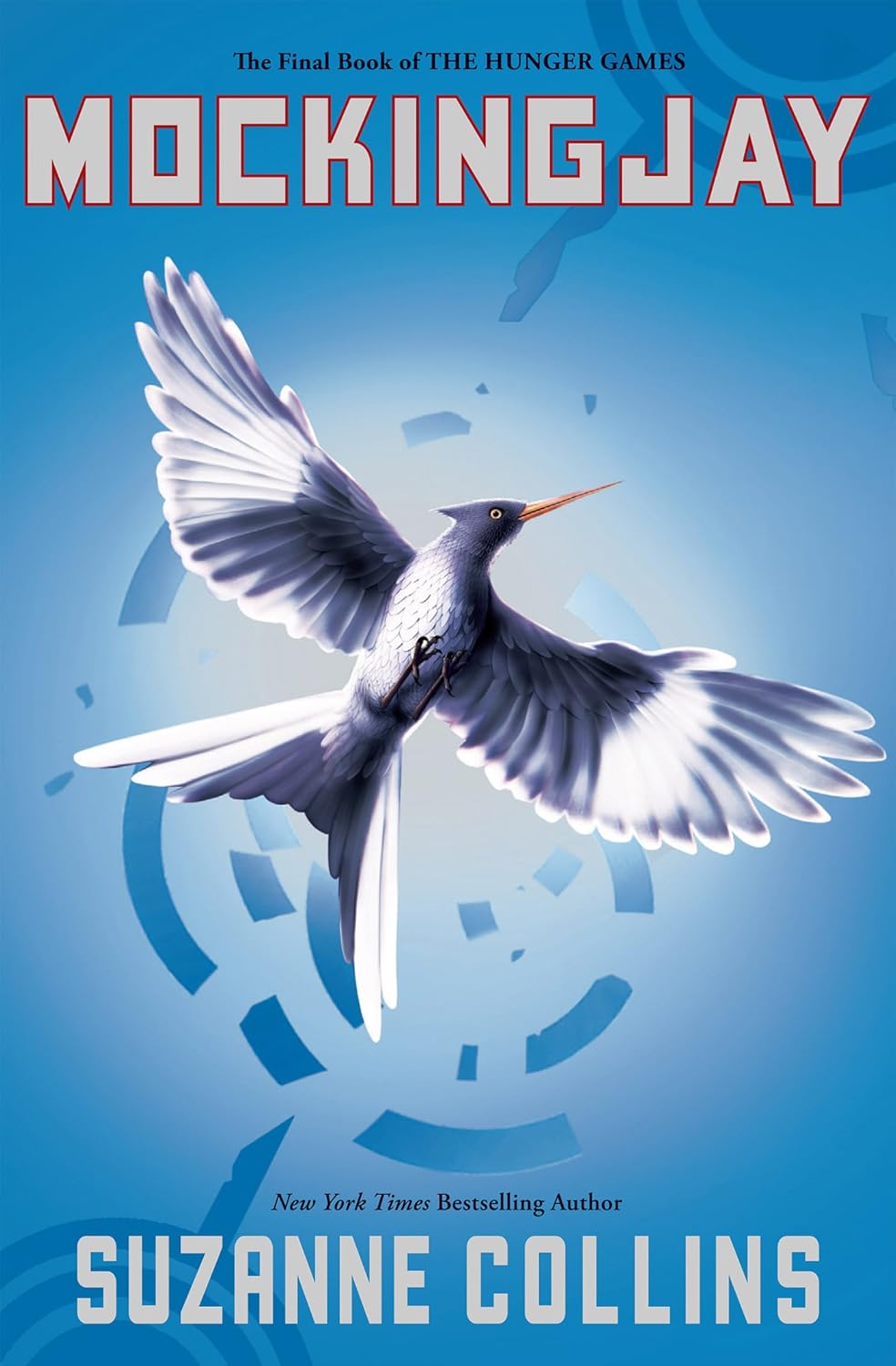
Mockingjay

I had been given appropriately low expectations of the final book of the Hunger Games trilogy. Expectations such as that I would really despise the Mockingjay herself, narrator Katniss Everdeen, and that the focus shift from dystopic public combat to rebellion also marked a loss of focus for the story as a whole. And you know… those things certainly have some truth to them.

Katniss isn’t a combatant in the Hunger Games anymore; instead, she’s the public face of the rebellion, which has caught fire just as predicted, which would be more okay if only one of her two possible boyfriends wasn’t the public face of the government against which they are rebelling. And things just get worse for her from there. It’s still an interesting world, and I still cared about what happened to it, but Katniss is never so compelling as when she’s in the arena fighting for her life against all the other tributes, and sure enough, those days are over. Plus, a year and a half has gone by, and the fact that she not only still hasn’t come to any kind of conclusion about the third of the story that is her love life, but actually keeps escalating the frequency of her lashings out against each of them and in fact everyone else in her world instead? It makes it really hard to believe she’d keep inspiring love from some people and loyalty from so many others.

Still, there’s a book here either way, because not learning a conclusion to the rebellion is untenable, and because people don’t have to like their Mockingjay personally to see her utility as a symbol. And her fate in that regard was inevitable, if only because the people watching her on TV can’t read her thoughts. To answer the obvious question,  the conclusion was satisfying; it’s just hard to read a book with a narrator that has grown mostly unlikable, especially if she isn’t locked in mortal combat often enough to mask what I didn’t like about her.

Unrelated prediction: the movie will succeed or fail on the strength of their Haymitch actor alone. That guy? He’s compelling.

Duke Nukem Forever

I have not and almost certainly will not sample the multiplayer, but without further delay, here are the things that are good about the Duke Nukem game that only came out 12 years later, and in so doing has done more than anything to support the idea that we will in fact mostly all be dead in 11 months:

1) The graphics are really pretty okay. Sure, some of them add to the discomfort of c) below, but by and large, they are entirely modern. And since they had special bonuses of footage from previous versions when they thought they’d be releasing by 2000 at the latest, I can assure you that’s a relief.
2) There were occasional in-jokes at other shooters, not quite to the level of parody most of the time, but I still appreciated them. The moreso, I expect, because of how little I appreciated any of the other humor.
3) The gameplay is pretty much what you’d expect it to be, which, cool, that’s all I was looking for anyway. The days of FPS innovations are mostly over.

Here is what was wrong with Duke Nukem Forever:

a) Load times between levels are 60-90 seconds. Load times between levels at all is pretty egregious in this enlightened age of seamless travel, but that much delay? Horrible and a half. Plus also, it takes just as long to load to the spawn point after you die, which is twice as bad. I know that they know time passed since 1999, because I’ve seen the graphics updates. So, man, what the fuck?
b) You can only carry two weapons at a time. I guess, okay, that everyone does that now, or at least limits you in some way, but this game hearkens back to the “choose your weapon from 0-9” school of thought, and if they’re going to stay so “traditional” in other ways, why screw me here?
c) The misogyny. I thought I knew. I thought, okay, there will be some uncomfortable interactions with strippers that would get a real person kicked out of an actual strip club, and there will be more girls in alien cocoons asking to get killed and you kind of have to because if not aliens burst out of them and they die anyway, but now there are aliens to fight, and I didn’t love that in Duke Nukem 3D, but still, it was a callback to Aliens, and it was uncomfortable there, so, okay. The reality, though… so, there are still cocoon girls, but they aren’t world-weary and in pain, begging to be spared what is to come. They’re bemoaning how much jäger they had last night and how they feel funny as a result. Plus also, I think he kind of ruined the idea of getting a blowjob while playing video games for me. It never seemed so one-sidedly ooky in my head. Perhaps it’s because in my head there aren’t twins, and even if there are, I’d have the capacity to call them something other than “Babes”, especially when addressing them.

Stopping alien invasions at the Hoover Dam is fun, it is. But, I reckon probably not worth it, y’all.
Assassin’s Creed: Brotherhood

acrom_360_mI wonder if there’s a new season of The Borgias starting on Sunday or so, or whether it instead got cancelled. I wonder this primarily because of my current familiarity with the characters and some of their life events, courtesy of my completing Assassin’s Creed: Brotherhood over the weekend. Because, see, after the happy ending in Assassin’s Creed II, the first thing that happens is the Borgias destroy Ezio’s home in revenge for that golden apple fiasco under the Vatican. It’s a whole big thing that won’t make enough sense to be spoiler if you haven’t played the first game and, if you have, basically it’s an excuse to get him injured and friendless so that he starts off the game not a god walking among men. Whether this is a good decision is left to the individual player, but I suppose it is at least an understandable one since someone could plausibly pick up this game first.
After that, it’s pretty much the same game, which is an entirely good thing. You climb and run and sneak and murder your way through early 16th C. Rome in an attempt to stop the Borgia and their Templar allies from controlling the fate of the world, with all kinds of side missions and secret explorations and memories of Ezio’s buried past along the way, not to mention the near-future modern day shenanigans in which it’s apparent that someone is helping Desmond Miles from afar, because he may not be able to trust all of the people helping him explore Ezio’s memories. To put it simply, this the best serious sandbox series ever, and the prettiest sandbox series ever regardless of plot seriousness. (The best non-serious sandbox series is Saint’s Row.) If you like to look at the beauties of the past, and you like to climb around on everything, you will love this game. If you like conspiracy theories and dark futures, you will also love this game. If you like both, this is your candy store right here. And there’s already another sequel out!

A word or two about the multiplayer: extremely fun among friends who have played the same approximate amount of time as each other, suffers from the modern theory that playing online a lot isn’t enough of an unbalancing reward, so we will also give you levels and new toys with which to crush newcomers who for some reason can’t play online 12 hours a day for the first month of release. I’m not sure how to solve this problem, and realistically there is no way beyond me accepting that multiplayer online has passed me by for the most part. (But yay for friends.)

Catching Fire

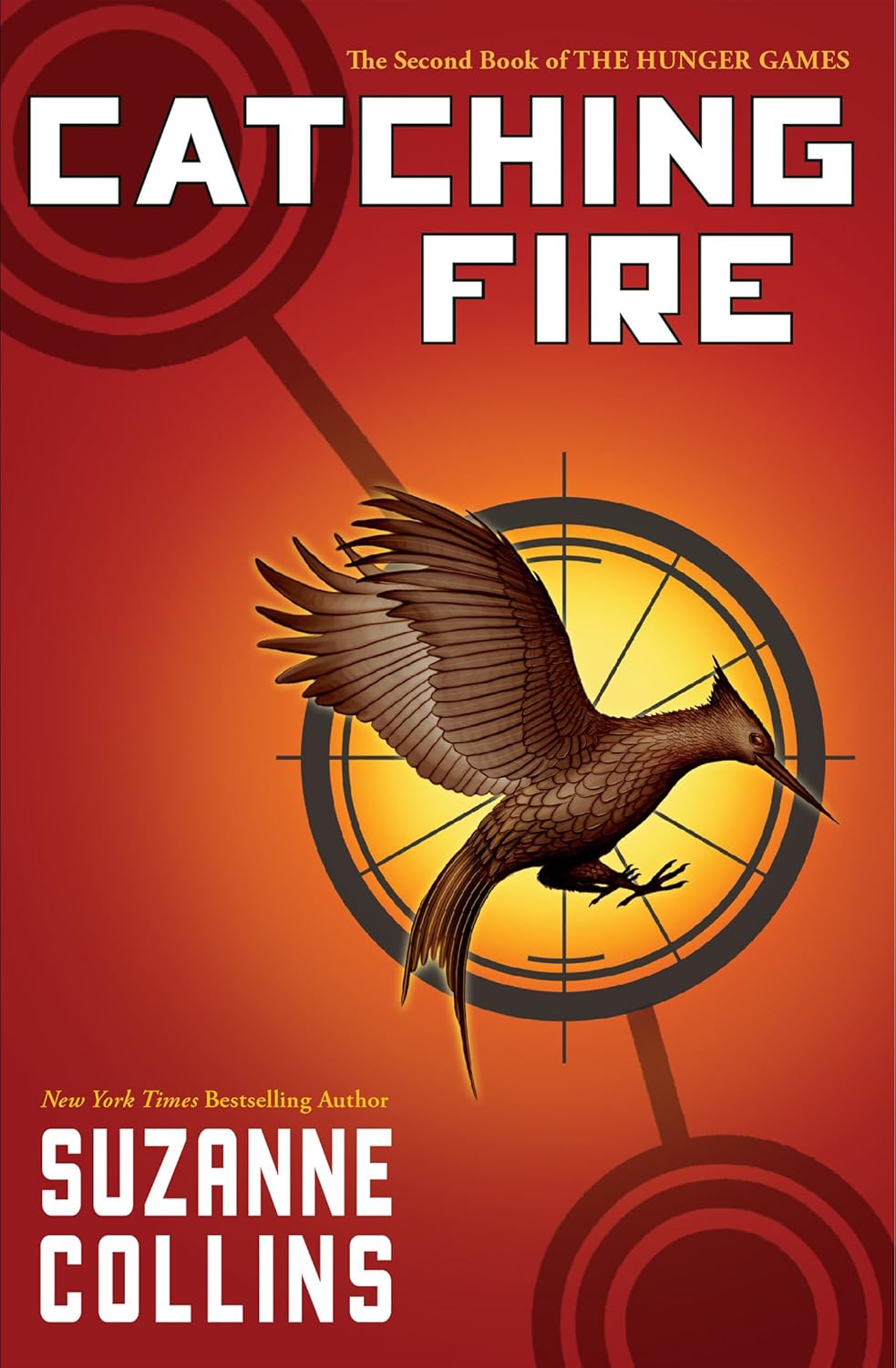
Several factors conspired to have me read the second book of the Hunger Games trilogy so quickly after the first one. There are some reviews I want to read and can’t until I’ve caught up. There’s a movie coming out this spring, and who knows how they’ll dole out spoilers? Amazon Prime has a feature that lets you rent one book a month free from the Kindle store, and the whole trilogy was on the list, and I have not for the life of me been able to find the second or third book used anywhere. (Mainly because of that movie announcement, I’m sure.) So you, see, that’s a lot of things!

Oh, and okay, I may have glossed over one of them unfairly. See, early this month, a couple of tremendously awesome people presented me with a Kindle Touch, all out of the blue! I have only read this and about a third of another book on it so far, so I have no idea where I will eventually land in the dead tree wars. But I can say that the device is extremely pleasant to use and doesn’t feel the least bit weird relative to reading from a book. It is even superior in some ways, e.g., no worries about holding the book open in a damage-free way, much harder to lose your page via random movement flaws (and even when it happens, you haven’t moved far, as opposed to the book is just closed and you have to find it), built-in dictionary functionality (this is cooler than you might think, even when you have a good vocabulary), and there’s even a thing where you can a) mark up a passage for later perusal / footnoting and b) enable the ability to find passages that lots of other readers have similarly noted. Lots of readers, in the case of this particular book, are teenage girls in search of romance. Which, y’know, fits. The main inferiority I notice with the Kindle versus dead tree books is probably quirky to me, but I miss the ability to use my appointment cards as bookmarks such that I don’t lose track of my upcoming schedule[1], and I miss the ability to put my movie stubs in the book I was currently reading when I watched the movie, because of how there is a personal archaeology scattered throughout my bookshelves and now I don’t really know what to do with them instead.

But I suppose I should say a word or three about Catching Fire itself? On the whole, I still liked it, though I share concerns I’ve seen elsewhere that it was less good than The Hunger Games. It is, I think not purposefully, a study on how history can decide who is important despite what that person may desire, despite even what they personally have done. Anyone can be a symbol at any time and for any reason. Because the truth of the matter is that Katniss is all over the place in this book, penduluming between self-sufficiently effective, petulantly stubborn, and (most frequently) blindly clueless. The latter is the most annoying because I refuse to buy into the “but she’s just a teenager” defense. The same hard life that made her so likable to me in the first book (not to mention so plausibly successful in the Games) makes it impossible for me to believe she’s this unaware of the way her world and the people in it work. And so she seems to stumble from one event to the next when I’m quite sure that she should be making choices. I’m not sure those choices should be good every time, but the fact is that the girl who stepped up to sacrifice herself for her sister in the opening scenes of the first book should not be gradually losing agency with each new chapter. That is the wrong lesson!

Also, I wanted the Quarter Quell section of the book to be a much higher percentage than it was, for what will be obvious reasons if you have already read this and spoiler proof if you have not.

[1] It has been pointed out to me, with some amount of audible disbelief, that there are electronic solutions to schedule-keeping.

In Time

You know that science fiction trope where there’s one guy who both sees the system is corrupt and has the moral / mental fiber to do something about it? And usually there’s a lot of running involved? In Time casts Justin Timberlake in that role, railing against metaphor run amok. Actually, it’s not that bad of a metaphor, and it’s certainly[1] timely, it’s just that I can’t decide if I wish there had been a subtler writer or if in fact the metaphor itself is too hamfisted for any given presentation of its message.

See, it’s like this. For reasons that are unexplored (and there’s nothing wrong with that, it’s why sci-fi exists), humanity has been genetically engineered to remain forever young, the aging process halted at 25. On the downside, the currency of trade is time, and the only place time comes from is the one year of additional life beyond 25 that everyone is born with. (Well, okay, there are mathematical problems with that claim, but as far as I know nobody ever claimed to an additional source.) And so the poor people live, literally, day to day, while the rich are functionally immortal. And if you thought that ‘day to day’ reference was a little bit twee, well, that’s my point when I was wishing for a bit more subtlety. But still, it is a genuinely apt metaphor that brings into stark relief why someone might have a problem with a CEO earning an eight-figure salary, even if our fictional née gold-backed currency system is less literally deadly and less literally draining out of our accounts, moment by moment. Plus, there are lots of pretty people running and a somewhat hilarious central irony.

But man, it would piss me off that I was paying to be at work, even if I made back more at the end of the day. Or perhaps it is more accurate to say that it does piss me off, since the currency being split into two forms doesn’t make it less true that I’m spending my life away in this office, one second at a time. On the bright side, though, I got to spend a few of them on you, my readers!

[1] Forgive me.