Category Archives: Words

Death Masks revisited

So, uh, massive spoilers for not so much this book but for the entire series through Peace Talks, which is not yet published as of this review. Don’t read farther unless you don’t mind.

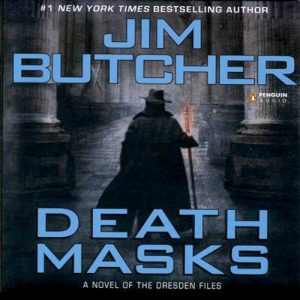
Without yet having checked my previous review of Death Masks, I assume that I liked it quite a bit[1], since all of the Dresden books have hit me pretty favorably. And yet, reviewing the audiobook relisten in my head, mostly what I think of it is… well, that’s not fair. It’s still extremely positive. The war with the Red Court is really heating up, we get the first real glimpse of the Denarians, Marcone is humanized[2], there’s some big movement with the Knights of the Sword that, if I remember my timelines correctly, has only recently paid off. Plus, they finally introduced Molly, who appears to have set off the chain of events leading to Harry’s procreation. A lot of really important things happened!

The problem, if there is a problem, is that everything I’ve said (or almost everything) is groundwork for future books. Whereas my actual experience of Death Masks as a book was: you know, it was fine. Butcher has already written better single book mysteries and anyway it only reached half-resolution, and only via deus ex missourian at that. I mean, unless you care how the Shroud of Turin thing turned out, which I suppose is fair enough. The problem, briefly expressed already a paragraph above, is that this makes me sound sour on the book, and I’m not! It was, y’know, fine.

Anyway, the by far more important part, my timeline update. The book occurs in February of year 3, seven months after the book prior. And various events lead me to conclude that okay, probably Harry’s daughter was conceived during this book, rather than being 6 months old already. Which makes her birthday in November of year 3 rather than Augustish of year 2. (Because, see, I’m still making this calculation easy on future me. Woohoo!)

[1] Guess: correct! Shockingly.
[2] Which has stuck with me ever since even if the details of how it happened had not.
The Bonehunters revisited

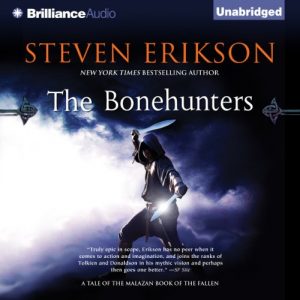
Jesus, I read The Bonehunters eleven years ago. No wonder I don’t remember things from these books. And then, helpfully, I didn’t say much about it, except for that I really like the book and the series. Facts which remain true, so that’s something.

To be fair to past me, it has gotten functionally impossible to discuss these books without spoilers, though, you know? So, prior to the cut, I can say a few things here.

Thing one: I remain pretty happy with the narration. The original guy was probably better, but they fixed the pacing issues I hated so much, and the new guy learned how to pronounce things, so all in all, it’s gone well.

Thing two: I’m pleased that the timeline jumps are mostly over? Well, that’s an assumption, to be sure, but I think a true one. The first four books alternated between relevant simultaneous timelines (plus one random major flashback), then the fifth book is all flashback to before any other events, and this sixth book is dealing with the consequences of everything that has happened prior, setting up an explosive… man, I don’t know. I remember bits and pieces of the next book, but I know I liked it too, and then to be honest I’m not sure if I ever read the eighth one or not. I definitely forgot the really important climax of this book here, so who knows?

Thing three: no, that was all except for spoilers. So thing three is the cut.

Continue reading

Powers: Z

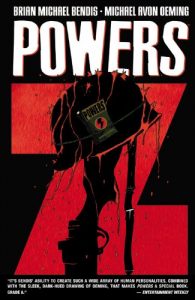
Considering how close I am to the end of the published Powers series, you would think I would not have gone three and a half years since the last one I read. That’s just weird. Even more contrary to expectations (well, mine at least), that gap is not the problem I had with the book.
Powers: Z is… well, okay, they’re all about murders. But this is about the murder of the guy who killed Hitler at the end of World War II. Who you would think would be popular enough to have been mentioned by now, especially since apparently our immortal main character used to hang out with Z during and after the war. But okay, comics retcon all the time, and that would not have caused me to blink if the rest hadn’t been so confusing. Which I cannot really explain without massive spoilers, and I’ll just respond if someone asks instead of assuming they’re needed.

But my problems, at broad strokes, included a) my occasional inability to distinguish between the present and flashbacks to the 1950s, b) caused in part (probably) by those flashbacks not actually being very important from either a plot or (worse) a character development perspective. Other than the basic “look, these guys were mobsters in the 1950s, and the people in the modern day plot are also mobsters” parallelism, there just really wasn’t anything there. Finally, c) the fifth issue in the book ended with some really big dangling plot threads, whereupon the sixth issue covered a completely new murder with no apparent tie to or resolution of the prior story, all for the sake of a last second character-driven cliffhanger. Which I sound negative about, but I would not if I hadn’t ended up feeling so much like I didn’t get a complete story in the service of said cliffhanger that I actually spent some research time seeing if there was a missing issue or a misprint of my book or something. As far as I can tell: there was not.

But all the Amazon reviews of the book are very positive, so maybe it’s just me regardless? I have no idea.

The Expectant Father: The Ultimate Guide for Dads-to-Be, part one

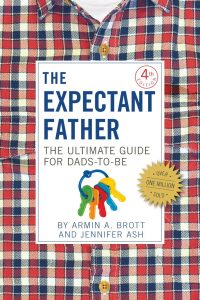
There are two things working against me here. 1) I am not used to reviewing reference books, and 2) I’ve been reading The Expectant Father slowly because the chapters are divided by months, and I’m trying to not read the whole thing in a row so I have a better idea of what to understand in the moment, instead of all at once and then I forget things by the time they’re relevant. As such, I’m only about four chapters in and have something like two-thirds of the book to go, since there is a big delivery room chapter. So this is at least part of why the review is split into two pieces.
Anyway: I do not know how valuable of a resource it is in terms of actual learning / time-specific knowledge. I think it’s probably closer to good than bad along that axis? It spends time talking about how things are for the interloper, how things are for the host, and how things are for me, and man, who knows if any of it is actually right, is my point. But it’s probably good, is my other point.

What it is definitely good at is making me feel like I have a handle on things. Which is, y’know, shockingly important! Or probably not especially shocking, in retrospect. Hopefully it proceeds along the same continuum as I continue to read it. All will be revealed in the second part of the review.

Summer Knight revisited

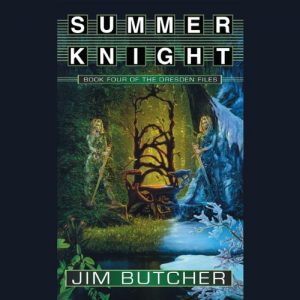
I am shocked to see that we finished listening to the last Dresden Files book less than six month ago. It really seems much longer ago. Which means that yay, still accomplishing something here. Anyway: as usual, the first and most important part of Summer Knight is timeline placement. This occurs in June (midsummer, really) of year 2, a good eight months after Grave Peril.[1]
Huh. I just realized why it seems so long: we didn’t really spend any time listening to the book between the August road trip and today. As a result, I do not have a ton of deep insights into the plot of the book, or the way things are going with the series. I do know that a) Marsters is still a good narrator, even if he keeps randomly not knowing some of the technical language of fantasy, and b) Butcher has definitely hit his stride.

Here’s a little behind a cut, mainly because my footnote definitely has a spoiler, so I need to anyway.

Continue reading

Fool’s Errand

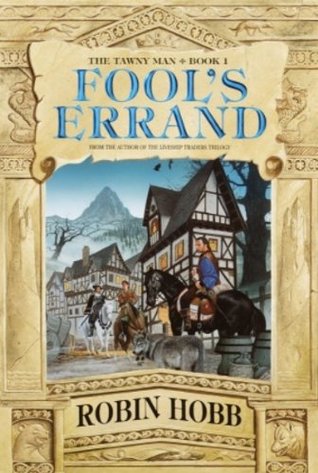
My Hobbsian (and let’s be honest, to a very real extent Hobbesian) journey continues, with the first book of the Tawny Man trilogy. Fool’s Errand, in addition to being a thoroughly apt title, is a surprisingly focused book. We’ve returned to Fitz’s quiet, retired life (one cottage, one wolf, one teenaged ward, one sporadic booty call), and the Fool has returned from wherever the Fool has been[1], and catching up on the last 15 years of not much happening[2] takes up the first third of the book. Then, the remaining thirds are taken up by, well, you know Fitz was going to get re-involved in the Farseer family and the fate of the Six-or-Seven Duchies, or else how do you even have a new trilogy starring him? But all of the above covers maybe three weeks. Like I said: focused.
So, there’s this one small errand to be undertaken, and if it’s going to cost Fitz everything, that’s pretty much how these things go. Details would go to the heart of what the book and the trilogy are likely to be about, so I’ll stay out of them, but I’m not sure how long it’s been since I’ve been pounded so hard over the head by a book, regarding a single unifying theme; in this case, letting go.

The thing that surprised me the most is that I never felt the sense of personal misery from the first trilogy, nor of societal misery from the second. This was mostly a straight adventure story, albeit shot through with threads of quiet, persistent melancholy. But what I’m saying is, melancholy is so much nicer than misery.

Anyway, I’ll keep reading these quickly, because I’m coming close to needing to finish out the Malazan books, and I don’t want that big of a gap interrupting this story, in which I am already heavily invested.

[1] I mean, it’s pretty clear where, but spoilers. And I reserve the faintest sliver of doubt, based on notions of the other prophet and catalyst on the other side of the Red Ship Wars not being a mislead, but instead a clue. But it’s a very fine sliver indeed.
[2] Or a well-documented trilogy happening, depending upon where you fall in your beliefs about the books

Crossways

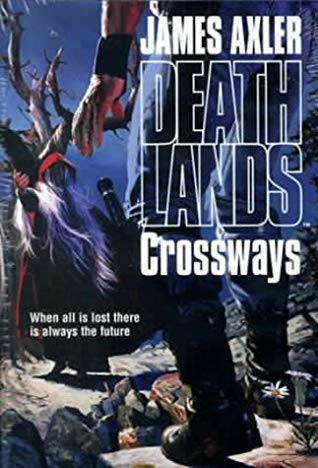
As usual, a weekend in the woods means another Deathlands book[1]. I don’t have a lot to say about it, because it was extremely transitional. Also because reviewing these is starting to feel a little like reviewing individual issues of comics? I think the latter is more true because this one was transitional. Like, when you have a really good four to six issue Spider-Man or Avengers run, and they’ve set up hints about what will happen next that’s big, but in between there are a couple of episodic villain of the week bits, with maybe two panels each dedicated to “no really, the next story is about to happen”? This is that but in book form.
And don’t get me wrong, the aggregate story is not hurt in the least by the transition, but there’s not a lot to say about it, nevertheless.

They’re still teleporting around, there are still dropped hints about teleporting Samurai too, plus a cast change and the first seeds of the big story that will follow whatever resolution occurs with the Japanese teleporters. Also: Crossways has enough dining establishments in a row to make me realize I can’t really wrap my head around either the economy or the distribution chains that would make some of the dishes they are making on the regular possible.

This last bit makes me sad, because I don’t want to accidentally ruin the series thirty books in by overthinking whether the world is plausible.

[1] Except I didn’t actually read a lot, and then took the rest of the month to finish. At least I am reading, unlike in August.

Fairest: The Hidden Kingdom

I’m going to start in a couple of weird places. First, a word about Amazon. I understand that it has turned into something of a flea market, like, from an observational perspective. This doesn’t bother me because I can mostly tell what I’m buying and what I’m not. I hear people talk about counterfeits, and I believe it, but I’m either okay at this or lucky, and either way, yay. I bring this up because I just saw something unpleasant while preparing for this review. The link I found for The Hidden Kingdom indicates that it’s not Prime eligible and is being sold by a third party vendor, which is fine as far as it goes, except that it also shows the notification that I bought it from this link in 2013. When it definitely was Prime eligible and being sold directly by Amazon. Is that as messed up as I think it is? It seems deeply troubling. But where else am I going to buy, well, everything except food?
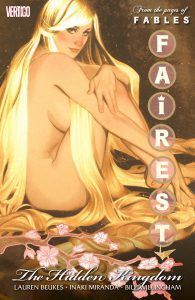
Then, a word about covers. I’m not a stranger to covers of comics collections that I read being only adjacent to work safe, and it’s not especially difficult to work around it. If I happen to have time for a reading break, it’s easy to read with the cover concealed, and when I do not I can just flip it over. So I’m a little annoyed that this book shows a different issue cover on the back side, which has an equivalent amount of Rapunzel nudity, only this time a kitsune is making out with her. Not a big help guys! And then, worse: the issues in this series were both written and penciled/inked by women, but the covers of the issues… you guessed it. Brotown. (The one to-be-fair is that the kitsune makeout scene cover is basically lifted straight out of the issue in question, but that doesn’t really alleviate much of my logistical or sexist concern. I don’t like being put in the position of having to come out against nudity in art, but, damn.)

Okay. That was a lot of words about not the book I’m reading. Cool. Moving on.

And then haha I didn’t move on, I did something else and later forgot I never finished the review, and now a month has passed. Super cool.

So, uh… there’s Rapunzel, right? And she’s on a quest to revisit her past between her early days as the adopted daughter of Frau Totenkinder[1] and her current days as a refugee in Fabletown[2], insofar as a) she wants to find her missing child that has been lost to her since its birth and b) she has been summoned by the past anyway, to Japan where the Japanese-style fables implausibly ended up while fleeing the expansionist emperor guy who used to be the bad guy of the series. Because that’s a lot of where she spent her time between child loss and fleeing the empire thing. Was in the land of Japanese fables. Before they went to Japan.

I am nailing this.

Then there’s also a one-shot wherein a tree lady dates a fox. With unexpectedly ominous hints about the future!

[1] Somehow, it never crossed my mind before to look up what the “toten” part of Totenkinder means in German. That’s awesome.
[2] This is a flashback, set some years before the series opened back in Fables #1.

The Institute

It’s nice to have read a book within a reasonable timetable for a change. I mean, sure, The Institute came out nearly a month ago, but I’ve only been reading for a week or two. (I think?) Since I’ve been taking a lot longer than that lately and for shorter books to boot, I’ll gladly accept the win.
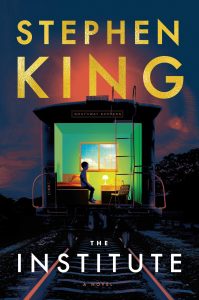
My last impression is one of sadness. Because, okay, anyone can just be walking down the street and get plowed into by a bus van, and bam, lights out. That is the way of the world. But this is the first time I’ve seen an author photo of Stephen King and thought that he looked old. Which means there’s a time limit outside the confines of happenstance.

If I were terribly clever, I would now tie in the plot or theme(s) of the book into this sense of impending loss. And okay, maybe I could at that[3], but I don’t want to get too deep into spoiler territory. So, instead, let’s start over.

My first impression of the book was… well, okay, it has a pretty confusing intro. I say confusing because it has nothing whatsoever to do with the visible plot of the book, as judged by the cover. And, in retrospect, this is 100% awkward. I don’t mind, because I will give the man a lot of leeway, but if you are really interested in the structure of writing, yeah, I cannot say this is a stand-out entry.

My middle impression of the book was extremely favorable! See, there’s the hyper smart kid, one of those people who is a supernova in a world of candles and light bulbs, right? I’ve met one or two of them, and while I don’t consider myself a dope, I’m smart enough to know the difference between me and someone like that.[1] And via a few dozen pages of plot events occurring, he finds himself in a prison for children who have certain small talents.

Everything else follows from here. Why was he taken? What do they want? What can he do about it? Everyone wants to compare this book to It, because the main characters are mostly children, and… I mean, that’s a true point of overlap between the books, but man are they nothing alike. And almost none of the things I love about that book are present here either. Some of the kids are outsider types, but some are not, and it is certainly not the meat of their friendships. There’s no sense of the sweep of a dark and disturbing history[2], no slice of small town life through a lens as warped as conservative ideology paints our mid-century past, only warped in the opposite direction. In all the ways that make that book matter, they’re nothing alike.

Which is not to say I did not like The Institute. It’s a lovely adventure story with characters I cared about. But it’s a fun book, not a great book. Which is okay! It’s just irritating to compare the books on the basis of “kids vs evil”.

Long story short: I hate writing reaction reviews, and I’m sorry that either of us had to sit through this one.

[1] Also, happily, it means I don’t have to dwell on how King didn’t write him nearly intelligently enough, what with the twin excuses of how would I know the difference past a certain point, and that, supernova or not, he’s still twelve.
[2] Although if the book were twice its length perhaps there could have been. This is not a thing I can recommend, though.
[3] Anyway, after further consideration, the thing I was thinking of doesn’t even really work.

The Walking Dead: Rest in Peace

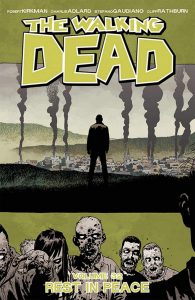
I’ve been saying since… well, at least since the end of All Out War, that there are ways in which the Walking Dead as a series has outstayed its welcome. I kept reading because I still cared about the characters, but the story? Well, it has become at least a bit repetitive. Who was Negan but a better take on the Governor, and at a larger scale? The Whisperers were a good variant, but still ultimately not very different. And now the Commonwealth was gearing up to be a here we go again, but this time it’s different because, um… it’s geographically even bigger than the previous times?

You see my point, which is, come on Kirkman, get it together and find a new take or a conclusion.

What I did not expect (although the title perhaps should have been a giveaway[1]) was that, as of Rest in Peace, I’d learn that he has been listening to me and the story is now over. Of course, that was five years ago, but still.

With the benefit of hindsight: there have been too many characters to reliably keep track of, but except for that it was a pretty good five year continuation, and a quite satisfying end to the story, containing all the elements I personally deemed essential and pretty well sticking the landing. Go team zombie!, I guess? I mean from a literary tradition standpoint, not from a spoilers about how the story ends standpoint. That it ends at all is the one unavoidable spoiler in this post.

[1] Actually, it sort of was? Also, it’s a large volume. Between those, I had to check the collection info, and it ended at #193, so, nah, no way they don’t go to at least issue 200, for a big momentous event of some kind. Right? Right.