Category Archives: Words

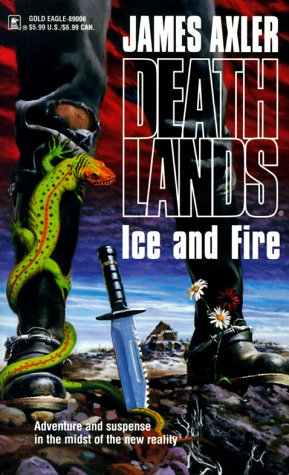
Ice and Fire

51nrpwy4fylI’m reading too many of these, and they are too similar, for much in the way of in depth reviews. So I think if you are interested at all, you’ve got the premise settled in your head by now, and I can just go with sense impressions, unless something vital changes. So, here’s what’s going on in Ice and Fire.

1) More secrets from the past, via cryogenic chambers! That is definitely a cool thing, not simply for the information they have been able to glean that will help them on their way, but also because where there is one bank of cryogenically frozen people from the past, there will be more. Y’know?
2) More ambivalence about the purpose of their travels. I guess the real purpose is to eventually teleport into a place where they like what they find and want to stay there forever and grow old and fat together with lots of slightly mutated children, but I think even though that’s what they believe, they none of them would be willing to put down roots when there are more things to see and people to save. Yet at the same time, they spent the whole book seeing a big, obvious problem (otherwise happy, wealthy people living one of the better lives available in our tragic future, except the massive mutant snake-worshiping cult that has sprung up is threatening to turn them all into hate-filled religious slaves) and saying in a number of different ways, “Hey, this is not our problem, we don’t have to solve everything, we’ll just get chilled if we do”. Right up until they end, when they remembered that they’re suppose to leave the campsites cleaner than they found them. I want this ambivalence and, okay, flip-flopping to be a psychologically interesting long term problem, but the truth is that it’s probably just iffy writing. Still, I hold out hope!
3) Romance is in the air! By which I mean the guy who likes guns is awkward around the baron’s secretary and also the blonde girl that’s been associated with Doc Tanner gets tired of him being old and her vagina starts making questionable decisions for her. The second part was the worst thing in the series so far, because even though their relationship troubles have been in evidence around the edges of the previous book or two, she suddenly becomes completely unreliable out of nowhere in this book, and then is clumsily removed from the plot. It all felt very “teenager in an ’80s horror movie”, when the rest of the series has not shown any evidence of slut-shaming or indeed imbalance between the sexes on either the good or evil sides of the equation.
4) Gradual cast turnover continues as well, which I still like, even if I could stand for it to not be, y’now, clumsy like this was.

By and large: there’s still more good than bad here, even if I wasn’t so susceptible to the setting that I’d ignore the bad for as long as possible. The edges are fraying a little bit, but I see all kinds of ways to recover, so for now I’ll hold out hope that my trashy apocalypse-porn series can stay less trashy than one might expect.
Jack of Fables: The Bad Prince

It had been so long since I last read one of these books, I was convinced I didn’t remember anything about the series. Luckily, I could remember two plotlines and had only read two previous books, so apparently I’m okay after all. But still, there’s a noteworthy gap, and I’ll be more careful in the future.

So, anyway, Jack, right? I’m not sure whether I should care about the ongoing plot of his personal arc, since it is so obviously a low-key romp with little or no seriousness or long-term impact[1], but it was certainly visible that he was mostly hijinx with brief reminders of the plot tacked on this time instead of the plot itself. The hijinx revolved around getting a slightly clearer picture of his place in fabledom as well as of his history, while only incrementally advancing the potential long term plot via the clarification of powers above the fables and via hints about Jack’s son, if such a creature still exists.[2]

But then there was a thing that made no sense at all, and it was the title. Unexpected cloning, sure, potential Fable Creators, okay, more devil-dealing than you can shake a pointed stick at, absolutely. But if there was any kind of prince buried in the book, much less a particularly bad one? I’ll eat my hat. And I can assure you, it’s a fantastic hat that I would regret losing quite apart from the digestive issues.

[1] The truth is, this book makes me question that assumption for the first time. We’ll see I guess!
[2] Spoiler alert: I’m betting yes.

Ultimate Fallout

Nominally, Ultimate Fallout is about the world’s (and especially the enhanced community’s) reactions to the death of Spider-Man. The nominalization is strong enough that the collection was put under the imprint of that particular storyline, in fact. And I’m okay with that, it was a big enough deal to deserve an entire one-shot run’s worth of reactions, much like the Requiem that followed the Ultimatum event. But it’s also (as partially evidenced by the multiple authors who not-coincidentally are the authors of the three concurrent ongoing series (Spider-Man, Ultimates, and X-Men) that are starting up next) the end of the bridge between the first and second runs of the Ultimate Marvel universe, and as such, there are a lot of things that happen. I mean, really a lot of thing. Pretty much, all the things happen in this book.

Just like Requiem set up the way the world was going to look after Magneto’s Ultimatum, Fallout finally ties together the randomly wandering threads of the last couple of years’ events and sets up a much tighter future. This guy Mike that I know called it a reboot, and while I wasn’t prepared to agree with him before I read the book, now I’d say that everything between the Ultimatum and now was a glacially slow reboot that has finally been realized. Because, like I say, a lot of ground got covered in here. Too much to speak of more than I have in the premise statement I made above, but I can toss out several sense impressions.

May Parker is still and forever the most improved character from the original Marvel continuity. She’s been incredibly fun to read at every turn, and I anticipate missing her nearly as much as I miss her nephew. She’s frequently cooler than Nick Fury, and I don’t care how much Samuel L. Jackson cachet they lent him. That said, I’ve never liked Nick Fury more than I do today, and I like him quite a lot on average. I’m still skeptical of the world’s newest apparent supervillain. I’m really, really excited to read the X-Men stuff, as it will almost certainly have the best forthcoming storyline. And as for Captain America, I provisionally like him better than I ever have too, although even if I’m right about that guess, he still won’t have been worth it.

That’s all for now, though. More next year!

11/22/63

You know how I was recently talking about running out of Stephen King books? Well, now it’s actually happened. I’m sure he’s still writing something, but there are no more plans floating around in the world for when the next one will come out. I have read an entire canon.[1] This particular book is his take on the big time travel questions, like “What would happen if you went back in time and killed Hitler?” or “What if you killed your own grandfather before he met your grandmother?”[2] or, predictably in the specific case of 11/22/63, “What if you saved Kennedy?”
Naturally, of course, the book proceeds to be only partially about that. Mostly, it’s about an (only slightly nostalgia-tinged) trip through the late ’50s and early ’60s filled with the same ratios of horrible and wonderful people that exist everywhen and with the consequences of impossible choices. What King gets right (really, what I think he always gets right and is least appreciated for) is the characters. They are always painfully honest and painfully real. Nobody, not even the wifebeater who apparently[3] shot the President, comes off as irredeemable. And nobody, not even the man who plans to give up five years of his life just on the odds that he can prevent the assassination and that doing so might make the world better, is faultless. Typing it out, that sounds trivial and necessary in any worthwhile story, but I guess I am more talking about the unflinching way he portrays the horribleness that lurks in the best people and the basic decency and love that exists in the very worst people.

What he gets wrong? I mean, obviously I’m going to trust his historical research, because I don’t have that kind of time. The other things are towards the end of the book and are pretty subjective. Also, due to their placement, they are spoilers, but I still want to talk about them, so see you in the first comment!

[1] The most trivial of internet research has revealed the preceding statements to be untrue. But after April? Nothing.
[2] Why would you do that? That’s stupid.
[3] No spoilers!

Ultimate X: Origins

There are two serious upsides to the new Ultimate X book that came out last week. (And man, do I ever hope it’s a series rather than a one-shot.) The first is pretty obvious, really: the whole “all mutants are terrorists and must turn themselves in to the government or be shot on sight” decree that followed Magneto’s destruction of Manhattan means that lots of characters I am invested in have been flying way under the radar for months, and it’s nice to start getting an inkling of how they are doing. The second has more to do with timing.

Put simply, Origins with its implied (and fulfilled) focus on new growth in the Ultimate Universe was a really nice (and needed!) palate cleanser after recent painful events. Truth be told, I think this book really happened before the latest Spider-Man storyline, but I could not be more relieved to read a small, personal story now. That story, I suppose I should mention, revolves around the last few free mutants on both sides of the fence built by Charles Xavier and Erik Lensherr starting to band together and figure out what their role in the new, infinitely more dangerous-to-them world will be. Lots of new characters, sure, but lots of familiar faces too, and nearly every one of them was a surprise. (It didn’t help, of course, that I remembered only a fraction of the Ultimatum’s massive death toll. Yay, Wikipedia!)

Cycle of the Werewolf

I’ve read all the Stephen King books, right? Weirdly, I had not! (I mean, there’s a non-fiction book from the early 80s about the state of the horror genre that I will probably never read because it is incredibly dated at this point. But we’re not counting that one.) Because there’s this tiny book, as full of illustrations as of text, that I somehow avoided for the past twenty years of reading everything else the man has published, and in real time for over half of that period. (Except for the one that’s due out on Tuesday, I mean. ‘Cause, you know, it’s not here yet.)

Cycle of the Werewolf feels very similar to the kid-book version of ‘Salem’s Lot. Very few of the characters get a great deal of screen time, because the town of Tarker’s Mills is really the main character. And of course it’s impossible to avoid noticing the vampire / werewolf parallel. Even though it feels like a kid-book and probably reads like one for the most part (a couple of exceptions push it up to PG-13 effortlessly), the illustrations would almost certainly keep you from letting it pass as a bedtime story. That said, if you take it as a kid-book written for adults, it’s a pretty decent short story, and let me tell you, the implied Three Little Pigs joke is worth the whole thing, even if I hadn’t liked it otherwise.

Ultimate Spider-Man: Death of Spider-Man

There just aren’t any words. Which I suppose I’m going to have to get over quickly, all things considered. It’s just that I haven’t been hit this hard by a character’s death since, well, every time I re-read The Fires of Heaven.[1] But there’s still almost nothing to say. I mean, I can’t talk about the plot, because the title (frankly, the last several titles) gives away far too much as it stands, and anything I might add to plot details after that would take away even more strongly from the experience.

But then again, Moiraine’s death didn’t hit me nearly as hard the first time, because of the shock, so maybe they knew what they were doing. (Maybe not, too, because I’m sure it wasn’t broadly announced on the monthly schedule. Still, all I can go with is what I was given, you know?) The upshot of all this? I do have words, but they are not really that different from the words I already had. Peter Parker is an astoundingly brave and moral character who improves everyone around him, and this book tells… you know, it doesn’t tell a powerful story. It simply tells the latest chapter in an incredibly powerful and almost certainly wildly underrated story. I think it also makes a huge mistake, but I suppose that remains to be seen.

[1] Also, Joyce in The Body[2], but that’s not the same thing, my sadness is for the ones she left behind, not for her loss itself.
[2] Unlike The Body, I didn’t cry. But I bet I would if I ever read through these books again. It absolutely hurts.

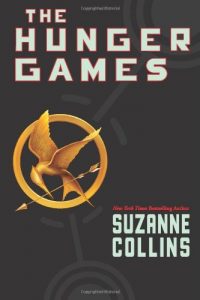
The Hunger Games

A forthcoming movie announcement led to a few people (my former roommate decidedly not among them) raving about The Hunger Games trilogy, which I had never heard of before that moment. This is understandable, since it’s written under the auspices of the young adult section of ye olde bookestores, which I have not often entered in this post- Harry Potter world. But all the same, a dystopian future America with hidden secrets in which teens are randomly selected every year to compete in a fight to the death, all so that the Capitol can flex its muscles over the 12 districts? It’s like someone watched Battle Royale and decided to rewrite it so that backstory would make sense. Obviously, once someone got around to telling me about it I wanted to read it for myself!

Anyway, the upshot is that while I learned all about the Hunger Games themselves[1] and a fair amount about Katniss Everdeen, our narrator-heroine, I did not learn very much yet about the hidden secrets of the dark future. But that’s cool, I have two other books where that can happen, and in the meantime the book was just compulsively readable. Of course, it had a few problems as well, though I hasten to add that none of them dampened my interest one bit. It’s written mostly in present voice, although it dips into the past for flashbacks and history lessons. I thought that would turn out to be a problem, but it’s not so bad, I’m just not used to seeing it. The other, larger problem, is that Katniss is sometimes jaw-droppingly oblivious as a direct result of her overabundance of natural suspicion[2]. I thought this would break the character, and it may yet, but not so far; because, so far, it has been at least as much hindrance to her as it has been benefit, and it turns out I’m interested in reading about characters with flaws that actually affect the progression of the story. As long as she either fixes herself or eventually gets badly hurt, I will have no complaint here either in the long run. (And it’s not like that suspicion of hers is unjustified, given her world.)

So, cool setting, cool plot, interesting narrator, and if the rest of the characters were just a little beyond two-dimensional at best, well, that didn’t bother me through the voice of this particular narrator. It might in the movie, but then again, the characters in the movie might have more depth. All that matters for now is, y’know, this was a pretty good book! I should find the next one, eh?

[1] Enough to make me wonder how they can adapt this young adult book as anything but an R-rated festival of violence without changing a lot of things during the Games themselves. I shouldn’t care about that, but, well, you saw the Battle Royale reference earlier, right?
[2] Well, okay, and a third problem, not so much for me but maybe for you if you are not in fact a teenaged reader, which I expect you will not be if you’re reading this particular review, is the occasionally awkward “Who do I really like, if anyone?” or “What will my first kiss be like?” folderol that when you get right down to it are the only parts of the book that felt like they were aimed at a young adult audience, and I almost wonder if they were conceived after the fact to get the book into this particular… genre? That doesn’t seem like it should be the right word.

Superman: Red Son

The upside to that random Frank Miller book I read today is that it broke up my otherwise back-to-back Mark Millar readings. (Although, of course, if they’re pronounced the same (as I suppose), it’s like a threepeat. Which is really a terrible word, so I hope it’s instead mill-are as I’ve always said under my breath when typing it.) I’m not sure what I would have read if I had planned ahead, but the graphic novel that happened to be sitting in my car, still uncategorized after my last trip to Recycled Books in Denton, was Red Son. And I’ve been wanting to read it for ages anyway, so there was really no question of anything like worrying about it not being one of my ongoing non-superhero series and therefore out of order.

The conceit, if the title does not make it obvious, is that Kal-El’s ship landed on the other side of the planet, where he was found by collective-farmers and raised as a Communist before developing superpowers (as one does) and becoming Stalin’s darling. And then, of course, the story proceeds.[1] There’s not a lot more I want to say, because things go in extremely interesting directions that should not be spoiled, but I will say that it presents one of the most compelling versions of Lex Luthor I’ve ever seen. And despite my avoidance of DC Comics, I follow really a lot of Superman stories on film. So.

One downside: I cannot find it in me to entirely approve of Superman having as strong of a moral center without having been raised by the Kents. I comprehend how that’s wildly unfair to millions of possible parents out there in the early twentieth century world, and especially to somewhat fewer millions of Soviet parents. Nevertheless, it’s a thing.

[1] Not that you can tell from where you are reading, but I have been paused for a very long time because the incredibly compelling Game Six of the World Series has distracted me from typing for a while. I’m not sorry or anything, just documenting.

Holy Terror

Sometimes, really random things happen to me. For instance: today my boss recommended (based on the horribleness of it) that I read Frank Miller’s latest opus, Holy Terror, and then he handed it to me. Did you ever wonder how heroes thinly based[1] on Batman and Catwoman would react to a series of terror attacks, if they were interrupted mid-hate-fuck on the roofs of Gotham? Let me assure you that you will never have to wonder again.

Anyway, some sense impressions, and that will be all I have to say about that. Why so very much attention to ours heroes’ sneaker patterns? Why, for that matter, sneakers? I don’t care how artistic the impulse, three pages of empty white squares still comes off as lazy. I’m insulted by cartoonish villains at this point, much less cartoonish villains based on real people. Speaking of real people, the caricatures mostly came across as mean-spirited, and I wonder if that was the point; certainly it was the point of the rest of this story, right? It doesn’t matter that you ascribe the elaborate and pages-long rope bondage of Catw Natalie[2]-the-cat-burglar to frustrated Al Qaeda members, Frank, we still know it’s your fetish.

The worst part is, there are interesting ideas in here that will probably never be handled by an author who is more interested in them than in an anger-fueled revenge fantasy about Batman knocking out terrorist teeth. Al Qaeda as the tip of a much vaster conspiracy? I would read more. I would probably even read more if written by Tom Clancy, ’cause sometimes he can make a concept come alive. Archaeological discovery of an ancient and incomprehensible city beneath Manhattan? I would absolutely love for a good speculative fiction author to steal that idea wholesale and do something amazing with it. (Even if they had to keep and explain the utterly random T-Rex head coming out of one of the walls.) Instead, though, we’ve got this, which I hope I have prevented you from reading. Because the art? It would be the worst thing about the book if I hadn’t also read the words.

[1] I really, really wonder whether it was Miller or DC that decided to pull the plug and re-imagine this particular scenario with characters outside certain lucrative copyrights.
[2] let’s say