Category Archives: Words

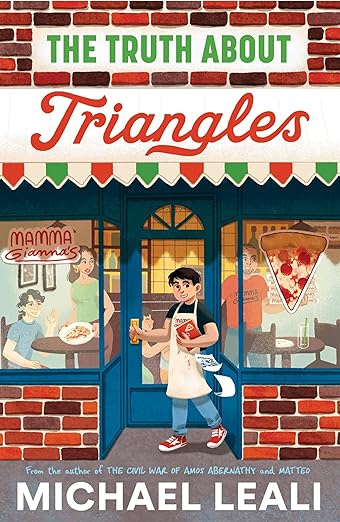
The Truth about Triangles

Obviously, I read to my kids all the time. Just as obviously, I do not review the hundreds of picture books and board books, nor still the dozens of chapter books that I have read. But once, almost exactly a year ago, I read Malcolm a real book, and that time has come around once more.

This time, he chose The Truth about Triangles. I wasn’t at the library when he picked it, so I don’t know if it was on one of the monthly themed displays or how he found it, but I assume he liked the picture of the pizza slice on the cover. The last one was probably 50ish pages shorter but aged identically, 12 going on 13. That said, it was a noticeably younger book than the one I’ve read this past month. And I have to say, I don’t know if Malcolm was entirely ready for this one?

In part I say this because he took quite a while to get into the groove, consistently wanting me to read something else.[1] But mostly I say it because this 12 year old is dealing with much older situations than the last batch were. Luca Salvatore has to contend with a junior high crush on the new kid in school, and with his parents’ eroding marriage, and with their eroding family pizza business, and with his overblown sense of responsibility to resolve these issues by himself and without affecting his best friendship.

Luckily, he’s a really good pizza maker, and he has an idea about getting on a reality show and winning over his celebrity crush who hosts the show, as a method of solving nearly all of these problems. But will he be able to keep everyone together and solve all of their many problems, even with such a great plan up his sleeve?

Kid book that nobody who sees this will read so: mostly, yeah. If you accept the premise that he was always going to get on the show, the book shines for dealing with the other problems in mostly thoughtful and realistic ways. Luca has to learn how to not solve everyone’s problems and just be a kid, but since pizza is his passion, he’s allowed to nevertheless solve the biggest one that way. Everything in his personal life is solved through a judicious helping of telling the truth instead of lying about how he’s fine in order to keep other people from feeling more stressed out. And the divorce…. isn’t fixed. He learns that, no, that’s not how life works. Kids cannot fix adult relationship problems, nor be responsible for them.

And so on the one hand, that was a lot of stress for Malcolm to wade through, and I get why he was so unwilling to listen to the earlier parts of the book where it’s all a quagmire of tween angst. But I’m glad to have him be matter of factly exposed to gay kids, and the idea that some parents don’t make it and the kids are not and cannot be responsible for that, and hell, even the idea that sometimes with enough passion and perseverance, problems can be magically solved. It doesn’t happen much, but it doesn’t happen never, y’know? But mostly the prior things more than that last one.

Oh, and also: the triangle as slice of pizza but also as visual metaphor for many, many three-sided relationships? It comes up a lot. Which makes it the most literary book I’ve ever read to a child. Hooray!

[1] I’m not a monster, after the first few chapters I offered for him to not finish reading it and take it back to the library. But he always vociferously refused, and he did basically devour the second half.
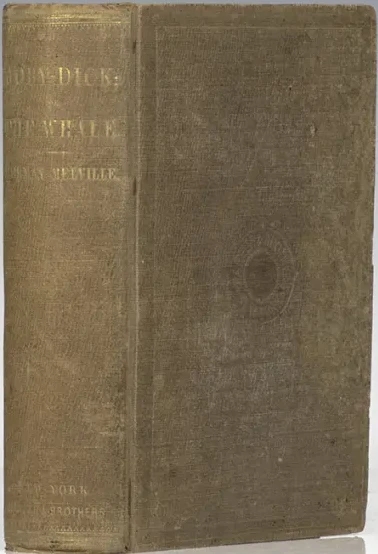
Moby-Dick; or, The Whale

Some years back, there was a real time release version of Bram Stoker’s Dracula, by which I mean the person who ran it looked at all the dates of the diary entries and and letters and whatnot, and emails followed with the information from those dates, on those dates. I missed that, but it sounded pretty cool, and later when our group of friends did a similar re-read of Freedom and Necessity, I liked that enough that I took the plunge on yet another guy’s read of Moby Dick. That one is less explicitly dated in most places, so I think he more or less made up the schedule as he went along, but still, Ishmael’s journey does cover a goodly span of time; if two years sounds right to you, then hooray!

A thing I forgot to mention but which is perhaps obvious from context clues is, I’ve never read this book. I was scared off of it at a young age by people telling me there’s hardly any interactions with the eponymous whale, and that instead most of the book is Melville explaining the whaling industry. More on that later, but I can say that this book is oddly paced, and not because it took me nearly two years to read it.

In the first act (let’s say), Ishmael[1] was bored and listless in Nantucket and looking for a job on a whaling ship. This part is surprisingly heartfelt, and snarkily hilarious, in part because… here I will just admit I’m not going to worry about spoilers for a 175 year old book, so consider yourself warned. In large part, I was saying, because he’s clearly unqualified for the job. But he meets and instantly forms a bond (see heartfelt above) with Queequeg, who is a Pacific Islander of some extraction or other[2], and Queequeg is a harpooner of substantial skill, with the results being that Ishmael rides his coattails onto the Pequod, a boat captained by one Ahab, about whom we spend the rest of act one hearing various dark portents and omens and foreshadowings.

In the second act, Ishmael introduces us to the three captain’s mates and the two or three other harpooners (all alike noble savages, because the thing about sports existed even then I guess) and life on the boat, I suppose because he’s experiencing it as we are. Here we also learn that Ahab’s missing leg is due to a fight with an albino sperm whale who is famous enough to have acquired a name among the whaling brotherhood, and that Ahab is less interested in bringing home as much sperm oil as possible[3] and more interested in finding that particular whale, and, you know, winning round two. If you’re thinking that Rocky II should never have been made and this has the same energy, well, you’re half right.

In the third act, which is the meat of the book (no pun), the ship sails into the Pacific to hunt some whales. Here, Melville gives up all pretense that Ishmael is not actually him, and sets to describing the American sperm whaling industry in exhaustive and gory detail, including the differences from other nations and other whale types. He describes a hunt and a cleaning and a disposal from beginning to end, including an almost but not quite slapstick scene in which someone falls into a whale whilst it is hung to be processed. He waxes rhapsodic about his plans to categorize all whales amongst the other fish of the sea, and bemoans his inability to truly explain the fearsome, awesome scope of what a whale truly is, up close and personal, neither alive nor dead.

All this is interspersed with various stories of the sea, both his own experiences and what he hears from others along the way, I suppose to show passage of time and remind people that this is in fact a narrative. The odd thing is, yes, I said it was an exhaustive survey of the whaling industry, but what it never is, is exhausting. I would not have expected to find anything of interest in a historical oddity that is abhorrent to anyone who has seen Star Trek IV or who cares in any other way about other highly intelligent species. Nevertheless, it was engrossing. I think this may be a sign that I’m old?

In the fourth and final act, the action picks up for nearly the first time since Ishmael set foot on the boat. The odd part is, after having talked to the reader about all his grandiose plans to correctly taxonomize the various whales and of his struggles to convey the truth of them, he all but disappears into the woodwork as the story nears its climax. Now everything is about the crew slowly being stretched tauter and tauter by Ahab’s monomania, plus more signs and portents about the inevitable conclusion. His return to the narrative in the denouement is written as an offhanded afterthought.

So, going back to my point above: seriously weird pacing, not just from a narrative perspective, but from the perspective of Melville’s intentionality about what the book should actually be. I  still liked it, so I suppose I cannot say he failed despite my bewilderment on this point; and having actually read the book definitely does elevate Star Trek II above even what that scene meant without the full context, which I would not have expected, honestly.

In the scope of 19th century American literature, you could do a lot worse! I’m still surprised by just how funny the book was.

[1] Rebecca Black’s inspiration
[2] It is clear throughout the book that Melville is enlightened on the subject of race, as compared with his 1851 American peers in general, but he is nevertheless a white dude from 1851, and concerns himself little with such niceties as whether people from different places are in fact much different from one another.
[3] I wonder as to Ayn Rand’s opinion on Ahab’s anti-capitalist sensibilities.

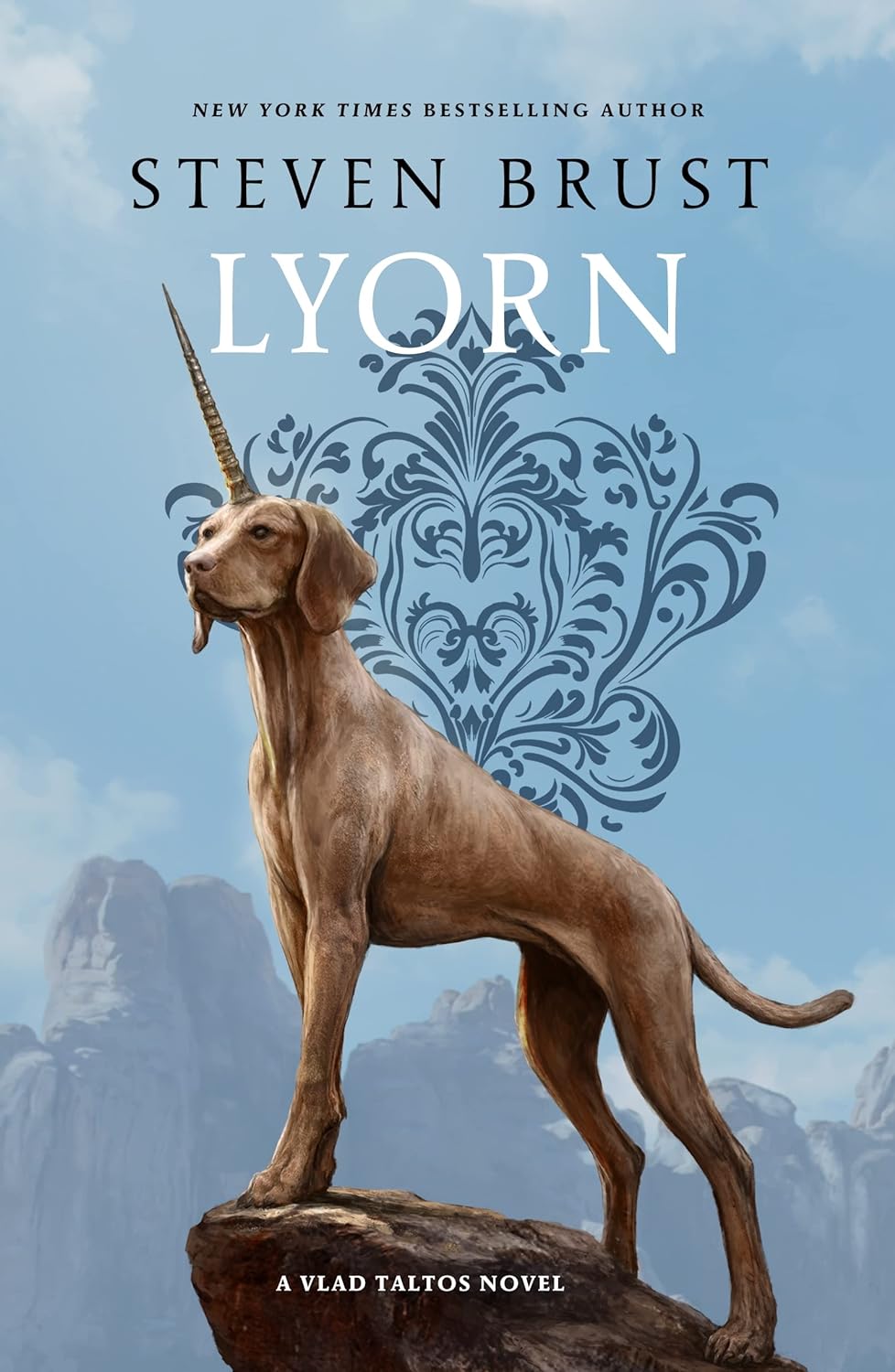
Lyorn

After Lyorn, there are two books left in the Vlad Taltos series, and you can really tell. This is a book that is tying up loose ends in an effort to rush headlong toward a finale. But, and here’s the good news: it’s also a book that’s about something besides tying up loose ends.

In the words of General Rieekan, “A death mark’s not an easy thing to live with.” So Vlad has decided to lay low at a theater (because of sorcery-related reasons) to plan his next move. Which quickly turns into a series of musical numbers and side quests, but the former are unobtrusive to the reader (if that’s not your thing) and the latter are quickly rendered apparent to be the actual point of the book. I’ll explain myself below the spoiler cut, not because it is especially a spoiler for more than the book’s themes, but for brevity, because I’m about to overstay my welcome.

Continue reading

Dragon Keeper

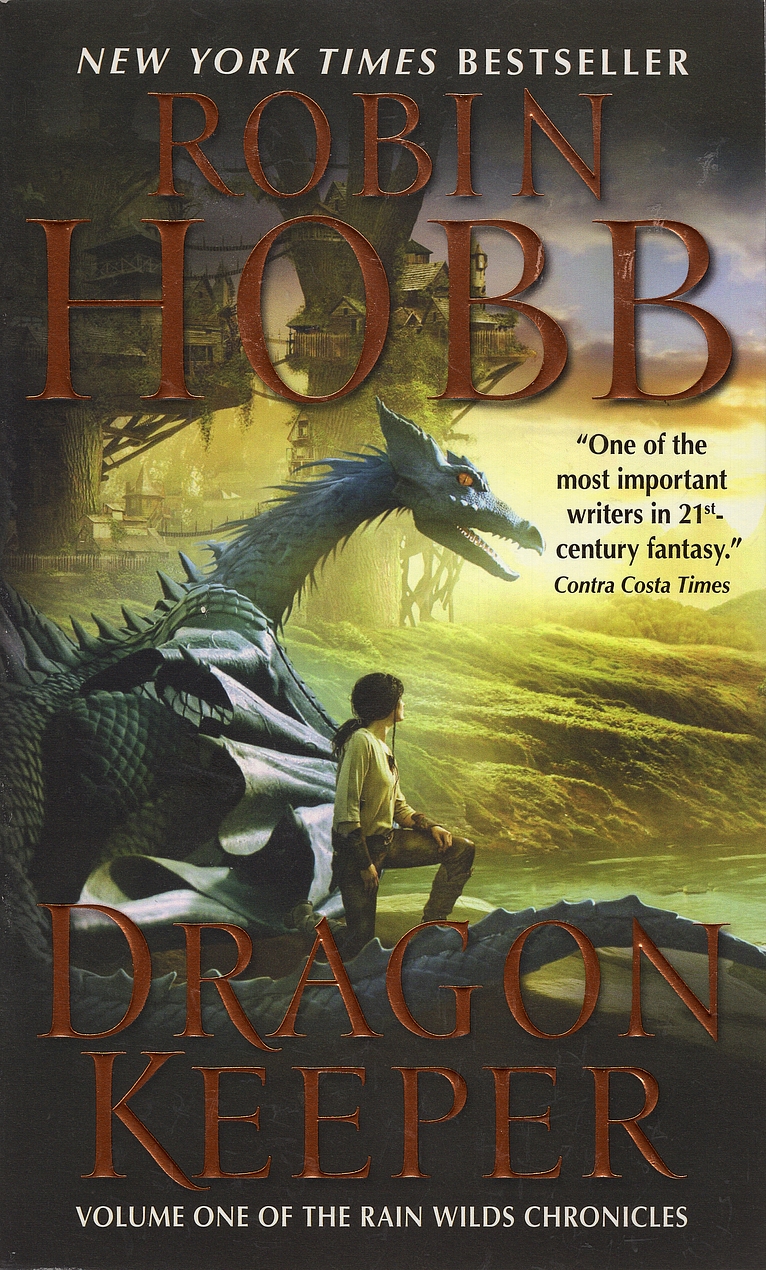
It has been a minute since I read a Robin Hobb book in that one series with all the Elderlings. So I’m not sure if she is softening as she ages, or if I’m hardening as I age, or what. But the first volume of The Rain Wilds Chronicles was not what I expected.

Dragon Keeper returns us to the Bingtown and the Rain Wilds Traders, last seen surviving an invasion due to a timely alliance. Now, brief years later, they are chafing under the terms of that alliance, mainly because its principal member got a boyfriend and stopped hanging around. I’d say more about why that’s an added burden, but it would involve pretty big and unexpected spoilers, so I shan’t.

Our main characters are 1) an unexpectedly married scholar of dragons, 2) a not quite Liveship Trader who has engaged himself in a morally troubling endeavor, and 3) a Rain Wilds teen with no real future, until the option to become eponymous is thrust in front of her. Well, and there’s also a fourth main character who is not strictly human at all as such, although she is the subject of scholarly pursuits.

And here’s the thing I was talking about in the first place: it didn’t feel all that miserable to me? I mean, in the sense that the hallmark of these books to date is how unrelentingly dark they can get, with only occasional flashes of hope and/or success. Do all of the characters have pretty huge problems to overcome? Yes, for sure. But it’s weird that it kind of feels like they can, and maybe even will in some cases.

A couple more weird things, rattling around at the bottom of the barrel. One is, okay, yeah this is a four book series instead of a three book series. Even still, it felt like this was 85% setup, and then 15%… not payoff like you’d expect, but rather 15% the start of the next book, because she was told she could not just have a book that was all setup. Whoever told her that was wrong, because the end we got was weirdly forced and artificial, and the ending we’d have gotten with all setup would have made rather a lot of sense, payoff or no. And two is, at the back of this book, I learned that Robin Hobb also has the pen name Megan Lindholm, which is the same person as a Steven Brust co-author on a book I haven’t yet read but am now much more excited to pick up.

But not, y’know, next. Or indeed anytime soon.

Demons of Eden

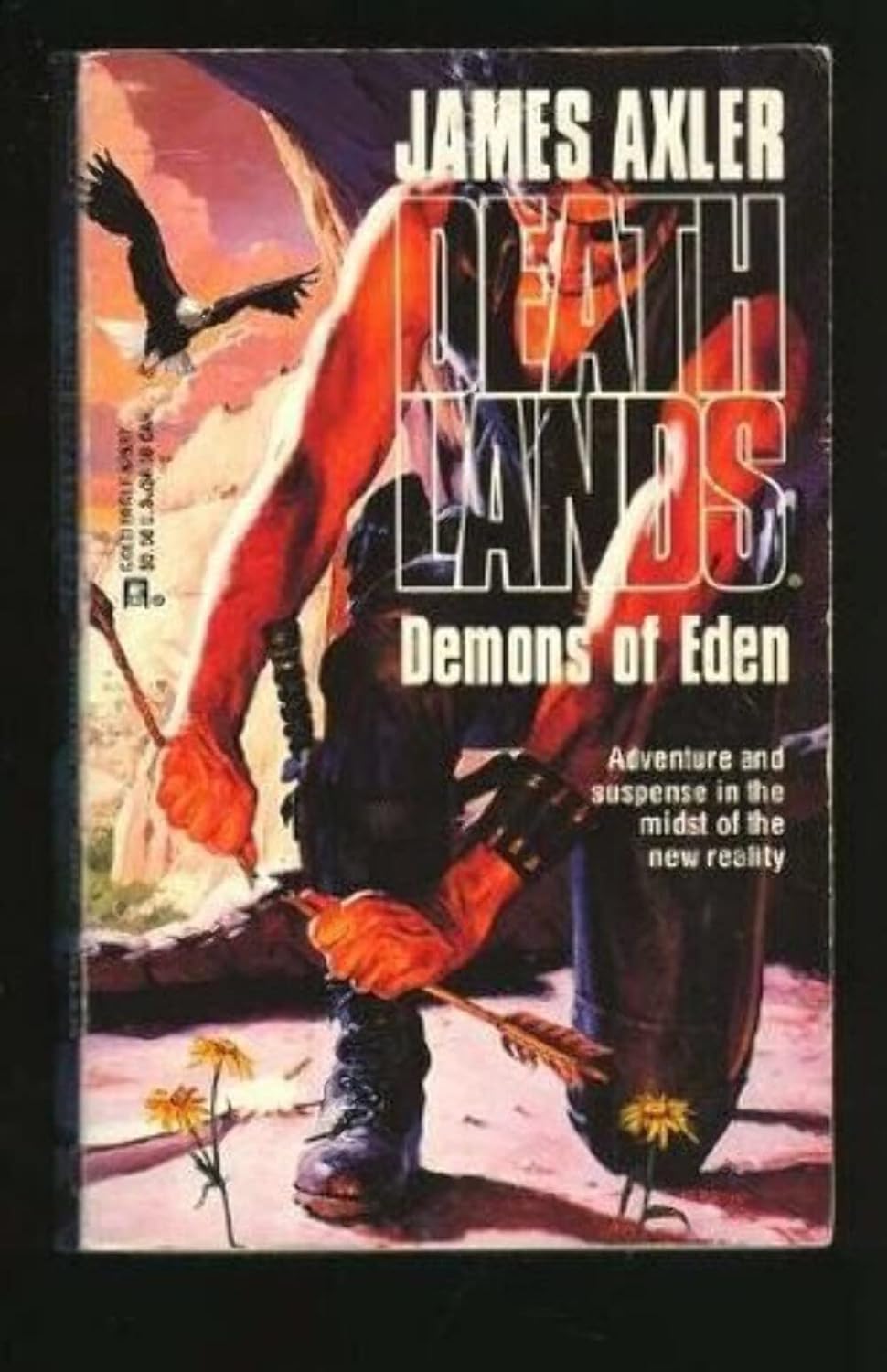
I know I was just complaining about how these Deathlands books are just extruding titles now, but maybe someone else thought the same thing lo these 27 years ago? Because Demons of Eden is basically on the nose. I could wish the editors were better about paying attention to character continuity now that there are multiple authors, or for that matter about scene continuity within a single volume.

And I could especially wish the books had not suddenly remembered their genre and started turning all male gazey. 38 books in, plus owning all of them, I’m not likely to stop now. But I miss being able to recommend them with almost no reservations[1], back when they were subverting the expectations of their audience instead of pandering to it, and back when there was a little more science in my speculative fiction.

But my original point was that at least the plotting is a bit more interesting and on track and acting like it and the title are related, which is not nothing. This time, our heroes tackle ancient Sioux and conquistador legends about lost cities of gold, which might also hold the key to undoing a century of nuclear damage to the entire planet. But if the only way to reach that end is to despoil one of the last idyllic locales in the post-holocaust world, is it worth it?

In conclusion, ley lines and Gaia and leaning more into earth-based fantasy plotting is all well and good, but I miss when the characters were jumping into government funded teleporters all the time.

[1] Way too detailed about guns in use, which is its own kind of uncomfortable in these fallen times, and some pretty explicit violence on the regular. But otherwise? A+, for a long run of books.

Nona the Ninth

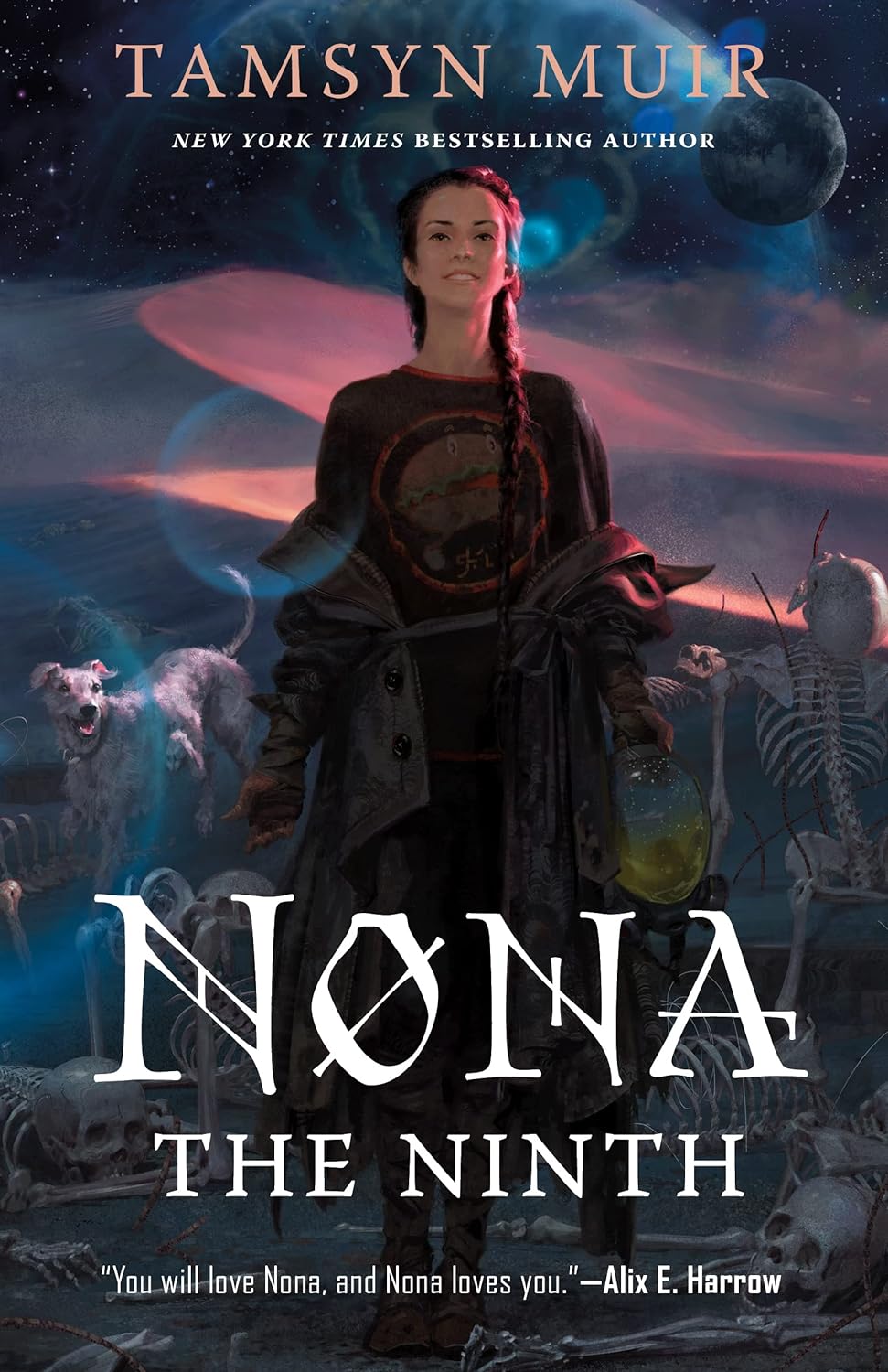
It is my understanding that Tamsyn Muir wanted to name this book Nona, rather than Nona the Ninth, but her editor and/or publisher told her she couldn’t if she expected people to find the book and continue reading the series. The compromise position they reached was Nona the Ninth, and to my regret, this is not something I can reflect in the post name. So just be aware I would have if I could have.

Nona was much easier to read than Harrow, but I find that it is much harder to describe without spoilers. Part of that is because it is the third book in a nominally four book series, of course. Part of it is because Tamsyn Muir never met a plotline (or a character development) she couldn’t obfuscate inside out and backward[1].

So let’s see. If Gideon is a book written from the perspective of the Nine Houses, and Harrow is a book written from the perspective of The Emperor and his Divine Saints, then Nona is a book written from the perspective of the citizenry of the Empire that exist outside the Houses[2]. Nona and her friends (and the citizenry that surround them) live in a city on a planet under siege. Under siege by the [let’s say] terrorist organization Blood of Eden, under siege by the Empire, under siege by the glowing blue light in the sky. Within five days (as heavily implied by the early text of the book), everything is going to go straight to hell, and Nona (and her friends, let us not forget) must balance the razorwire to make it through those five days. Also, not for nothing, that’s when Nona’s birthday is!

Before I go, I will introduce you to Nona, by telling you that her primary concerns are her job at school, and her upcoming birthday, and dogs, and absolutely none of the dangers that surround her. (And her friends.)

[1] To be clear, this is a compliment. I think a grudging one, and that is probably what makes it not be clear, but a compliment nonetheless.
[2] Which is already sort of a spoiler for the series, because as far as I could tell reading Gideon, the Nine Houses were the entirety of the Empire; I had no idea a separate citizenry existed!

If This Book Exists, You’re in the Wrong Universe

I just really like these John and David books, okay?

That said, I think this is the best one. First book: suffered from first book syndrome, and especially from being written episodically on the internet before it was bundled into a book. Second book: too many spiders. Third book: a little too much depression therapy, though if it helped anybody, that’s really great news.

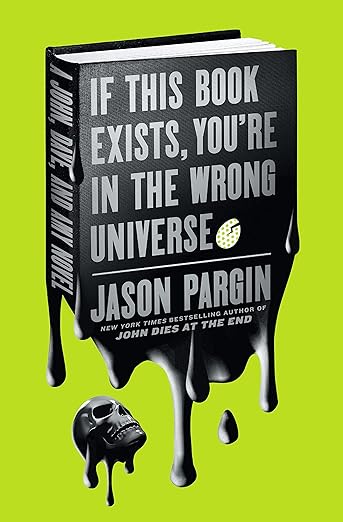
If This Book Exists, You’re in the Wrong Universe covers multiversal time travel, tamagotchis, questions of determinism, and more, all through the lens(es?) of the losers who are all that stand between us and fourth wall-breaking, world-ending dangers. It also serves as a different kind of therapy than the prior book, I think, and it incrementally advances our knowledge of the narrator[1], in new and troubling ways.

There are definitely things[2] about the book that make it appear, impossibly, as though the whole series has been planned out from front to eventual back, from which I can glean both appreciation of the writing craft involved and also make some shrewd guesses about as yet unwritten events to come.

But then again, questions of determinism, I believe I mentioned? Recommended, would read for the first time again.

[1] Complete tangent, but I think my favorite thing about David Wong is that he thinks John is the main character.
[2] and by things I mean retcons

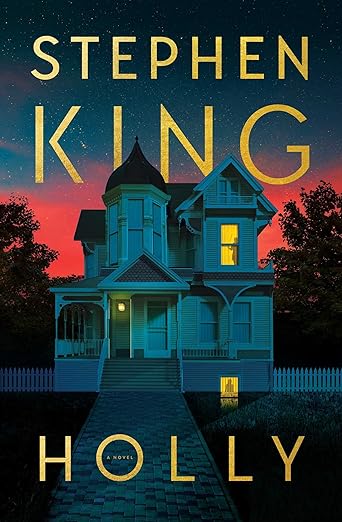
Holly

‘Tis the season, by which I mean autumn and time for the annual (or more) Stephen Kjng book. Like the other books written in which Holly Gibney solves (or helps to solve, the first time out) mysteries, this book is not a mystery for the reader to solve, but rather, to watch the characters solve. Usually, the tension to a mystery novel where you already know whodunnit is in watching your hero (or heroes) work it out. Yes, they’ll solve it, but how? And will it be in time to save… well, no, too late for them, but what about… okay, but surely in time to save, well, whoever you want to see survive after the halfway point of the book.

But this is Stephen King, and he has named the book after its main character. So in this case, the tension is in whether Holly will solve the mystery before the mystery solves her! … Alright, that one got away from me. But seriously, I was nervous on page 1, and I was nervous on page 301[1].

I suppose I’ve said nothing about the plot. The book opens on the very worst night of a Hispanic literature professor’s life, and proceeds forward over the course of several years and several victims of a pair of undetected serial killers, in parallel with Holly’s present-day travails in the age of Covid, until, inevitably, they cross paths via a missing person’s case her detective agency is hired to solve.

Which reminds me of something I’d already suppressed over the last few days since I finished the book, which is… King is maybe too political for my tastes here. And I say this as someone who shares his politics, but, wow, fully justified, pre-established viewpoint character or not, this was the most polemical work of fiction I’ve read this side of Terry Goodkind. I wonder if it will hurt his sales. I also wonder if it will read differently with the passage of time, by which I mean, will it hit the same when people aren’t still being constantly infected by this thing? Maybe it won’t feel quite as cartoonishly diatribical when people aren’t still glaring dismissively at each other in real time.

I feel like I’m complaining here. Ultimately, this did not hurt my enjoyment of the book, it just started out so strongly positioned, in a way I’m not used to thinking about his fiction ever being. And I don’t want to be complaining, particularly when I don’t know how many new King novels I have left to read. Which is I suppose an appropriate mix of maudlin and morbid, for both the subject matter and the season which I so recently ’tissed.

[1] Pagination simulated for effect

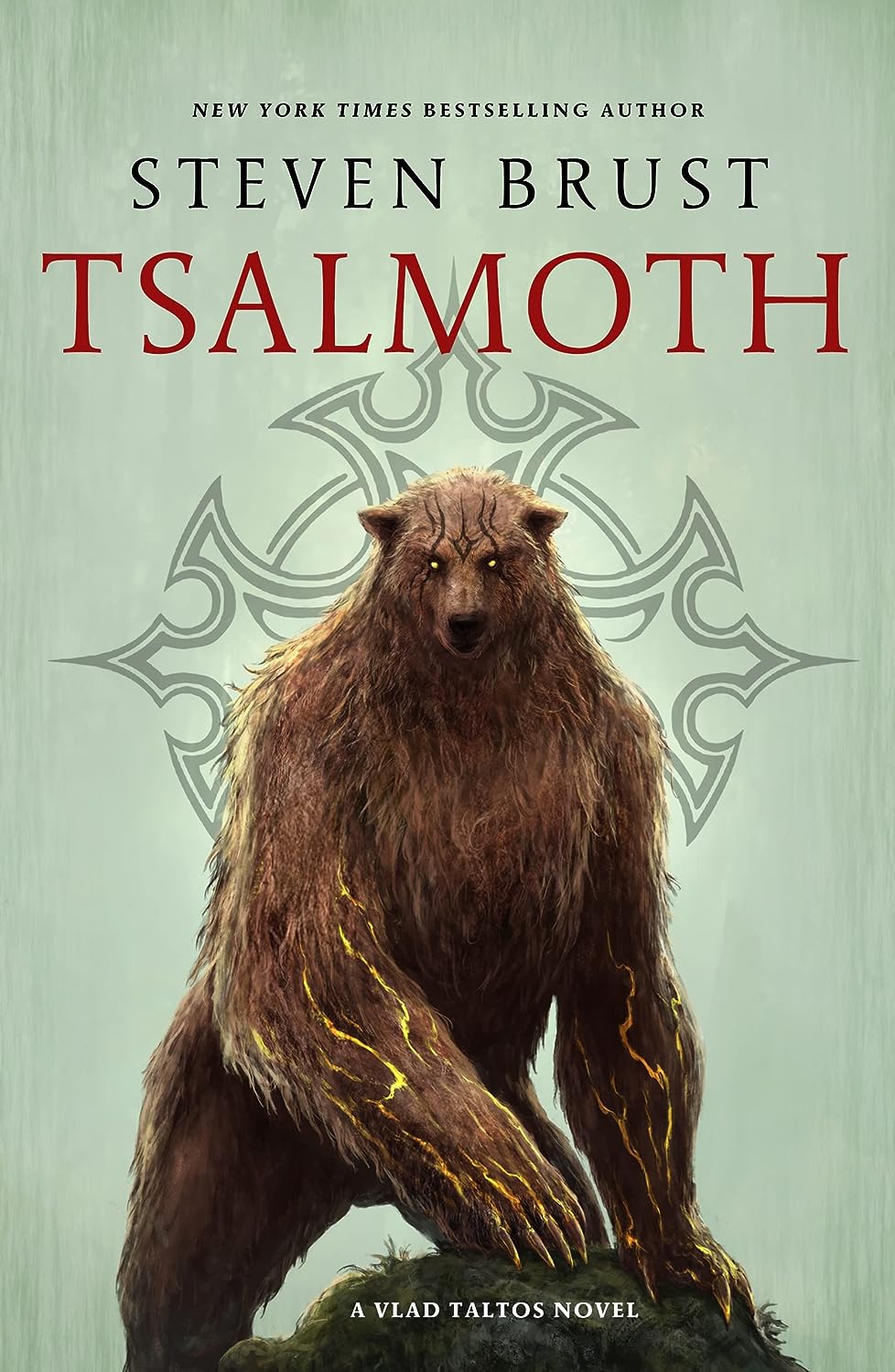
Tsalmoth

As you certainly know if you know what book I’m reviewing based on the title alone, the Vlad Taltos books bounce around in chronology, with gleeful abandon. Whether this is part of some grand design on the part of the author, or whether he just writes a new story whenever he thinks of one, and drops it in wherever it happens to fit? Not only do I have no idea, I’m not sure it’s possible to know the answer. (Probably Brust knows, but given his utility at writing a character like Vlad, could you ever fully trust his response?)

Tsalmoth goes back nearly to the beginning, interleaving wedding planning with… well, if you don’t know Vlad, and this is for some reason your first exposure, he is a talented assassin who has leveraged that skill (and the money it brings) into a low level boss position in a criminal enterprise[1]. So when I say his concern is with a simple collections job, you understand the kind of collections I’m talking about. Anyway: the book interleaves planning for Vlad’s wedding to Cawti (also a talented assassin, among other things) with his concern about a simple collections job with a twist: the person who owes him money is recently dead.

That’s the superficial plot summary, but what I’m interested in from the 16th book in a (I’m estimating here) 19 book series (not counting an extensive spinoff selection) is the stuff beneath the surface, which of course means spoilers not only for this book but for a lot of other incidental books. Hence, a cut.

[1] Boy is there ever a lot more to it than that, but I’m doing a baseline introduction here.

Continue reading

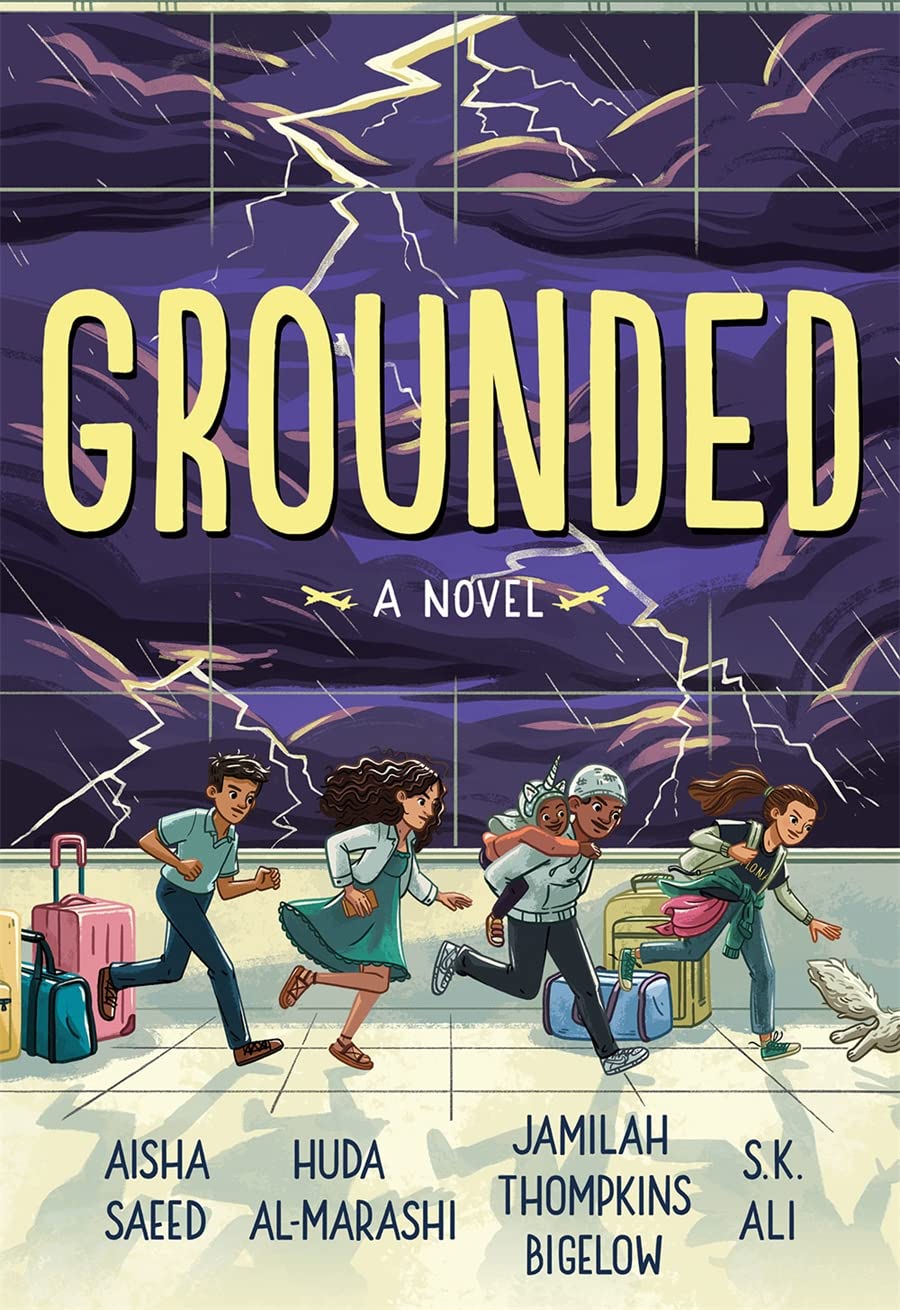
Grounded

I have mentioned, on occasion while justifying the snail’s pace at which I read the books I review, that I also read a lot of books to my son. Board books, picture books, and lately early chapter books[1]. 80-100 pages, almost always exactly 10 chapters, almost always with characters that are 7 or 8 years old, the kind of thing that makes it truly and painfully obvious who they are aimed at. And I mean, he cannot read them, but boy does he love them.

I, on the other hand, do not. I mean, they’re mostly fine, but they are not worth writing a review over, any more than each comic I read is. This is both in consideration of time and of content. It would be different if this were a kidbook or a comic review site, but since it isn’t, well.

All of that to say, over a period of a couple of weeks, I read Grounded to the boy, and, okay, yes it is still a kidbook, this time aimed at a tween audience either to show them Muslim-American culture or to make them feel seen as Muslim-Americans. (I couldn’t tell you which, if either, was the goal of the authors; but it was more likely the second one, based on how little hand-holding they offered for the religious terminology.) It seems to be written in “pass the typewriter” style among them, with each taking the reins of one of the four main characters, children trapped in an airport due to inclement weather after a cultural/religious conference. Said children are in search of a missing cat, which provides the narrative propulsion against which backdrop their forming friendships and individual problems (too-early adult responsibilities; replacement of a dead mother; navigating junior high in the age of social media; not-quite crippling anxiety) are projected.

If I’m being real, it reminded me of nothing so much as Stand by Me (or more properly, The Body) by Stephen King, modernized and written from a non-white perspective. There’s virtually no way this was an actual influence, so whether this says something more about my own, er, cultural background or about my low-grade obsession with King is left as an exercise for the audience.

It was, despite anything I may have said or implied up to this point, definitely a book aimed at children of a certain age[2], with the pitfalls that implies to a more discerning audience. But still. There was an emotional climax to Feek’s[3] story that made it hard for me to keep reading, both in the voice and in the eyes, if you know what I mean. (And it paid off Chekhov’s Rhyme from all the way back in chapter one, to boot.)

It’s hard to imagine recommending this to anyone who is likely to see the review, but it really is recommendable, if you know anyone in an appropriate age range.

[1] I do not understand the derivation of “chapter book”. Well, no, I mean it’s obvious what it means, what I don’t understand is how it came into vogue. Once you get past Dick and Jane and Grinches and Green Eggs and Nights before Christmas, pretty much anything more advanced has always had chapters. Why are we calling out that graduation to more advanced books now?
[2] This review is not a vehicle to showcase that my three year-old is comprehending at a twelve year-old level. He just cared about if the kids found the cat or not, and if they got in trouble or not. But it’s not not to showcase his attention span. I don’t think a ton of kids his age will sit still for 75% of a 272 page book. (I don’t want to exaggerate the accomplishment; sometimes he was all jittery, but never enough that my threats to stop reading were fulfilled.)
[3] One of the four narrators, Rafiq.