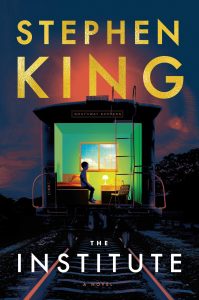
 It’s nice to have read a book within a reasonable timetable for a change. I mean, sure, The Institute came out nearly a month ago, but I’ve only been reading for a week or two. (I think?) Since I’ve been taking a lot longer than that lately and for shorter books to boot, I’ll gladly accept the win.
My last impression is one of sadness. Because, okay, anyone can just be walking down the street and get plowed into by a bus van, and bam, lights out. That is the way of the world. But this is the first time I’ve seen an author photo of Stephen King and thought that he looked old. Which means there’s a time limit outside the confines of happenstance.
If I were terribly clever, I would now tie in the plot or theme(s) of the book into this sense of impending loss. And okay, maybe I could at that[3], but I don’t want to get too deep into spoiler territory. So, instead, let’s start over.
My first impression of the book was… well, okay, it has a pretty confusing intro. I say confusing because it has nothing whatsoever to do with the visible plot of the book, as judged by the cover. And, in retrospect, this is 100% awkward. I don’t mind, because I will give the man a lot of leeway, but if you are really interested in the structure of writing, yeah, I cannot say this is a stand-out entry.
My middle impression of the book was extremely favorable! See, there’s the hyper smart kid, one of those people who is a supernova in a world of candles and light bulbs, right? I’ve met one or two of them, and while I don’t consider myself a dope, I’m smart enough to know the difference between me and someone like that.[1] And via a few dozen pages of plot events occurring, he finds himself in a prison for children who have certain small talents.
Everything else follows from here. Why was he taken? What do they want? What can he do about it? Everyone wants to compare this book to It, because the main characters are mostly children, and… I mean, that’s a true point of overlap between the books, but man are they nothing alike. And almost none of the things I love about that book are present here either. Some of the kids are outsider types, but some are not, and it is certainly not the meat of their friendships. There’s no sense of the sweep of a dark and disturbing history[2], no slice of small town life through a lens as warped as conservative ideology paints our mid-century past, only warped in the opposite direction. In all the ways that make that book matter, they’re nothing alike.
Which is not to say I did not like The Institute. It’s a lovely adventure story with characters I cared about. But it’s a fun book, not a great book. Which is okay! It’s just irritating to compare the books on the basis of “kids vs evil”.
Long story short: I hate writing reaction reviews, and I’m sorry that either of us had to sit through this one.
[1] Also, happily, it means I don’t have to dwell on how King didn’t write him nearly intelligently enough, what with the twin excuses of how would I know the difference past a certain point, and that, supernova or not, he’s still twelve.
[2] Although if the book were twice its length perhaps there could have been. This is not a thing I can recommend, though.
[3] Anyway, after further consideration, the thing I was thinking of doesn’t even really work.
 I’ve been saying since… well, at least since the end of
  I know mostly all I do is complain about being behind and/or working constantly. But here’s my point. I read another Deathlands book, right? This is the book I take camping because I might finish one or two over a long weekend, all while helping with a giant fireworks show plus explosion, and also getting up to who knows what all manner of shenanigans. (I mean, I know, but this is a public forum, of however limited readership.)
 Remember that time where they took my very favorite book and made it into
 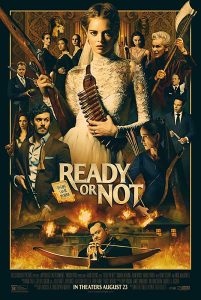 Here’s how you can tell you’re too far inside an industry: when I watched
  Last week / weekend was a big driving vacation (let’s say) to GenCon. Which was cool and completely exhausting but I think pretty cool, but I’m really disappointed that I never managed to do anything much towards getting in on any games. I will be a little choosier about getting involved with something on the next con with signups that I go to. (Which is probably most of them, but not so much BGG.)
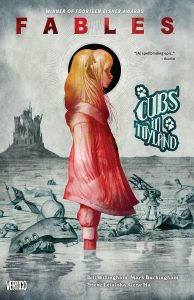 Someday, I will write a review that does not start off discussing how far behind I am and how that’s highly unlikely to change. Today is certainly not that day, in that, at the end of a week of work, I got maybe halfway through my list of tickets once, and I’m positive that a lot of them are waiting on me to do work to proceed. Which is why I never read, which is why I’m actually not very far behind, or wouldn’t be if I hadn’t been on a long drive that included finishing an audiobook. But this is not about that.
 I saw the new Spider-Man movie over two weeks ago. You may consider primal scream therapy to be occurring during the paragraph break, because, seriously. I am consistently too busy when at work and too mentally drained when not at work to do almost anything thinky, and yet the further from the movie I get and the more other reactions I see, the harder the thinking part of a review becomes. It’s awesome[1].
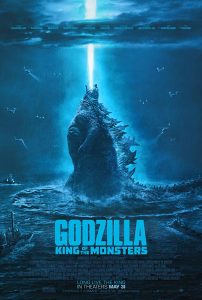 Thanks to punctuation, I don’t need to point out that this is distinct from the 1956 movie where Godzilla and his title are separated by a comma instead of a colon. I guess I did anyway, but these are the things I think about when searching IMDB for the correct link.
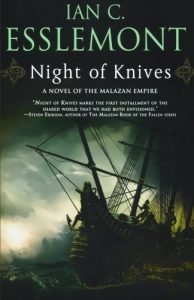 This is where the Malazan books get logistically weird. Because, see, Erikson had a fellow gamer partner back in the early ’80s or whenever they were building this world, which is ultimately my point, that the world builder behind the Malazan books is a they. And apparently the dividing line they have drawn is that Erikson writes about the Malazan Empire in decline[1], whereas Ian Esslemont writes about the Malazan Empire in ascension. Well, he does eventually. In a trilogy written later than this one.