I really liked that movie, V for Vendetta. It had Hugo Weaving and moving stories of humanity and some explosions and an important political allegory. Therefore, why not read the graphic novel upon which it is based? I’ve been doing a lot of that anyway, and it is one of the classics of the modern age, and anyway, they can’t all be serialized. Plus, adding to my knowledge of the overall field is cool, because then I get to giggle over things like the reference to Preacher in the last Y I read a few weeks ago.
To those various ends, I did read it. Which, maybe pretty obvious already, I guess. Anyhow, it was good. In the not-so-distant future, England has survived a holocaust that has left most of the rest of the world reeling. And to survive the aftermath and ensure that England prevails, a totalitarian regime has emerged. Was it inevitable, or even necessary? That’s a matter of argument, but in any event some of the actions it took in those early days clearly were unnecessary, and there’s one man who is ready for the regime to crumble and restore the power to where it belongs, in the hands of the governed. He has no name, but he has got a codename, V, and a Guy Fawkes mask, and some pretty sharp knives. And an impressive knowledge of explosives and the inner workings of the evil empire. And he’s got a pupil, Evey Hammond. Mostly, though, he’s got a vendetta. Because some of those unnecessary actions were performed on him.
There were differences of course. Mostly in the order of the story, but also via a few characters changed, added, or left out. For the most part, I ended up preferring the movie, which is probably a matter of blasphemy to some people somewhere. But the pacing was better, the message was just a little bit less scattered, and there were a couple of aspects that wouldn’t have affected me as deeply with still images. I did miss the written-out character of the party bigwig’s wife who loses all of her social support with the death of her husband and has to find a way to live in the world he helped to create. On the other hand, the Leader was mostly unimpressive in the book, which I didn’t like at all. It’s hard for me to credit that people will give up all of their freedom in the name of fear alone. Charisma has to play a part too, in my largely uninformed reading of history.
Lastly, there’s a message in the book that may have been in the movie as well, but I never saw it if so: that governments are inherently negative, and people should live in order without any guidance from leaders at all. Well, okay, I take that back. Should is a pretty strong word, and I think I agree with that as written. But unlike V, I don’t believe that people will do so, and that some amount of governance is therefore imperative. But I’m with him on how that line should be drawn much closer to the individual than it currently is, and especially than it has been at certain points in our history and probably will be again at certain points in our future.
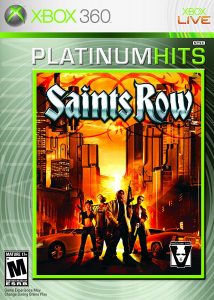 I finished another video game, yay! And got something like 650 gamer points in the bargain, also yay! Now I should maybe get around to finding out why my wireless adapter no longer works so I can resume being online. Or I suppose I could always move the cable modem into the TV room and go ethernet, now that my desktop has been broken for six months with no signs of me caring enough to fix it. It’s possible none of that is really relevant, except insofar as I’m pretty much console or nothing these days. Anyway, the coolness here is that I played
 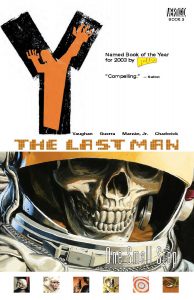 The thing about nothing but graphic novels between now and next Saturday is that I’ll probably get through quite a few of them. Which means I’ll have a lot to do here. That’s not a bad thing, of course. Though sometimes I worry when I get all prolific like this that I’m just saying the same things over and over again. Probably not in this case, though, since the other stuff today was an action movie and a pretentiously dense allusion disguised as a book[1].
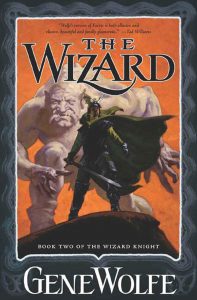 Gene Wolfe is an author whose work tends to exist right at the outer limit of what I can wrap my mind around. I swim through his novels, working to keep my head above water the whole time, and the nature of that effort leaves me with a limited perspective of the story’s surface from moment to moment. Not only that, but I’m aware of unplumbed depths of added meaning in a vague, unformed way; I guess I’m aware of it only to the extent that I can tell there’s a whole lot more happening that I’m not aware of. Possibly this all sounds unpleasant, and maybe it would be except for three things. The parts of the story I can grasp (a sizable amount of plot, bits and pieces of characterization, shadows of literary influences, and the faintest impressions of theme) have always been very entertaining; the prose is good enough to make mention of; and the parts of the story I can’t grasp exercise my reading brain. I’ll read the Book of the New Sun sometime again, and I’ll have benefited by that. Also, the Malazan series. (Which I’m sufficiently behind on now that I’ll probably need to start over. Oh, well.) Umberto Eco does this to me as well, but without quite as much enjoyability on the front end. I guess my point is that being challenged is cool.

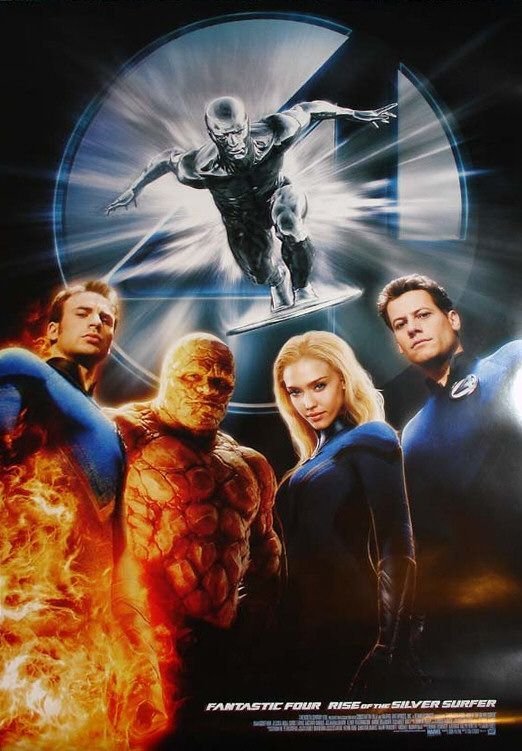
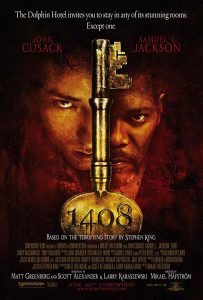 Stephen King novels that are adapted to film result in movies that are often, well, not very good. His short stories, however, turn into movies that tend to be pretty awesome. Most of the ones I would name just aren’t very horror-y, though, so maybe the problem is in the genre rather than the size of the adaptation? In the good news for people who have taken the bull by the horns of this particular dilemma department,