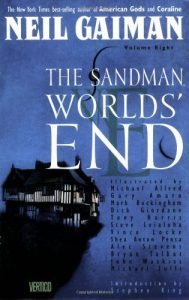
 It was Harry Potter weekend, and I sat at work waiting and waiting and waiting for notification that my package had arrived, so I could leave work and grab it and have some reading time back at work with which to while away the long weekend hours. The fly in my chardonnay was that UPS handed off their delivery duties to the USPS, at which point delivery info didn’t appear on the tracking page until this morning. Although I now know it arrived at 2:52, at the time I had nothing but shattered hopes. The upshot of all of which is that I started reading the eighth Sandman volume, World’s End. And then got stalled by actually having to work, and was unable to finish it before I got home and took delivery of my book.
Here’s the thing, though. It’s Sandman, right? And even though it’s one of the alternating books that explores mythos and shards of character personality instead of the main plotline, it’s nevertheless right at the climax of the series. It’s possible I could have set down an earlier volume unfinished and come back to it, and I’m sure I could have set down any other re-read and probably a lot of new reads to start my precious Harry Potter conclusion. But not this.
The story is simple, is in fact nearing a millennium in age. Travelers forced together by circumstance tell tales to each other to pass the time on the road to Canterb-, er, no. To pass the time in the inn called World’s End, where they have each taken shelter from an unseasonable storm. And if you suspect that each of these stories will reference someone that has been important to the overall Sandman cycle thusfar, well, try not to be too surprised by your perspicacity in this instance.
Knowing what I know about how the overall story ends, I was at first struck by the irony of the storm as catalyst. Because, to me, this was the calm before the real storm that has been building for, well, the entire series. But it’s been obviously building for the last four volumes. And yet, I reached the end and surprised myself with the realization that the storm within the story was generated by the outcome of the metaphorical storm of plot I’d been envisioning. The next time I read these, I’m going to be looking for the iconic moments from each of them. Just as the dinner under the stars at quest’s end was the moment to watch for in the previous volume, the procession at the climax of World’s End nearly literally took my breath away. I took about 20 minutes to recollect myself before finally cracking Harry Potter, at least. And that’s on a reread.
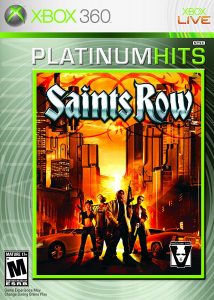 I finished another video game, yay! And got something like 650 gamer points in the bargain, also yay! Now I should maybe get around to finding out why my wireless adapter no longer works so I can resume being online. Or I suppose I could always move the cable modem into the TV room and go ethernet, now that my desktop has been broken for six months with no signs of me caring enough to fix it. It’s possible none of that is really relevant, except insofar as I’m pretty much console or nothing these days. Anyway, the coolness here is that I played
 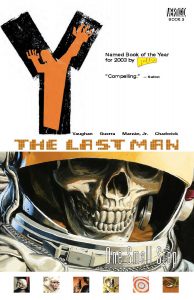 The thing about nothing but graphic novels between now and next Saturday is that I’ll probably get through quite a few of them. Which means I’ll have a lot to do here. That’s not a bad thing, of course. Though sometimes I worry when I get all prolific like this that I’m just saying the same things over and over again. Probably not in this case, though, since the other stuff today was an action movie and a pretentiously dense allusion disguised as a book[1].
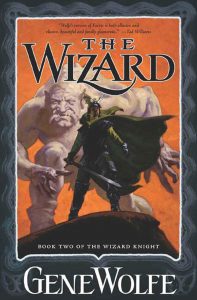 Gene Wolfe is an author whose work tends to exist right at the outer limit of what I can wrap my mind around. I swim through his novels, working to keep my head above water the whole time, and the nature of that effort leaves me with a limited perspective of the story’s surface from moment to moment. Not only that, but I’m aware of unplumbed depths of added meaning in a vague, unformed way; I guess I’m aware of it only to the extent that I can tell there’s a whole lot more happening that I’m not aware of. Possibly this all sounds unpleasant, and maybe it would be except for three things. The parts of the story I can grasp (a sizable amount of plot, bits and pieces of characterization, shadows of literary influences, and the faintest impressions of theme) have always been very entertaining; the prose is good enough to make mention of; and the parts of the story I can’t grasp exercise my reading brain. I’ll read the Book of the New Sun sometime again, and I’ll have benefited by that. Also, the Malazan series. (Which I’m sufficiently behind on now that I’ll probably need to start over. Oh, well.) Umberto Eco does this to me as well, but without quite as much enjoyability on the front end. I guess my point is that being challenged is cool.