As entertaining as the previous Fables volumes have been, with their magic-mirrored reflections on politics and relationships and rivalries and so forth, there was something missing that I hadn’t really even placed as gone until Bill Willingham set it down in front of me. See, all the many and varied familiar characters in Fabletown only came there for one reason: a powerful Adversary conquered and enslaved their homes, one by one, and they fled to the one place he never showed any interest in, our mundane world.
Except, as you’ve already guessed, all that is about to change. March of the Wooden Soldiers chronicles the first escapee from the Aversary’s grasp in over two hundred years, and the brutal aftermath of that event, including (but not limited to) open warfare in the streets of New York City! Not only has this opened up rich new avenues of future storytelling, but it provided the surprising (to me, anyway) info that nobody really knows who the Adversary is; I had been imagining a Voldemort kind of situation, rather. And in the meantime, several outstanding storylines have proceeded forward in highly satisfying ways. I am pleased to have a new favorite ongoing series, what with the end of Y: The Last Man a few months ago. Hooray for good stuff!
 So, new James Bond movie, which is almost by definition cool and only really needs to be compared to other Bond movies. I liked it enough to have seen it twice, and yet I’ve been stuck on the review for a while now. I think it wasn’t until I realized that and thought about why that I was able to come up with something, but it does all kind of make sense now.
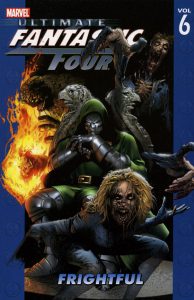 I’m not really sure what was done differently, but the latest volume of the Ultimate Fantastic Four managed to be as busy as the last few have been while simultaneously not feeling like each individual story was rushed. If anything, it felt like a return to the madcap days of the ’60s where each storyline lasted for two or three issues and hints of the future or ties to the past bled into each individual magazine; in short, like there was an ongoing, somewhat-planned story arc. It turns out, I really dig that.
 The awesome thing about reading a Dresden Files book is that I’m guaranteed it will be good, between the quality of the earlier entries in the series and the universal acclaim it has received among my friends who have read them. Plus, reading them spread out like this means I’ll still have new ones ahead of me for at least months, if not years. The downside is that it’s really hard to convince myself to read something else instead once I’m done with one. Like now!