Avatar (2009)

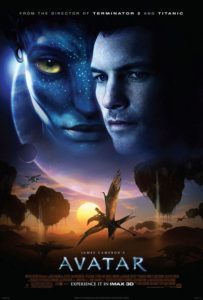
Avatar has been an interesting phenomenon to me. Because I watch the previews of it, and it of course looks really pretty, plus I know James Cameron makes good sci-fi[1]. But then again, I watch previews of it and it makes me think it will be Dances with Wolves in space.[3] And I didn’t hate that movie the first time, but it grows more awful with each subsequent viewing, and eventually it has retroactively become the moment at which Kevin Costner stopped being a respectable human being actor.

So, after all of that spinning around in my head for a month, I expected it to be pretty, yes, but still mostly terrible. I didn’t see it in the IMAX that the tagline suggests, though it was in 3D. I suppose I’ll get to that before too terribly long, though. Because, IMAX or not, expectations or not, Dances with Wolves and all? It was still really good. (And, yes, very pretty.) And if the message was perhaps bludgeoned in, it is not a message with which I have no sympathy. I guess I should ought to find a hardcore conservative and find out just how much they hated it. But really, even if you are allergic to hippie granola, I think the prettiness of the film will get you past most of the relevantly crunchy scenes.

What impressed me most, though, was the uncanny valley effect. Or, rather, it’s lack. Far short of the giant blue Na’vi people looking just subtly wrong enough to hurt my eye, the time rapidly came when it was the actual actors who started to look slightly wrong, and every scene back among humans had me itching to get back to the part of the movie I cared about. Which, okay, the whole point of Dances with Wolves is to throw off the trappings of the Western World, so it makes sense this movie would want me to be there. But when he can manage it even on a physical CGI level? Kudos, Mr. Cameron. I daresay you deserved the full theater and applause you got on even this third weekend of theatrical release.

[1] Seriously, that’s kind of his Thing, blips on the radar like Titanic[2] notwithstanding.
[2] Hey, now there’s a piece of irony.
[3] And then I watch South Park, and they point out that in fact it will be Dances with Smurfs, and Giovanni Ribisi will be an unobtanium-hungry Gargamel, but really that’s still Dances with Wolves.
Ultimate Spider-Man: Ultimate Knights

I maybe already mentioned this, but in case you’re wondering: after I noticed that I was getting spoiled for my Spider-Man stories in Ultimate X-Men, I’ve started reading the Ultimate series in graphic novel release order, and I had a bit of catching up to do on Spidey. So, that’s why so many of these in a row. So that’s that. Luckily, the Ultimates and Fantastic Four cross over with the rest of the continuity less often, or this would have been a problem much sooner, and probably when I could have done less about it. As it is, though, hooray, all’s well now.

The upshot being, I just read Ultimate Knights. And… okay, even though I knew it would be another 5-star story, I also knew there was no possible way it could live up to the jaw-dropping splendor of the Clone Saga. I’m not going to sit here and tell you it did, either, because I meant that about no possible way. Yet, at the same time… Bendis took a book that should have been breathing space from one major revelation after another, things that will likely have repercussions for years down the line if the series continues (as I very much hope it will), and he made it about a collective effort, organized by Daredevil, to take down the Kingpin. And what I’m saying is, it worked as breathing space, an arc that under any other circumstance I would have considered a major turning point in its own right! But as fantastic as I have found these various rounds with the Kingpin to be, what I think I liked best about the book[1] is that it really was breathing space. It’s nice to see Peter Parker have a good day every so often, and this was one of those.

[1] Please don’t take this to be a spoiler about the outcome of that Kingpin confrontation; I wouldn’t do that. Separate thing here.

Sherlock Holmes (2009)

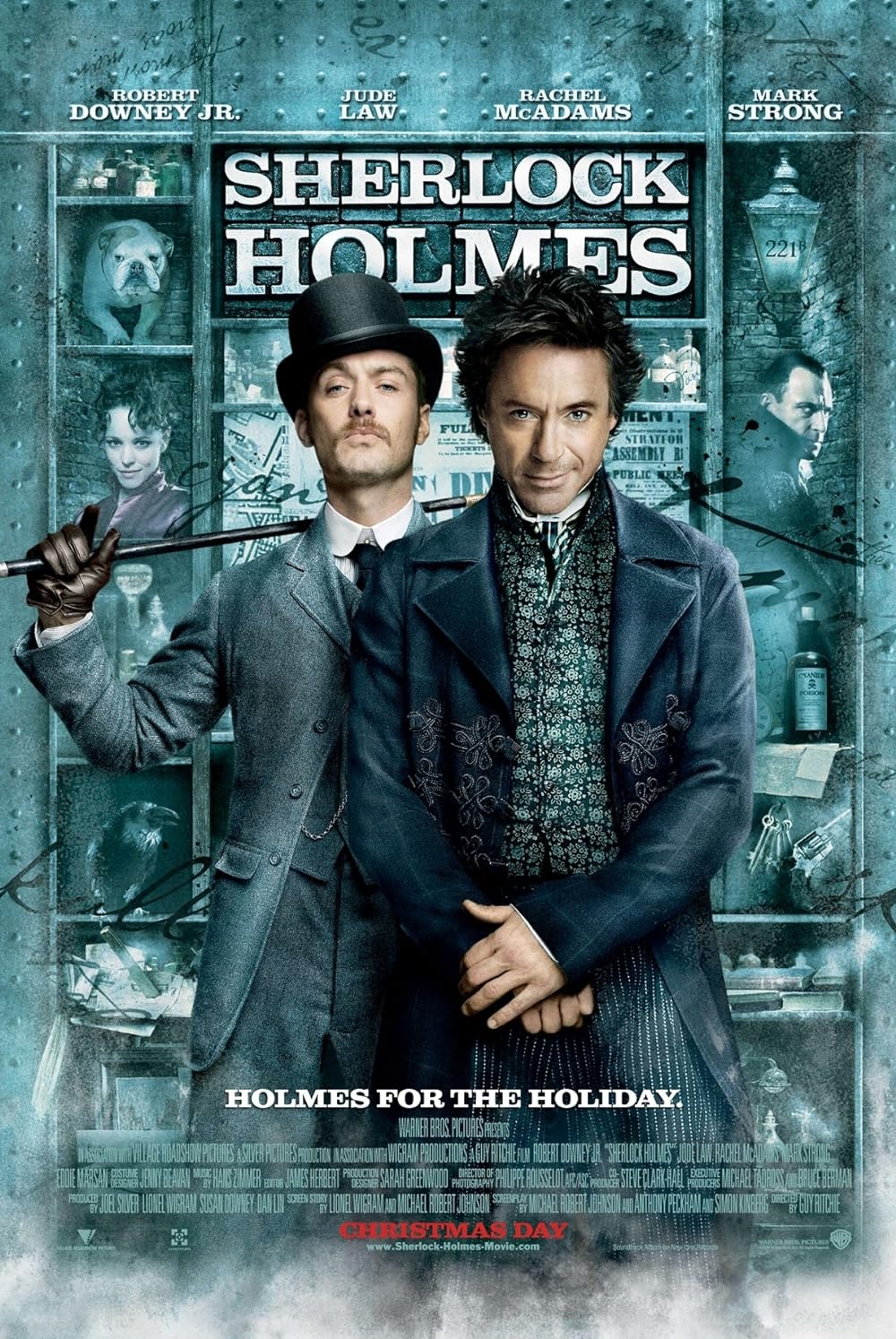
I should admit off the bat that, although I have read two out of the three of my volumes of the complete Sherlock Holmes as written by Sir Arthur Conan Doyle, I am not an obsessive fan of the type that I know exists. People who argue these books up and down the way people I know (and, okay, also people I am) used to discuss the minutiae of Robert Jordan’s books, only since there’s no new Doyle forthcoming, I think the Holmes fans are a bit more hardcore. My point is, I like the guy, and I want to reread the books I’ve read, plus certainly read the final volume that I haven’t ever done. And I know, from my perspective of entertained reader rather than fan, there’s all kind of reasons that I perhaps should have to hate the new Sherlock Holmes movie which have managed to elude me.

Luckily, those reasons did elude me. Because this was a fun, intelligent romp through Victorian England, full of action sequences that were not nearly as out-of-place as the previews hinted, deductions galore, and, surprisingly, apt sexual tension to boot. The plot is pretty good, but I’ll leave it to be discovered on its own. What I loved were the characters. Holmes is exactly the kind of broken man I’ve come to expect from between the lines, a genius in his element but completely lost outside of it, always waiting with barely (if that) concealed desperation for the next case, the next chance to come back to life. And his relationship with Watson… I can imagine thinking it’s just a little too boisterous and funny for the period, but really, I think this is a matter of between-the-lines too. People are people, and I doubt that Victorian propriety as conveyed in the fiction of the time was really as accurately staid as they wanted to believe of themselves. Whatever the case, this interpretation worked for me.[1]

I just hope that it’s accessible enough for the sequel that they all but promised; there was almost never a moment when the script slowed down enough to hold anyone’s hand. As it should be, I think; but like I said, people watching it enough to give me that sequel would be pretty alright too. Anyway, I already said it was fun and smart, right? So go see it already![2]

[1] I feel less qualified to comment on the portrayal of Irene Adler; although I know who she is, I think I’d have to be one of the hardcore fans to really concur with or dispute her place in this movie. But I did appreciate Rachel McAdams nonetheless.
[2] It’s not that I’m above misleading my audience about the objective quality of a piece, if it will get me something (in this case, that sequel) out of it. Because I’m almost certainly not above that. It’s more that in this particular case, I don’t need to mislead anyone, as I’m right about the quality. So why are you still here?, is my point.

Outcast

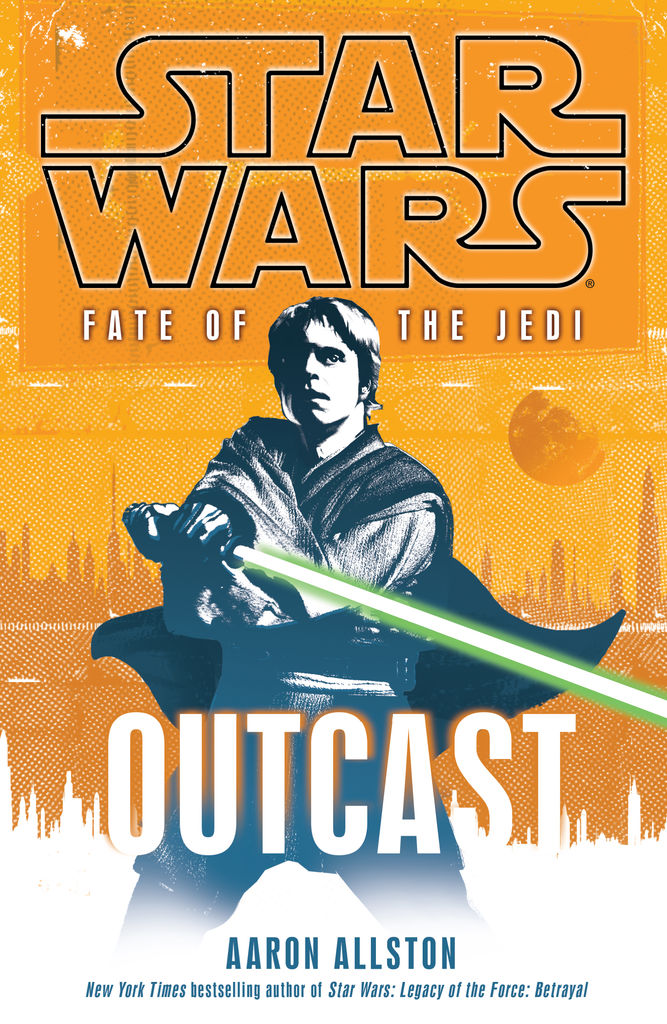
Outcast_coverThere’s a new Star Wars series again, set 40 years after the events of the movies, decades past the final fall of the Empire, well past the invasion of an extra-galactic alien armada not affected by the Force, just a few years past a second galactic civil war caused by another Sith lord from the Skywalker line. And this most recent event shows that people are basically the same all over; public sentiment has turned sharply against the Jedi Order in the wake of Jacen Solo’s fall, mostly because political figures are of the opinion that Luke Skywalker should have seen it coming and prevented it.

The truth of that statement, despite its simultaneous unfairness, points Luke and his son Ben on a quest through the galaxy in search of the various Force-sensitive but non-Jedi societies Jacen visited in the years before his fall, to see if they can find any clues. After establishing this premise and hinting at mental illnesses that may be starting to afflict some of the Jedi, Outcast proceeds to… well, to stall out. The first leg of Luke’s investigation is entertaining, as are Han and Leia’s adventures trying to keep a planet from being blown up. (By earthquakes, not Death Stars.) But the pacing back and forth between these stories and the Jedi illness plotline is awkward, and by the end of the book, I felt like it maybe should have been compressed into just a hundred pages with plenty of room for more. Worse, the Han and Leia plotline actually had no apparent bearing on anything else, even though I’m well aware that a seemingly minor event involving their granddaughter will be relevant later on. The knowing and the entertainment just weren’t quite enough to make up for the structural weirdness and the slowness of the pace.

Possibly as part of a straight through read of the nine book series, the pacing would not have struck me oddly, but in the book standing alone: no good. Luckily, I did enjoy the discrete events, so I have no worries about liking the next book, whenever I get around to reading it. (Probably not terribly long from now, as it would be nice to be caught up again.) I guess the majority of my disappointment comes from the fact that Aaron Allston is a known good quantity in the Star Wars Expanded Universe, and to see plotting or pacing problems from him, much less both, confuses me more than just any randomly off-kilter Star Wars book would. It’s not like they don’t exist in the wild.

Death: The High Cost of Living

Between the length of the week with various holiday trips and all and the amount of time I’ve spent staring at my own writing while scouring the internet for repairs on this until recently dead site, it’s kind of hard to remember just how I felt about The High Cost of Living. There is a legend that Death must spend a day in every century as a mortal, I guess to better understand her job. And the book is entirely about that day, spent with a Manhattan kid whose ennui would do a French philosopher proud, Mad Hettie from the Sandman series, and a couple of bad guys who hope to capture all of Death’s power while she is mortal and vulnerable. It is fair to say, I think, that there’s not a single character in the story who actually understands what is happening, nor what his or her individual role is to play. Possibly Hettie, but as she’s quite mad, it’s difficult to tell. Certainly nobody else. It is left to the reader to unravel the various skeins of consequence. It’s a good little story, for all that it’s short and confusing. There are aspects I did not understand one bit, but I felt pretty comforted by what I did latch onto.

The last pages of the book are a brief sexual health pamphlet distributed by Death to keep us all from getting AIDS (among other STDs), as, after all, we’ve only got the one life and wouldn’t it be best to keep on living it, and to do so in reasonable comfort and health? You can certainly tell it’s twenty years old, but I like to imagine that it both helped some people and turned some people onto Gaiman’s world that might otherwise have never known to look for it.

State of Delirium

Get it?

Anyway, I’ve been doing this for north of five years. Wow. And you may have noticed over the past week or so that it all went away. There was an unfortunate server incident and an even more unfortunate failure to retrieve data backups for six months. However, Google is sufficiently advanced as to be indistinguishable from magic, and with help from longtime contributor Jason Newquist and longtime reader Mike Kozlowski, and from the Google cache, I have retrieved all of the actual review files, the vast majority of the tags, and all but four of the comments. Everything should look just about the same as it did a week ago when this all happened. I, for one, am relieved. Also, the WordPress instance is now, as I understand it, mailing me weekly site backups to avoid this kind of tomfoolery down the line.

That’s it. Just wanted to catch y’all up, those as wondered at least. Thanks for reading.

Ultimate Spider-Man: Clone Saga

If I thought I could get away with it, the entirety of my review would be “Holy shit.” Because, in contravention of every reasonable expectation I could have had, Clone Saga did not merely maintain the high standards that I have, despite myself, come to expect from the Ultimate Spider-Man series; it surpassed them in every way. Everything else that it crosses my mind to say is, although probably accurate for me as a reader, actually too hyperbolic to put on a page. Suffice it to say, I wish I could do a targeted mindwipe of the book, so I could read it again for the first time, Right Now.

It is my understanding (in fact, there’s an entire introduction discussing it) that this revisits yet another long-celebrated moment in the original Spider-Man continuity. As such, I look forward to it, but I’m glad there will be so many differences, because if it was very similar beyond the essential clone concept, I would be doomed to disappointment. But, okay: in thumbnail, Spider-Man fights the Scorpion at the mall, only to discover that the man inside the suit is Peter Parker! In the aftermath of that stunning moment in the real Peter’s life, Mary Jane gets kidnapped by… but that would be telling; and Nick Fury declares war on Spider-Man, a move that could well be his biggest mistake. And honestly, I’m barely scratching the surface.

And, I know I’ve said this before, but, my God, Aunt May. Simply amazing.

Mirror’s Edge

So, it is celebration time here at Wit’s End[1], because I finished another videogame. Woohoo! Mirror’s Edge is a light, breezy even, rush of a game. You are a runner, tasked with moving information along the rooftops of The City at blinding speeds, using native instinct to know when you can make a jump between buildings or clear an obstacle. What exactly the information is, or why it needs to be moved discretely, or why the cops usually don’t bother the runners, these questions are never really addressed. The only thing that matters is, things have changed, times are suddenly far more dangerous, and it’s up to you to unravel the mystery!

Luckily, the gameplay, which consists of a constant barrage of running, jumping, ducking, dodging and weaving that optimally should never involve gunplay[2], is more than exciting enough to make up for the tragically thin plot. It’s not so bad that the information above is missing, except that it quickly becomes central everything you’re doing, and I feel like I might have gotten more engaged in the story if I’d known why the bad guys wanted to wipe out the runners, or even what [else] exactly they had done to become the bad guys in the first place. I kind of started to get distracted during the cutscenes, because they weren’t really making enough sense to me. Or else the distraction caused me to miss something vital? Yeah, I just don’t know. But the game itself, divorced from all these concerns? I say again: pretty good stuff.

Man, I really need to play an RPG now, though. If only I actually had a new one in my house. Maybe next month!

[1] That is what I call my home. There is even a sign!
[2] Although I acknowledged my lack of utility against the heavy gunners early on and started blasting away at need; but you’re just so slow-moving with a gun, they clearly intend you to have avoided them, and I always felt like I was letting the game down a little bit whenever I pulled a trigger.

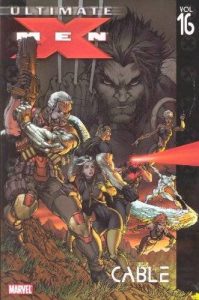
Ultimate X-Men: Cable

I have made mention several times over the past few months that the Marvel Ultimate series has an expiration date that, according to my bookshelf, I seem to be approaching. But it hasn’t felt like that in the depths of the storylines, right? Which is one of the reasons that Cable caught me by so much surprise that it has caused me to rethink the Ultimate X-Men series as a whole. More on that in a sec, but what made me start thinking about the Ultimatum again is how much finality and apocalypticism Kirkman brought to the table this time. There’s this guy Cable, see, and he has come from the future to kill Charles Xavier and thereby prevent said future from ever occurring, probably because it sucks? This is information I have not yet been specifically given, so. All the same, the situation felt like the first pebble of an avalanche, in a way that nothing previously has.
Which I guess ties into what I meant about rethinking the UXM series. Obviously I’ve been fine with the development of Spider-Man. The Ultimates are busy with one nation-threatening event after another, and the Fantastic Four skip jauntily from one sci-fi menace to the next, but neither group has built up much in the way of continuity. (The Ultimates would I think have built more, if only more had been written about them.) The X-Men, though… some I’ve liked, many I haven’t liked very much, but I never really looked at the series as a cohesive unit before, and I have to admit, for all the individual episodes I haven’t cared much about, the whole of it stands together really well. Somewhere along the way, no question, I started caring about these characters. If I’m right about this being the first signpost of things to come, I’m glad it happened here. Spider-Man’s story is too personal for world-shaking events, and the others are too scattered.

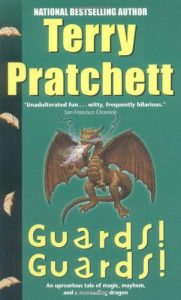
Guards! Guards!

This is the point at which, if I understand conventional wisdom, the Discworld novels start to become “good”. Also, more incidentally, this is probably the first Discworld book I ever read, far back in the depths of junior high. (All I remembered is the “mllion to one shot” gag, so, it was basically like reading it all over again.) And most incidentally of all, I’m pretty sure it’s the farthest I had read into the series, so everything from here on will be entirely new, cultural zeitgeist notwithstanding. Anyway, that “good” thing, though: as much as I have enjoyed the last several books on their own merits, Guards! Guards! definitely has some barely definable adult quality that the previous books have not had, though some have grasped at it.

In addition to first introducing Ankh-Morpork’s city night watch and its world-weary, heroic-in-spite-of-himself Captain Samuel Vimes, a group character study that could have carried a book with no plot whatsoever, the novel also for the first time superficially grazes the inner political workings of the city at the dark, ulcerated heart of the Disc. It asks and perhaps answers the essential question of whether democracy or monarchy ought best be left to run amok through the lives of a citizenry that barely comprehends either and tends to cheer whichever of the two it has seen least recently. Also, and here is the only point at which it diverges from any standard reality to which you may be accustomed, there is a dragon.