One of the cool things about Hugo (and believe me, there are many) is that it contains multitudes. It explores with uncomfortable realism how it would feel to be an orphan in 1930s Paris, forever doing the (apparently unpaid!) work of an adult, because to let it go undone is to be caught and exiled to the orphanage. It has the best use of 3D I’ve seen since My Bloody Valentine. It has one of my favorite character archetypes in fiction, the (in this case) girl who desperately wants adventure and has no idea what she’s letting herself in for. It has all kinds of foreshadowing, frequently in multiple layers. It tells a lot of the different stories swirling around Hugo, not just his own one. It has a robot! It is one of the funniest non-comedies I’ve seen in a long time, and while it’s not a “kid’s movie that is great for adults too lol!”, it is almost certainly a movie you could take your kids to, if you care about that kind of thing.
Most of all, permeating every other aspect of the movie (even if it’s not obvious at first), it is Martin Scorsese’s love letter to the art of cinema. And it’s a damned good one.
Also… that girl Isabel was both the second main character in Let Me In and the girl hero in Kick-Ass? Damn.
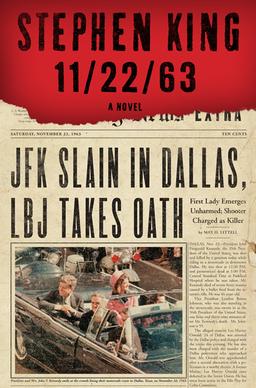 You know how I was recently talking about running out of Stephen King books? Well, now it’s actually happened. I’m sure he’s still writing something, but there are no more plans floating around in the world for when the next one will come out. I have read an entire canon.[1] This particular book is his take on the big time travel questions, like “What would happen if you went back in time and killed Hitler?” or “What if you killed your own grandfather before he met your grandmother?”[2] or, predictably in the specific case of
  Sure, the movie too, but there is something downright unsettling about silent closing credits. Of course, maybe that’s only true if the movie was unsettling first. It’s cool, though,