The Da Vinci Code

The short answer is: someone made a near enough to duplicate as makes no difference film version of the Da Vinci Code novel. As a result, there is nearly nothing new to say from what I said a year ago.

Slightly longer answer: good realization of the sets and props described in the novel, with film improving the prose at most every step. Possibly better explanations of things, certainly not in a way that made me think any of the characters were stupider than they ought to be, much unlike the book. I can’t recall the book’s dialogue well enough to compare that bit. Somewhat actiony, extremely sacreligious if you are a lot of people, approximately as much information density as a 30 minute Discovery special on the topic. As movies go, it was really quite good. Also, Sir Ian was cool, like always. And the bad guy reveal was not nearly so clumsy as I thought it was in the book, or else maybe I was able to see the foreshadowing better. But I doubt it; I think the foreshadowing was actually presented better, instead. Advantage: Ron Howard!

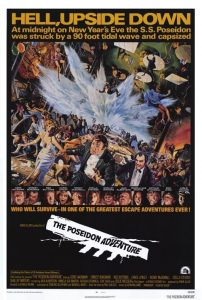
The Poseidon Adventure

I thought I ought to ground myself in history, so thanks to my good friends at Netflix, I snagged The Poseidon Adventure no more than a week after its remake’s release date, to watch prior to catching said remake. (Because I am nothing if not timely. Also: product endorsements deserve to be rewarded with free stuff. Just saying, good friends at Netflix.) The seventies were a different time is what I have learned. Sure, blah blah blah special effects cakes, but that’s not the thing. The thing is the acting. With the exception of Ernest Borgnine (who was frankly superb) and Roddy McDowall, every single male in the cast acted via angry loud voice. It was just bizarre to watch, especially in Gene Hackman, who I have certainly seen perform well enough in other (notably later) roles. Meanwhile, the women were mostly called upon to scream a lot. This is somewhat less surprising on the whole, but still pretty sad. As the main exception here was Ernest Borgnine’s wife, I am forced to assume that it was talent by osmosis.

As for the plot? Well, you know, boat flips over, people try to survive in upside-down boat. Is there more that you need to know? I will say that the set design did an almost non-existent job of conveying upside-downness, which robbed the movie of a good third of its purported impact. I expect that the remake will handle that part, at least. And maybe less shouting. But mostly better special effects traded in for someone not as good as Borgnine. Probably this is a bad thing; it certainly would be if the original had been a tour de force, but since it was not, I’ll take what I can get.

X-Men: The Last Stand

So a few years ago, they made an X-Men movie. Despite having played an X-Men video game for the NES in the 80s, I really knew nothing about them except that Nightcrawler was fun to play in that game and Wolverine was supposed to be pretty cool. Comics and me have never really gotten along to the extent that I would expect them to, considering how much I enjoy the movies and games and other trappings of the comic book industry, not to mention how much I enjoy, y’know, books and television. So, there I am, with no expectations. And the movie met or exceeded them. It was fine for what it was, but nothing crazy exciting or groundbreaking. Then they made another one, and man, it was really good. Meaningful character interactions, tough choices with tough consequences, that storytelling meme where the guy that you used to dislike turns out to be really stand-up and helpful when compared against the new opponent that hates all of the characters equally, so the established people have to put aside their petty squabbles and face the new thing together. That’s an idea that has rarely failed to wow me.

And now, the trilogy has been completed. X3 is kind of a weird movie to me. I mean, not the plot. The plot was fine, with its paired external struggles of mutants against government and mutants against mutants and internal struggles between certain sets of key characters, its allegorical hearkening back to the original film, and its pyrotechnics and combat by virtue of leaping through a lot of air at your opponents. So, that was all fine. (Okay, I’m lying about the leaping through the air thing. It didn’t take very many such leaps to start looking really dumb. But, whatever.)

No, X3 is weird to me in that it has so many successes and so many failures. On the one hand, you’ve got the subtle brilliance in the contrasting character development between Magneto and Wolverine, even including an ironic mention of it in conversation between them. But on the other, you’ve got reference to the comicbook love triangle between Rogue, Iceman and Kitty Pryde that goes absolutely nowhere despite ample screen time to make some kind of point. Mix that in with a choppy editing job early on, and I’m forced to conclude that although the spectacle of it was almost total greatness and although the story from all three movies was wrapped up cleanly by the conclusion of this one, it nevertheless falls well below the bar set by X2. Still, though, far better than the original. After all, unlike that (and unlike a lot of first entry comicbook movies, really), it had a plot with deeper complexity than good guys versus bad guys.

A Storm of Swords

And so, my third and final reread of the recent era, A Storm of Swords. As previously, I read this over a little too broad of a time- and bookspan to really dig deep into it, but over a lesser span than before, so I’ll see what I can do.

Certainly, as the name implies, it was a bloodier and more dire book than its predecessors. The scattered hints of doom have coalesced into a thing that, though still rarely seen, is now believably dire enough to plunge the entire world into shadow; if only there were enough people who knew it was coming to stop with all the other stuff and, y’know, fix it. For the most part, though, it felt like a plot-driven book with just a few good character studies again. I don’t mind that, really, as I am really enjoying the chock-full-of-politicky-goodness plot. But it’s light on theme, and the book reviewer in me has little to catch hold of. As it is, though, the people to watch for are Jaime Lannister, Brienne of Tarth, and Stannis Baratheon, and in that order. There’s a lot going on there. I could name plenty of other people I liked, but for character growth, there’s your fun. (Prediction: the next one is going to be Sansa’s book.)

I have a feeling that my review of my first time reading of A Feast for Crows is going to suffer from this timespan thing. Hrmm. I might have to cheat and read ahead as I go, much as I hate the idea of it. Unclear. Maybe I’ll take notes? Hard, when I always wait for a whole picture to start coalescing my thoughts. Problematic, this.

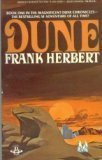
Dune

A thing that qualifies as unlikely: I’ve never read Dune before. Unlikely, yes, but all true. I expect I would have gotten around to it, but was reminded prematurely by this girl who inspired me to pick it up because it’s one of her favorites. In a more optimal world, having read it would in some way that I’m failing to imagine inspire her to become suddenly interested in me as date material. Because of a defect in my brain that allows me to conceive of that kind of world, I now have read the book, and therefore, I will talk about it.

In a trend that fits more well with the actual world, I’m left a little bit mystified by the whole experience. I pretty well understand what happened, and now want to go back and watch the movie and see if it makes more sense. Except for the part where I don’t actually understand what happened at all. The discrete events made perfect sense, yes, but I’m really unclear on what it means to have gotten to the end of the story. It feels like there’s this symbolism rumbling around below the surface that transforms it from entertaining sci-fi vengeance war into shining, brilliant example of the genre, and I’m just not seeing it. (Spoilers for a forty-year old book below the cut. Panic!)
Continue reading

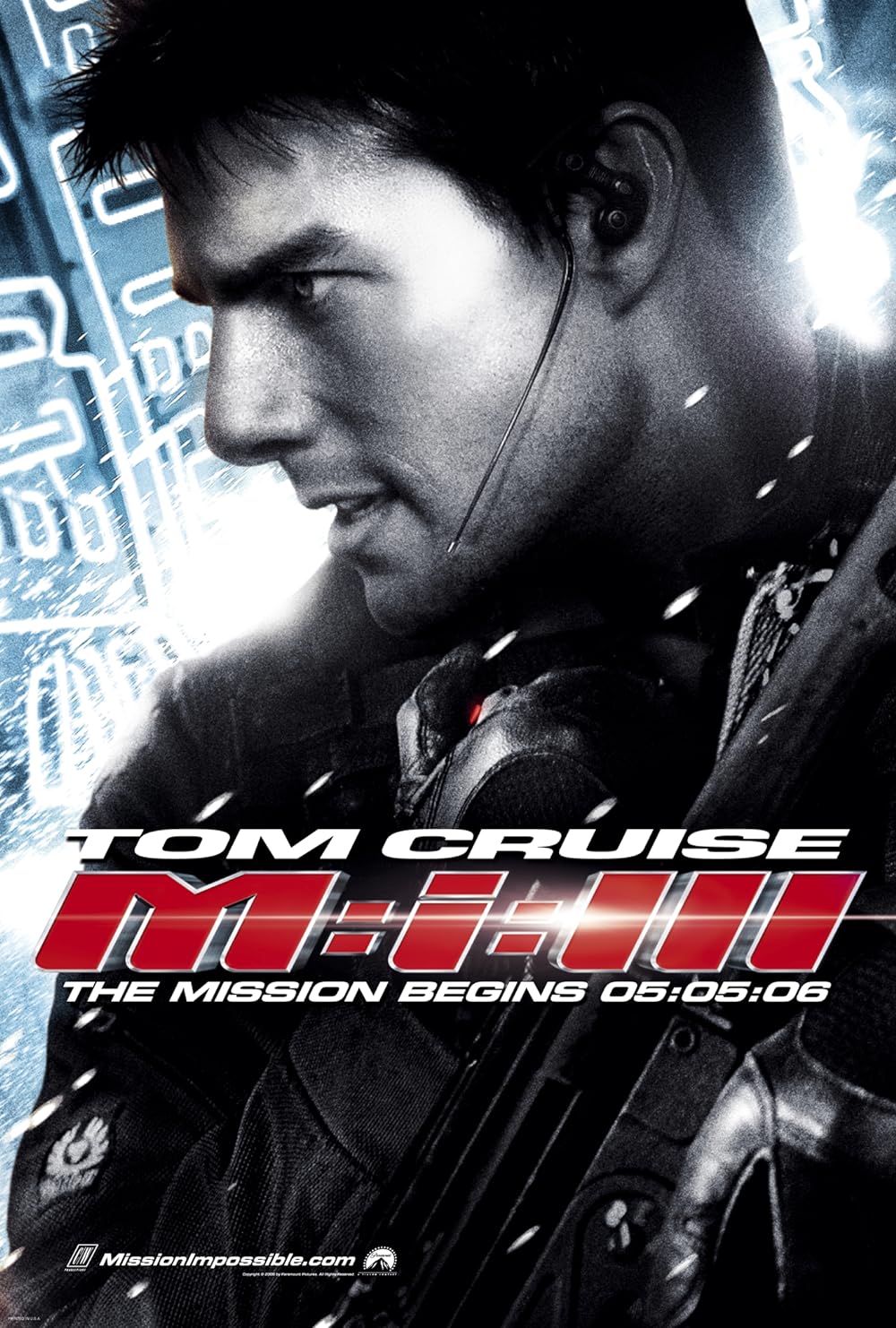
Mission: Impossible III

Here are the problems with the summer movie season.

1) It starts too early. First weekend in May? Inevitably, by mid-July all of the exciting movies are over, and you’re left watching previews for a voodoo horror flick for 3 straight months because it’s the only thing the movie studios think anyone will actually bother to see, and by the time it finally comes around, all you can do is thank God that the previews aren’t on anymore, all desire to actually look into the movie having been leeched away by repeat after repeat of that stupid, terrible, no-good preview.

2) Hollywood has learned, like an undisciplined child, that all attention is good and to be craved, regardless the actual quality of the action that garnered the attention. That is, any movie that is a sequel to a successful movie or has stars I’ve ever heard of or has explosions and car crashes, people will go see it in droves, cranking millions of dollars of profit into the studios, regardless of whether the film in question is actually good. The goal isn’t to make a lasting product, just to bring in money. Used to be, they’d make their money over time by having a film people wanted to see, instead of making it all in the first weekend. (I openly admit to being a part of the problem in this regard. But still, it would be nice to see good movies.)

3) No boobies. All of the nudity in the year comes in December when people are trying to win Oscars for Important Roles where shirts come off only because it is Relevant to the Plot, or else in February/March, aka horror movie season. (And I think we all know those pickings are getting slimmer even as they’re getting fatter.)

The good news, though, is this. Mission: Impossible III has glossed right over the failure of point #2, coming up with a sequel that’s actually worth seeing. More amazing still, it followed a pretty bad sequel, which is usually the kiss of death for an ongoing franchise. I think most of the credit for this can be laid squarely at the feet of J.J. Abrams and his skill with the Alias series. He may still be finding his sealegs in the mysterious / spooky sci-fi genre, but the boy knows how to handle spies, both (obviously) the exciting wetwork and (less commonly by far) their lives outside of those deadly mission into Prague. I mean, get this: I cared what happened to Tom Cruise’s love interest. That right there is an impossible freaking mission, let me tell you.

The only real flaw, and it’s minor, is that the villain is a bit of a hollow shell. Hoffman certainly pulls it off well, creating a sufficiently cold, unaffected, and downright dastardly bad guy that I didn’t notice that there was nothing really there until the credits were rolling. Evil and diabolical, sure, but nothing like reasonable motivations or character development. A pretty cool obstacle, and nothing more. I’d expected better after all those seasons of Alias I’ve washed down over the past year, but then again, it’s only a two hour movie. (I should also say that my ability to map out all the twists and turns an hour in advance is a flaw, but I’m enough used to that to only count it as a plus when a movie actually succeeds in tricking me, these days.)
Silent Hill

I am annoyed right now, because of how I’m thinking about this movie and I want to talk about facets of it, and instead I’m being made to feel guilty for examining those facets rather than committing to a single opinion, full stop, the end. However, guilt is for Catholics and people in jail, and terrorists who haven’t been charged with crimes of course; most importantly, not for me. So, Humbug, I say. Also, I say Silent Hill.

So there’s this game, right, and they made a movie. That nearly never ends well, and not least because they mostly only make movies based on good and popular games. (It is a source of surprise to me, how much more often popular equates with good in the video game arena than in the movie or literary arenas. I wonder if I’m wrong, really. But let’s assume not, as it makes it easier for me to continue with my thoughts, here.) So, there’s automatically farther to fall, as your built-in audience will necessarily be more judgmental than otherwise.

Silent Hill the game was creepy of atmosphere and mysterious of plot, only providing drips and drabs to explain what was really going on while keeping you on edge throughout. The movie provided both the best and the worst of that, more’s the pity. Because it tried very hard to be a good movie, and I can see the good movie lurking just beneath the surface. Nevertheless, it never really surfaced.

Silent Hill the movie is the story of a woman trying to penetrate the mystery of her adopted daughter’s nightmares and accompanying sleepwalking. So she takes the girl to the place those dreams speak of, a ghost town called Silent Hill. (I know, it was a shock to me, too, the coincidence of that name with the movie’s title. But I resuspended my disbelief and soldiered on.) Only, their arrival is marred by a car accident that knocks out the woman just long enough for her daughter to vanish. After that, all that’s left is to find her, and that means unraveling the mystery behind the town and its death.

The audio and the visuals were both brilliant, evocative, and a joy to behold. Perhaps a dread to behold would be more accurate, but I like what I like, and joy is the word for me. Also, I liked the music. The plot, however… possibly forgivable gaming tropes were overshadowed by an unforgivably dense plot, and the side story of the woman’s husband that had no right to be in the script at all. The good news is this: I don’t have to concern myself with the good movie that I kept nearly seeing, because I’ve got these games that totally make up for it.

The Lunatic Cafe

I had this idea to read an old science fiction novel that I’ve never really opened before. So, I found a copy and the time was ripe, and I started reading. Then, about three chapters in, I left it in the theater after Slither, and despite a lack of shows between then and when I showed up the next day to ask after it: gone! Thusly, the book closest to hand was the next Anita Blake, and I read that instead.

And then, I waited for days to say anything about it, because although I enjoyed it, I’m running out of things to say. The Lunatic Cafe had yet another reasonably good mystery (not feasibly solvable like Veronica Mars, but fun to watch unfold), still more wacky dating hijinks with local vampires and werewolves, and a heroine whose pluck has not diminished over the half-year I’ve been reading. In short, if the first one was readable, this one is too. But it’s not really any different, except for the plot and incremental growth in character depth. So, y’know.

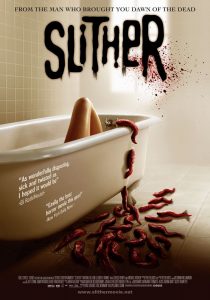
Slither (2006)

You know Creepshow? Well, obviously you do; I didn’t mean to be insulting. So, here’s my point. Imagine if the meteor that turned Stephen King into a plant instead landed in Hicksburg, The South, USA and got all The Thing on the local residents, and then it and Malcolm Reynolds got into a competition for the same girlfriend. In this circumstance, you would be watching Slither, an excellent space monster movie that is inexplicably failing to sell tickets. I mean, this movie has alien cow-tipping!
More impressively even than that, though, it has that degree of reality that I was just praising in The Hills Have Eyes, where it feels like actual people are in this actual situation, somewhere just down the road and not in my life only through sheer geographic and temporal luck. Which is quite a feat for an alien-in-a-meteor flick. So, good on them.

Also? Someone I’ve had drinks with was in the credits. That’s never not cool.

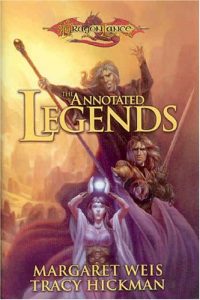
The Annotated Legends

Previously, I claimed that the Dragonlance Chronicles stood head and shoulders above most of what I was reading at that time (other TSR books, Piers Anthony, etc.). I made this claim with perfect honesty and no malice aforethought. Be that as it may, it falls under that thing that we classify as ‘damning with faint praise’.

To my delight, I still find that the Dragonlance Legends are genuinely good in their own right, better than some of the books that lie ahead on my reading list over the next few months. They’re not great, or life-changing, or even wonders of prose. But they tell a story personal enough to satisfy people with no interest in the sci-fi/fantasy genre (y’know, if they were to read it, which they would not) with a scope that is epic enough to satisfy people who would refuse to read anything else. I find that usually the balance is not there. And there’s something about a good story that allows me to forgive the occasional mistakes in execution, which of course existed. I mean, yeah, I like it a lot, but it’s still from TSR.

This is all good news for me, because the annotative part of the book was a lot less well done than in the previous volume. The authors did fine, of course, as one would expect, and the poet guy too. Instead of comments all over from the design team, though, there’s one unidentified annotator covering everything else. And everything else consists of, in this case, pointing bright flashing neon signs at already sufficiently obvious thematic elements, removing any hope of subtlety. That, and pausing at any point where a moment from the past has been referenced in the text to explain exactly in what book and chapter said event first occurred. This “helpful” dissemination of information eventually came to include references to earlier points in the current book. Seriously. So, so aggravating. And I couldn’t even find a name of someone to blame, anywhere in the book.