Tag Archives: graphic novel

Marvel Zombies 3

At some point, the continuity in which Marvel superheroes were infected by the Hunger, a flesh-craving virus that specifically targets “capes” and “masks” because of their facility with destruction[1], has become its own relevant parallel universe. Not as important as the one that started in the ’60s, not as important as the Ultimate Universe, but probably more important than any of the other parallels that have come and gone.[2] For evidence, I present Marvel Zombies 3.

Featuring a significant number of secondary heroes and villains I’ve only recently become aware of in my original-Marvel readthrough (currently February 1975), the book brings the Marvel Zombies (well, those who aren’t on a 40 year tour of their local galaxies) to that main Marvel continuity, circa 2009. Being over 30 years behind means they had characters I’ve never heard of (including the prospective heroes of the piece, Machine Man and Jocasta), but seeing the highly regimented post-Civil-War-era regular Marvel characters deal with the Zombies? Pretty cool, nonetheless. It was like giving myself odds and ends of spoilers. I wonder if that made it cooler than being only 20 years behind (or, dare I say, caught up) and catching more of the references would have been?

[1] It occurs to me that a virus that is trying to destroy all life doesn’t seem to have a very good evolutionary endgame. I wonder if a) a writer didn’t think it all the way through, b) the virus was created by someone with a larger goal and that backstory is yet to be revealed, c) it’s not a virus at all, which, to be fair, it’s not like the very few people still “alive” are good at science anymore, or d) other?
[2] I’d say that, though, wouldn’t I? After all, how many of them am I really aware of? But still.
Powers: Supergroup

Superficially, the fourth volume of the Powers series appears to have borrowed heavily from the Fantastic Four mythos. Sure, the government-backed group is named FG-3 and has only the three members such a name would imply, but the long history between its members, their popularity, the wealth and merchandising, the times when the team is in some kind of interpersonal crisis? All quite familiar. The good news is that the similarities really do fall apart once the plot of Supergroup has proceeded beyond the surface. Down there in the muck, the story is chock full of dark conspiracy, several stripes of bravery, and some pretty big changes to the series’ dynamics, all while inching closer to the as-yet unrevealed underlying truths of the Powers world.

Which is a good thing: only four books in, and already most of the recognizable secondary characters have bitten it. Either Bendis intended to show a world in crisis all along, and this is a good way to make his character realize it and start working towards the solution, or else this kind of change is the only way to slow down the grinding wheel of destruction and give us a chance for alternative storylines. I think I prefer the former but expect the latter, since there are quite a few of these books left. But at least my interest in them is renewed by this solid entry, so, we’ll see!

Jack of Fables: Jack of Hearts

The brilliance of splitting the Fables series by giving Jack Horner his own spin-off is that the mainstream series is free to switch to an all serious, all continuity focus while giving fans of lighter fare a place to go for that. I like both, don’t get me wrong, but all the same, I like them better separately than together, because now I know what to expect from each storyline, instead of guessing whether the next book will matter to the plot or not. (This theory probably falls apart entirely for people who read the individual comics instead of the collections, but I’ve got to say that I’m really glad the graphic novel format exists; as much as I’ve enjoyed my Marvel readings over the last years[1], the modern trend toward extended storylines fits my pleasure a lot better than changing focus every issue or three. Whether the graphic novel format led to or from extended storylines is a question for historians.[2]

The downside of reviewing a book in which you already know that the plot will be played for light comedy (nevermind how brutal or violent individual moments might be) is that probably nothing will really change, and there’s not a whole lot you can say about it except for spoiling the plot. So, to the minimal extent that I’m willing to do that, Jack of Hearts follows immediately from the events of the previous story, where Jack takes the time to tell his fellow escapees the possibly true story of how he became Jack Frost and the heads off to the warmer climes of Las Vegas, in pursuit of the two things it has in the most abundance, love and money.

On the bright side, though, the potentially very interesting story of Mr. Revise, the guy from the last book who has been capturing fables in order to remove them from pubic memory? It is not only not over, but figures to be the main arc of the Jack of Fables series, much as the war against the Adversary is the main arc of Fables. I really look forward to seeing where all it goes, though I trust Jack will stay for the most part light and comedic. Otherwise, it’s just a new series entirely, which defeats the purpose. Well, the one I laid out for it, anyway. Oh, and unrelated to almost anything else I’ve said about the book, I really hope to see more of Alice in future volumes.

[1] I’m in 1974, except that I went back to catch up on Daredevil, where I’m trapped in 1968.
[2] So, Fresh Air has a rock historian, right? I wonder how long until a show on NPR has a comic historian, and I also wonder why it cannot be me.[3]
[3] So, okay, there are a lot of really good reasons why. But still, what a cool job. If it existed, I mean.

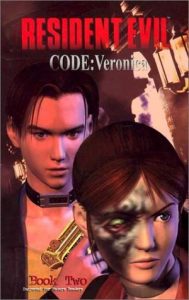
Resident Evil – Code: Veronica – Book Two

Remember that time when I was reading a manga-as-walkthrough graphic novel of a Resident Evil game I never finished, because at least I’d get to know how the game ended this way? And it actually spent more time showing where to find the next emblem or key or blue herb than examining the story being told, and it was pretty much terrible, but hey, end of the story without having to plug in a Dreamcast, right?

So, yeah, it turns out that while the second book is the last book I have, it is not the last book in the series.

So. That was pretty sad.

Lucifer: Evensong

The fundamental story being told in the Lucifer series was over at the conclusion of the previous book, which is as it should be.  I have realized while reading Evensong and contemplating my review of it that how a story ends matters to me a great deal. I mean, certain series which I read for the sake of humor and masochism (and am probably overdue on another entry from) aside, the ongoing story will need to be good for me to care about it at all. But the dividing line between the merely competently entertaining and the sublime that will stay with me for years ahead? The strength of the ending will almost certainly be the surest tell.

All that to say that I feel like the strength of this ending is the closest Carey has come in his quest[1] to match Gaiman’s Sandman. It hit all the right notes of regret, yearning for more but acceptance that the wind has blown an ending, tying some loose ends while leaving others conspicuously unknotted… it was an end, is what I mean, and what I also mean is that I really don’t see one that satisfies me all that often.[2] I can tell when I dislike them, as evidenced by everything I’ve read by Dan Simmons, but the ability to recognize that I actively like one and it has really added to my opinion of the whole? That is a new gift that I’ll enjoy all the more for getting to talk about it. It also explains why I like ongoing series as well as I do. With no end in sight, the let down is all but impossible. And then there are some series that make a conscious choice not to end, which may work pretty well or not, depending on who you are. (It’s such a massive spoiler that I can’t even mention what series I’m talking about, though it wouldn’t be a spoiler to say I believe the Wheel of Time will head in the same direction. I mean, that spoiler is right in the name.)

Anyway, clever readers will note I’ve spent almost no time talking about this book, and that’s a feature since it being both a grand denouement and an eleventh volume makes it tricky to say anything that wouldn’t be a spoiler for, at the least, earlier books in the series. But I will reiterate again (once per paragraph, yo!) that it was entirely satisfying, and I don’t really regret that there won’t be more to come. Which is maybe the highest praise I can pay any series, even though in another context it could be the lowest insult. Still, the difference between the two is clear!

[1] I suppose I should not ascribe to him motivations that aren’t in evidence, but despite one of the points of the series being that filial obligations… chafe, I can’t believe he spent no time comparing his work to the one it sprang from.
[2] Did I just restate my topic sentence? MAYBE.

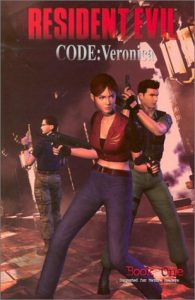
Resident Evil – Code: Veronica – Book One

Did you ever find yourself wishing that someone would write a manga-style graphic novel that comprised a blend of two parts recap to one part walkthrough of a game that was first released for the Sega Dreamcast? If so, your troublingly narrow desire has been granted in the Resident Evil – Code: Veronica series, which… well, I’ve pretty much said all that there is to say about it, haven’t I? Still, you may be wondering exactly why I’d have bothered to own and read such a thing my own self, to which I can only respond that a) I wasn’t aware of the strategy-guide-like feel of the book until I read it today[1] and b) I never did actually finish the game itself, one of the very few Resident Evil games for which that is the case (well, besides the last couple, but I was much better at it in The Past, is what I’m saying), so it will be nice to have the knowledge gap plugged in.

In case you’re wondering, the manga thing is, while largely distasteful, not a bar to entry.

[1] Seriously, it included a couple of the “take this crest to that recessed panel to unlock the next area” puzzles, not to mention an honest-to-god green herb.

Marvel Zombies vs. Army of Darkness

You know that something has become a bona fide phenomenon[1] when it starts generating its own spin-offs. Not that Marvel wasn’t already a phenomenon, but the Ultimate series and 1602 and Marvel Zombies are the kind of thing I’m talking about here. Or when Cheers spawned Frasier. So, but obviously I’m really talking about comics, and specifically still about Marvel Zombies. Because what I would not have expected was for the important people at Marvel (by whom I guess I mean Joe Quesada, but who can keep track?) to already have spawned yet another alternate earth, just slightly different from the one where the interstellar zombie plague arose in the first place, in which to insert Ash from the Evil Dead series, as portrayed by an extremely young Bruce Campbell, and let him and the Necronomicon take on the ravening heroic hordes. I mean, really?

That said, if you like Marvel Zombies and you like Ash, you will definitely like this book. He fits in surprisingly well, and everyone’s reactions to him (disdain or disgust, for the most part) really felt pitch perfect to me. And yet his charmed existence keeps him going far longer than any mortal human in the Marvel universe has a right to, even before the zombie thing is a factor. But mostly, this is a laugh. Here’s the way I can tell the author knew exactly what book he was writing, in four words: Howard the goddamn Zombie Duck.

[1] I am not endorsing this outcome, only observing it.

Powers: Little Deaths

I am still trying to work my way through my reactions to the third volume in the Powers series. We’ve previously been introduced to the world and its concepts quite well, so by now the interactions between the main cop, his new partner[1], and the superhero-related crimes they investigate are comfortably old hat. And the stories in the book (big hero dies in a way that reveals salacious sexual peccadilloes; smalltime hero and villain conspire to make their comebacks) are quite good. Yet, I found myself really disappointed with it.

And the why? I feel like I’m being unfair, with the massive amount of monthly comics from the early ’70s I’m reading right now that are frequently guilty of this and yet I never give a second thought about it there. But, my problem with Little Deaths is that nothing new happens. Did I learn anything new about the world? Not that I can tell. Was an important new character introduced that I need to keep an eye on? It’s always possible, but I don’t believe it. Detectives Walker and Pilgrim entertained me as always, but no new facet of their characters or relationship was revealed. It seems ridiculous to complain about a comic book being more like cotton candy than steak, but it turns out that I’ve come to expect substantive new material from any given book, and today I simply didn’t get that. Oh well. At least I learned Olympia (who I hadn’t heard of until he died) has a thing for redheads? Useful!

[1] Although I say it that way, I kind of think that Deena Pilgrim is the character best suited as stand-in for the audience and therefore the actual main character of the series. The probably-cancelled The Good Guys on Fox does the same thing, though without superheroes. Still, I’m not sure how to refer to a rookie cop and his experienced partner, since the X and new Y flows so much better.

Hack/Slash: Super Sidekick Sleepover Slaughter

An interesting thing about the Hack/Slash series is that is has ongoing arcs, but not one overall arc; and in that way it is quite similar to all the old superhero comics I’ve been reading these last few years. The most recent volume, Super Sidekick Sleepover Slaughter, consists mostly of a side arc in which a tangential but still minimally related aspect of the current main arc (a decades-old secret society that may be behind all supernatural slashers) takes the driver’s seat. In this case, that arc revolves around a group of teens who have found a way to give themselves superpowers. It is fair I think to say that the title has NO SPOILERS WHATSOEVER indicating the outcome of their experimentation.

Meanwhile, dark portents are afoot back at Hack/Slash, Inc. headquarters. And then, for some reason, there’s a crossover with some alternate earth half-zombie guy and a rip-off of the Marvel Zombies. So, that happened? But the rest was pretty cool. I just wish the last crossover thing had a slightly more cheese-cakey aesthetic, to make up for my being otherwise bored.

Ex Machina: Term Limits

Having reached the finale of Ex Machina’s comic run, I can safely say that there was a pretty decent superhero comic in it, and a very good political comic in it as well, and they fought like cats in a sack for the spotlight on a non-stop basis that precluded any kind of rational pacing of either of those major storyline aspects. Which is unfortunate, since it colors my opinion negatively on what otherwise might have been two differently good things. I admit to having no way to be sure whether the pacing would work better if read in a chunk, and perhaps that is relevant?

Term Limits describes the end of the ongoing storyline that explains how Mitchell Hundred got his powers in the first place as well as the looming threat to humanity that is so intricately tied into those powers, and it simultaneously describes the end of his mayoral life in New York City, and then just for fun, it follows through the next three or four years to see how he and everyone else turned out. Y’know, pretty much exactly what you would expect the conclusion of a story to do. So yay for structure. There is something about the transparency of the political and historical wish-fulfillment of the overall plot that doesn’t sit that well for me, just as it always has not, but it really is just the transparency aspect; if wish-fulfillment bothered me on its own merits, I couldn’t have sat through the first episode of The West Wing, much less the entire series. But all in all, these complaints are minor, and I’m glad I read the series.

…except for the part where I can’t help looking back on Y: The Last Man with a more critical eye now and being skeptical of its own pacing issues that I hadn’t really considered the first time. Oh, well.