Assassin’s Creed

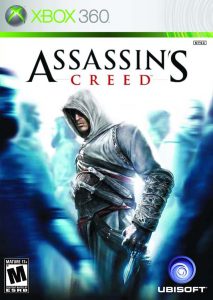
71233_frontTo be clear, this is a pretty old game. I remember reading about Assassin’s Creed in Gamestop’s magazine sometime in 2006 and being really excited about what they were doing with the cities full of random people and the ways you could run and climb and otherwise interact seamlessly with the environment, and without a lot of weird button combinations and things. Plus also the plot, which pits historical Assassins against the Knights Templar in the Crusades setting; it seemed to have a lot to offer on both the very pretty and the very cool scales. The framing story, which has a faceless but clearly very wealthy corporation essentially kidnapping a man who is a descendant of one of these assassins, because they can put him in their cool sci-fi device and use the blood link to pull genetic memories from him, seemed like it may also have been cool, but I really didn’t get far enough into the game to form a valid opinion.[1]

So, right, that part is probably relevant. Despite all of the real coolness inherent in the gameplay and plot in concept, in practice I found it absolutely unplayable. Part of this, I realize now after the fact, is that the introduction was weak and did not provide as much direction as I think I needed to latch onto the plot. The other part, that caused me to stop playing out of pure frustration, was mechanical in nature. Without a clear set of roadsigns to pull me quickly into the plot, I was still enamored of the beautiful countryside, and on top of that there were collectible items and very tall towers with expansive views to enjoy, so I started poking around into that, still perfectly happy with what was going on around me. Until I learned that any time I ran (or ran my horse) past a soldier, I would be targeted for death. It’s not like I had started murdering people yet, and it’s equally not like it was based on some recognition of me, as obviously a walking person is easier to look at. No, the designers just made a terrible decision in which any person who is running must be evil and in need of capture. And once I had to enjoy the expansive open world at a snail’s pace always instead of slowing down at the parts I wanted to explore in greater detail, or else I’d have to fight all the time? And I still didn’t really have a feel for the actual main game on top of that? It was rendered unplayable.

In the meantime, people have sung the praises of its sequels, and while nobody seemed to hate the one game-breaking aspect of the first game the way I did, everyone seemed to claim that the sequels fix a lot of other small problems that I never really saw for myself, and the whole is a massive improvement. My completionism still left me believing I might try to pick up the original again someday, but having played a few hours of its first sequel (review forthcoming, though likely not anytime very soon) and seeing that on top of my complaint, it really does feel a lot more polished and playable in ways I can’t even explain the differences for, it has become clear to me that I would only be punishing myself by going backward.[2]

Anyway, this right here? Kind of a horrible game that thankfully got another chance at life. Because the concept I loved so much? It works every bit as well as I had imagined.

[1] The wikipedia summary that I recently read tells me it probably would have been very interesting, though.
[2] Hence the wikipedia summary.
BioShock 2

It’s been rather a long time since I finished a game, though thankfully not as long as it’s been since I finished BioShock. All the same, definitely too long. But over the past few weeks and culminating in an enforced snow day on Tuesday, which is slightly ironic when you consider that I never bothered to get the plasmid that lets you freeze people into ice sculptures, I played its unimaginatively-named sequel, BioShock 2, to completion. It seems overly harsh to proceed by saying that “unimaginative” was a convenient choice of word since it can serve double duty by also describing the gameplay, which has a few cosmetic changes but nothing especially new. Honest, yes, but harsh; and I think that feeling of harshness stems from the part of my brain saying, “well, it’s a sequel, of course the game play is the same. That would be like complaining that Halloween II had a tall guy in a mask who went on a murderous rampage while trying to schedule a family reunion![1]”

If, like me, you accept my brain’s premise there, the really important question is, how does the game rate on the basis of plot and theme? And the answer to that is a little complicated. BioShock, as you may remember, was unapologetically cruel to the objectivist philosophy described by Ayn Rand. Or, depending on your perspective, it was compellingly accurate about the end results of objectivism run amok. BioShock 2 seems on the surface to be written as apologism for that cruelty. At least, the simultaneously cartoonish and ham-fisted portrayal of Sophia Lamb as Andrew Ryan’s philosophical nemesis reminded me so much of the strawmen used by Terry Goodkind throughout his Sword of Truth series that I assume the main point of BioShock 2 was apologia.[2] “That doesn’t sound complicated at all,” you are no doubt thinking. And you’d be right, except that there are moments of real brilliance (mostly in the end game[3]) that shine through that muck and leave me considering aspects of both the original and this game all over again in that light. So, yeah. Complicated.

[1] Insofar as, y’know, of course he did, that was the whole point of it being a sequel.
[2] There is every chance that this is a real word, and a slightly lessened but still significant chance that I’ve just used it correctly.
[3] And therefore firmly in the territory of spoilers. See the ROT13 comment I’ll leave by tomorrow for more detail.

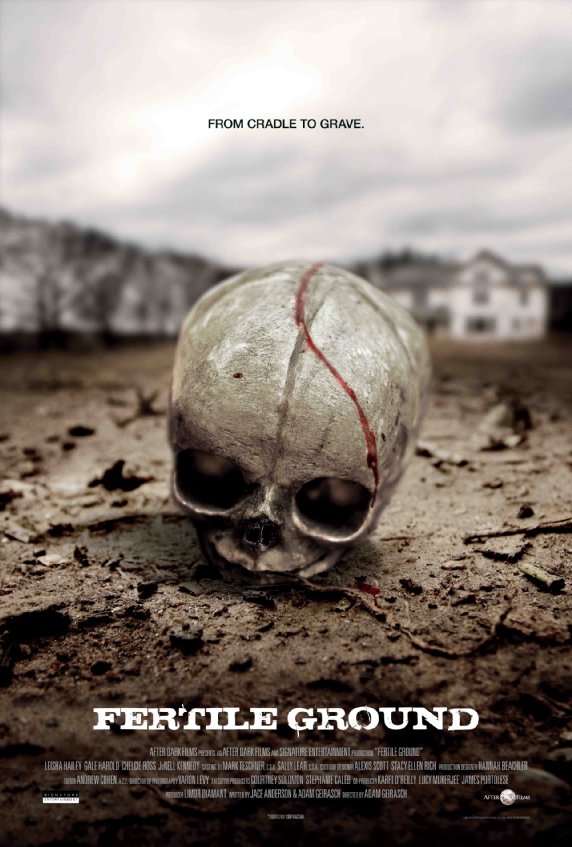
Fertile Ground

MV5BNTM4MzM1NTg5Ml5BMl5BanBnXkFtZTcwMzMzNjM1NA@@._V1__SX1859_SY847_And, right, the last movie on the docket? My hopes were dashed, it was not a sex- and drug-fueled teen massacre. Still, there at least was nudity; only once out of five different films in the genre is a little hard to believe. Not as hard as zero out of five would have been, though! Fertile Ground is a good old-fashioned possession ghost story, with a bit of a pregnancy twist. It rated really well on the tension scale, and decently well on the creepiness scale, and I was actually relieved that the lead actor who looked like Nathan Fillion wasn’t actually him; he would have been entirely too frightening[1], compared to this guy who was merely competent. But it had the same problem that most haunting stories have in modernity, which is that the characters stay in the range of the haunting past the point of all reason. Even though our heroine had an excuse in this particular case, it was only enough to carry her through the first two thirds of the movie. I cannot think of anyone I know in a similar circumstance who would have stayed for that last week or so.

Still, if Accepting the Premise were really a big problem, I could not enjoy this entire genre, so, y’know, no big. Plus, it had a valuable life lesson, which is that you should not turn around a blind corner while leading with a butcher knife. I just wish the ending had been as strong as the lesson.

[1] If you think I’m wrong, it’s because you maybe didn’t see his turn in the last season of Buffy, or have forgotten just how intense Malcom Reynolds is when angry. And he’s still a good guy then!

Seconds Apart

MV5BMTYyNzUwMDg4MF5BMl5BanBnXkFtZTcwMjMzNjM1NA@@._V1__SX1859_SY847_A thing I am forced to admit I didn’t care for in The Task is that it marked the continuation of a trend that remains unbroken by my viewing of the night’s other movie, Seconds Apart. Despite being 75% teenager-centric, not one of these movies has yet been filmed in the traditional slasher vein, full of stock characters who exist only to have pre-marital sex, drink illicit alcohol and/or consume still more illicit drugs and therefore demonstrate to some killer, supernatural or otherwise, that they deserve gruesome death over the course of a single, probably stormy, night.

And I feel a little guilty about that, because most of these movies have had something pretty compelling in them, and if there’s anything I should be happy about, it’s when people are making good horror movies. For instance, in this movie, they examined a truth that I feel is usually ignored in all the annals of cinema, and also in real life for that matter: identical twins are damned creepy. Sure, they can function in society and all, and many of them are probably quite nice, but all the same: creepy! They’re, like, nature’s clones and shit, am I right? And this is just the regular ones, much less ones that seem to be able to force other people into committing suicide as part of a personal, ongoing film project.

This would have been the best film of the weekend, if not for the fact that Orlando Jones'[1] investigating police detective spent so much time on his own (uninteresting) issues and backstory, instead of just acting as a stand-in for the audience. As it is, most of the movies have been about equivalent, and at fairly high quality water mark. Which is all well and good, but I still feel like I deserve a deliciously, hilariously bad horror movie in which the budget for gore outpaces the budget paid to the actors and the scriptwriter combined. Maybe tonight?

[1] You may, and by that I mean I did, remember him from his Sprite (or Seven-Up?) commercials in the ’90s. You do not remember him from his androgynous turn in the Jackson Lord of the Rings movies; that was someone else.

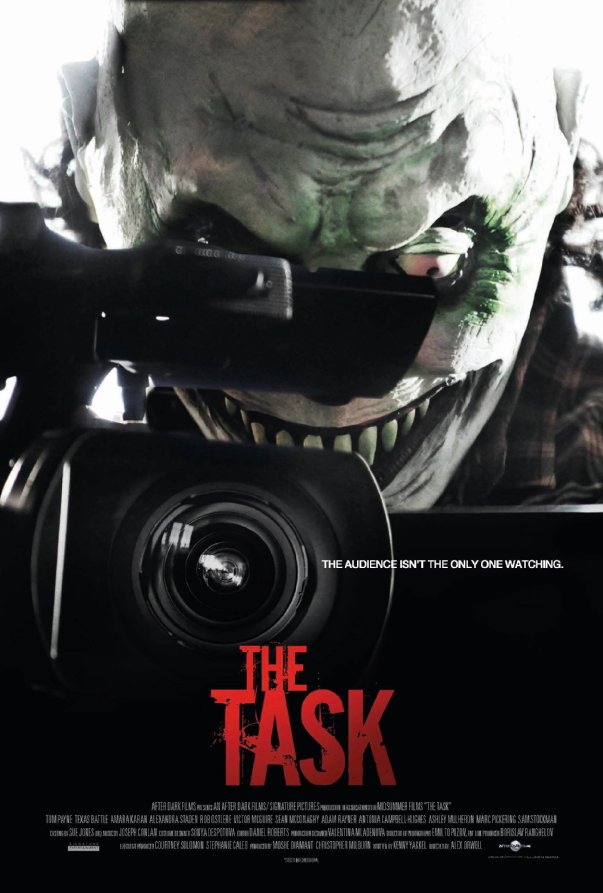
The Task

MV5BNzUzMDExMDUzNV5BMl5BanBnXkFtZTcwNDMzNjM1NA@@._V1__SX1859_SY893_Last night, as foretold in prophecy, I saw a couple more of the AfterDark Originals films. (Horrorfest really was a much better name.) The first of these was The Task, which documents the production of a reality show set in an abandoned, blood-soaked prison. The generally unlikeable contestants must spend a stay through the night while performing various tasks centered around their previously professed greatest fears, in exchange for valuable cash prizes. Despite this rather distasteful premise[1], it turns out to have had quite a lot going for it!

Things of which I approved, in no particular order, were 1) the right proper evil backstory of the place, complete with abusive warden and suicidal prisoners, 2) the unrelenting tension and creepiness, 3) the believability of the characters despite that I’ve complained about this elsewhere, and especially 4) the probably best moment in the movie when the show’s producers decide that the guy who unexpectedly shows up in the prison to start screwing with their contestants that looks just like that prison warden and none of them seem to remember hiring is probably just a plant by the network to create an added level of “reality show” to the proceedings, this time with themselves as the victims of the premise.

S’pretty good!

[1] I believe the main cause of my distaste is how very plausible it seems that this show could (or indeed, already has?) pop up on my television someday. Well, that and how well-drawn the contestants were. You know, on the scale of reprehensibility.

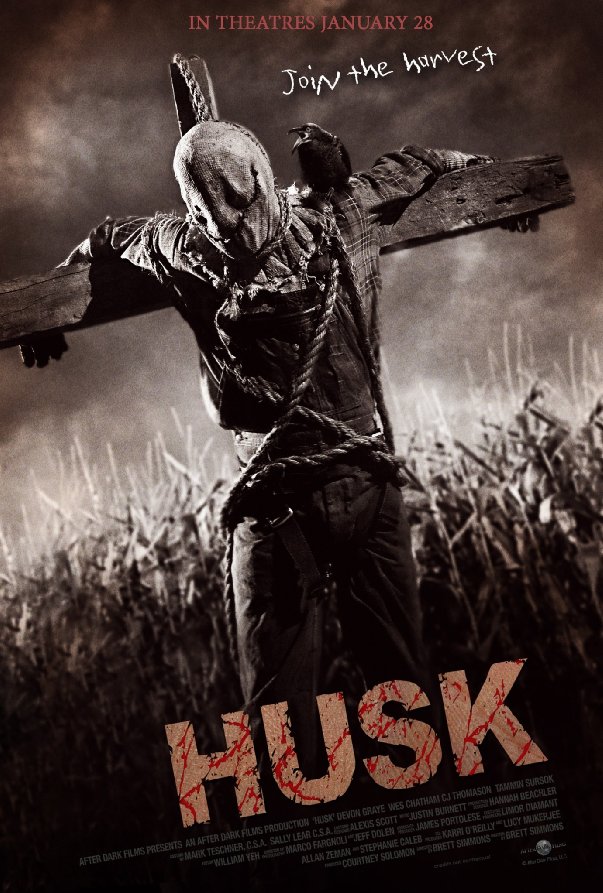
Husk

MV5BMTMwOTQ0NDgxM15BMl5BanBnXkFtZTcwOTQ3MjY4NA@@._V1__SX1859_SY893_Tonight’s second movie, Husk, had all the makings of an old-fashioned splatterfest: teens in a van (okay, it was a truck, but it had van-like qualities from the interior camera angles I saw) discussing how they will be finding the girls who played strip poker at last year’s lake house party as they drive past some creepy corn fields. Then, to my surprise, it immediately defied expectations by veering off into a spooky and atmospheric ghost story, one that managed to include a murderous scarecrow without being ridiculous.

So, and this clause constitutes a spoiler alert, one of the key plot elements is a Cain-and-Abel story. The reason I mention this is that there was a random crow hanging out on the porch of the creepy house (that inexplicably wasn’t the house from either incarnation of the Chainsaw series) throughout the second half of the movie. And whenever I would see him, I would try to find a way it would fit the story for him to somehow be Matthew the Raven. I never really managed it, but the fact that I was trying to see my way clear to it should indicate the relative quality of the film more easily than any more relevant positive I could toss out.

All in all, while I really had been looking for it to be a brain-numbingly horrible slasher pic punctuated throughout by gratuitousness of every flavor, you’ll never hear me complaining about a movie that is instead actually a little bit scary, and far less so about one that puts me in mind of The Sandman.

Prowl

It’s been a long time since I made reference to the AfterDark Horrorfest; that’s because the fourth one didn’t have a theater in Dallas, so I missed it last year. And then there wasn’t ever a fifth one. Except, there kind of was after all? They renamed it, and it doesn’t have a number attached anymore, but it is nevertheless happening this weekend. Well, five of the eight movies are, anyway. In many ways, this is convenient for me, as eight would have been a lot harder to accomplish. Much less the marathon of reviewing I’d be doing. (Not that this will be nothing.)

The festival definitely started off right this year. I don’t necessarily mean because of the contents of the first entry, Prowl, so much as because of its first scene, which showed a blonde girl running in terror through a dark forest. You basically cannot describe a more iconic horror movie image than that, you know? The problems after that are hard to pin down. The premise certainly works: a girl with dreams of escape from her small town life enlists the aid of her friends on a road trip to the big city, until circumstances conspire to place them square in the middle of a horror movie. The acting was fine, although very few of the characters had a chance to do much acting.

I think I have to blame the pacing. After all the trouble the script went to to rapidly isolate lead character Amber and leave her free to live or die on her own strengths, it… just stopped doing anything interesting. There are no pivotal moments of strength, or cunning, or bravery. Okay, there’s a half-hearted swipe at revenge, but mostly there are just a lot more shots of her running through moonlit factoryscapes, and as well as that works for setting a mood, it rapidly loses its charms as a full-on plot and character element. By the time the admittedly cool third act turn occured, it didn’t seem like anyone in our theater had it in them to care anymore.

Love and Other Drugs

The sad part of the whole story is that I really only went to see Love and Other Drugs because I’ve had a crush on Anne Hathaway since Ella Enchanted, and she was reported to be extremely hot in this film[1]. Instead of the romantic comedy I expected, I ended up watching a heartfelt, romantic struggle against the odds set against the backdrop of the late ’90s pharmaceutical boom. If it happened to be funny now and again, so is every movie and every real life situation, for that matter; this doesn’t make them comedies! Enough with the pigeonholing, Hollywood advertisers. But, anyway, where was I? Oh, right, the movie: Jake Gyllenhall plays a young rising star pharmaceutical representative, in the heady days of Prozac, Zoloft, and of course, Viagra. If you’ve ever seen one of these people out in the wild, you know they’re all sexy, driven young professionals who haves sales in their blood, and the only things that like more than money are alcohol and intercourse. So, he’s like that, and then he meets an early-onset Parkinson’s patient, Anne Hathaway, who sees right through him. They clash, and then they, um, clash, and then, you know, the romance part of the movie kicks off. And from there, all the characters worth paying attention to[2] evolve in relatable ways while telling a story that left me jealous, introspective, and a little moody, instead of riding on the high of naked Anne Hathaway. Which, seriously.

Probably, this is no more than I deserved.

[1] Well. That’s just not true. She’s extremely hot in every film, but she was reported to be naked in this one. Plus, the previews looked interesting; I mean, I have the internet if that was really my only goal.
[2] You might think I mean both of them, but I consistently enjoyed Hank Azaria and Oliver Platt, too. Good supporting cast, really!

Saw 3D

Saw 3D is, they say, the last Saw movie. It is important to note here that lots of horror franchises have made this claim before, and it is almost never true. But I am forced to judge the movie as though it is true, since that has importance in considering not just it for itself but the franchise as a whole. I say that last part because Saw is as far as I’m aware unique among horror series for having maintained a single coherent narrative throughout its run, a feat which has always caused me to give it a goodly amount of respect. There was this guy, and he got cancer. And it made him angry, because he was going to lose his life, while people that he interacted with were so careless with their own lives. So he got the idea to put these people into situations that forced them to make painful, committed choices in order to live. Most such people died, but some survived, and were usually a lot stronger for it.

The last movie is explicitly about that, although Jigsaw’s survivors have always been important to the story as a whole. But in this instance, they have formed support groups, one of them has written a book and gone on tour, it’s really a whole theme. Quite a bit more compelling than last year’s indictment of the American healthcare industry, if only for being so much less hamfisted. So, there’s an interesting narrative. The devices, for a change, did not really impress me that much. They were every bit as squirmily uncomfortable to watch, don’t get me wrong, but they just didn’t feel as inventive as previous such deathtraps have been. But like I said earlier, the most important question is this: did the series as a whole come to a satisfactory conclusion?

Well, that’s a tricky question to answer. If you are looking for some kind of overarching lesson, or a note that neatly closes the theme that was played so heavily for the events of this specific movie and that loomed so large over the series as a whole, the one about being mentally strong enough to choose life? I don’t think it managed that.[1] If you are looking for narrative closure, that I think was achieved, and I’m glad to have seen it done. If you’re looking for a slight crack in the closed door, some light allowing for another sequel after all? Well, of course there was. It’s a horror movie. Duh.

On a technical note, the 3D right at the beginning of the movie had some severe issues, and the fact that they cleared up so fast makes me think this might be a limitation of the format, not the people processing this particular film. The opening scene involves one of the iconic traps, in a glass-enclosed room, in the middle of a public space where passersby can observe what is about to happen. As a result, there are a large amount of reflections as the camera looks in one direction or the other through the glass. And the reflections cast onto the glass really screw up the 3D effect badly. I think it is because the reflections have some amount of depth that they would not have in a real world situation, and then my eyes freak out because it looks so wrong? I’m not sure that’s what it was, only that my eyes were freaking out over whatever cause existed. So, 3D film-makers? Fix that, or avoid the situation. That is all.

[1] More to the point, I don’t think it tried. I wonder if they saw no way to do it, or if it didn’t cross their minds that they should have? Because if that had happened, I would have to be singing some praises right now.

Jack of Fables: Jack of Hearts

The brilliance of splitting the Fables series by giving Jack Horner his own spin-off is that the mainstream series is free to switch to an all serious, all continuity focus while giving fans of lighter fare a place to go for that. I like both, don’t get me wrong, but all the same, I like them better separately than together, because now I know what to expect from each storyline, instead of guessing whether the next book will matter to the plot or not. (This theory probably falls apart entirely for people who read the individual comics instead of the collections, but I’ve got to say that I’m really glad the graphic novel format exists; as much as I’ve enjoyed my Marvel readings over the last years[1], the modern trend toward extended storylines fits my pleasure a lot better than changing focus every issue or three. Whether the graphic novel format led to or from extended storylines is a question for historians.[2]

The downside of reviewing a book in which you already know that the plot will be played for light comedy (nevermind how brutal or violent individual moments might be) is that probably nothing will really change, and there’s not a whole lot you can say about it except for spoiling the plot. So, to the minimal extent that I’m willing to do that, Jack of Hearts follows immediately from the events of the previous story, where Jack takes the time to tell his fellow escapees the possibly true story of how he became Jack Frost and the heads off to the warmer climes of Las Vegas, in pursuit of the two things it has in the most abundance, love and money.

On the bright side, though, the potentially very interesting story of Mr. Revise, the guy from the last book who has been capturing fables in order to remove them from pubic memory? It is not only not over, but figures to be the main arc of the Jack of Fables series, much as the war against the Adversary is the main arc of Fables. I really look forward to seeing where all it goes, though I trust Jack will stay for the most part light and comedic. Otherwise, it’s just a new series entirely, which defeats the purpose. Well, the one I laid out for it, anyway. Oh, and unrelated to almost anything else I’ve said about the book, I really hope to see more of Alice in future volumes.

[1] I’m in 1974, except that I went back to catch up on Daredevil, where I’m trapped in 1968.
[2] So, Fresh Air has a rock historian, right? I wonder how long until a show on NPR has a comic historian, and I also wonder why it cannot be me.[3]
[3] So, okay, there are a lot of really good reasons why. But still, what a cool job. If it existed, I mean.