The Texas Chainsaw Massacre: The Beginning

“Ah,” you say, “but you told us it was a double feature, and now a day later there’s still only one movie mentioned.” (See how I pretend I have daily readers? It’s downright adorable is what it is.) Well, you’re right about that. As it happens, I saw a second movie, which had not quite as much irritating pun potential, but still more than is preferable. The Texas Chainsaw Massacre: The Beginning is, on the face of it, a seriously pointless movie. It’s a prequel to the remake of a movie that itself had two sequels. Mind you, the remake was very good as remakes go, though it simply couldn’t live up to that original film, which was filled with non-stop tension that only old-school grainy filmstock can provide, as well as (I’m pretty sure) the single most annoying wheelchaired character in the history of film. It’s possible the latter part isn’t a selling point for everyone, but I like it when my movies are superlative in some way. Of course, Chainsaw is superlative in more than one way, so that’s good too.

Anyhow, that was the face of it. The reality of it is… well, there’s a 15 or 20 minute short subject film in which most of the beginning is explored, true to their words. Then it turns into ‘Let’s kill some pretty hippies and/or bikers!’ for the next hour; while that’s what one should expect from a movie in the Texas Chainsaw Massacre franchise, it does seem like a pretty thin premise on which to hang a prequel. And they’re not even naked hippies. What is the Vietnam era coming to, these days? Anyhow, after the hour, there’s a little bit more with the prequel bait, and I’m have to say that they finally managed to get an iconic moment in there. Although I’ll admit to watching anything with the word ‘chainsaw’ in the title, I’m still willing to say with authority that as sequels and prequels go, this one at least falls above the 50 percent mark, and if you’re only including horror movies, it easily gets a passing grade after the curve. After all, it was merely not very pointful; it was still competently plotted and filmed.

Saw III

More awesome by far than merely seeing a movie after a long drought is going to the drive-in and seeing a horror film double feature. (For one thing, it’ll make good practice for next weekend.) So, of course, that is what I did. The Galaxy Drive-in in Garrett, TX is far enough outside DFW to cut down on the light pollution, and the food is just barely on the correct side of tolerable. Result: an opportunity to step back in time and realize that the old method of watching movies was… okay, terrible, because seriously, who wants to have their windows open during the time of year when it’s dark enough to watch movies at a reasonable time, and then listen to a mono movie-track? But it’s okay, because you can leave the windows up and tune in on the car radio instead. The potentially inferior sound quality versus the cineplex is more than made up for by the ability to control the volume and other sound settings, and best of all, the ability to hold conversations about the movie at any volume you feel up to, with nary a shush to be heard, or for that matter some other rude sonofabitch who won’t shut up during the film.
Although the majority of movies are drive-in acceptable, of course the best options are horror films. So, like I said, I went and… saw a couple. I can already tell where this is going, having had experience with it before. So I’m saying right now, just don’t start. The first movie I, um, viewed, was Saw III, a franchise that is quickly turning into a Halloween staple. Picking up right around the point where Saw II ended (which is sensible when your antagonist has a brain tumor and tends to be hovering right at death’s door throughout the series), the movie follows the actions of serial killer Jigsaw, who to all appearances has started to cheat his victims. In the past, he has always provided them with an escape from the deaths he has arranged for them, if only they have the will to take it. But the last few Jigsaw deaths have been murder, pure and simple.

That’s the backdrop, though. The main plotline is pretty familiar from the original movie: a doctor and this other guy are provided with different sets of information and tasks and are then set on a collision course. And might it be that they’ll turn out to be connected on a deeper level? That’s a broad stroke; the details are quite different. But it’s still a noticeable trend. As usual, Jigsaw has set up a game, with rules, and woe be to the person (perhaps even Jigsaw himself?) who chooses not to follow them. Although this was not as good as either of the other two entries, it still had the flashes of psychological brilliance that are the hallmark of the series. Well, and the naked people and the buckets of blood, of course. And the cringe-inducing death machines.

Borat: Cultural Learnings of America for Make Benefit Glorious Nation of Kazakhstan

That thing where I haven’t seen a movie in forever? I aim to remedy that. In fact, I’ve already made a bit of a start. Of course, my start was kind of unexpected, in that I went to see a movie based on a character from Da Ali G Show, which I thoroughly disliked the one time I watched it. But it was a group friend outing, and I haven’t been to anything in so long that I went for it. Plus, the previews have amused me from time to time. Plus plus, I read a review of it by someone I trust, which let me know that despite the majority of the people on film not being aware it’s fake, there is still a coherent plot during which characters grow and change. Well, okay, that might be taking things a bit far, but the plot is coherent.

Our hero, Kazakhstani newsman Borat Sagdiyev, has been sent by his country to America to film a documentary that will use us as an example to teach them how to become a great country that can overcome its problems (economic, social, and Jew). Along the way he meets a lot of people, demonstrates that they are perhaps even more racist and sexist than he is, and falls in love. Except, of course, that the joke is on all the people he encounters, because he’s only pretending, and they really, really aren’t. It’s a weird movie, in that I spent equal time laughing and cringing, sometimes at myself for laughing. I’m going to steal the metaphor that sold me on the movie, though, as it explains it better than anything new I could come up with. Sacha Baron Cohen is playing a game, with his subjects and with the audience. It is possible to win the game, but only by either rejecting most everything that he claims to stand for, or else by understanding the joke and spending most of your time laughing (but still cringing, a little, for the sake of humanity) at the people who are losing the game. And my word, how easy it was for him to find people willing to step up and lose big. And without even the excuse of not knowing they were on film at the time.

In any case, I can easily see why it’s not for everyone, as nearly all of the humor has the potential to make you uncomfortable. But Borat the character is endearing despite how awful he is, and unlike most of the folks whose path he crosses, he even seems to come out of his journey a slightly better person. As, one hopes, will most of the people leaving the theater.

Agyar

The most awesome thing about travelling, aside from the destinations tending to be filled with people that make me happy (because, apparently I am a traveller for visits vastly more than I am a traveller to see new things; I don’t think of that as a bad thing, because while I may eventually fail to see the world (but I may not! it remains to be seen (ha! I just got that)), I’m also pretty much guaranteed that every trip will be a good trip; but I digress), is that it leaves me with far more time to read than I have in my normal life. Mostly while sitting around in airports and on airplanes at way too early in the morning, it must be admitted, so I also use some of that time to sleep. Nevertheless, between long works hours, good things on TV, and moving (mostly moving, and I am so very, very ready to be done, I can tell you), I’m left with only wee amounts of time to read, usually at lunch or right before falling asleep. So that airport time is pretty awesome indeed.

As a result, I’ve already finished another, albeit short, book. It’s by Stephen Brust, so you’d think it would be Dzur, but I keep forgetting to look for it in the used bookstore, and I frankly have too many books in my pile to justify buying it new right now. (That’s probably not true, and I bet that as soon as I remember to go to Amazon and snag Lisey’s Story, I’ll get Dzur too. Or I could go back and reread the rest of that series first, but that seems unlikely right now too. So. It is a quandary. And man, can I not stay focussed today. My employer must be thrilled.) Anyway, what it actually is is Agyar.

It’s interesting. The eponymous John Agyar is writing the story out on a typewriter just for the sake of writing it. He has no particular audience when he starts, although he occasionally acquires one; mostly the ghost with whom he shares his house, an ex-slave named Jim. (I spent a fair amount of time wondering, incidentally, whether I’m meant to believe we’re referring to Huckleberry Finn’s Jim, here. Ultimately, I could not decide either way.) He is chronicling his short-term stay in suburban Collegiate-Anywhere, Ohio just for the sake of doing so. It’s not that he’s an unreliable narrator so much as that he doesn’t present information that he takes for granted, only information that is novel or exciting to himself. I don’t think I’m going too far, therefore, to say that there’s a fair amount of information that is left for the reader to unravel from context.

So, that’s how the story is presented. As for what it’s about? It’s a combination of murder mystery, love story, and study of unhealthy power relationships. Nearly every character is in some way despicable, and nearly every character has the hope of and chance for redemption. So I guess what I’m saying is that it’s populated by, y’know, actual people. Which is not as common as it could be in the fantasy/sci-fi section of any given bookstore. Plus, the story was interesting and the prose quite good, which is not as common as it could be in the general fiction section of any given bookstore. My point here is ‘yay’.

Watchmen

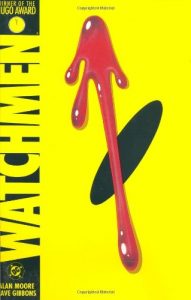
And so I continue through my list of genre greats. I avoided reviews of stuff while I was reading these, because I’ve mostly been able to not spoil myself on any given comic up to now, and it would be pretty awesome to not do so now that I’m actually reading lots of them. But I’m pretty sure that any random review of Alan Moore’s Watchmen will tell you that it’s a seminal masterpiece, or a watershed moment for the genre, or some other such reviewer-speak for ‘I liked it; now, you must also like it’. So, I’m going to cut to the chase: I liked it. I am enlightened enough to know that my tastes are not universal, for some inexplicable reason, so I will not proceed to tell you must also like it. But you probably will.
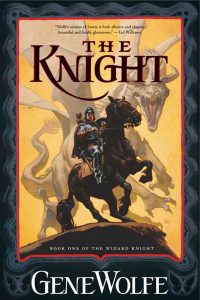
Now is where a weekend of debauchery is causing me to struggle to remember what kinds of things I can say about it. In short, it’s an alternate history where the comic book heroes of the late 1930s caused real people to start donning masks and outfits and engaging in enlightened vigilantism. Which was all well and good until the second generation of costumed heroes in the 1960s changed the world in drastic ways; by 1977, nearly all of them had been outlawed. Now, in 1985, the world hovers on the brink of catastrophe and, as ever, only the heroes can save the day. The problem being, most have retired; one still operates due to his uncompromising moral code, despite being more wanted by the law than most of the criminals he continues to take down. And of the two who are still government-sanctioned, one has just been murdered. The most important question being, was it random, or was it part of a far-reaching plot to neutralize any and all of the heroes who might yet be willing to step in and stop the clock before proverbial midnight?

Okay, I’m forced to admit that wasn’t short. And yet I’ve barely scratched the surface. That’s because the book is about almost everything: the relationships among heroes, of course, and between heroes and the public they serve or menace (depending upon who you ask); from where power most justly derives, and to where (“Who watches the watchmen?”); whether governments or lone vigilantes, either one, can justly use the power they have rightly or wrongly acquired; and whether it is permissible to sacrifice the few to save the many, at both the macro and micro level. Less thematically, it’s about how close to the brink of nuclear war we really were in the 1980s, and about noble last charges, and about allegorical pirates. In the words of a certain pirate in the current popular consciousness that, when taken allegorically themselves, very nearly fit: “You’re off the map. Here there be dragons.” And as much as I really approve of maps, the most interesting things happen when off them.

The Knight

Hard to believe, but true: I actually haven’t done anything in the past month or so. Well, okay, completely untrue. I’ve done lots of stuff in the past month or so. But they’ve all involved being at work a lot or hanging around the house catching up on my TV watching (alas, not reviewed here; but you should be watching Veronica Mars) while my house guy makes various improvements or moving stuff from my storage unit to my house and unpacking and sorting and cleaning and the like. What I haven’t done is play more than about 10 hours of video game total, or watch any movies, or finish more than one book.
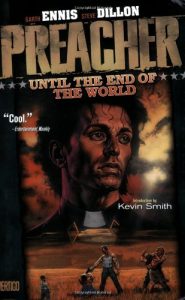
Luckily, I did finish that one book, earlier in the week, and that means I get to be here and talk about it. A long time ago, we used… no, that’s wrong. A long time ago, I was in a book club in San Jose. It met for (I want to say) two books. But one of them was the first part of a Gene Wolfe series, the Book of the New Sun. And although I can remember few or none of the plot elements at this particular moment, I distinctly remember liking the main character, the setting, and the prose. A lot. So I’ve had this low-grade interest in Wolfe ever since. And now, I have finally exercised that by reading the first of his most recent pair of books, The Knight.

In what is apparently a common theme of Wolfe’s writing, the eponymous knight is a first-person narrator of dubious reliability. Despite his size, strength, and apparent wisdom, he is in reality a young boy (no older than teenaged) who wandered off unsupervised one day, Alice-style, and found himself in a fantastical (and apparently multi-dimensional) medieval world; and who, a short time later, found himself grown to adult size via enchantment. So, like any boy probably would, Able determines to become a knight and seek adventure and the favor of a lady.

And now, an undetermined period of time later, he appears to have found a way to communicate with his older brother back in America. The story is entirely his very long letter to that brother. Unfortunately, Able still has the mind of a child. He presents information haphazardly and out of order, often whenever it occurs to him without respect for the narrative flow. What he finds important is not always what the reader would, and he puts his trust and faith misguidedly at times. The result is a mish-mash of fact and speculation and almost certainly outright fiction, too. (I mean, internally fiction.)

I say all this like it bothers me. It really did not, though. Sure, it’s a little bit harder to read and work out exactly what’s going on, but I’ve always gotten something out of puzzling out events and peoples’ motivations and so on. It’s like history; it can’t always be clean and orderly and straightforward, because history (and books) are populated by humans who are flawed, wicked, stupid, and often many of these at once. Unlike history, it’s also rife with metaphor, allusion, and dreamlike fairy tale prose. I can dig it.

Preacher: Until the End of the World

When last we saw our hero, preacher Jesse Custer, he was on his way back to Texas to follow up some leads on the whereabouts of God, who to Jesse’s way of thinking owes him an explanation or three. But if there’s one thing that can get in the way of a perfectly good spiritual quest, it’s family business…
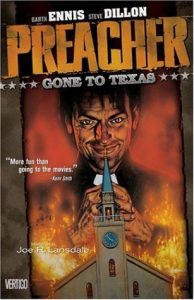
I said that unless something went horribly wrong, I’d be buying more of this series. I can say with a great deal of assurance that something has gone horribly right. Until the End of the World, the second volume in the Preacher series, ratchets up the sex and the violence and the fiery theological debate, and adds in family themes with depth that would feel right at home in a Gaiman comic and a love story that could measure up to anything written by S. Morgenstern. Can I hear an Amen?

Also, I’m really curious to discover what Skwid was referring to by conspiracy theories. So yeah, I’ll be ordering more of these as soon as I can feasibly do so, I think. In the meantime, still a couple of entries in the gift pile yet to go.

Xombies

Here’s what makes zombies work for me. They are the perfect mixture of two of my favorite subgenres of fiction: horror and global catastrophe. There are bits and pieces of specifics, but that’s the lion’s share of the appeal, right there. The fact is, I get a childlike glee out of both the idea of an empty world and the idea of an unstoppable plague of the undead. One presumes that my actual reaction to such events would be, at the least, more sober and thoughtful. It remains to be seen!

The point of all that being that I’ve found a book that breaks with all previous reader conventions on my part. Xombies is the story of the end of the world at the hands of all women of childbearing age, who all at the same time became blue of skin and started to perform the function for which zombies are second-best known: killing everyone within the reach of their arms and replicating themselves. And it is the story of the aftermath, the struggle for survival of dozens of military men tasked with saving civilization and the hundreds of boys who managed to come along for the ride. And of course it is the story of our narrator, a seventeen year old girl who, thanks to a medical condition, is unable to menstruate and is therefore immune to the initial phase of the disease. (Nobody, of course, is immune to the methods by which it is spread.)

There are layers upon layers of depth to the story. The point that only menstruating women initiated the disease was not lost on me; neither was the bitter irony of the narrator’s surname being Pangloss. Inevitably, I skipped by many of the layers, because, English degree or not, I’m a pretty simple guy at heart, and I mostly wanted to see how the world ended and how our heroes survived it. I’d probably consider going back and reading it again sometime in the near future with an eye on plumbing the depths more fully, except, as I said, it broke my conventions for this genre.

At no point, from the first few chapters through the climax, was I filled with childlike glee at the end of the world. Instead, I was filled with the thick, choking oppression of an actual world’s ending. The sense of things winding down, of people losing purpose and hope hand-in-hand, of the inherently contradictory senselessness of the situation: all of these things accompanied me throughout the book. Having gotten an impression of what the end of the world would really feel like, I find that I prefer my childlike glee. So I probably won’t read it again anytime soon after all. It was good, but not spectacular enough to overcome the unpleasant feeling of reality.

Preacher: Gone to Texas

When I received all of these graphic novels, it was in response to my thinking aloud over a period of time as to how I have so little grounding in especially the history and high points of the comics universe, despite knowing pretty well what’s going on in any given movie. So, I got some old stuff as well as some landmark entries. It could be that the Preacher series is such a landmark, but it could also be that my fascist friend was simply tickled at the idea of a violent theological epic playing out in my home state.

Whatever the case, Gone to Texas, the first volume in the Preacher series, is an excellent book. A Romeo and Juliet story on a slightly larger scale than Verona results in a small town preacher with a murky past given power that is on the same cosmological scale as God’s own, or so it seems for now. Together with his ex-girlfriend and an Irish fellow with an aversion to tanning, he starts on a quest to find God and ascertain why He has abandoned His creation to the forces that have affected him so drastically, and which most recently have unleashed an unstoppable killer to end him for good.

The story is by turns horrific and hilarious, amoral and yet with an unshakeable sense of justice that nevertheless allows for the unlikelily absurd. And best of all, there’s no question as to whether you want to know what’s going to happen next from issue to issue, and frankly from page to page. After the trouble I had following the Dark Knight, I was pleased at the skill that must have gone into making each page chapter-like in its self-containedness. Not to mention that the art is pretty traditionally interpreted as well. Which it should be, because it allows the gruesomeness to be viscerally felt instead of disguised by the stylistic art that’s present in so many other graphic novels I’ve read.

I only have two of these, and I think there are nine in the series. Unless something goes drastically wrong with the second volume, I’m going to have to buy the rest of these and see how it turns out.

Blue Moon

I’m not sure what happened, here. I’d swear I waited longer than a month or so between the vampire porn this time. And yet, the evidence suggests I finished the last one no later than the beginning of August. Perhaps it’s some kind of compulsion. Because I know, I know I was going to wait longer, and then I thought I had. I’d still think I had, if the evidence wasn’t right in front of me. All I’m saying is, this can’t be a good sign.

Anyhow, I read Blue Moon. One thing good I can say for it is that the plot was vastly improved over the last one. Although aspects of it were a bit predictable, I definitely wanted to find out what was going on and how it would all end. Another thing I can say for it, which may as well be classified as good, is that it really lends itself in visuals to a comic format. Now, sure, I’ve been reading a lot of graphic novels lately, so I may bias in that direction. But I haven’t noticed it with any other books, plus the art style in my head does not match the art style in any of the graphic novels I’ve been reading. There may have been a third good thing. If I remember it, I’ll probably edit these lines out and replace them with the thing. But don’t hold your breath.

The plot, then, which I have deemed good: an unscrupulous and wealthy fellow is trying to acquire a piece of land for what will no doubt turn out to be nefarious reasons. Unfortunately for him, a post-grad research team is observing a tribe of peaceful trolls with sentient characteristics that live on the land. Even more unfortunately for him, one of the post-grads is the werewolf ex-fiance of our perpetual necromantic heroine, Anita Blake. So when his tactics to remove the research team from the area (so he can dispose of the land as he sees fit) go beyond the ‘Pretty Please’ phase, he’ll no doubt discover what a mistake it was to mess with anyone that Anita feels a tie to.

As for the bad stuff, well, it was basically everything that occurs in and around the plot but isn’t directly related to it. For one thing, there is no more porn bloat. This is actual porn. Sure, Ms. Blake has the excuse of a vengeful spirit inhabiting some portion of her psyche for actively seeking a hard lay from anyone close to her (including, in one memorable event, an entire werewolf pack). But that only excuses her. The book, on the other hand, has none. Along the same track but even worse, through her ignorance, the audience is provided with exposition illuminating BDSM terminology. I really fear for what will happen in the next book, since there was no payoff in this one. (I mean, people can live their lives as they wish, and I don’t judge, nor do I confirm or deny my own opinion on the topic. All I’m saying is, it does not make for compelling literature.) And we’re informed that Jean-Claude (the main vampire of the series) gains power through the sexual pleasure of people around him. (No payoff and correspondingly more fear for the future on this one, too.) Worst of all, though, Anita has graduated to full-blown Mary Sue status.

You know, I say that’s what’s worst of all, but it isn’t. If it was just the necromancy stuff, I could see it as growing powers where each step along the series made logical sense. But the werewolf stuff, in addition to appearing without much logic involved, doesn’t really add anything to the stories that’s at all necessary. This book could drop about a hundred pages to be as long as the first one in the series, and it would be much better as a result. So the worst part isn’t the Mary Sue thing, it’s that there’d still be a story without it, and not only that, a fairly good one. Instead, Anita seems to live in a consequence-free world where her biggest problem is whether one or the other of her boyfriends will be jealous when she has sex with someone other than him. She can stop anyone around her from dying, kill anyone in her way, and nobody seems to mind or expect much different.

And yet, God help me, we all know I’ll have read the next one by November at the latest. What is wrong with me?