Category Archives: Words

Ultimate Avengers Vs. New Ultimates

I guess this Death of Spider-Man thing is the next big Ultimate event, what with a prelude and now crossovers? I still think it will turn out to have been a giant mistake (unless it is simply not true), and the current book did not disabuse me of that notion at all. The book starts pretty much exactly where Blade vs. the Avengers left off, with S.H.I.E.L.D. in the midst of an international incident in the Iranian desert. What better time to set off a power struggle between Nick Fury (leader of the black-ops Avengers) and Carol Danvers (leader of the public-facing Ultimates) by accusing each of them to the other that they are responsible for the sale of genetic secrets to rogue nations and splinter groups?

And, seriously, whether the struggle was set off by whichever of them is the guilty party or by a mysterious outside agent, the twists and turns are pretty entertaining. (Though I will admit this is perhaps just a few too many versus in too short of a time, but it’s cool, the horizon looks clear for a little while.) In any case, I liked the starting point and I liked the ending point, and the path was, if just a touch predictable, still always fun to read. Except for, well, the crossover bits with the so-called[1] event itself, which felt tacked on and unrelated in every way to the story being told. I wonder if, in a week or so, I’ll regret the publication order of this book and the next one? Either way, I definitely regret the hollow treatment in this book, with characters mouthing mostly empty platitudes about importance and tragedy. What I don’t know is whether the cause was Millar’s annoyance at having to work a few extra pages into the story he was actually telling or whether it was that the emotional impact resides elsewhere in pages I haven’t seen yet, and any words without the weight behind them would just feel this empty?

[1] Technically, by me, but I still bet I’m right and this is / was meant to be a big crossover event.
The Road

I got on a plane to Portland on Thursday night, and, as one does, I brought a book along. It had been recommended by a librarian and by a used bookstore’s regional manager, both friends of mine. Pretty rarefied praise, right? I read about three chapters of it around the discomfort of my late arrival to the front seat, you know the one, it has no tray and no space for your stuff. Then, when the plane landed, I set it down to get my backpack out of the overhead luggage, and then walked off the plane, fiddled with the internet for an hour thanks to free wifi, and realized as I was at the end of the line for the next plane that I had never picked it back up. A quick check in my backpack confirmed the sad tale, but by then not only was the first plane almost certainly gone, I was also on the jetway, three people back from the actual plane entrance. So I sat on that flight, sad about the lost book and the inability to read until I finally fell asleep, and then I found a Powell’s at the bookstore in the Portland airport and bought the first book that really caught my eye, the long-recommended The Road. (There was a movie starring Aragorn as the man who is on said road, which I never saw, if that helps to identify which particular road I have in mind.)

In a strictly plot-derived sense, this could be a book of the first years of the apocalypse that resulted a century and change later in my ongoing Deathlands series[1]. Something horrible happened, and the world (presumptively but never explicitly America) is a broken, terrible place where you can only rely on yourself or, in the case of pretty close to 50% of the book’s characters by presence, your father. Food is gone, shelter is gone, animals are gone, even the sun is gone. The prose reminds me a lot of Hemingway, only with a richer vocabulary of colors to paint from; I could almost understand, reading it, why people can appreciate a spare canvas over a rich, vibrant, and above all completely full one. It will stay with me, I know, but I’m not sure I can say that I liked it.

How is this, you may ask, knowing my love of the apocalyptic? It occurs to me that, aside from the dire events themselves, my apocalypse porn addiction shares another consistent thread throughout the collection. All of those books, however high- or low-minded, have a generous amount of hope buried within them. The Road was as bereft of hope as it was of sunlight, and no amount of spare beauty could ever make up the lack. And now that is a thing I know about myself!

[1] In the character and prose senses, of course, they could not be further apart.

Dectra Chain

Camping now means “another Deathlands book”, since they’re already old and don’t need to be kept very well plus also it’s not like I’m going to run out of them anytime soon. Of course, I only managed to read a tiny portion of the book while camping, because I had very little luck concentrating on any book until the last full day. And then it took me like a year to read it afterward, but that’s because I’ve been busy with too many hours of work (and lots of comics to read while there) and too many hours of TV that I fell behind on while camping, so, y’know. It’s just weird ’cause these read so easy.

You know what else is weird? Dectra Chain does not refer to anything actually in the book, and even Wikipedia Pete knows almost nothing about the word. It appears to have to do with navigation? Which, okay, is fair enough, since the book is about a post-nuke whaling village in Maine. It’s not clear to me where they got their boats or the know-how to maintain them, but I guess it’s been a hundred years, people adapt and all. If you’re anything like me, a whaling village doesn’t sound like it has the kind of serious threat that Ryan Cawdor’s band of teleporting rovers needs to take care of, except perhaps from the whale’s perspective. But sure enough, there’s a bloodthirsty captain who holds the town in a strange thrall and who our heroes naturally manage to run afoul, after which violence ensues, as it is wont to do.

But what’s interesting to me is not this so much as the fact that our good guys are still kind of assholes at times. Notably, they both ran across some French Canadian hunters[1] and chased them off and stole their food and weapons instead of just leaving them be, and then later very nearly left town without Righting the Wrong. I like to think the subsequent difficulties were karmic retribution, but I suppose I’ll instead have to get used to the idea that they’re merely the best of a bad world, and not always good in a bad world instead. However else I may feel about it, that at least has the virtue of being suitably apocalyptic.

In other, unrelated news, there may be more people teleporting around! And also a secret, more highly classified teleporter that leads to a secret moonbase? Whether these facts are related or will ever become the focus of an episode remains to be seen.

[1] Well, that’s what I assumed, all it said was that they couldn’t speak English.

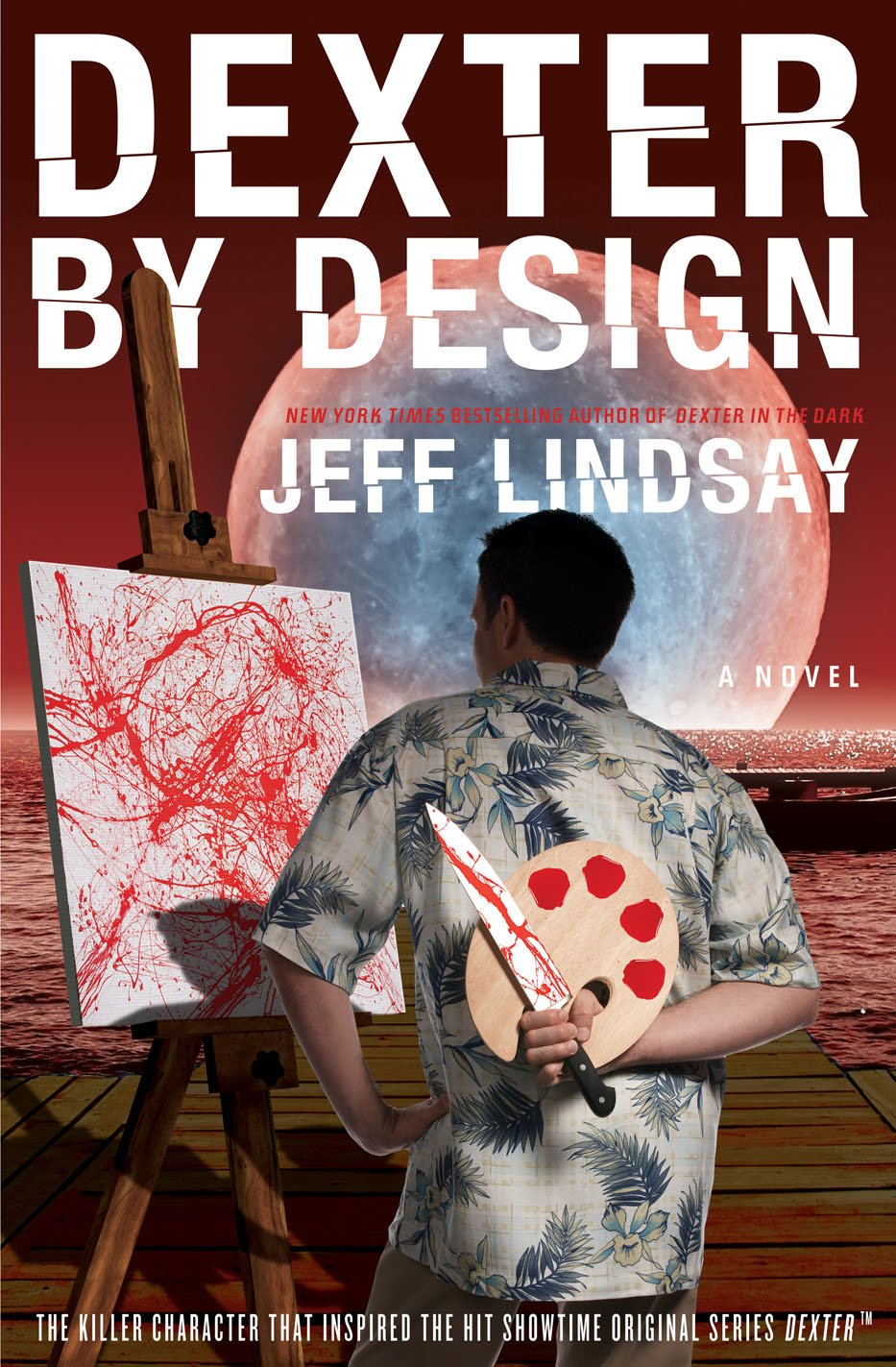
Dexter by Design

With every Dexter book I read, I am less and less convinced that he’s anywhere near as smart as he thinks he is. I haven’t decided how I feel about that, I think because television Dexter is so much more on the ball. He’s not hyper-effective, but he doesn’t strike me as ever more inaccurately-pompous in each succeeding season either. See, and this is no good, because it’s starting to sound like (as of Dexter by Design) I actually dislike the character now, and that’s not it. It’s just that I am snickering at him, and I cannot imagine snickering at the TV character. Or maybe it’s that it’s harder to be okay with his plan to thin the world’s population of murderers if I become less and less sure that he actually knows what he’s doing. On the bright side, he’s at least still likable in his blunders and pratfalls, at least for now.

In this particular book, the Dark Passenger’s supernatural origins take the back seat, just as I had hoped, in favor of a more prosaic killer who is nevertheless quite artful in his arrangement of the bodies he is leaving scattered across Miami. None of which would seem out of place for the two-thirds of a TV episode devoted to the killer of the week instead of a season-long plot, except that this particular killer has a bone to pick with Dexter, and he has far more than enough information to pick that, uh, bone[1] quite masterfully indeed. As if that weren’t enough, Deborah is in danger and the cops are closing in. Hooray for a light summer’s thriller! (And yeah, I’m nearly positive that reading the book during last week’s camping trip made it better than it would have otherwise been. Setting matters, y’all.)

[1] It turns out that metaphor only works in the passive voice. Who knew?

Powers: Sellouts

In a way, Sellouts is the exact same book that Supergroup was, they just changed Marvel to DC before writing it. In another way, it’s the biggest book in the Powers series since the first one, because this is where everything changes. Obviously I cannot talk about the second part of that claim, so I’ll have to explain the first part. Imagine if the Justice League of America was full of people who hate each other and are no longer concerned with fighting the supervillains much at all, instead renting out their Hall of Justice for tours and merchandising. Imagine further if Batman were to be embroiled in a sex scandal in which an underaged girl was dressed up in the Robin outfit, seducing him, on film. This is like that, except these statements are not spoilers, they are the premise of the book. Things start getting bad after all that is established. (The names have, of course, been changed to protect the guilty.)

Really, that’s what makes it work for me, is that a lot of such stories would be rolling for shock value. And while that is a little bit true here, don’t get me wrong, it is still primarily a springboard to examine dire consequences, and I like how they laid it out. This established, I have a bit of a gripe about Deena Pilgrim. Well, not about her, but… this is a buddy cop noir drama thing, right? The thing about buddy cops is, they are both the main character, billing split right down the middle. So why is it that Deena has been shown naked not only more often than her partner, but in fact more often than any other character in the series? I will never oppose nudity in my art, full stop. That is a known quantity in any disinterested observer’s evaluation of me. But that doesn’t mean some characters aren’t being exploited, and I do object to that. ‘Cause, seriously, what gives? How are you supposed to be a credible main character if the author or director or whoever is exploiting you?

It occurs to me belatedly that the title may have had more relevance than I thought. In any case, I hope something is done to adjust the balance. This be uncool, as it stands.

Marvel Zombies Return

Remember how the Marvel Zombies series used to be about A-lister characters with cosmic powers, devouring every scrap of food in their reality from one end of the universe to the other and back again? Acknowledging that this was pretty cool, someone decided to get a whole bunch of authors together and write a sequel to that book, so we could find out what happened to them all when they got tricked into another dimension, safely out of the way of the very few survivors of their home plane.

As with most of the series, Marvel Zombies Return is, if not great, absolutely good enough. In some ways, it may have been the most satisfying entry in the series to date. It certainly had the funniest single scene I’ve ever read in the series, and it answered, if not the driving question I’ve had all along[1], at least another very important question concerning the genesis of The Hunger. Plus, you know, all manner of intestines are ripped apart, girlfriends are accidentally eaten, and Hank Pyms are mocked for being prime douchebags enough to stand out in a world full of remorseless killing machines. I can dig it.

[1] “What is the nature of The Hunger as a religion?” For various reasons, I don’t expect to ever find out, at this point. That said, there are at least two more books in the continuity that I have yet to read, and maybe closer to two and a half.

Backlash

star_wars_fate_of_the_jedi_backlash_frontcover_large_uz9CMVYuUc5x3R7While trying to remember the name of this book so I could find a link on Amazon, I determined that the series is almost completed, despite my not even having reached the halfway point. Does this mean I’ll suddenly start reading a lot more Star Wars books? Y’know, probably not, it’s not like anyone talks about them such that I have to avoid spoilers; if anything, I’m the one who’s guilty of them. It’s hard to avoid spoilers in my own reviews, because the continuity is so massive now. When I talk about Ben Skywalker’s brief period as potential apprentice to a Sithlord who happened to be his cousin, you’d be all like, “Wait, what? What Sithlord? What cousin? Since when is there a Skywalker named Ben?” Kind of enormous spoilers for events like 10 books ago, and yet necessary backstory to understand some of his motivations in Backlash, as he and his exiled father[1] try to prevent the Sith apprentice they are following from both returning to her leadership with news of a very powerful Dark Side creature they all encountered in the last book while simultaneously helping to end a long-standing wrong on the planet of Dathomir. Oh, and while laying the groundwork for future romance, I predict!

It’s funny how much this series reminds me of an episodic TV show like Burn Notice, or episodic book series like the Deathlands. I mean, don’t get me wrong, the connective tissue in which we are apparently to learn the Fate of the Jedi, politically as well as spiritually[2], is certainly interesting. And the non-Jedi politics are also a thing about which I… well, okay, I mostly don’t care who’s in charge, and the maneuvering is a little infantile after having just re-read the entire Song of Ice and Fire series to date over the summer, but I still rarely get tired of that kind of fiction. And you can always count on Han and Leia to get up to interesting things, regardless of what the story is notionally going to be about. But after two long series in a row, one with twenty books about extra-galactic invaders and one with nine books about that Sithlord, an episodic series with connective tissue feels a little bit like stepping backwards into the mid ’90s when none of the authors had a plan or any kind of interaction with each other as they stumbled from one event to the next to another one two years in between the first two, in the days after the fall of the Empire.

And don’t get me wrong, they only let pretty good authors write these books now, and they all collaborate extensively, so it’s not like I’ve read an actually bad Star Wars book anytime this decade. It just still feels weird to have so much looser of a plot arc than usual, is all. I find myself hoping for some kind of societal collapse, which I know is not okay, because billions of sentient beings would die or fall upon dire straits. Nevertheless, the wild and woolly days of the Empire, with scattered, ineffective Jedi and a struggle against overwhelming odds were a lot more fun than these struggles to maintain the status quo. Whatever the Jedi used to be in the Old Republic, they aren’t that anymore. Too many people remember too many failures, and as long as books keep being written in this time period, there’s never going to be a generation of peace during which they come to represent the old days, so forcing them to weather scandal after emergency just makes them look more and more small and sad, and I’d rather see roaming Jedi deciding what’s best for each situation on an individual basis than an Order that is as decayed today as the Senate was during the last days of Chancellor Valorum’s reign.

Huh. This is not the review I expected to write.

[1] Oh, you know. Don’t pretend.
[2] You may recall that a) they are on the outs with the current government after the big Sith thing I mentioned earlier and that b) some of them are going crazy, with virtually no rhyme or reason and certainly with no cure.

Hack/Slash: My First Maniac

Get this: a prequel. Well, okay, those happen all the time I guess? But get this: I didn’t actually buy My First Maniac from Amazon. See, local comic store that buys failed local comics stores was having a massive superhero comics overstock sale, and I went in on 80% off day, where I picked up a couple of the more recent Powers, Kick-Ass in hardcover, not Red Son because I tragically failed to find it, and also a Cable collection from the ’80s that my boss apologized about later because he hadn’t been serious about me getting it. How was I supposed to know?! He’s been reading this stuff way longer than me, yo. Oh, and since all of that was still only like $15, I picked up the newest Hack/Slash volume that I had not known existed, since some online company failed to put it in my gold box or even my daily “you should buy this!” emails. Yay for supporting local businesses, right?

Anyway, Cassandra Hack is back — all the way back, in fact, to her first adventures, before she even went out on her own to hunt supernatural baddies or met up with that cool sweetheart of a deformed guy whose name I cannot currently remember but that possibly starts with a V? See, her mom was the lunch lady, and after having seen her daughter Cassie take too much abuse at the hands of the other kids, said lunch lady started slaughtering the school kids and serving them up in the next day’s lunch line. Which, okay, I’m sure that happens on a more-or-less monthly basis somewhere in the world, but after she got caught and committed a particularly gruesome suicide rather than go to jail, her revenant corpse came back and started slaughtering kids at Cassie’s new school, to protect her all over again. And now that she knows about the world that lies behind the world, it’s time to cowboy up and do something about it.

If, you know, she can just find another example of the genre, and prove that her mother wasn’t just a fluke in existence and ability-to-be-killed-by-her alike, and hold onto her angst hard enough to not get distracted by offers of friendship, and find sufficiently goth-revealing clothing to create a legend with. Spoiler alert: she somehow manages that last one, despite the odds.

Marvel Zombies 4

This sequel to Marvel Zombies 3 (as opposed to the series in general, because the third volume went off in an entirely new direction, you see) is interesting not for being a good zombie story (it was not bad, but it was also not good), but for being an archaeological study of the period of Marvel that I’m reading right now. The main characters are chock-full of the Marvel horror experiment: Morbius the Living Vampire![1], Jack Russell, the Werewolf by Night, Simon Garth, the [voodoo type of] zombie, Man-Thing, Daimon Hellstrom, Son of Satan, and, okay, some witch chick that I haven’t yet heard of. But my point is, these characters are wandering in and out of all kinds of crossovers with the comics I am reading (June 1976, now), and have titles of their own that all started since 1974. I am honestly surprised at how many of them have stuck around, though there are certainly changes, as I think there would have to have been. ‘Cause, really.

Alas, after all the interesting set-up that I speculated might be coming from the previous volume, Marvel Zombies 4 was a pretty straightforward fight to avert apocalypse. That certainly has its place in comics, unquestionably, but after setting up the MZ continuity to relate to horror and destruction and the existential angst of wanting to be a good guy but virally failing, watching some world fight off an incursion without any examination of the deeper causes of things and without… well, okay, in their defense, the book where we lose is already written, so putting that scenario on a new world is redundant. But I still say that using the MZ world as a springboard for “look, an apocalypse to avert!” is too, and I guess that’s why I was disappointed. Man, I wish they’d used the space to explain what the fuck is actually going on instead. Particularly if they’re going to insist on giving it religious overtones in the first place. Religious overtones = “there is a responsible party”, not “random happenstance in the universe, what are you gonna do?” So use that, Marvel Zombie authors!

On the bright side, the end of the book contained black&white issue 1 of Tales of the Zombie, which was a lot grimmer and a lot more nudity-filled than I expected a Marvel title to have ever been. Plus, it was pretty decent, even without its own more direct version of well-timed archaeology. I still won’t mind just watching these characters interact with my superhero continuity instead of actually reading about them too, but I’m at least getting a clearer picture of why people would have.

[1] I mean, they don’t themselves use the exclamation point as part of the name, but I cannot see how to say that without planning on being excited about it, and so.

White Night

I’ve reached a crisis point in my reading of the Dresden Files. See, there’s always (by which I mean starting in the third book or so) been a long-term story being told, and I know this. Plus, there’s always been continuity, and I know this too. But until White Night, I’ve been able to pick up each new book and just read it, and remember enough about the previous continuity and the long-term story to do just fine. Now, though…

Don’t get me wrong, I remembered enough to keep up with Harry Dresden’s rampage through the spirit world in response to the recent murders of magic-sensitive women, that took him through several trips down memory lane and culminated in, as usual, mostly everybody but Harry winning big[1], but there was at least one world-shaking revelation that lacked the punch I think it should have had. And I know it’s only going to get worse. So now what?

If there were a lot of books left, obviously I’d just read them. But the truth of the matter is, I’m only a few behind now, and there are (I believe) quite a few to come, as yet unwritten. So if I were to rush it now, I’d just have the same problem in October. So I guess I’ll just stick with what I’m doing? (I do kind of wish I could do online research without fear of massive spoilers, though.)

Oh, anyway, I did want to say that I continue to be intrigued by Harry’s emotional ups and downs. Struggle with sexism? Sort of. Really, he embraces it, but I have the impression that the more he talks about it, the more he is trying to figure out a better way. Anger issues? Big time. Too much paranoia (or justified fear) to work well with others? Oh, my, yes. But he’s still unquestionably a good guy, and that’s what I like best about him. The nuances. He’s an interesting, interesting person.

[1] At least he continues to win small.