 It’s easy to forget, living in the country that spawned the Salem Witch Trials, that other places were equally terrible to women in (especially but certainly not exclusively) the 17th century. Take England. Imagine you’re a squire, which is apparently a term for a landholder, not just someone who carries things for a knight. People all over are dying of the plague, and for some reason you want back a parcel of land you’re renting out. The only thing standing in the way is the family you’ve rented it to. Now imagine the husband gets the plague and dies, and now it’s only the wife and infant daughter, but the wife has paid for the next six months of rent up front. And yet you still want the land. If only there were some way to… oh, wait, no, she’s probably a witch, right? Problem solved!
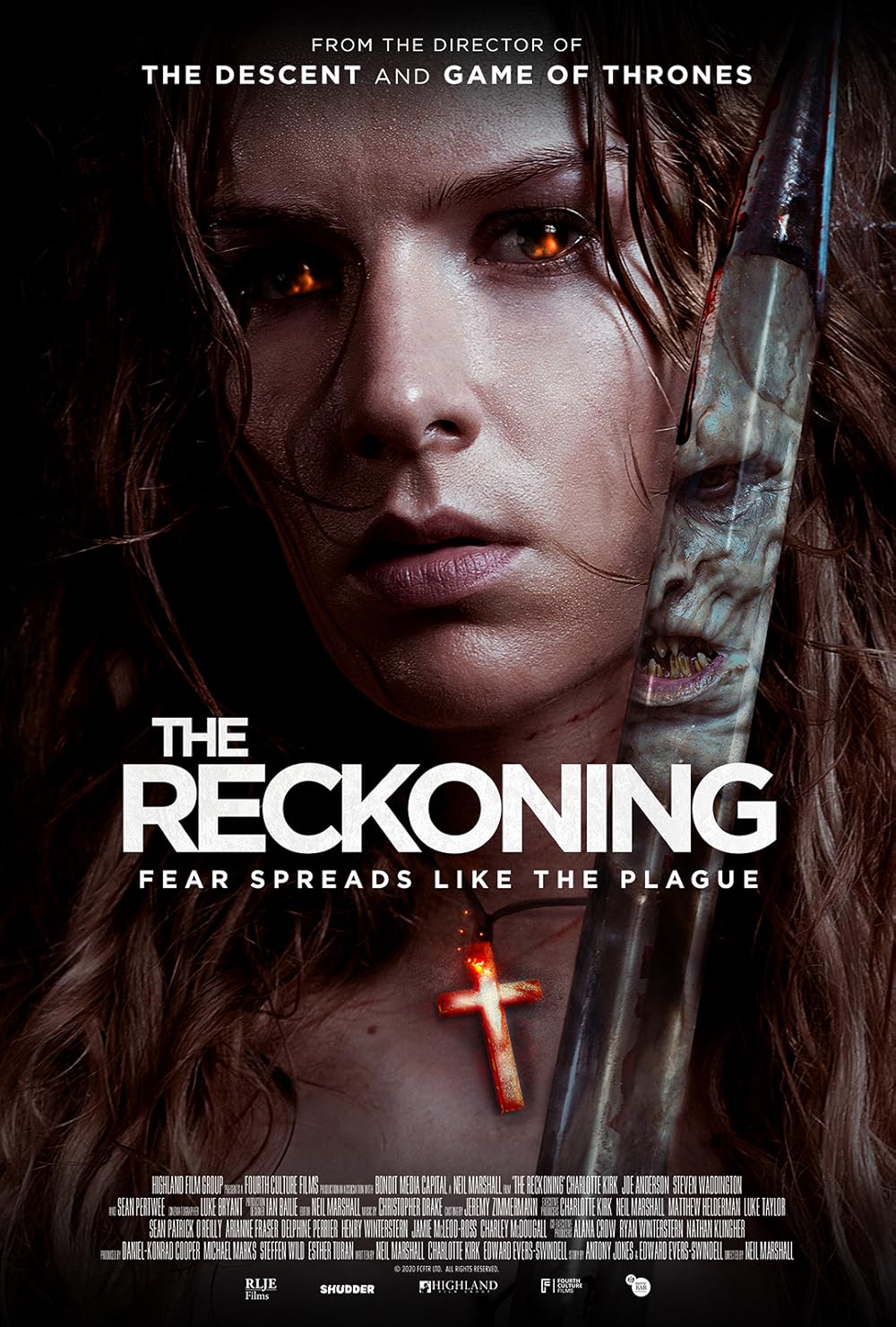
The Reckoning is about what happens after Grace stands accused of witchcraft. There’s a witchfinder, and there are implements of torture, and there are public hearings, and there are family schisms, just really all the things you would expect out of obviously false accusations of this type, you know? I at first was afraid we were headed towards Hostel: The History of Europe, but none of the torture scenes (well, after the initial public flogging) are lingering and visceral, they are there solely to make sure you know they happened.
The heart of the movie is the face-off between Grace (the witch [let’s say]) and the witchfinder with whom she shares a past. Each is certain of their facts, and each is certain of the strength of their will. And the drama of that, er, reckoning is enough to carry the movie. Honestly, at almost two hours, the movie overstays its welcome any time it strays from that central conflict and the secondary conflicts surrounding it to explore the stuff in Grace’s head.
Her… visions? delusions? hallucinations? temptations? serve only to confuse the question of whether she might in fact be a witch after all, which I think strongly undercuts the story’s entire purpose. Also, they are aggressively sexualized in a way that simply doesn’t fit the surrounding events. I am never opposed to sexualization and also nudity in the service of the plot, and rarely for that matter does the gratuitous type bother me either. I think what failed here is that it was not meant to be gratuitous, and yet there was no way for me to take the scenes with the gravity they were portrayed without, like I said, completely fracturing the movie’s central thesis.
The fact that I still think it’s a good film, despite that previous paragraph, should be taken as a pretty solid endorsement. I have only one caveat, but it would completely spoil the ending, and so I bite my tongue and still mostly say, yeah, check it out.