Category Archives: Words

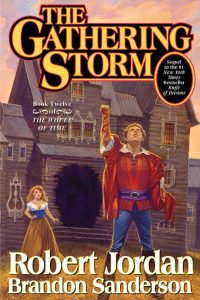
The Gathering Storm

This has been a strange experience, probably from start to finish. The last time I read a Wheel of Time book, I think Robert Jordan wasn’t sick yet. I had certainly never heard of Brandon Sanderson. And it’s probably been that long or longer since I last bought a new book in a bookstore, instead of used or (rarely) Amazon. But, it’s been four years since that last book, which I suppose leaves a lot of room available for changes of this type. It’s just weird, is all I’m saying. Anyhow, expect no particular spoilers, but also expect me to think you’re familiar with the series. If you aren’t, this wouldn’t really be the right place to start anyhow.

The Gathering Storm is an accurate title for a good book. The Last Battle is drawing closer day by day, and the Pattern is unraveling at the same rate as Rand al’Thor himself. ‘Cause, y’know, Fisher King metaphor. And nobody else’s life is much better, at least what we saw of them. All of the characters were visited, but Rand and Egwene were the mainstays; I think I can therefore expect a lot of Mat and Perrin in the next book, due out a mere year from now. Anyway, that’s plot if you know what’s been going on, and if you don’t, I still wonder why you’d bother to closely read a review of the twelfth book in a non-standalone series.

The thing is, we all know that plot review is boring and completely disregards the s’redit in the room. How did Brandon Sanderson do at (all too literally) ghostwriting from Jordan’s notes? And you know… it’s hard to compare. The plot was much tighter even than the previous book, much less than the several that preceded it. But then again, Jordan swore for the last years of his life that he’d be finishing the series in one book. So plot tightening was, one hopes, guaranteed. Plus, there’s no guide to who wrote which sections[1]. So all I have are sense impressions. Some of the language is different, but not in a way that was bothersome. I mean, I noticed it, and it took me out of the trance for a moment, but, what can you do? The characters were mostly the same, though there were outliers. Mat especially seemed a little off, but I think it was mostly because he didn’t have any plot moves to make, and that he will thusly seem far more familiar in the next book.

The biggest weirdness came in the Egwene scenes. Not that she seemed not herself, but the way she talked was… there was a lot of lecturing in there, and some pontificating as well. You know what it reminded me of? Take away the solid characterization and plot points, and just look at tone, and it kept reminding me uncomfortably of the polemics Terry Goodkind has been placing in his characters’ mouths for the past five years. She never sounded objectivist[2] or crazy, but the manner in which she spoke and all of the people around her took careful notice and nodded wisely while stroking their ageless faces? It hurt what was otherwise the best sequence in the book.

But, to break it down: this is really a minor complaint, and it did not hurt the book or even plot surrounding said complaint. And my other complaints, mentioned and un-, are far more minor still. Whether Sanderson or Jordan had more words typed, this was an excellent Wheel of Time novel that has me as excited for the next release as I last was over a decade ago in my college days. I think I may even reread the series, before the last book drops, to get it all in one gulp. But that’s a couple of years out, so, we’ll see.

[1] Jordan had been writing at the concluding volume[s] for months or years before he died.
[2] I toyed with saying “Randian”, but, you know.

A Night in the Lonesome October

I have been vaguely aware of A Night in the Lonesome October for ten years or better, but it’s really hard to find a copy, so I’ve never read it. However, I finally did find one earlier this year. Which I suppose is pretty obvious, as, review! I have always been told, during the span of said vague awareness, that the appropriate way to read the book is day by day throughout October, to coincide with the chapters which are each their own day. And so I was gonna do that this year, but then on top of it, some people I know decided to do a reading-club-style daily read at the same time, so I also got to discuss as I went. This does not, per se, take away from my review thoughts, because the talks were mostly about the plot revelations and not much at all about theme. Still, it will turn out to have an influence nevertheless.

Because mostly what I learned is that it’s the kind of book about which the less you know going in, the better. If I had my druthers[1], I would not even have read the jacket text explaining the setting and plot outline. Which, well, makes it tricky to give much of a proper review of what’s going on, is my point. In short, a group of animals (including the book’s narrator, a dog named Snuff) and the humans they are attached to have gathered in the English countryside in October in order to perform an apparently supernatural task. And they are not all on the same side. And so the book gradually unfolds the nature of the task while exploring the motives and, of course, actions of the participants. I know this sounds boring, but I can guarantee that the majority of characters are compelling, and the plot is old-fashioned October horror. And probably that you’ll be happy not knowing more.

[1] Real word? You decide!

Ex Machina: Ex Cathedra

The Ex Machina series has been, at every point, stingy with its distribution of information. Why did this one Mitchell Hundred guy (and his nemesis Pherson) get powers? Is someone pulling the strings? What is the end goal? But this stinginess has been basically okay, because the character and political interactions fill up a lot of time and entertainment. What is currently weirding me out, therefore, is how Ex Cathedra doesn’t really seem to fit any of the established patterns.

Honestly, it’s enough out of bounds that I wonder if I need to reread the book. It’s happened before with stuff this short, that if I’m just not all there on the day I read it, I have a bookfail. Anyhow, the majority of the book is taken up by Hundred’s acceptance of a requested audience with the pope, in Rome. So, there’s religious talk throughout, but less political than you’d expect. And the flashback scenes about Hundred’s career as the Great Machine, pre-politics, have no apparent tie-in with the rest of the story like I’m accustomed to seeing. On what I’m gonna call the bright side, it had the weirdest vision I think I’ve ever seen in a comic. The final one-shot storydid have nice character development, but the main plot has left me scratching my head.

Ultimate X-Men: Magical

As much as I’ve enjoyed Robert Kirkman’s work in The Walking Dead series (and anticipate enjoying his work with Marvel Zombies), I must perforce be all the more disappointed by what I’ve seen of his Ultimate X-Men run so far. Magical initially expanded upon the character that I liked least in his first book, the Kirkman-created Magician, whose mutant power seems to be the ability to do, y’know, anything. Quelle fromage, as the French say.[1] So, after three issues of that chunk of disappointment, we proceed into the Annual, in which Kirkman continues his systematic destruction of Nightcrawler, who has always been one of my favorite characters. I guess there’s a whole Marvel committee that approves of this stuff and possibly even suggests it, and that therefore my blame is somewhat misplaced. Nevertheless, I do not approve. Also, the dialogue continues to be sporadically stilted, in that superhero-declamatory way that by rights should have been discontinued in the 1950s at the latest.

All in all: blech.

[1] Most likely, both the claim and the grammar/spelling are inaccurate, and that’s well before you delve into the translation.

Ultimate X4

So, I’m learning as I go that there are still a lot of small time Marvel Ultimate titles that I have missed because they were either never released as graphic novels, were deemed insufficiently relevant and/or good and/or long, or in one case maybe took so long to be completed that the landscape has moved on. Dunno, really. The relevance to all of this is that I’ve just read Ultimate X4, a two-issue crossover in which the X-Men and Fantastic Four are manipulated into brief combat over the theft of Cerebro, a mutant-detecting machine developed by Professor X. And while I can imagine the story being written for world-changing relevance or being provided a gripping an in-depth plot, I can’t see either of those ever having happened with only two issues’ worth of material. Pity.

The book is padded by an incredibly dense but informative (and at least for me, timely) encyclopedia of the characters and groups inhabiting the Ultimate universe as of 2006. If read out of order, it would be way too full of spoilers, but it worked as a pretty good refresher on the at this point vast number of graphic novels I’ve read in this series over the past couple of years. Which pretty well saves the book for me, especially since the story part was so very, very short.

Dragons of the Hourglass Mage

The final volume of another Dragonlance series has at last arrived, and I am forced to admit to a lack of objectivity about Dragons of the Hourglass Mage. Because, as the cover and unwieldy title alike imply, it is mostly about Raistlin Majere, and I don’t really get tired of that guy, at least not when written by Weis and Hickman.

Pretty much, the book details the lost month in the original Chronicles between when Raistlin left his companions to die in the Blood Sea of Istar[1] and when he reappeared at the series climax to tilt the balance against the Queen of Darkness[1], in order to further his own ambitions via a freer world. It may contradict some of the other main sequence canon, but never in very noticeable ways. Plus, since the character study continues to fulfill everything I’ve sought out of the series in the past twenty years, I don’t really care. Things in the story include a secret resistance in the heart of evil’s lair, an assassin kender, a plot against the gods of magic, and perennial Dragonlance favorite Lord Soth, the death knight. Unless you also really like the psychology of Raistlin Majere, though, it’s okay at best.

[1] Sometimes, when I have not typed the words out in a while, I forget just how standard-fantasy these books can get.

The Final Empire

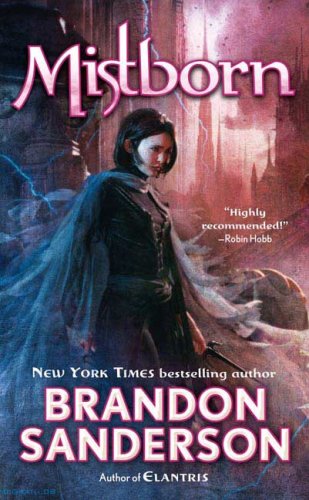
51E+7V-PDyLAt long, long last, I have found copies of some of Brandon Sanderson’s Mistborn trilogy. Sanderson, you may already be aware, is about to publish the first of the concluding volumes to Robert Jordan’s Wheel of Time series. Naturally, therefore, I’m interested in seeing how his previous writing style goes. And awesomely, I can report that Elantris was not a one-hit wonder.

The Final Empire tells the story of an indentured people that have been held down for a thousand years partially by the ruling noble class but mostly by the Lord Emperor, an immortal god-ascended man who once saved the world from a vague being known only as the Deepness, and by that man’s Inquisitors. It doesn’t help the enslaved skaa that the nobles are not only propped up by the regime, but that some of them also have magic powers derived from burning ingested metals and related alloys, such that they can see better or have more strength than normal people, or even influence emotions. Skaa women with whom the nobles dally are immediately killed to prevent the talents from entering that population, though of course it’s not a perfect system…

And then, there are those who have not the power to burn one metal, but the power to burn them all. These Mistborn are virtually unstoppable, except in combat with each other, or with the Lord Ruler’s Inquisitors. A skaa Mistborn would be the most dangerous creature the Final Empire has ever encountered. And though I bet you can guess what happens next, the story has twists and turns galore to keep you guessing at every moment. And after a full-blown stand-alone conclusion, there are still two more books worth of supposed awesome ahead of me!

The Walking Dead: What We Become

The new Walking Dead books keep catching me by surprise. Which is nice, really, I’m not complaining. There I’ll be, scanning my Amazon gold box for cheap stuff that I usually don’t want or need, and hey, another new one! Still, I think it may be a little while before this happens again, so I will bask in pleasedness over the event for a moment.

You can probably tell by now that I’m padding. I have a good reason. The book is great, although not much plot momentum occurs. But that’s okay, because I’ve felt throughout this ride that Kirkman really gets what a zombie story is about. Zombies themselves are mostly boring, and the struggles against them, while interesting enough on both the purely physical survival level and on the mental game-of-chess level in which an entire unthinking world of death is ranged against the few survivors, can only capture so much attention before repetition sets in. But the psychology, the eroding emotional state of people who are thrust into this impossible and deadly world? I just don’t get tired of that, no matter how long the story lasts and no matter how many different versions of it I am presented with.

So you’ll understand why What We Become was so compelling to me, even though there was no real movement on the hinted plan for eventual salvation. But at the same time, I can’t really say anything about the book that the title hasn’t already said. A year beyond the zombiepocalypse, a year filled with unrelenting horror interspersed with only the sparest patches of peace and contentment, and it is time for the characters to take stock of their place in the world, an emotional dipstick measuring the dregs of their humanity. But no matter how bad things may seem? They’re still alive, and in Kirkman’s world, that may be the only measure anyone is still capable of taking with any true accuracy.

Ultimate Spider-Man: Warriors

So, the most recent Ultimate Spider-Man, Warriors[1], has me thinking about Peter Parker’s foes. Most of the time, they’re dudes that were changed by science like he was, only with more sinister results. Most of them are bit characters, because there are always way more villains than heroes, and the heroes never permanently lose. (Mostly.) You’ve got the Green Goblin and Doctor Octopus, with whom he shares pretty much a familial bond.[2] But otherwise, most of what he faces is a generic stream of similar villains that he can quite easily quip to death, even without the spider powers. But then there’s the Kingpin.

Wilson Fisk is just a rich guy mob boss type. His henchmen are all just folk too; Elektra has no special mutant or science-run-amok powers that I can figure, and just about everyone else he works with isn’t big-time enough to have a recognizable name. He could be Spider-Man’s least interesting foe, and yet instead I think he may be the best of the bunch. He’s scary smart and he has the power that money brings, even though he’s been laying low due to legal difficulties for practically the entire run of the comic. I guess it’s a lot like Lex Luthor with Superman: the only person who can really compete with an unstoppable force is the one who can out-think it. And okay, Kingpin is a bald rich guy, so maybe there’s a little bit of larcened[3] idea in the character at that. But I don’t really care, because the more important of the two is original, and nowhere near an unstoppable force anyhow, which leaves Kingpin free to be even more of a puppet-master. Case in point: the book that I just finished reviewing, albeit in footnote one.

[1] The actual book? Of course it was fantastic. What do you expect me to say instead, at this point? In a way, there were way too many bit characters from previous continuity (and, okay, also from previous events in this series), but in another way, that managed to work and be really cool itself, even though that kind of thing usually pisses me off. Which is why I keep writing paeans to Brian Michael Bendis. Whatever he’s selling, I apparently keep buying it.
[2] I mean, Norman Osborn created him, and the paternal vibe has been there ever since. All too readily, Harry Osborn falls into the overlooked brother role, and Otto Octavius, self-created but still in Osborn’s employ when it all happens, kind of feels like part of the family to me too. The last part may be a stretch, I admit, but I’m impressed with how neatly Bendis shoehorned the other three characters into these roles, just as though they had always been written this way.
[3] Is that even a word? I bet not.

Ultimate X-Men: Phoenix?

Robert Kirkman, who you may recall me lauding from the Walking Dead series, begins his run as the writer for Ultimate X-Men with Phoenix?, in which the X-Men take some time off. No, seriously. The first half of the book is pretty much a date night. I mean, it’s literally named that. So, anyway, most of what happens is character development rather than plot advancement, but I’m okay with that. The central question of the book, as you may be able to guess by combining the title with some small amount of X-Men knowledge, is “Is Jean Grey the Phoenix?” And it’s a pretty interesting question even if you are familiar, because the Ultimate Phoenix has always been different from standard continuity, at least from what I know of the latter. Other questions for the book include: “Which character is homophobic?”, “What’s all the weirdness with Wolverine lately?”, “Who is this new Magician guy and did Kirkman create him out of whole cloth to seem awesome?”[1] and, if you are like me and reading these books in the wrong order, “Why are there Ultimate Spider-Man spoilers, dammit?”

An additional question, if you are familiar with Kirkman, would be “Why is the dialogue so stilted and basically terrible?” Thankfully, that question is obviated by reality as of his second issue, which means I don’t have to claim this book is terrible. Which is nice, since I had only recently started to really like the series.

[1] I hope the answer is “No”, because the character is kind of annoying, however intentionally.